Fencing options and costs in Palmerston-Little Italy
In Palmerston-Little Italy, fencing choices often come down to balancing curb appeal, privacy needs, and how you want the fence to handle Toronto’s freeze-thaw cycles. With a population of 13,826 (Statistics Canada, 2021 Census), the neighbourhood has a steady stream of homeowners improving side yards and front boundaries—especially in older pockets where lot lines are established and upgrades are common. In practice, each detached property that’s updated is also a potential fencing customer, which makes local demand track closely with household improvement projects. (Statistics Canada, 2021 Census)
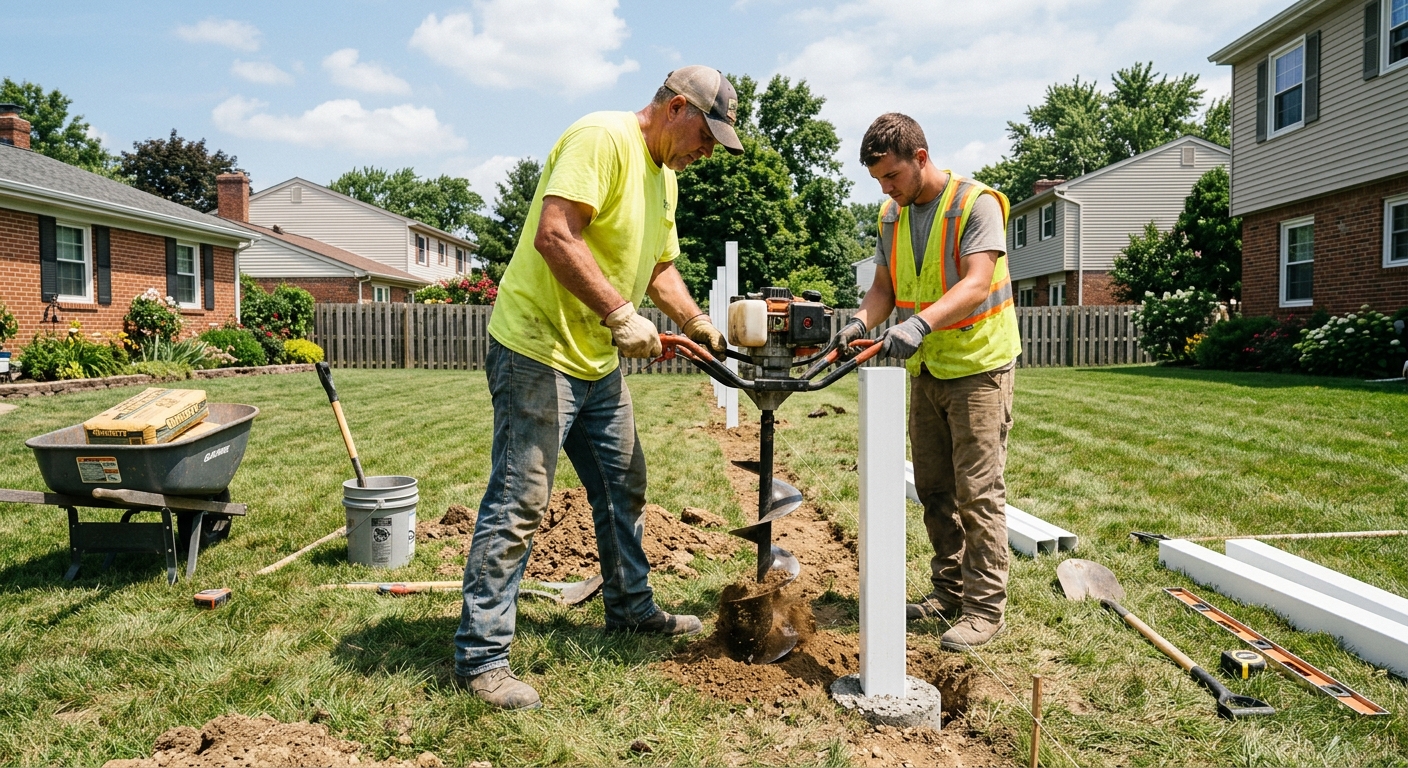
In the Toronto economic region, fencing pricing is heavily shaped by frost depth and local soil conditions. Contractors typically assume design frost is roughly 42"–48" in Southern Ontario, so posts need to be set about 3.5–4 feet deep to reduce the risk of heave—particularly for 6–8 ft privacy fences. That means many crews price concrete-set posts as the “best practice” option rather than driven posts, and you’ll usually see higher labour and ready-mix costs. Site access matters too: narrow laneways, gated backyards, and tree-root interference can add time to excavation and re-setting.
Trade demand is especially strong around the mid-block residential lanes between Palmerston Ave and College St, where backyards are often fenced for pet control and privacy. From there, homeowners usually compare materials before calling for a site visit, and the table below gives you a realistic range to start those conversations.
| Material |
Lifespan |
Maintenance |
Privacy Rating |
Price per Linear Foot |
| Pressure-treated pine (standard wood) |
10–15 years |
Stain/seal every 2–3 years |
High (solid pickets/panels) |
$65–$120 |
| Cedar (natural rot resistance) |
15–25 years |
Light stain every 2–3 years (or weather to grey) |
High (solid pickets/panels) |
$85–$130 |
| Vinyl / PVC (no-maintenance) |
20–30 years |
Occasional wash; avoid impact damage |
High (solid and lattice options) |
$75–$130 |
| Chain-link (galvanized steel) |
25–40 years |
Minimal; rinse and check tension |
Low–Medium (privacy slats optional) |
$45–$85 |
| Aluminum ornamental |
25–40 years |
Wash as needed |
Low–Medium (decorative pickets) |
$90–$160 |
| Composite / recycled material |
25–35 years |
Minimal; periodic cleaning |
High (solid styles) |
$110–$160 |
Prices are estimates only and vary by project scope, site access and material selection.
What affects the price of fencing in Palmerston-Little Italy
If you receive two quotes for what sounds like the “same” fence in Palmerston-Little Italy, it’s common to see swings of 30–50% across the Toronto area. The reason isn’t just materials—it’s how crews account for excavation depth, post spacing, wind loading, and the effort needed to get panels perfectly plumb on uneven property lines. Even in the same postal area, a yard with mature trees or a narrow side gate can turn a straightforward install into a longer, more labour-intensive day.
First, the frost line depth drives post requirements. Southern Ontario frost is commonly estimated around 42"–48", so contractors often set posts about 4–6 inches below the design frost depth. In practical terms, that frequently means 1.5–2.0 m into the ground. More depth usually means longer posts, larger holes, and more concrete—so concrete-set posts are a major pricing lever. Second, wind matters for panel style. While the Toronto region isn’t as exposed as the Prairies, tall solid privacy fences still experience uplift and racking, so wind-friendly hardware, heavier posts (and closer spacing like 6–8 ft centres) can be priced into the quote.
Concrete examples from similar Toronto projects: (1) On a straight 40 linear foot run with easy access, a vinyl/pvc privacy fence may land near the $75–$130 band. (2) If the same fence is on a driveway-side run with dense roots and requires hand-digging to maintain 3.5–4 ft footing depth, labour can rise enough to push total costs well toward the top of the band. (3) If you choose cedar instead of pressure-treated pine, better appearance and rot resistance can justify the premium, but you’ll still be paying for proper post-setting due to frost.
Local housing stock also plays a role: many older lots have established boundaries and landscaping that can restrict heavy equipment. That affects how quickly contractors can drill and set posts, which is why two fences with identical linear footage can still diverge by thousands of dollars.
| Price Factor |
Why It Matters |
Cost Impact |
| Fence length in linear feet |
Materials and labour scale directly with run length |
Major driver; typically changes the total the most |
| Post depth required |
Frost line determines hole depth and post length |
Deeper frost-safe set increases concrete and digging labour |
| Post setting method |
Concrete vs. gravel pack vs. driven posts affects stability |
Concrete-set usually costs more but reduces heaving risk |
| Material choice |
Vinyl vs. cedar vs. chain-link changes both supply and installation time |
Shifts pricing between typical bands like $45–$85 (chain-link) and $75–$130 (vinyl/wood) |
| Gate count and type |
Walk-through vs. double drive gates require heavier frames and hardware |
Often adds thousands for double gates and alignment adjustments |
| Grade and terrain |
Sloped yards need stepped or raked panels |
More layout time and extra labour to keep top lines consistent |
| Old fence removal and disposal |
Demolition includes dismantling, hauling and dump fees |
Can add significant labour days, especially with concrete footings |
| Permit fees and survey / property line locate |
Proper boundary work prevents disputes and rework |
Varies by job; locating can be required before excavation |
Permits & regulations in Ontario
In Ontario, many homeowners assume “a fence is just a fence,” but height and location matter. In general, fences above a height threshold—often around 2.0 m (6.5 ft) at the rear and 1.0–1.2 m (3–4 ft) at the front or corner—can require a building permit. Even when a permit isn’t required, fences still need to respect property lines and municipal setback bylaws, which is especially important in older, well-established neighbourhoods like Palmerston-Little Italy.
Before digging any post hole, you must call for utility locates (Ontario One Call). This is non-negotiable for safety and to avoid damaging buried services. Next, confirm your property line: obtain a survey or at least a proper locate of your property pins to reduce the risk of encroachment disputes. If you’re sharing a boundary fence, line-fences rules (provincial line-fences legislation) influence responsibilities and how shared costs are handled.
What typically requires a permit: taller fences near/over the common thresholds, plus certain corner or boundary-height combinations that trigger municipal review. What typically does NOT: small, lower-height privacy panels within allowable front/corner limits and standard rear fencing within typical bylaw heights (always verify with your municipality).
To verify a contractor in Palmerston-Little Italy, check three items before work begins: (1) Ontario licence/registration where applicable—ask for the exact business reference number and verify using the applicable provincial registry; (2) liability insurance—request a certificate of insurance showing adequate coverage and that your address is covered for the work; and (3) WSIB/WCB coverage—ask for clearance information (or WSIB clearance letter) and confirm it’s active for the job.
Choosing the right fence material for Palmerston-Little Italy
Choosing the right fencing material in Palmerston-Little Italy means matching what you want to live with to what Ontario weather does to fences. Toronto gets repeated freeze-thaw in winter and humid summers, so durability depends on more than just the top surface—it starts with correct post depth and concrete-set footings where frost heave is a concern. Most homeowners in this area choose privacy first, then consider low maintenance, since yard schedules often revolve around summer use and quick landscaping changes.
Pressure-treated pine is usually the best budget path, but it typically needs staining or sealing every 2–3 years to avoid grey weathering and to keep water from working into the wood. Cedar costs more upfront but resists rot better and often looks more refined; you still need periodic maintenance. Vinyl/PVC is popular for “wash and forget,” but extreme cold can make it more vulnerable to impact cracking—so you want solid installation details and good gate hardware. Chain-link is the lowest-cost way to enclose and it lasts a long time, but it won’t deliver privacy unless you add slats or plant screening. Aluminum looks clean and won’t rust, yet it provides lower privacy because it’s open by design. For many homeowners who want long-term value and a clean look, composite/recycled is a premium option.
Because Toronto frost is commonly treated as roughly 42"–48", posts are usually set 3.5–4 feet deep. That’s one reason most privacy fences rely on concrete-set posts, regardless of whether you go with wood or vinyl. Wind and snow can also tug on tall panels, so solid privacy styles may require heavier posts and closer spacing to limit racking.
Example of where cost differences make sense: switching from pressure-treated pine (often priced around $65–$120 per linear foot) to vinyl/PVC (commonly $75–$130) is most justified when you’re prioritizing maintenance-free ownership for 10+ years. If you’re comfortable staining and want to control upfront cost, cedar or pressure-treated wood can be the smarter fit.
| Material |
Cold Tolerance |
Lifespan |
Annual Maintenance |
Best For |
Price Band |
| Pressure-treated pine |
Good (with proper finishing and post setting) |
10–15 years |
Inspect + seal/stain every 2–3 years |
Budget privacy with planned upkeep |
$65–$120 |
| Cedar |
Good (resists rot better than pine) |
15–25 years |
Inspect + light stain every 2–3 years |
Longer-lasting natural wood look |
$85–$130 |
| Vinyl / PVC |
Very good (avoid impact damage in deep cold) |
20–30 years |
Wash occasionally; check fasteners |
Low maintenance and solid privacy |
$75–$130 |
| Chain-link |
Excellent (galvanized steel resists weather) |
25–40 years |
Minimal; check tension and posts |
Security, pets, and budget-friendly fencing |
$45–$85 |
| Aluminum ornamental |
Excellent (powder-coated system) |
25–40 years |
Wash as needed |
Decorative curb appeal with partial enclosure |
$90–$160 |
| Composite / recycled |
Good (stable boards; impact still matters) |
25–35 years |
Minimal cleaning; periodic inspection |
Maintenance-light privacy look |
$110–$160 |
How to choose a fencing contractor in Palmerston-Little Italy
Choosing the right contractor in Palmerston-Little Italy starts with verification, not promises. For Ontario work, confirm (1) licensing/registration status where applicable—ask for the contractor’s business information and verify it using the relevant provincial lookup; (2) liability insurance—request a current certificate of insurance showing coverage amounts appropriate for fencing and that your property is included for the project; and (3) WSIB/WCB clearance—ask for an active clearance letter (or equivalent documentation). A contractor who can’t provide these documents quickly is usually taking shortcuts that show up later as rework.
Next, get 2–3 itemised written quotes. You want labour and materials separated: post type and size, concrete quantity or footing specs, panel style, gate hardware, and any demolition/removal line items. A fair quote will also state what’s excluded—like permit pulls, utility locate fees, or disposal of old fencing and concrete bases—so you’re not surprised after excavation.
Warranty matters. Ask for a clear workmanship warranty length (for post setting, panel alignment, and hardware installation) and the product/manufacturer warranty (for boards, vinyl components, or metal finishes). Clarify whether warranties are transferable if you sell your home.
Payment schedule should protect you: never pay more than about 10–15% upfront. Use a holdback until the job is complete and walk the line with the contractor to confirm height, plumb posts, and gate swing.
Finally, demand a written timeline: start date, expected completion window, and what happens if weather or material lead times shift.
- Ask for insurance certificate and confirm it matches the exact work address.
- Request WSIB/WCB clearance documentation before any site work begins.
- Verify licensing/registration using the provincial registry (don’t rely on verbal claims).
- Get a written scope that lists materials, post size/type, and panel layout.
- Confirm footing depth plan (typically frost-safe, around 3.5–4 feet deep for privacy fences).
- Ensure concrete-set vs gravel pack vs driven posts is clearly stated.
- Check whether permit pulling is included or explicitly excluded.
- Confirm utility locate responsibility (usually homeowner/utility request; contractor should still coordinate).
- Clarify disposal: dump fees and hauling for old fence removal.
- Require gate details: frame size, hinges, latch type, and swing direction.
- Ask for warranty details in writing (workmanship + product) and transferability.
- Use a payment schedule with a holdback until final inspection and walkthrough.
Red flags to watch in Palmerston-Little Italy: (1) quotes with unusually low pricing that omit concrete-set post depth; (2) refusal to provide insurance/WSIB/WCB documents; (3) “lump sum only” estimates with no breakdown of posts, concrete, or gate hardware; (4) vague warranty language or no written warranty terms; and (5) scheduling pressure that discourages you from getting a contract and scope in writing.
Frequently asked questions — fencing in Palmerston-Little Italy
How long does fence installation take in Palmerston-Little Italy?
Most residential fence installs in Palmerston-Little Italy take anywhere from 1 to 3 days once materials arrive, with longer timelines for privacy fences that require frost-safe concrete-set posts. The biggest time variables are excavation access (narrow side yards, tree roots, and uneven grades) and whether old fencing removal is included. If your project is a long run, expect additional days for layout, post setting, and gate alignment. In winter Ontario conditions, crews may need weather-friendly pauses to pour concrete properly. A typical pattern is: day one for layout and digging, day two for setting and panel work, and day three if gates and finishing need extra adjustments. Your contractor should provide a start date and completion estimate in writing.
Can I install a fence on a slope in Palmerston-Little Italy?
Yes—you can install a fence on a slope in Ontario, and it’s common around older lots in Palmerston-Little Italy. The key is choosing the right method: you can use stepped panels (each section changes height at intervals) or raked panels (the top follows the slope with angled rails). Stepped is often more rigid and visually consistent for privacy fencing, while raked can work well when the slope is gentle. Proper layout takes extra time, because the contractor needs to keep post spacing uniform and ensure the fence line remains secure against racking and wind uplift. Also, frost-safe post depth still applies: even on a slope, each post needs a stable footing depth plan to reduce heaving.
What is the most weather-resistant fence for Palmerston-Little Italy's climate?
For Palmerston-Little Italy, “most weather-resistant” depends on how you define it: longest service life with low upkeep often points to vinyl/PVC or chain-link, while wood options can be very durable with correct installation. Vinyl/PVC is popular for Ontario freeze-thaw because it doesn’t rot like untreated wood, and it typically sits in the $75–$130 per linear foot range. Chain-link is extremely resilient in cold Ontario winters and often falls in the $45–$85 band, though it won’t give privacy unless you add slats or screening. For solid privacy with a natural look, cedar can be a strong choice, but it still benefits from maintenance. In all cases, correct post setting depth (often around 3.5–4 feet for privacy fences) is what protects the fence long-term.
How do I prevent wood fence rot in Palmerston-Little Italy?
Wood rot prevention starts before the first board goes up. In Ontario’s freeze-thaw climate, the biggest risk is water sitting around fence posts and fasteners. Make sure your fence uses frost-safe concrete-set posts rather than relying on simple driven posts for taller privacy fences—proper depth reduces movement, which reduces joint openings that hold water. Use pressure-treated pine or cedar, and finish pressure-treated wood with a proper stain/seal system (typically planned every 2–3 years). Keep bottom clearance and drainage in mind so water doesn’t trap against the boards. Avoid cutting corners on hardware: corrosion-resistant fasteners extend life. After installation, do a seasonal inspection in early spring and again in late fall to catch loose boards, cracking, or areas where water is collecting.
What is the cost per linear foot for fencing in Palmerston-Little Italy?
In Palmerston-Little Italy, fencing cost per linear foot usually aligns with common Toronto-area price bands that reflect frost-safe installation requirements and local labour rates. As a quick reference: pressure-treated wood typically runs about $65–$120 per linear foot, vinyl/PVC is often $75–$130, and chain-link commonly lands around $45–$85. Aluminum ornamental is frequently in the $90–$160 range, depending on panel style and hardware. Your actual number will depend on fence height, gate count, concrete-set footing needs, and whether old fence removal and disposal are included. For the most accurate estimate, request itemised quotes that show post depth, setting method, and gate hardware details.
Should I repair or replace my old fence in Palmerston-Little Italy?
Repair is often worthwhile if the posts are solid, the fence line is mostly straight, and the damage is limited to a few boards or pickets. In Ontario, however, rot and post movement from frost heave can be hard to “patch,” and repeated repairs can cost as much as replacement over a few seasons. If you see wobbly posts, significant leaning, sections where rails detach, or widespread board softening near the ground line, replacement is usually the safer long-term option—especially for tall privacy fences. If only a small section is affected, repair can make sense, but insist that the contractor checks footing stability and attachment points, not just the visible boards. A proper quote will include the decision basis: what can be salvaged, what must be reset, and how deep the posts will be set to prevent future heaving.