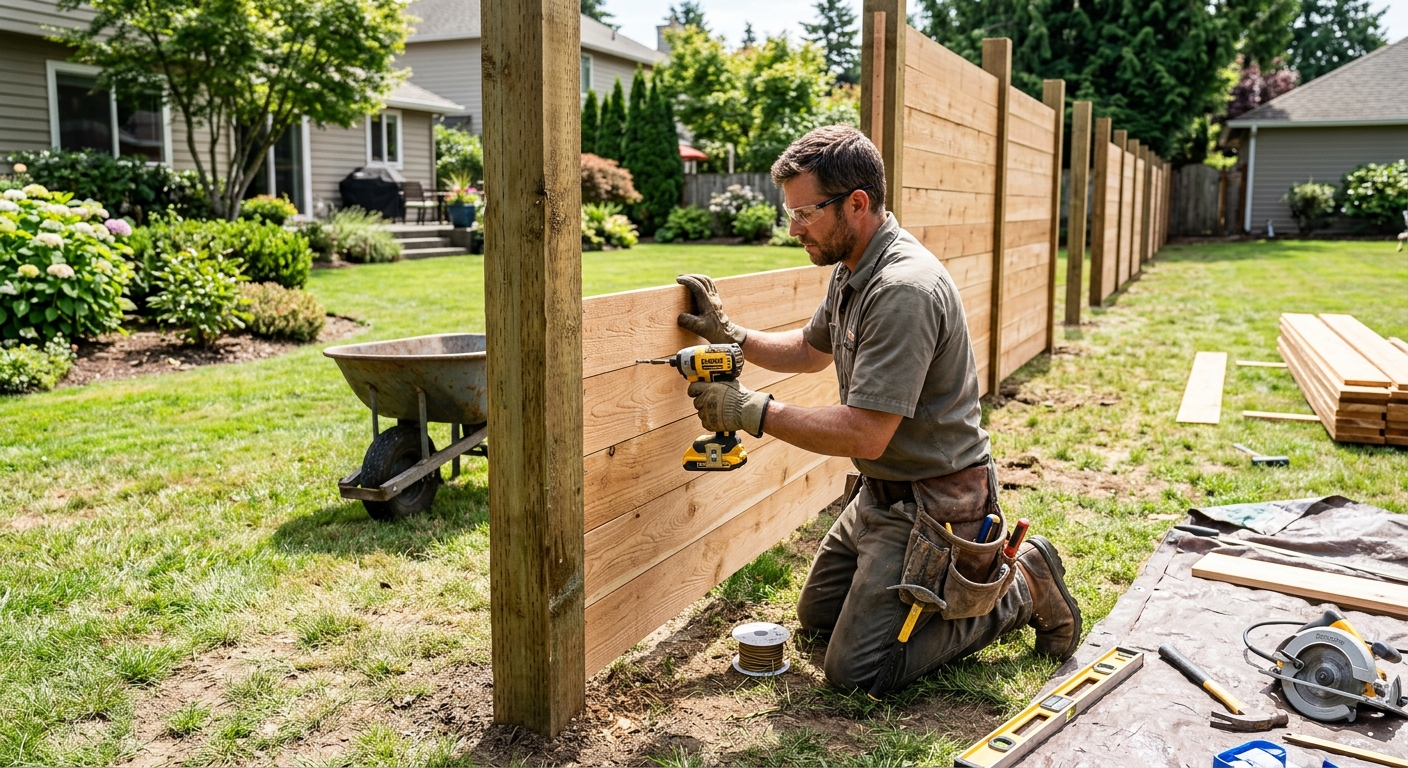
Fencing options and costs in Country Hills East
Country Hills East is a tight-knit community in the Toronto economic region, and it’s a place where homeowners tend to invest in outdoor upgrades that look good and hold up to winter. With a local population of 2,546 (Statistics Canada, 2021 Census), the number of properties is modest, but demand can still be steady because fencing is often renewed when homes change hands, when landscaping matures, or when families add pets and play spaces.
In terms of housing demand drivers, Country Hills East sits within the wider Toronto market where most yards are developed around existing lots and mature drainage patterns. That matters for your quote because frost-related post depth and wind-resistant panel layout are built into standard GTA workmanship. In southern Ontario, the design frost line is commonly treated as roughly 42"–48", so posts are typically set 3.5–4 feet deep for 6–8 ft privacy fences to reduce frost heave risk—usually with concrete-set footings. At the same time, local labour availability and common installation methods in the GTA help keep pricing competitive compared to more remote areas.
Trade demand is especially visible around the residential pockets where backyard privacy and pet safety are priorities—many homeowners in Country Hills East look for privacy fence upgrades along busy internal collector roads and near school-adjacent areas where sightlines are more noticeable. From there, the decision usually comes down to material and how much maintenance you’re willing to do year over year. Use the table below to compare the typical options side-by-side, then we’ll break down what swings your price in this part of Ontario.
| Material |
Lifespan |
Maintenance |
Privacy Rating |
Price per Linear Foot |
Price Range |
| Pressure-treated pine (standard wood) |
10–15 years |
Stain/seal every 2–3 years |
High (solid) |
$13 – $24 |
$65–$120 |
| Cedar (natural rot resistance) |
15–25 years |
Light stain every 2–4 years (as needed) |
High (solid) |
$18 – $32 |
$75–$130 |
| Vinyl / PVC (no-maintenance) |
20–30 years |
Occasional wash only |
High (solid styles) |
$16 – $34 |
$75–$130 |
| Chain-link (galvanized steel) |
15–25 years |
Occasional rinse; check tension |
Low (open) |
$10 – $18 |
$45–$85 |
| Aluminum ornamental |
25–40 years |
Wash yearly; inspect fittings |
Medium (ornamental) |
$18 – $38 |
$90–$160 |
| Composite / recycled material |
20–30 years |
Low; clean per manufacturer |
High (solid styles) |
$20 – $40 |
$90–$160 |
Prices are estimates only and vary by project scope, site access and material selection.
What affects the price of fencing in Country Hills East
Homeowners in Country Hills East often see fencing quotes vary by 30–50% even when the design looks “the same” on paper. The difference usually isn’t the fence panel—it’s the details: post depth and method, how many gates you’re adding, whether old fencing is removed, and what the installer must do to protect against Ontario winter movement. Toronto’s building practice also leans toward concrete-set posts for taller privacy fences, because the risk of frost heave is real and yard soils can be inconsistent.
In southern Ontario, crews typically plan post holes around 4–6 inches below the design frost depth so the base sits safely below the frost-affected zone; practically, that often means 1.5–2.0 m into the ground for many fence layouts. That has a direct cost impact: concrete, deeper excavations, longer posts, and more labour time. In cold Ontario and Alberta-like conditions, this pushes many projects toward the mid-to-higher end of the price bands—especially for wood privacy fences that often land in the $65–$120 range depending on height and gate count.
Wind exposure affects the build too. While the GTA doesn’t face the extreme open-field wind exposure of the Prairies, we still design for racking resistance: taller solid panels may need heavier posts (and tighter spacing) to prevent sag and uplift. On the other end, coastal BC’s wet, mild climate accelerates wood rot if maintenance is skipped—so builders there price and specify treatments differently; that’s not your situation here, but it’s one reason “national” quotes can come in mismatched. In Country Hills East, good hardware and properly set posts usually matter more than exotic materials.
Concrete examples: a straight 60 ft run with two walk gates may cost near the lower end, while the same total length with 8 ft privacy panels, three additional gates, and concrete-set posts can push you toward the higher end of the $75–$130 band for vinyl/PVC or cedar. Similarly, sloped yards that require stepped panels increase layout time and sometimes add extra rails—small changes in grading can add noticeable dollars.
| Price Factor |
Why It Matters |
Cost Impact |
| Fence length in linear feet |
Most materials (posts, rails, mesh/panels) scale directly with length. |
Largest driver of total cost; small measurement differences add up. |
| Post depth required |
Ontario frost conditions affect how deep posts must be set to prevent heaving. |
Deeper holes increase concrete, labour, and sometimes special post length. |
| Post setting method |
Concrete-set posts resist winter movement better than simple gravel pack. |
Concrete typically raises the budget versus gravel pack or driven methods. |
| Material choice |
Vinyl/PVC and cedar price differently; chain-link is more budget-friendly. |
Switching materials can move you between common bands like $45–$85 and $90–$160. |
| Gate count and type |
Gates add heavier framing, hinges/latches, and often more reinforcement posts. |
Each gate can add a major line-item cost compared with plain fence runs. |
| Grade and terrain |
Slopes require stepped or raked layouts; rails and panels aren’t “one size fits all”. |
Extra labour and layout time; potential add-on materials for alignment. |
| Old fence removal and disposal |
Demolition is labour-intensive and disposal fees can apply. |
Can meaningfully increase labour cost; depends on haul and condition. |
| Permit fees and survey / property line locate |
Boundary accuracy prevents encroachment disputes and rework. |
Costs vary by site; locate/survey can be a separate add-on. |
Permits & regulations in Ontario
In Ontario, fence height and location determine whether you may need a building permit. As a practical rule homeowners in Country Hills East should understand, fences above a height threshold—often around 2.0 m (6.5 ft) for the rear and roughly 1.0–1.2 m (3–4 ft) toward the front or corner—may require a building permit. Even when a permit is not required, your fence must still respect the lot’s property lines and any municipal setback rules.
Before digging any post holes, plan for utility locates. In Ontario, you can request marks through Ontario One Call so your contractor can avoid hitting underground services. Also, it’s smart to get a survey or confirm locate information for your property pins before installation; that’s how you avoid the most common “fence is on the neighbour’s land” disputes.
Shared fence rules are generally handled under Ontario line-fences principles. In practice, if a fence is shared (and it’s typically on or near the dividing line), ownership and maintenance responsibilities are determined by the specific situation and local facts.
What typically DOES require a permit: a high fence over the common rear/front thresholds, fences enclosing pools or restricted areas where applicable, and projects that include structural changes that trigger review.
What typically does NOT: replacing like-for-like fencing that stays within permitted height limits and doesn’t alter footprint or boundary placement. Final requirements vary by municipal bylaws, so confirm with your contractor and municipality.
To verify an Ontario-licensed contractor, ask for (1) their Ontario licence reference and business number if applicable via the online registry your contractor uses, (2) a current certificate of insurance showing general liability, (3) evidence of WSIB/WCB coverage (or an exemption letter where appropriate), and (4) a clearance letter if your municipality or site requires it. A reputable fencing contractor can provide these documents before you sign.
Choosing the right fence material for Country Hills East
Choosing a fence material in Country Hills East is really matching your priorities to Ontario’s winters: freeze–thaw cycles, snow loading on rails, and the need for properly set posts. Pressure-treated pine is the budget-friendly starting point, but it isn’t “set and forget.” In the GTA, expect staining every 2–3 years to prevent grey weathering and to keep water out of end grain. Cedar naturally resists rot better and often looks warmer, but it still benefits from periodic staining—think every few years rather than annually.
Vinyl/PVC is popular for low maintenance and a clean look, yet it’s not invincible. In extreme cold snaps, vinyl can become brittle if poor-quality product is installed, which is why quality rails and correct installation matter. Chain-link is the longest-life “function-first” option and usually costs less, but it offers limited privacy unless you add slats or plan planting. Aluminum ornamental gives you a rust-resistant, mid-range cost option with visibility, while composite/recycled materials target a balance of long life and low maintenance.
Post depth is where Toronto climate shows up in real dollars. With the frost line commonly treated around 42"–48", many privacy fence builds require posts set about 3.5–4 feet deep (often 1.5–2.0 m) and concrete-set footings. That means taller solid fences—wood or vinyl—tend to land toward the higher part of the wood and vinyl bands, rather than the very bottom. For instance, a standard 6 ft pressure-treated privacy run may land in the $65–$120 range, but upgrading to vinyl/PVC for the same layout often justifies the difference within the $75–$130 band when you value fewer maintenance visits over the next 15–25+ years.
Wind and snow load considerations are still relevant in the Toronto market: even without Prairies-style exposure, taller solid fences can rack. That’s why heavier posts and correct spacing—plus tight hardware—are worth paying for in the quote.
| Material |
Cold Tolerance |
Lifespan |
Annual Maintenance |
Best For |
Price Band |
| Pressure-treated pine |
Good with proper staining and correct post setting |
10–15 years |
Inspect yearly; stain typically every 2–3 years |
Lower upfront cost and traditional look |
$65–$120 |
| Cedar |
Good; performs well if end grain stays protected |
15–25 years |
Inspect yearly; stain every 2–4 years (as needed) |
Better appearance and improved rot resistance |
$75–$130 |
| Vinyl / PVC |
Very good if installed with correct spacing and quality materials |
20–30 years |
Wash as needed (often 0–1 times per year) |
Low maintenance and long-term appearance |
$75–$130 |
| Chain-link |
Excellent; galvanized steel handles winter well |
15–25 years |
Inspect tension; rinse occasionally |
Security, pets, and budget-friendly perimeter fencing |
$45–$85 |
| Aluminum ornamental |
Excellent; no rust in Ontario winters |
25–40 years |
Wash yearly; check fittings |
Front yards and decorative lines |
$90–$160 |
| Composite / recycled |
Very good; engineered for freeze–thaw durability |
20–30 years |
Low; follow manufacturer cleaning guidance |
Low upkeep with a solid-privacy look |
$90–$160 |
How to choose a fencing contractor in Country Hills East
Choosing the right fencing contractor in Country Hills East starts with verifying proof—not promises. For Ontario work, ask for their liability insurance certificate (general liability with adequate limits for property damage and bodily injury). Also confirm WSIB coverage (or WCB equivalent) for their workforce; a contractor should provide a clearance letter or documentation showing active coverage, or a valid exemption where applicable. If they can’t produce insurance and coverage documents promptly, that’s a strong signal to move on.
Next, request 2–3 itemised written quotes—not just one lump-sum number. A good quote breaks labour and materials down by fence type: posts and rails (including post size), concrete quantity/setting method, panel/mesh cost, gate framing and hardware, and any demolition/disposal. Read the exclusions carefully: is the permit pull included (if required), is disposal of old material included, and are utility locate calls accounted for? If these aren’t listed, you may pay later.
Warranty matters too. Ask for (1) a workmanship warranty length and what it covers (for example, post movement and hardware failure due to installation), (2) the manufacturer/product warranty for materials, and (3) whether the warranty transfers if you sell your home.
Payment schedule should be conservative. Never pay more than about 10–15% upfront for materials and mobilization; hold back the remainder until the job is complete and cleaned up. Get your start date and completion estimate in writing, including a weather contingency plan.
- Confirm they specify concrete-set posts for tall privacy fences in winter-prone Ontario soil.
- Ask for itemised labour/materials (posts, rails, panels/mesh, fasteners, gates, and concrete).
- Verify liability insurance (certificate provided before work begins).
- Verify WSIB/WCB coverage and request a clearance letter if available.
- Require utility locate documentation or scheduling through Ontario One Call.
- Check whether disposal of old fencing is included or billed separately.
- Ensure gate hardware is listed: hinges, latches, and any reinforcement.
- Confirm the quote includes measurements (linear feet) and how they calculated fence length.
- Ask how they handle slopes (stepped vs. raked) and whether the layout is shown in writing.
- Request a workmanship warranty in writing and clarify what counts as a defect.
- Agree on schedule in writing (start date, estimated completion, weather limits).
- Set payment terms in writing with a holdback until final walkthrough.
Red flags I see in Country Hills East include: vague quotes that omit post depth and setting method, refusing to provide insurance/coverage proof, starting work before utility locates are scheduled, claiming “no permit required” without checking height/location, and asking for large upfront payments (more than 10–15%) without a signed contract and material list.
Frequently asked questions — fencing in Country Hills East
How much does a fence cost in Country Hills East?
In Country Hills East and the Toronto region, pricing depends mostly on fence length, height, gate count, and—crucially—how posts are set for freeze–thaw. As a baseline, wood privacy installs often land in the $65–$120 range, while vinyl/PVC typically sits in the $75–$130 band for comparable layouts. Chain-link is usually the lowest-cost perimeter option (commonly $45–$85), and aluminum ornamental often starts higher (often $90–$160). If your yard needs more excavation or multiple gates, your quote can move toward the upper end. For context on local demand, Country Hills East has a small population (Statistics Canada, 2021 Census), so contractors may schedule projects tightly—timing can influence your final cost.
How deep should fence posts be for Country Hills East's frost?
For fences in southern Ontario like Country Hills East, a common best-practice approach is to set posts below the frost-affected zone. With the design frost line often treated as roughly 42"–48", most installs for 6–8 ft privacy fences aim for about 3.5–4 feet deep post settings to reduce frost heave. That usually corresponds to around 1.5–2.0 m into the ground, and it’s why contractors often recommend concrete-set footings rather than simple driven posts. Deeper holes increase material and labour, but they’re what keep panels from shifting after freeze–thaw cycles. Your final depth can vary based on soil conditions and local layout, so confirm the setting method and hole depth in the written scope.
Wood vs vinyl vs aluminum fence — which is best?
“Best” depends on how you balance privacy, maintenance, and budget in Ontario winters. Wood (pressure-treated pine) gives you the lowest upfront start in the $65–$120 range, but it typically needs staining every 2–3 years to stay looking good. Cedar costs more but resists rot better; many projects land closer to the $75–$130 band and still benefit from periodic staining. Vinyl/PVC is often the low-maintenance choice within the $75–$130 band, though quality installation matters in extreme cold. Aluminum ornamental (often $90–$160) is excellent for rust resistance and front-yard aesthetics, but it doesn’t deliver the same privacy as solid wood/vinyl. If you’re choosing for backyard privacy, wood/cedar or vinyl generally fits best.
Do I need a permit to build a fence in Ontario?
In Ontario, permits may be required when fence height exceeds common thresholds—often around 2.0 m (6.5 ft) at the rear and roughly 1.0–1.2 m (3–4 ft) toward the front or corner—depending on the specific municipal bylaw. Even when a permit isn’t required, your fence must respect property lines and local setback rules. Before digging, you should also ensure utility locates are done through Ontario One Call. A survey or property pin locate is strongly recommended to prevent encroachment disputes. The safest way for a homeowner in Country Hills East is to ask your contractor to confirm whether a permit applies based on your fence location and final height, and to include any permit work in the itemised scope.
How long does a wood fence last in Country Hills East?
A wood fence’s lifespan in Country Hills East usually depends on the wood type, how well posts are set, and whether it’s maintained. Pressure-treated pine commonly lasts about 10–15 years when the fence is installed with proper post depth (often concrete-set for winter stability) and you stain it every 2–3 years to slow weathering. Cedar can last longer—often around 15–25 years—because of better natural rot resistance, though it still needs periodic maintenance. If a wood fence uses shallow post settings or skips concrete in frost-prone conditions, it may start leaning or rack sooner after several winters. In the Toronto economic region, proper installation is the difference between “looks great for a few years” and “still solid a decade later.”
Who owns and maintains a shared fence?
For a shared fence in Ontario, ownership and maintenance are typically based on where the fence sits relative to the property line and on the line-fences principles that apply in the province. If the fence is truly on (or directly associated with) the boundary, responsibilities can be shared, but the exact arrangement depends on the situation—age of the fence, who installed it, and whether the fence was treated as a boundary structure by the prior owners. Practically, many disagreements happen when a fence is assumed to be shared but is actually on one side of a boundary. That’s why confirming property pins/locates matters before you build or replace. In Country Hills East, if you’re planning a replacement, talk to neighbours early and ask for clarity on costs, maintenance responsibilities, and any written agreement you can both understand.