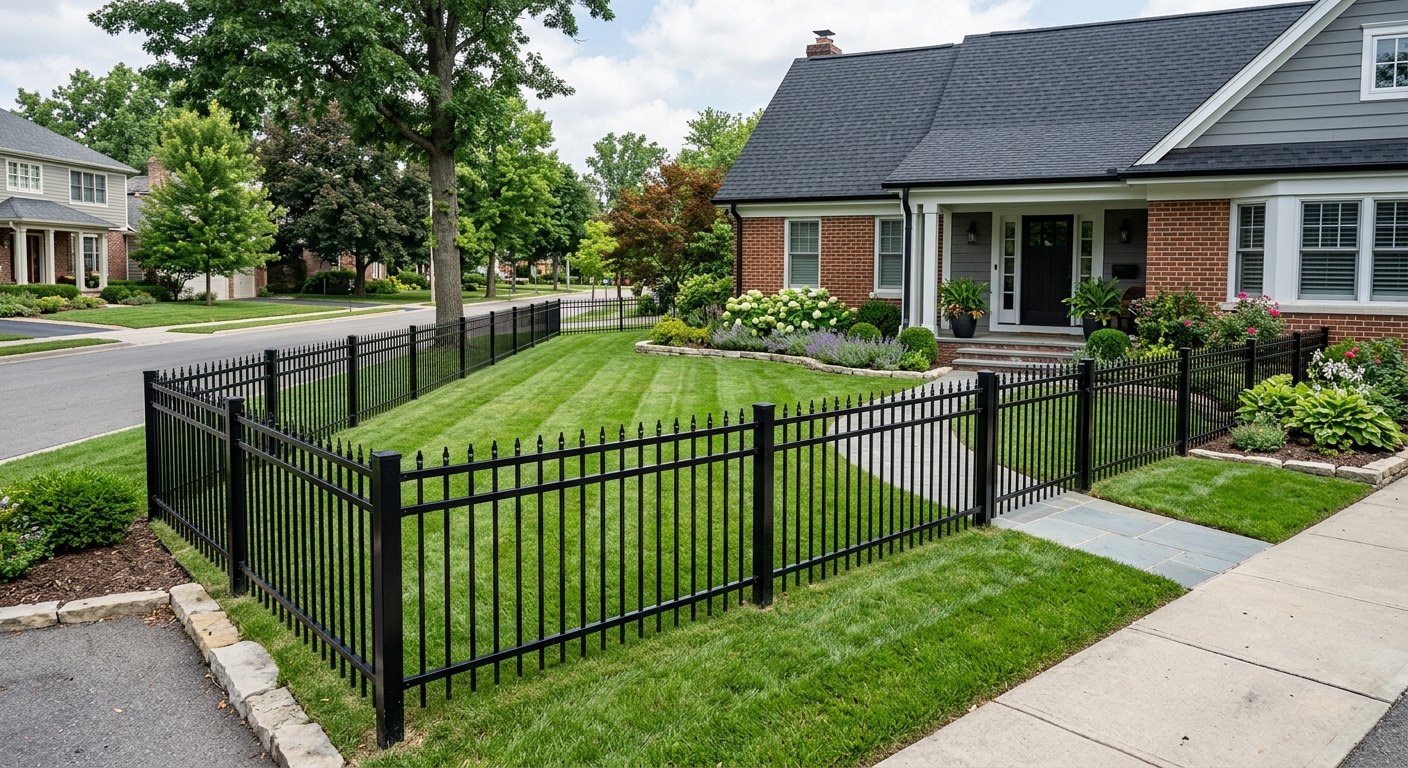
Fencing options and costs in Leamington
Leamington is where homeowners tend to think about fencing as both curb appeal and practical protection—especially when you’re dealing with large backyards, shared property lines, and the cycle of freeze–thaw through the Windsor–Sarnia corridor. With 29,680 residents and about 7,305 homeowner households (69.3% of households own), demand is steady, and every single-detached property is a potential fence project. Nearly two-thirds of dwellings are single-detached (64.6%), so you’ll often see replacement and upgrade work rather than only small repairs (Statistics Canada, 2021 Census).
Pricing in Leamington is shaped by southern Ontario’s frost-line conditions. In practice, that means posts are typically set to at least 3 ft deep (and often deeper) and structural footings are installed below the frost line to prevent heaving. That extra digging, concrete, and longer materials add cost, particularly on tight lots or areas with clay-heavy soil. Meanwhile, even though we’re not as wind-exposed as open Prairie regions, gusts can be noticeable near Lake Erie/Lake Huron influence and along farm-field edges. On those sites, contractors may tighten post spacing and choose more wind-relieving styles (like board-on-board, aluminum, or chain-link) so panels don’t act like a sail.
In Leamington, trade demand is especially strong around older established areas like the downtown and adjacent residential blocks, where many homes pre-date 1981 and fences often need full rebuilds rather than patch jobs. If you’re planning your next fence project, the table below summarizes common materials so you can compare realistic ranges per linear foot and privacy level before we talk specifics like gates, soil, and post depth.
| Material |
Lifespan |
Maintenance |
Privacy Rating |
Price per Linear Foot |
| Pressure-treated pine (standard wood) |
10–15 years (typical) |
Seal/stain every 2–3 years |
6/10 (board-to-board coverage varies) |
$45–$80 |
| Cedar (natural rot resistance) |
15–25 years |
Stain or seal every 2–4 years |
7/10 (solid boards improve blocking) |
$60–$95 |
| Vinyl / PVC (no-maintenance) |
20–30 years |
Rinse as needed; occasional cleaning |
8/10 (solid panels are available) |
$65–$110 |
| Chain-link (galvanized steel) |
25–35 years |
Minimal; rinse occasionally |
2/10 (low privacy unless screened) |
$30–$55 |
| Aluminum ornamental |
20–30+ years |
Minimal; wash occasionally |
4/10 (decorative spacing) |
$70–$130 |
| Composite / recycled material |
20–30 years |
Low; periodic cleaning |
8/10 (privacy styles available) |
$85–$130 |
Prices are estimates only and vary by project scope, site access and material selection.
What affects the price of fencing in Leamington
In Leamington and the broader Windsor–Sarnia corridor, quotes for the “same” fence can swing by 30–50% because the real cost drivers—post depth, soil conditions, wind loading, and how many gates you need—aren’t always visible in a quick look. Two homeowners can pick the same height and material, but one site might have clay that requires more excavation and concrete, while another has sand where footing holes are easier. Add tight access (wheelbarrow-only areas, long pulls from the street) and the labour rate becomes a bigger share of the total.
Frost-line depth sets how deep posts must be set to prevent heaving. In cold Ontario, posts typically go roughly 4–6 inches below the design frost depth; in practical terms, that often means 1.5–2.0 m of embedment, which increases digging time, concrete volume, and the need for longer posts. That’s why wood and vinyl jobs in exposed stretches near open fields often land closer to the upper end of their local bands.
Wind exposure also matters. Where gusts are strong, contractors tighten post spacing and use heavier rails/hardware so the fence doesn’t rack. And while chain-link doesn’t offer privacy, its open structure can be more wind-tolerant and often sits nearer the lower end of the $30–$55 chain-link band. By contrast, solid privacy panels (especially taller) can require additional reinforcement, pushing costs toward $65–$110 for vinyl/PVC depending on footing demands.
Concrete examples from Leamington: (1) A rear-yard replacement in older neighbourhoods (many homes built before 1981) often includes old fence removal and disposal, adding labour and dump fees. (2) Clay-heavy backyards can require more concrete-set posts and careful alignment to avoid post wobble—raising the price even when fence length is similar. (3) Fences near pools or where you need a double drive-through gate add hinges, latches, and heavier posts, which also increases footing size and hardware cost.
| Price Factor |
Why It Matters |
Cost Impact |
| Fence length in linear feet |
Most materials and labour scale directly with length. |
Highest impact; can dominate the quote. |
| Post depth required |
Frost line determines embedment and hole depth. |
Deeper posts increase digging and concrete. |
| Post setting method |
Concrete vs. gravel pack vs. driven posts affects stability. |
Concrete typically adds labour and material cost. |
| Material choice |
Different products have different rail systems and hardware. |
Switching wood/cedar to vinyl or aluminum shifts the budget band. |
| Gate count and type |
Gates require heavier framing and more hardware. |
Every gate adds structural posts and installed time. |
| Grade and terrain |
Slopes require stepped or raked panels and extra layout time. |
May add materials waste and labour hours. |
| Old fence removal and disposal |
Salvage vs. full teardown changes handling and dump costs. |
Often increases the total meaningfully. |
| Permit fees and survey / property line locate |
Documentation is sometimes required for compliance and accuracy. |
Can add direct fees and professional costs. |
Permits & regulations in Ontario
In Ontario, fence permit requirements depend on height and location. As a practical rule, fences above a height threshold—often around 2.0 m (6.5 ft) at the rear and about 1.0–1.2 m (3–4 ft) at the front or corners—can require a building permit in many municipalities. The exact threshold and application steps can vary by local bylaws, but the key takeaway for Leamington homeowners is: if you’re planning a tall privacy fence, especially near a front lot line, verify the permitting requirement before you order materials.
Also, all fences must be built within the property line and respect municipal setbacks. Before digging any post hole, you must call for utility locates so you don’t damage buried services (Ontario One Call). If there’s any chance your old fence is misaligned or you don’t have clear pins, get a survey or locate your property pins before installing; it’s the most common way disputes are born.
Shared fence ownership and line-fence responsibilities are governed by Ontario line-fences legislation, so if you’re building on or near a boundary, clarify who maintains it and how costs are handled.
Work that typically does require a permit: installing or replacing fences over common height thresholds, and any fence associated with special site conditions that your municipality flags. Work that typically does not: like-for-like replacements within standard height limits, and repairs that don’t change the overall height/location—still confirm with your local bylaw.
To verify a contractor: (1) check they hold an Ontario business registration/appropriate licensing for the work they advertise (use provincial/national business registries as applicable), (2) request a certificate of insurance and confirm liability coverage is current and includes fencing work, and (3) ask for WSIB/WCB coverage documentation. Look for clearance letters where applicable and ensure the certificate lists the correct legal name and addresses for your project.
Choosing the right fence material for Leamington
Choosing a fence material in Leamington is mostly about matching your priorities—privacy, low maintenance, and long-term lifespan—to how our winters and summers actually behave. Pressure-treated pine is the budget-friendly starting point, but it needs staining/sealing every 2–3 years to prevent grey weathering and protect the boards in freeze–thaw cycles. Cedar has better natural rot resistance and often looks great longer, yet it still benefits from maintenance to keep colour and surface integrity. Vinyl/PVC is popular because it’s low maintenance, but extreme cold snaps and impact can lead to cracking if panels aren’t installed with the right expansion allowances and hardware. Chain-link is the longest-life low-cost option, but it won’t give you privacy unless you add slats, lattice, or greenery.
Aluminum ornamental offers a strong “looks-clean” option with no rust and good longevity, though it’s usually mid-range on privacy because it’s spaced for airflow. For composite/recycled products, you get a privacy-style look with low upkeep, but you should still expect some expansion considerations in Ontario temperature swings.
In Windsor–Sarnia conditions, post depth is part of every material decision. We design around the local frost line, typically embedding posts to prevent heaving—often aligning with the 1.2 m (roughly 4 ft) southern Ontario frost-line concept and then setting below that depth. On many Leamington sites, that means concrete-set posts for structural stability, not just a quick post-in-the-ground approach.
Here’s where the dollar difference can be justified: if a cedar privacy fence is running closer to the higher end of wood options while vinyl is nearer $65–$110, vinyl may win if you want fewer maintenance visits for the next 10–20 years. But if you’re comfortable with regular staining, cedar can be a good “balance” choice—often delivering a nicer finish than pressure-treated pine. Weather and soil determine footing difficulty, which is why even materials with similar per-foot pricing can land differently once we account for frost-depth embedment and the amount of concrete.
| Material |
Cold Tolerance |
Lifespan |
Annual Maintenance |
Best For |
Price Band |
| Pressure-treated pine |
Good (with proper sealing) |
10–15 years |
2–3 year staining cycle |
Lower upfront cost |
$45–$80 |
| Cedar |
Good |
15–25 years |
Stain/seal every 2–4 years |
Appearance + rot resistance |
$60–$95 |
| Vinyl / PVC |
Good (avoid impact; allow for expansion) |
20–30 years |
Minimal; rinse/clean as needed |
Low maintenance privacy |
$65–$110 |
| Chain-link |
Very good |
25–35 years |
Minimal; occasional wash |
Security + airflow |
$30–$55 |
| Aluminum ornamental |
Excellent |
20–30+ years |
Minimal; wash occasionally |
Curb appeal with durability |
$70–$130 |
| Composite / recycled |
Good (proper installs matter) |
20–30 years |
Low; periodic cleaning |
Privacy with less upkeep |
$85–$130 |
How to choose a fencing contractor in Leamington
To choose a fencing contractor in Leamington, start with verification, then move to detailed quoting. In Ontario, reputable fencing crews should provide proof of liability insurance and confirm their workers are covered under WSIB/WCB (as applicable). How to check: ask for a current certificate of insurance (make sure it’s in the company’s legal name and includes fencing/contract work) and request WSIB/WCB clearance or coverage documentation. Don’t accept “we’re insured” without paperwork—if there’s an incident on-site, you want your project protected.
Next, get 2–3 itemised written quotes. The best quotes separate labour, materials, post depth/footing approach (concrete set vs. alternatives), gate framing, hardware, and disposal. Avoid lump-sum offers that don’t describe how posts will be embedded below frost depth. Also ask whether permits are handled by the contractor or whether you’re responsible for pulling them.
Read the scope line by line: what’s excluded (rock removal, tree trimming, hauling, weekend work, site restoration), whether old fence removal is included, and whether property line locate/survey costs are part of the price. For warranty, confirm workmanship coverage length (and what “defects” means), product/manufacturer warranty terms, and whether the warranty transfers to you if you sell the home.
Payment schedule matters: never pay more than 10–15% upfront, and keep a holdback until the job is fully complete and cleaned up. Get the start date and completion timeline in writing so winter conditions and material lead times don’t turn into delays you can’t control.
- Request certificate of insurance and confirm the legal company name.
- Verify WSIB/WCB coverage with clearance documentation.
- Ask for an itemised quote (posts, rails, panels, gates, concrete/footings, hardware).
- Confirm post embedment approach supports southern Ontario frost protection.
- Ensure gate hardware is listed (latches, hinges, closures) and that posts are sized for gates.
- Ask whether old fence removal and disposal are included.
- Check what’s excluded for yard restoration (topsoil, sod/grass repair, grading).
- Confirm utility locate responsibility and documentation (Ontario One Call locates).
- Get warranty details in writing (workmanship + product warranty terms).
- Agree on a payment schedule with a small deposit and holdback until final walkthrough.
- Confirm start date and expected completion timeline in the contract.
- Ask for photos or references from similar Leamington-style backyards (gate-heavy, clay soils, or old fence replacements).
Red flags to watch for: (1) they won’t show insurance/WSIB/WCB documentation, (2) they quote “posts in the ground” with no frost-depth/footing plan, (3) they provide only a vague lump sum with no gate/hardware breakdown, (4) they avoid questions about permits and property line location, and (5) they demand a large upfront payment (well beyond 10–15%) without a signed scope.
Frequently asked questions — fencing in Leamington
What is the most weather-resistant fence for Leamington's climate?
For Leamington’s freeze–thaw winters and wind/gusts around open-field edges, the most weather-resistant choices are typically chain-link and aluminum. Chain-link is galvanized and handles moisture swings well; when properly installed with frost-safe post embedment, it can last 25–35 years with minimal upkeep. Aluminum is also durable (no rust) and stays rigid through seasonal temperature changes. If you need privacy, vinyl/PVC can be very resilient and low-maintenance, but it should be installed with correct expansion allowances to reduce cracking risk in extreme cold. In most projects, longevity comes down to proper post depth and footing quality as much as the material itself, especially when posts must be set below southern Ontario’s frost line.
How do I prevent wood fence rot in Leamington?
Wood rot prevention in Leamington starts at the bottom: ensure posts are set with proper embedment and drainage so water doesn’t hold around the base. For typical installs, we design posts below frost depth and often use concrete footings where soil conditions call for it, then keep the timber components protected from direct soil contact. Use pressure-treated lumber for budget projects and cedar where you want better natural resistance and appearance. Don’t skip sealing/staining—pressure-treated wood usually needs staining every 2–3 years, while cedar often benefits from a 2–4 year recoat to preserve surface integrity. Also correct panel sag early; standing water forms quickly on misaligned sections. If your yard has clay-heavy soil, you may need more precise spacing and footing work to prevent long-term moisture traps.
What is the cost per linear foot for fencing in Leamington?
In Leamington, typical installed fencing pricing usually falls within these per-foot bands depending on material and site conditions: chain-link commonly comes in around $30–$55 per linear foot, while vinyl/PVC often ranges about $65–$110 per linear foot. Wood typically sits around $45–$80 for pressure-treated options, with cedar generally higher than the standard wood band. Your final number can move up or down because frost-depth post embedment below the frost line increases digging and concrete, and gates add structural posts and hardware. If you’re replacing an old fence, removal and disposal can also increase the overall per-foot effective cost even when fence length stays the same. For the most accurate figure, ask for an itemised quote that includes footing method and gate hardware.
Should I repair or replace my old fence in Leamington?
Repair makes sense when the posts are solid, the rails aren’t twisted, and rot is limited to a few boards. In Leamington, many older fences fail at the base—posts that loosen from freeze–thaw movement or moisture trapped near soil. If you see leaning sections, widespread board rot, repeated fastening failures, or post movement (even if the fence “looks fine” from a distance), replacement is usually the better value over 5–10 years. Also consider whether the old fence was installed with shallow embedment; if it wasn’t set below southern Ontario’s frost line, it may keep shifting. When the fence is near pools or where security is critical, replacing with properly set posts and correct gate hardware can be the safest long-term solution. A contractor should assess post stability, not just surface board condition, before recommending repair.
How do I handle a fence dispute with a neighbour in Ontario?
If you think your fence is on the wrong line or a neighbour disputes ownership/maintenance, pause and verify facts before emotions. First, locate property pins or get a survey to confirm the boundary; this matters because older fences around Leamington neighbourhoods were sometimes built without clear referencing. Ontario’s line-fences rules help govern shared fencing responsibilities, but the practical step is still to establish where the fence belongs. Next, document everything—photos, any past correspondence, and the contract scope if you’re hiring a contractor. Avoid moving or removing parts of the fence until you know the boundary and your municipality’s requirements. If you’re installing a new fence, ask your contractor to reference the verified boundary location. If it becomes formal, Ontario’s dispute processes may require mediation or additional legal steps, so keep your records organised.
What fence style offers the best wind resistance in Leamington?
For Leamington, the best wind-resistance tends to come from designs that reduce “sail” effect. Chain-link and other open styles typically handle gusts well because wind passes through. If you want privacy, board-on-board or partially open designs can perform better than solid panels—especially in areas with more exposure near open farm fields or where the wind funnels between properties. Structurally, the wind outcome depends heavily on post embedment below the frost line and the post/rail spacing. When panels are tall and solid, we often upsize posts and use tighter spacing so the fence doesn’t rack. Gates need extra bracing too, because they act like weak points under wind load. For homeowners near Lake Erie/Huron influence, choosing an open or wind-relieving layout often reduces movement over the years.