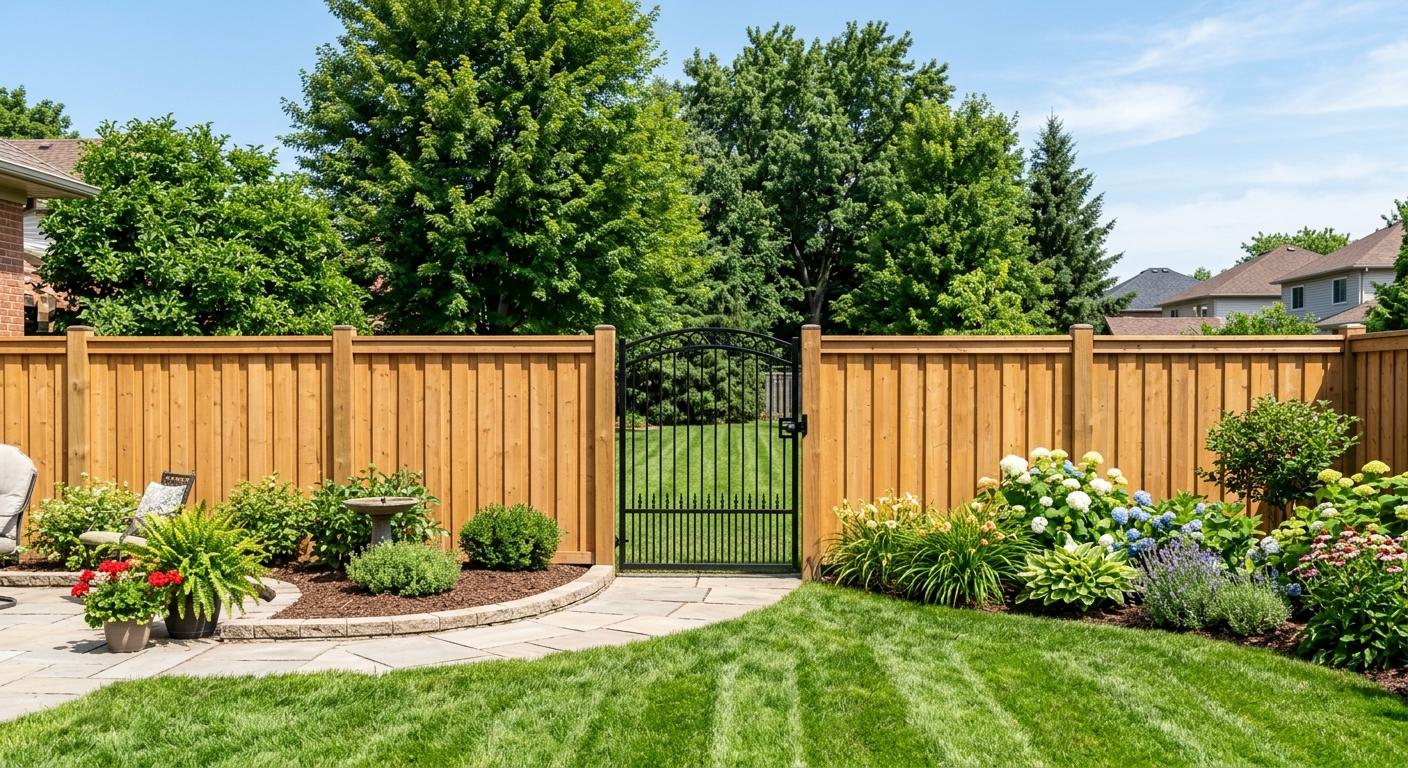
Fencing options and costs in Smooth Rock Falls
Smooth Rock Falls is a small, homeowner-led community, and that matters because most fence projects start at the property line of a single-detached home. In 2021, 80.2% of local households owned their homes, and 86.2% of dwellings are single-detached—each one is a potential backyard, side-yard, or driveway fencing upgrade. The housing stock is also quite established: 87.1% of homes were built before 1981, which often means older lots with mature trees, uneven ground, and occasional legacy fencing that needs removal or re-alignment.
Pricing here is shaped by Northeast Ontario winter conditions. Cold snaps and freeze–thaw cycles increase the importance of proper post depth and concrete-setting, while wet spring conditions can temporarily limit access with machinery. Even when the work is straightforward, quality installs require longer excavations, more materials for bracing, and careful grading so panels don’t rack in wind.
In Smooth Rock Falls, this trade is especially active around the residential pockets near downtown services and along the main local streets where side-yard fences help define property boundaries and keep pets contained. Contractors typically see more calls there for gates and fence line repairs—often tied to older property layouts—before moving on to backyard privacy builds.
Below is a practical comparison of common fence types you’ll see quoted in Smooth Rock Falls, with typical installed price bands to help you benchmark bids.
| Material |
Lifespan |
Maintenance |
Privacy Rating |
Price per Linear Foot |
| Pressure-treated pine (standard wood) |
10–15 years |
Stain/seal every 2–3 years |
High (solid boards) |
$80–$130 |
| Cedar (natural rot resistance) |
15–20 years |
Re-stain/brighten every 2–4 years |
High (solid boards) |
$95–$140 |
| Vinyl / PVC (no-maintenance) |
20–30 years |
Rinse as needed |
High (solid panels) |
$85–$140 |
| Chain-link (galvanized steel) |
20–35 years |
Occasional rust-check and tightening |
Low (open mesh) |
$55–$90 |
| Aluminum ornamental |
25–40 years |
Wash and spot-coat if needed |
Low to Medium (decorative pickets) |
$95–$150 |
| Composite / recycled material |
20–30 years |
Minimal; periodic cleaning |
High (solid privacy styles) |
$110–$160 |
Prices are estimates only and vary by project scope, site access and material selection.
What affects the price of fencing in Smooth Rock Falls
In Smooth Rock Falls, it’s common to see fencing quotes for the same linear footage land 30–50% apart across the Northeast Ontario market. The difference usually isn’t the fence “type” so much as the install design: post depth, footing method, site prep, and how much steel bracing or extra hardware is required to keep the line straight through freeze–thaw and spring settlement.
Post depth is the foundation of cost. Frost line depth sets how deep posts must be set—typically about 4–6 inches below the design frost depth—to reduce heaving. In cold Ontario and Alberta regions, that often means posts going roughly 1.5–2.0 m into the ground. When you increase hole depth, you also increase labour time, require longer posts, and usually need more concrete for a stable base, which pushes pressure-treated and cedar privacy fences toward the higher end of the $80–$130 and $95–$140 bands.
Wind exposure also matters for board-to-board solid fences: tighter post spacing and sturdier rails help prevent racking. In sheltered yards you might stay mid-band, but in more open runs along wider lots, I often spec stronger framing and heavier gates, which nudges projects toward the upper vinyl / PVC or cedar ranges.
Concrete examples from jobs I see around town: (1) removing an old fence with buried posts can add labour and disposal costs, lifting the final budget by several hundred dollars on average; (2) sloped backyards often require stepped panels, which increases material waste and alignment time. If you’re building a new privacy line on uneven ground, the difference between a mid-band wood install and a higher-spec vinyl install can be justified when you’re paying for extra rigidity and decades of low maintenance rather than repeated re-staining.
| Price Factor |
Why It Matters |
Cost Impact |
| Fence length in linear feet |
The more footage, the more posts, rails, and fastening required |
Largest driver; often sets the total within your $80–$130 (wood) or $55–$90 (chain-link) range |
| Post depth required |
Frost protection governs post length and excavation depth |
Deep frost posts push costs upward due to extra concrete and longer materials |
| Post setting method |
Concrete setting versus gravel pack versus driven posts changes labour and stability |
Concrete footings generally cost more but reduce seasonal movement |
| Material choice |
Vinyl/PVC and aluminum have higher material costs and specific hardware needs |
Often moves you from $80–$130 (standard wood) up toward $95–$150 (metal) or $85–$140 (vinyl) |
| Gate count and type |
Drive-through (double) gates need heavier framing, hinges and latches |
Can add a large fixed cost per gate even if fence length stays the same |
| Grade and terrain |
Slopes require stepping, racking, or redesign of panel height |
More layout time and material trimming/waste |
| Old fence removal and disposal |
Existing posts may be concrete-set and harder to extract |
Added labour and dump fees; can noticeably increase totals |
| Permit fees and survey / property line locate |
Verifying lines and compliance avoids rework and disputes |
May add incremental costs but prevents expensive corrections later |
Permits & regulations in Ontario
In Ontario, the fence height that triggers a building permit can vary by municipality, but a common threshold homeowners run into is around 2.0 m (6.5 ft) for rear yards and about 1.0–1.2 m (3–4 ft) for front yards or corners. Even when a permit is not required, fences must still respect property lines and municipal setback bylaws. Because Smooth Rock Falls is served through municipal rules and planning practices, I strongly recommend confirming the exact height limits and setback distances before you order materials.
Before digging any post holes, call for utility locates through Ontario One Call. This is non-negotiable for safety and to avoid hitting buried services. Also, obtain a survey or locate your property pins (if available) so you don’t encroach—post locations are the hard part to fix after concrete sets.
Shared fence ownership and maintenance obligations typically follow provincial line-fences legislation and any applicable local rules, so if you’re tying into a neighbour’s line, decide in writing who pays for what (repairs, replacement, or upgrades).
Permits: fences over the local height threshold (often around the 2.0 m rear-yard mark) generally require a building permit, especially for corner visibility and certain boundary conditions. Typically no permit: most short boundary fences and standard side-yard enclosures that stay under the local height threshold and meet setbacks, provided you comply with property line rules.
To verify an Ontario contractor: check their licence registration (where applicable), request a certificate of insurance for general liability, and confirm WSIB/WCB coverage. Ask for a clearance letter or proof document before work begins; a reputable fence crew will provide it without pressure.
Choosing the right fence material for Smooth Rock Falls
Choosing a fence material in Smooth Rock Falls is really about matching your priorities to winter reality: cold ground, freeze–thaw, and wind-driven snow that can batter posts and rails. Pressure-treated pine is usually the budget-friendly choice, but it needs staining or sealing every 2–3 years to prevent grey weathering and protect the surface. Cedar offers better natural rot resistance and looks great, but it still benefits from regular maintenance to keep it evenly coloured and to reduce surface cracking over time.
Vinyl/PVC is popular for low upkeep—no routine staining—and it typically ranks high for homeowners who want to stop maintaining rails and pickets. However, vinyl can become brittle in extreme cold if the system isn’t designed for it, so you want the right post spacing and hardware. Chain-link remains the longest-life and most affordable option per foot, but it won’t give privacy unless you add privacy slats or another treatment. Aluminum ornamental is rust-resistant and attractive, but it also provides limited privacy.
For frost-protection, the material choice doesn’t change the physics: posts still need to be set below the local frost depth, often about 4–6 inches beyond the design frost depth, to reduce heaving. Concrete-set posts are commonly the most reliable in freeze–thaw areas because they stabilize the base against seasonal movement. Where yards are open to wind, I often recommend stronger rails and closer spacing—especially for solid privacy panels that act like sails during gusts.
A practical example: if you compare a basic pressure-treated pine privacy fence around $80–$130 versus cedar closer to $95–$140, the extra cost is most justified when you want a longer-looking service life and can commit to straightforward re-staining schedules. If you’re aiming for “install and forget,” vinyl/PVC in the $85–$140 range can be a better fit despite the higher upfront material cost.
| Material |
Cold Tolerance |
Lifespan |
Annual Maintenance |
Best For |
Price Band |
| Pressure-treated pine |
Good when posts are set correctly |
10–15 years |
Light prep/cleaning; stain every 2–3 years |
Budget privacy with acceptable maintenance |
$80–$130 |
| Cedar |
Good; handles cold well with proper coating |
15–20 years |
Stain/brighten every 2–4 years |
Appearance and natural rot resistance |
$95–$140 |
| Vinyl / PVC |
Good with correct hardware and spacing |
20–30 years |
Rinse and inspect fasteners |
Low maintenance and consistent look |
$85–$140 |
| Chain-link |
Excellent; steel is stable in freeze–thaw |
20–35 years |
Tighten/inspect; occasional coating touch-ups |
Security and pet containment |
$55–$90 |
| Aluminum ornamental |
Excellent for cold climates |
25–40 years |
Wash; touch-up if scratched |
Decorative look with durability |
$95–$150 |
| Composite / recycled material |
Good; typically stable with proper installation |
20–30 years |
Minimal cleaning; inspect for fastener issues |
Privacy with reduced wood-like upkeep |
$110–$160 |
How to choose a fencing contractor in Smooth Rock Falls
Start by verifying credentials that protect you in Ontario. Ask for their insurance certificate (general liability) and confirm WSIB/WCB coverage—some contractors use subcontractors, so you want coverage that matches who will actually be on site. How to check: request documents before you sign, verify the certificate is current, and ensure the name matches the company on the quote. If you’re offered only a verbal assurance, that’s a serious gap.
Then get 2–3 itemised written quotes. You want a breakdown that separates materials (posts, rails, fence panels, hardware) and labour (layout, excavation, post setting, fencing install, gate build, and any removal). A fair quote also specifies whether disposal of old fencing is included, and whether permits or property line locate work are covered or are your responsibility.
Read the scope carefully for exclusions: winter work restrictions, rock removal limits, trenching depth assumptions, how they handle sloped grade (stepped vs. raked), and whether the contractor provides concrete footings when required for frost protection. Warranty matters too: ask for the workmanship warranty duration, the product/manufacturer warranty terms, and whether warranties are transferable if you sell your home.
For payment, never pay more than about 10–15% upfront. Hold back the balance until the job is complete, inspected, and any punch-list items are fixed. Get the timeline in writing: a start date, delivery lead time, and completion estimate.
- Confirm general liability insurance certificate is current and matches the contractor name.
- Verify WSIB/WCB clearance or proof before work starts.
- Ask for an itemised breakdown: materials vs labour, not a single lump sum.
- Ensure post depth and setting method are explicitly stated (concrete vs other).
- Confirm whether removal/disposal of the old fence is included.
- Get gate specs in writing (frame thickness, latch type, hinge style).
- Require stepped vs raked grade approach in the scope for sloped yards.
- Ask who pulls permits (if required) and whether permit fees are included.
- Confirm utility locate responsibility is covered.
- Insist on warranty terms: workmanship length and manufacturer coverage.
- Request a written payment schedule with a retainage/holdback.
- Have them mark the planned post locations on site before concrete is poured.
Red flags I’ve seen around Smooth Rock Falls: quotes that omit post depth or footings; “too-good-to-be-true” low prices that don’t include disposal or gates; no written scope or warranty details; reluctance to provide an insurance certificate or WSIB/WCB proof; and a payment request that asks for a large upfront deposit without a signed contract.
Frequently asked questions — fencing in Smooth Rock Falls
How deep should fence posts be for Smooth Rock Falls's frost?
In Smooth Rock Falls, the goal is to place posts below the frost-affected soil so they don’t heave during freeze–thaw cycles. Practically, contractors usually set posts roughly 4–6 inches below the design frost depth; that typically works out to about 1.5–2.0 m of embedment in cold Ontario conditions. When posts are too shallow, you’ll often see leaning panels or gaps after winter, which then adds repair costs next spring. A reputable fence quote should spell out the post depth and whether the base is concrete-set or another frost-stable method. If your yard has poor drainage or you’re near a wet area, ask the contractor how they manage footing stability and whether they recommend belled footings or added concrete.
Wood vs vinyl vs aluminum fence — which is best?
“Best” depends on what you value most. If you want the lowest upfront cost and are okay with periodic upkeep, pressure-treated pine is a common choice; typical installed pricing falls around $80–$130 per linear foot depending on style and gates. Cedar looks great and resists rot better, often landing closer to $95–$140. Vinyl/PVC is best for homeowners who want low maintenance and a uniform finish; it often sits in the $85–$140 range and needs proper installation for cold snaps. Aluminum is durable and rust-resistant but usually provides less privacy; it commonly trends toward $95–$150. In Ontario’s older housing stock areas, good post installation matters more than material—so choose a contractor who specifies proper frost depth and sturdy gate framing.
Do I need a permit to build a fence in Ontario?
Often, yes if the fence is over your municipality’s height threshold, but it depends on location (rear yard vs front/corner) and local bylaw rules. A common Ontario guideline is that taller fences—frequently around 2.0 m (6.5 ft) in rear yards and about 1.0–1.2 m (3–4 ft) in front or corner areas—may require a building permit. Regardless of permits, fences must meet property line requirements and municipal setbacks. For Smooth Rock Falls homeowners, the safest process is to ask the contractor to confirm whether the project triggers a permit and, if needed, to coordinate it as part of the scope (or tell you upfront what you must do). Also remember: before digging, utilities must be located through Ontario One Call.
How long does a wood fence last in Smooth Rock Falls?
With proper installation and maintenance, a wood fence in Smooth Rock Falls often lasts about 10–15 years for pressure-treated pine and roughly 15–20 years for cedar. The biggest drivers of lifespan are post depth (to prevent heave), how the posts are set, and whether the fence gets regular protection from moisture and sun exposure. If posts are installed too shallow, winter movement can loosen rails and expose more wood to water—reducing lifespan even faster than the material itself. Homeowners who plan for maintenance typically stain/seal on a cycle of about every 2–3 years for pressure-treated wood. If you’re building near areas that stay wet longer (low spots near downspouts), expect more maintenance to keep the wood looking even and performing.
Who owns and maintains a shared fence?
Shared fence responsibilities in Ontario are typically governed by provincial line-fences legislation, plus any local rules and how your property boundaries are defined on the survey. In practical terms, if the fence is on or along the boundary and serves both properties, neighbours often share responsibility for maintenance and replacement costs—unless an agreement states otherwise. For Smooth Rock Falls homeowners, the key is clarity before work begins: put expectations in writing about who pays for repairs, who approves materials (like moving from chain-link to privacy boards), and how disputes are handled. If one side wants upgrades (taller height, new gate, wider gate swing), discuss whether costs are shared or proportional. A fence company can help document what’s being replaced, but the legal responsibility still comes down to boundary ownership and any agreements between parties.
How do I find my property line before fencing?
Your best starting point is your survey and property pins. If you don’t have an up-to-date survey, order a locate so you can identify the boundary accurately before you dig. Smooth Rock Falls is full of established lots, and older fence lines sometimes drift over the years—so measuring off an old fence can be misleading. In Ontario, you should also respect setbacks and any municipal boundary requirements once you know the line. Before any post holes go in, call for utility locates through Ontario One Call so you don’t strike buried services. When you meet with a fencing contractor, ask them to review your survey (or confirm they’re working from your pins) and to mark the intended post locations on site before concrete is set.