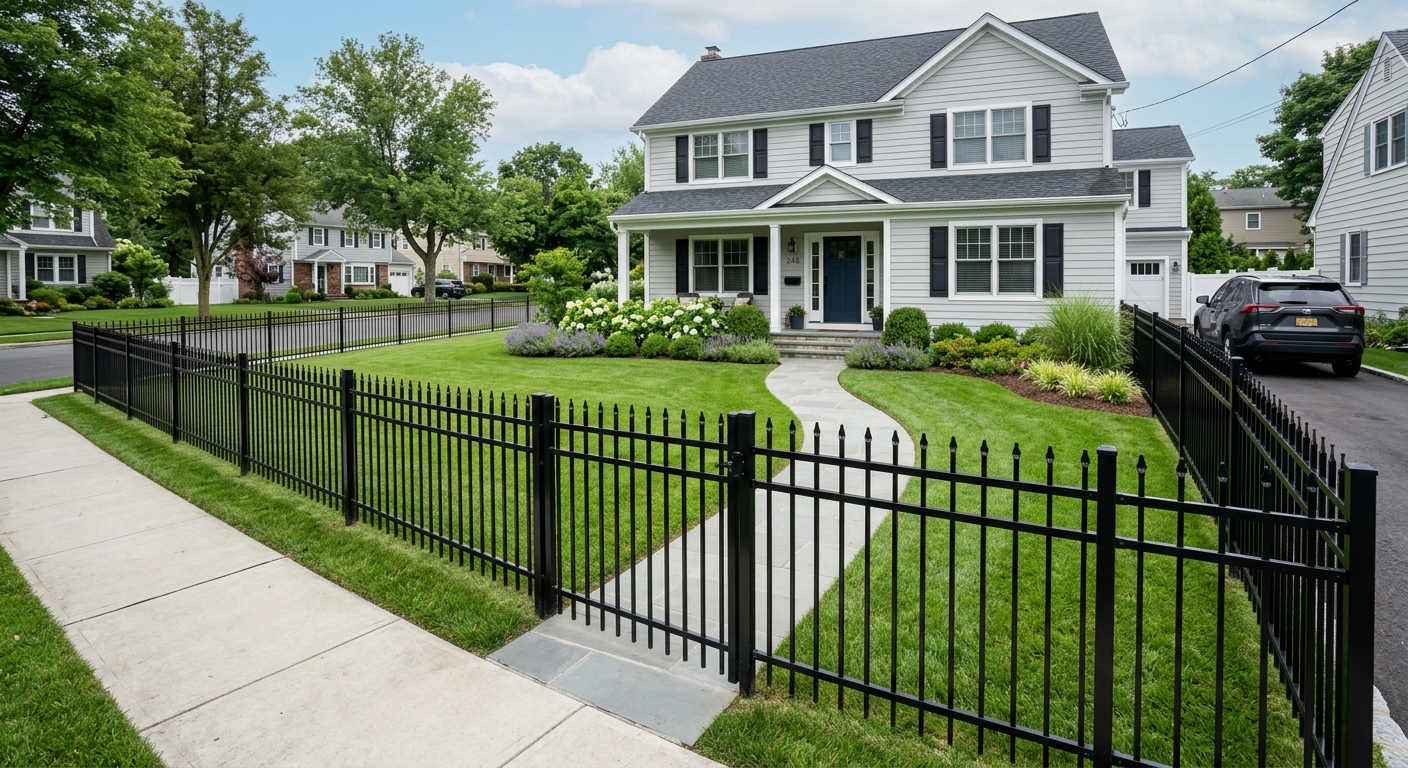
Fencing options and costs in St. Catharines
St. Catharines homeowners have a lot of fencing options, but the “best value” depends on whether you’re prioritizing privacy, long-term stability, or low upkeep. In 2021, St. Catharines had 136,803 residents, and the city’s housing demand is heavily driven by owner-occupied households (37,945 homeowner households; 64.4% of households own) (Statistics Canada, 2021 Census). With 55.6% of dwellings being single-detached homes, many projects are full property perimeter upgrades rather than small townhouse repairs—so fence length and gate count usually decide the final bill.
In the Hamilton–Niagara Peninsula, winter conditions are a major cost-shaper. Frost penetration in southern Ontario is about 1.2 m (4 ft), so contractors typically set posts deeper than you might expect, often using 36–42 inch post depths for typical 6 ft residential fences, and then pushing toward the deeper end where clay soils or softer subgrade are present. That means more drilling time, longer posts, and standard concrete-set posts for long-term stability (especially with repeated freeze–thaw cycles). If you live near heavy wind exposure along the lakeshore or on a hilltop lot, contractors may also adjust post spacing and panel style to reduce wind load and prevent sagging.
In St. Catharines, trades often see especially steady demand in older, established neighbourhoods where lots are mature and replacement cycles are reaching end-of-life—areas like Port Dalhousie and near the downtown core commonly bring requests for board fencing, privacy upgrades, and matching gates.
Below is a practical cost comparison to help you sort options before you request itemised quotes.
| Material |
Lifespan |
Maintenance |
Privacy Rating |
Price per Linear Foot |
| Pressure-treated pine (standard wood) |
8–15 years |
Stain/seal every 2–3 years |
High (solid boards) |
$22 – $32 |
| Cedar (natural rot resistance) |
12–20 years |
Light staining or sealing every 2–4 years |
High (solid boards) |
$26 – $40 |
| Vinyl / PVC (no-maintenance) |
20–30 years |
Wash only; check for panel expansion |
High (solid privacy styles) |
$28 – $48 |
| Chain-link (galvanized steel) |
20–35 years |
Occasional tightening; no coating touch-ups |
Low to Medium (privacy slats optional) |
$17 – $26 |
| Aluminum ornamental |
25–40 years |
Wash periodically; inspect hardware |
Low (decorative pickets) |
$26 – $52 |
| Composite / recycled material |
20–30 years |
Wash only; occasional hardware checks |
High (solid boards) |
$30 – $55 |
Prices are estimates only and vary by project scope, site access and material selection.
What affects the price of fencing in St. Catharines
In St. Catharines and across the Hamilton–Niagara Peninsula, the same “6 ft privacy fence” can land 30–50% apart between quotes because post installation is where effort and materials concentrate—and because sites differ. Two yards can look similar on a frontage line, but one may have clay that won’t take tamped backfill well, uneven grade that requires raked or stepped panels, and a second may have tighter access that slows machinery and increases labour.
Frost line depth is the biggest technical driver. In southern Ontario, frost penetration is roughly 1.2 m (4 ft), and pro installs generally place posts below the design frost depth. Practically, many jobs require digging deeper than standard, so you end up with longer posts and concrete-set bases to reduce frost heave and leaning. That extra depth can raise material cost (longer posts) and labour time (deeper drilling, more concrete). Wind exposure also matters: while Hamilton–Niagara isn’t as severe as open Prairie or some coastal BC sites, hilltop and lakeshore lots still experience gusts that can require heavier posts, closer spacing, or more rigid panel rails to stop flutter and rack.
Concrete examples: (1) a 60 ft run on firm, well-drained soil may use standard concrete-set depth, while a clay-heavy run may require extra drilling and more mix to achieve proper bearing; (2) a backyard with two gates, one wider double gate for a vehicle, increases hardware and framing, often shifting the budget into the higher band. If you’re comparing materials, pressure-treated wood projects often fall around the $45–$80 wood installation band, while vinyl/PVC and composite privacy fences commonly land higher, closer to $70–$120 for typical installs depending on panel style and gate hardware.
Finally, the housing stock in the region matters. With 71.0% of homes built before 1981 (Statistics Canada, 2021 Census), it’s common to see older fences and tight lots where removal and property line verification take time—meaning disposal and locate work add real dollars even before new material pricing is applied.
| Price Factor |
Why It Matters |
Cost Impact |
| Fence length in linear feet |
The total run determines how many posts, rails, and panels are required. |
Usually the largest single driver; longer runs scale costs directly. |
| Post depth required |
Frost line depth sets hole depth to prevent heaving and leaning. |
Deeper holes increase drilling time, concrete use, and post length. |
| Post setting method |
Concrete vs. gravel pack vs. driven posts affects stability in freeze–thaw cycles. |
Concrete-set typically costs more but performs best long-term in many soils. |
| Material choice |
Vinyl and composite cost more upfront; cedar offers a middle ground. |
Can move the project between the wood band and vinyl/composite band. |
| Gate count and type |
Double drive gates need heavier frames, hinges, and latch systems. |
Gates add labour, hardware, and often increase the overall quote by a noticeable margin. |
| Grade and terrain |
Slopes require raked or stepped panels and more measuring/adjustment. |
Adds time and can require specialty rails or extra materials. |
| Old fence removal and disposal |
Hauling and disposal is separate from installing new components. |
Can add cost if the old fence is heavy, damaged, or requires extra labour. |
| Permit fees and survey / property line locate |
Compliance and boundary accuracy prevent redesign and disputes. |
Often minor compared to materials, but still changes total project price. |
Permits & regulations in Ontario
In Ontario, fence rules are typically tied to height and location (front vs. rear/corner) and must respect property lines and municipal setback bylaws. As a practical guideline, fences above a height threshold—often around 2.0 m (6.5 ft) at the rear and about 1.0–1.2 m (3–4 ft) at the front or corner—may require a building permit. Exact thresholds can vary by municipality and the specific lot configuration, so for St. Catharines homeowners the safe approach is to confirm the trigger with the city before you order materials.
Before you dig any post holes, call for utility locates through Ontario One Call. This step is required because you could hit buried hydro, communication, or gas lines during drilling. Also, get a survey or property line locate so your fence sits on your property (or where permitted/shared) to avoid encroachment disputes. Shared fence ownership rules are governed by provincial line-fences legislation, but your design, height, and placement still need to meet municipal requirements.
Licensing and coverage verification is part of due diligence. Ask your contractor for: (1) proof of Ontario licensing/registration status where applicable for their business category; (2) a certificate of liability insurance (make sure it lists your address/party as appropriate); and (3) coverage for workers—WSIB in Ontario—so you’re protected if someone is injured on-site. If they can’t provide certificates or clearances promptly, that’s a red flag before work starts.
Choosing the right fence material for St. Catharines
Choosing a fence in St. Catharines is mostly about matching material to your priorities—privacy, low maintenance, upfront budget, and how long you want to avoid repairs. Pressure-treated pine is usually the lowest upfront option, but it needs staining or sealing every 2–3 years to slow grey weathering and keep moisture from soaking into the boards. Cedar offers better natural rot resistance and an attractive look, yet it still benefits from periodic sealing to maintain appearance and reduce cracking at joints.
Vinyl/PVC is popular for “set it and forget it” living. It’s higher upfront, but it doesn’t require staining and typically performs well in routine Canadian freeze–thaw. That said, extreme cold snaps can make some panels more brittle if the system is poorly installed or if expansion gaps are ignored. Chain-link is the most budget-friendly and tends to last a very long time, but it provides little privacy unless you add privacy slats, lattice, or screening. Aluminum ornamental fences are excellent for durability and curb appeal without rust, though they generally do not deliver the privacy most homeowners want. Composite/recycled fencing provides a solid privacy look with low upkeep, but it costs more and still depends on correct post setting for long-term stability.
For the Hamilton–Niagara Peninsula, frost penetration of about 1.2 m (4 ft) means posts must be set below the frost line. In practice, this often leads to deeper concrete-set posts for long-term stability, especially in clay or mixed soils. If wind is a factor on your lot, contractors may choose closer post spacing or sturdier rails to reduce panel rack during snow and gust cycles.
Example: if a pressure-treated privacy fence lands in the wood installation band (often about $45–$80), while vinyl privacy may sit closer to the higher band (about $70–$120), the vinyl option can be worth the premium if you want minimal yearly work and longer service life without re-staining.
| Material |
Cold Tolerance |
Lifespan |
Annual Maintenance |
Best For |
Price Band |
| Pressure-treated pine |
Good when properly sealed and installed on correct depth posts |
8–15 years |
Seal/stain every 2–3 years; quick checks after winter |
Lowest upfront privacy with regular upkeep |
$45 – $80 |
| Cedar |
Good; tends to handle moisture swings better than pine |
12–20 years |
Seal/stain every 2–4 years; inspect for warping |
Natural look + better rot resistance |
$55 – $95 |
| Vinyl / PVC |
Very good; installation details matter in deep cold |
20–30 years |
Wash/inspect seasonally; check hardware |
Low-maintenance privacy |
$70 – $120 |
| Chain-link |
Excellent for freeze–thaw with galvanized steel |
20–35 years |
Tighten periodically; no staining |
Security/containment on a budget |
$35 – $60 |
| Aluminum ornamental |
Excellent; powder-coated systems resist winter impacts |
25–40 years |
Occasional wash; hardware inspection |
Durability and curb appeal |
$80 – $150 |
| Composite / recycled material |
Good; relies on correct post setting and fastening |
20–30 years |
Wash/inspect; minimal upkeep |
Privacy with reduced maintenance |
$85 – $140 |
How to choose a fencing contractor in St. Catharines
To choose a contractor in St. Catharines, verify licensing/registration, liability insurance, and WSIB coverage, then compare quotes on scope—not just total price. Here’s how to check each: first, ask for proof of their business registration/licensing status (where applicable for their trade/business category) and confirm the details on their website or through the relevant public business profile. Second, request a certificate of insurance for general liability (and any additional coverage they carry). Third, confirm workers are covered under WSIB—ask for a clearance letter or WSIB documentation showing account status for the work period. A reputable fencing contractor provides these without pushing back.
Get 2–3 written, itemised quotes where labour and materials are broken out. The best estimates list: linear feet, number of posts and post depths, concrete volume/setting details, rail and picket/board quantities, gate hardware, and whether disposal and site cleanup are included. Read exclusions carefully: is permit pulling included if required? Is removal of the old fence and hauling covered, or billed separately? Confirm what happens if utilities are found during locates—who pays for adjustments?
Warranty matters. Ask for the workmanship warranty length (the installer’s claim), plus the manufacturer’s product warranty. Also ask whether the warranty transfers if you sell your home. Payment should be controlled: never pay more than about 10–15% upfront; hold back the remainder until the job is complete and the fence passes your walkthrough. Get a start date and completion estimate in writing, and note weather contingencies for drilling and concrete cure times.
- Ask for itemised pricing: labour, concrete/post setting, hardware, and material by line item.
- Confirm post depth and setting method in writing (concrete-set vs gravel pack vs other).
- Verify how they handle utility locates and what happens if they encounter utilities.
- Request a gate line-item that specifies hardware brand/type and latch style.
- Check whether permit pulling is included if your fence triggers Ontario/municipal requirements.
- Confirm disposal and stump/post removal from the old fence are included or priced separately.
- Ask how they deal with slopes: stepped panels vs raked rails.
- Look for a clear warranty statement for workmanship and materials.
- Ensure they provide WSIB clearance/documentation and a liability certificate before work begins.
- Get the exact start date and an installation schedule with a completion target.
- Verify they include a final cleanup and sweep down of the work zone.
- Make sure the quote includes measurements on a sketch and notes fence alignment to property/locate marks.
In St. Catharines, concrete red flags include: (1) contractors who quote without specifying post depth or setting method; (2) quotes that lump everything into one number with no gate/hardware breakdown; (3) refusal to provide WSIB clearance or liability insurance documentation; (4) payment demands exceeding 10–15% upfront; and (5) no written timeline, scope, or warranty terms.
Frequently asked questions — fencing in St. Catharines
How do I compare fencing quotes?
In Ontario, the easiest way to compare St. Catharines quotes is to use the same checklist for every bidder: linear feet, post depth, post setting method (concrete vs gravel pack), number of gates, and hardware type. Ask for an itemised breakdown of materials and labour, not a single lump sum, so you can see what’s driving the difference. Also compare whether the contractor priced longer posts/extra drilling for frost protection; in this region, frost penetration is about 1.2 m (4 ft), so quality quotes will address deeper setting below the frost line. Finally, verify warranty terms and whether disposal and cleanup are included. If one quote is much lower—especially against typical wood installation ($45–$80) or vinyl/PVC ($70–$120)—it’s often because the post depth or setting method isn’t fully accounted for.
How long does fence installation take in St. Catharines?
Most residential installations in St. Catharines take about 1–3 days once material is on site, assuming access is straightforward and posts can be drilled/placed promptly. Larger projects with multiple gates, significant slope changes, or old fence removal can take longer—often 3–5 days. The schedule depends on concrete curing time for concrete-set posts and the availability of materials, plus any time needed for utility locates and property line confirmation. If your backyard has tight side access (common on older lots), labour time increases because wheelbarrows, staging, and careful placement are slower. A solid contractor will give you a written start date, completion target, and a weather contingency plan so you’re not left waiting mid-project.
Can I install a fence on a slope in St. Catharines?
Yes—fencing on a slope is common in St. Catharines, especially on hillier streets and near areas with changing grade. The key is choosing the right method: stepped fence sections (each panel level changes) or raked panels (a continuous angle). A good quote should specify how they will handle your slope and whether they’ll adjust rails/pickets accordingly. This affects cost because raked work needs extra measuring and cutting, and stepped installs can require additional framing. It also matters for stability: posts still must be set below the frost line to prevent heaving, even if the fence “looks level” to your eye.
What is the most weather-resistant fence for St. Catharines's climate?
For St. Catharines’ freeze–thaw winters, the most weather-resistant options are typically those with proven durability and proper post installation: chain-link with galvanized steel, aluminum with powder coating, and vinyl/PVC when installed with appropriate expansion and solid concrete-set posts. Wood can perform well too, particularly cedar, but it requires more upkeep to maintain appearance and slow moisture penetration. In the Hamilton–Niagara Peninsula, frost penetration of about 1.2 m (4 ft) means the real “weather resistance” starts with correct post depth below the frost line—not just the material. Contractors commonly use concrete-set posts for long-term stability, which reduces leaning over repeated winters.
How do I prevent wood fence rot in St. Catharines?
Wood rot prevention is mostly about moisture management and correct installation. First, ensure posts are set correctly below the frost line and don’t trap water at the base; quality concrete-set methods help stabilize posts and reduce movement that breaks seals over time. Second, use proper boards and fasteners designed for exterior exposure, and don’t install directly against soil where contact accelerates decay. Third, choose a maintenance plan: pressure-treated pine usually needs staining/sealing every 2–3 years, while cedar still benefits from sealing every 2–4 years to reduce grey weathering and cracking. Finally, keep vegetation trimmed so air can circulate. If your yard has clay-heavy soil, ask your contractor how they manage drainage around post holes—this is a common St. Catharines difference in outcomes.
What is the cost per linear foot for fencing in St. Catharines?
Pricing in St. Catharines is usually quoted per linear foot once you know the run length, post spacing, gate count, and post depth requirements for frost protection. Typical per-foot ranges for residential projects commonly land around: pressure-treated pine $22 – $32, cedar $26 – $40, vinyl/PVC $28 – $48, chain-link $17 – $26, and aluminum ornamental $26 – $52 (material and installation complexity included). Your actual number may move up if you need deeper concrete-set posts in clay, add raked/stepped panels for slope, or include double-gate hardware. For a quick budget check, compare the price bands for installation: wood $45–$80, vinyl/PVC $70–$120, chain-link $35–$60, and aluminum/metal $80–$150.