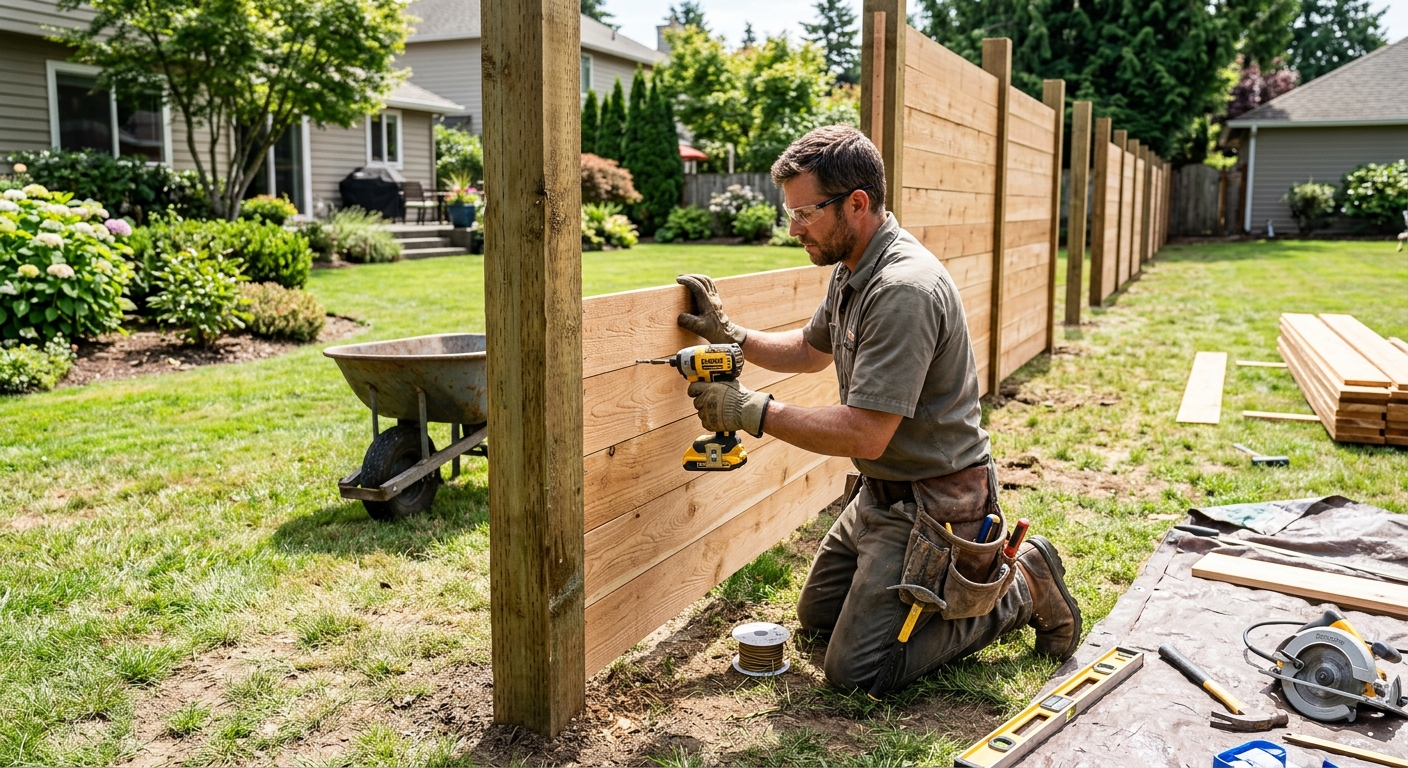
Fencing options and costs in Oakwood Village
Oakwood Village is a great place for homeowners who want clean lot lines, more privacy, and better pet safety—and the fencing market moves with the neighbourhood’s steady housing turnover. With a population of 21,210 residents (Statistics Canada, 2021 Census), there’s consistent demand across the Toronto economic region for practical, durable fence solutions. In addition, Oakwood Village’s mix of residential lots means many backyards are set up for privacy screening and dog runs, which is why contractor availability can be especially high in the most “fence-ready” pockets around established streets and school-adjacent blocks where properties tend to share straightforward backyard lines.
Pricing in Toronto is strongly shaped by climate and local build practice. In Southern Ontario, the design frost line is commonly worked out at about 42"–48", so fence posts usually need to be set at least 3.5–4 feet deep to help prevent frost heave—especially for 6–8 ft privacy fences. Most local crews lean toward concrete-set posts rather than simple driven posts because it improves long-term stability in the region’s clay and mixed soils, even though it increases labour time and ready-mix costs.
Material choice then determines how much ongoing effort you’ll need. If you’re comparing privacy panels, expect that vinyl and treated wood will typically require different support and different maintenance schedules, while chain-link remains the best value for budget perimeter security. For a quick apples-to-apples view, use the table below as a baseline for Oakwood Village projects.
| Material |
Lifespan |
Maintenance |
Privacy Rating |
Price per Linear Foot |
| Pressure-treated pine (standard wood) |
10–15 years |
Stain/seal every 2–3 years |
High (solid boards) |
$18–$30 |
| Cedar (natural rot resistance) |
15–25 years |
Seal/stain every 2–4 years |
High (solid boards) |
$22–$40 |
| Vinyl / PVC (no-maintenance) |
20–30 years |
Wash occasionally; rare repairs |
High (solid or semi-solid) |
$22–$42 |
| Chain-link (galvanized steel) |
20–35 years |
Rinse; occasional tighten/replace |
Low to medium (mesh) |
$14–$26 |
| Aluminum ornamental |
25–40 years |
Occasional wash |
Low (open pickets); privacy add-ons possible |
$28–$55 |
| Composite / recycled material |
20–30 years |
Low; wash and inspect annually |
High (board-style composites) |
$26–$50 |
Prices are estimates only and vary by project scope, site access and material selection.
What affects the price of fencing in Oakwood Village
In Oakwood Village and across the wider Toronto region, two contractors can quote the “same” fence and still land 30–50% apart. That gap is usually explained by how each quote handles the hidden cost drivers: post depth and footing method, rail/panel engineering for wind resistance, gate hardware, and whether the crew includes demolition, disposal, and utility-protection work.
Start with the frost line. In Southern Ontario, post holes are commonly designed so posts sit about 4–6 inches below the design frost depth logic, which translates to roughly 1.5–2.0 m in the ground in many local builds. Because that depth calls for longer posts and concrete-set installs, labour hours and ready-mix expenses rise—especially for 6–8 ft privacy fences. Material also changes the engineering: taller solid fences need heavier posts (and tighter spacing) to reduce racking and uplift during gusts.
Local conditions create cost swings even within Oakwood Village. For example, a straight 40 ft run with easy backyard access and level grade can land closer to the wood installation band of about $65–$120 total per linear foot equivalent scope (depending on height and hardware). By contrast, a 60 ft run on a slope with two gates and old fence removal often pushes you into the higher end of the same project class because you’ll pay for stepped/raked sections, more posts, and disposal. Similarly, switching from chain-link to vinyl/PVC often moves the budget into the $75–$130 range for many installed packages, but the extra cost can be justified where you want a true low-maintenance finish through Toronto’s freeze–thaw cycles.
Finally, contractor availability affects schedule and sometimes pricing: peak season turnarounds in the GTA can mean crews allocate more labour to existing projects, and that can show up as higher labour components on new quotes for same-week installs.
| Price Factor |
Why It Matters |
Cost Impact |
| Fence length in linear feet |
Most materials and labour scale directly with total length. |
High impact (primary driver) |
| Post depth required |
Frost-line requirements govern hole depth and post length. |
High impact (more concrete + longer posts) |
| Post setting method |
Concrete-set posts increase stability in Toronto soils. |
Medium to high impact |
| Material choice |
Different framing weight, panel cost, and hardware needs. |
Medium to high impact |
| Gate count and type |
Gates require heavier hinges/latches and often stronger framing. |
Medium to high impact |
| Grade and terrain |
Slopes may require stepping or raking, and additional framing work. |
Medium impact |
| Old fence removal and disposal |
Haulage and dump fees can be significant. |
Medium impact |
| Permit fees and survey / property line locate |
Verification avoids encroachment disputes and redesign. |
Low to medium impact (varies) |
Permits & regulations in Ontario
In Ontario, fencing permits can come into play when a fence is tall enough and/or affects how the municipality reviews frontage and line impacts. As a practical homeowner rule, fences above about 2.0 m (6.5 ft) at the rear and about 1.0–1.2 m (3–4 ft) at the front or corner often trigger a building permit requirement, though the exact threshold can vary by location and circumstance. Regardless of permit needs, you must respect property lines and municipal setback requirements.
Before any post hole is dug, you should call for utility locates (Ontario One Call). This isn’t optional for best practice: it protects you, the crew, and your property. If you want to avoid neighbour disputes, obtain a survey or verify property pins before installing—misplacing a fence even by a small amount can lead to costly rework. Shared fence ownership rules are governed by Ontario’s line-fences approach, so if you’re replacing a shared boundary, confirm who owns what section and how cost is to be allocated.
What typically DOES require a permit: installing or replacing a fence that falls above the common height thresholds (especially at corners/front areas), and any situation where a municipality flags the fence as needing review. What typically does NOT require a permit: small, standard-height boundary fences that stay under the thresholds and don’t affect special municipal conditions. Finally, verify your contractor: check their Ontario business information online (as applicable), request proof of liability insurance and WSIB/WCB clearance, and keep a copy of the clearance letter and certificate of insurance on file before work begins.
Choosing the right fence material for Oakwood Village
Choosing a fence material in Oakwood Village is less about “which is best” and more about matching your priorities to Toronto’s freeze–thaw winters, spring thaw conditions, and occasional strong wind gusts. Pressure-treated pine is the entry-friendly option, but it needs a stain or seal every 2–3 years to reduce greying and surface wear. Cedar offers better natural rot resistance and a richer look, but it still benefits from regular sealing and inspections. Vinyl/PVC is the low-maintenance favourite—washing is usually all you’ll do—though in extreme cold it can become more brittle and will only perform well if it’s installed with correct post spacing and compatible hardware.
Chain-link is the most budget-stable perimeter choice and tends to last a long time, but it won’t provide privacy on its own; if privacy is your goal, you’d typically combine it with privacy mesh or choose a solid-panel system. Aluminum ornamental fencing is attractive and won’t rust, but it’s generally mid-cost and low in privacy because of its open pickets.
For almost every Oakwood Village install—especially 6–8 ft privacy fences—plan for concrete-set posts at frost-protected depths. With Southern Ontario frost considerations (commonly worked around 42"–48"), posts typically need to be set around 3.5–4 feet deep to reduce frost heave risk. That means the “best value” isn’t just material price; it’s the combination of correct post depth, panel support, and durable hardware.
Here’s a realistic dollar example: upgrading from pressure-treated wood to vinyl can add roughly $5–$15 per linear foot installed in many GTA quotes (depending on height, gate count, and grading). If your goal is hands-off maintenance and you expect to keep the fence 20+ years, that upfront premium can be justified quickly—especially when you factor in Toronto’s routine freeze–thaw and the cost of re-staining and repairs.
| Material |
Cold Tolerance |
Lifespan |
Annual Maintenance |
Best For |
Price Band |
| Pressure-treated pine |
Good (with proper sealing) |
10–15 years |
Inspect; light care; stain every 2–3 years |
Budget privacy where you’ll maintain the finish |
$65–$120 |
| Cedar |
Good (naturally resilient) |
15–25 years |
Inspect; seal/stain every 2–4 years |
Appearance plus better rot resistance |
$80–$135 |
| Vinyl / PVC |
Good (installed correctly) |
20–30 years |
Wash/inspect; rare repairs |
Low maintenance in freeze–thaw climates |
$75–$130 |
| Chain-link |
Excellent |
20–35 years |
Rinse; occasional tightening |
Security/perimeter on a tighter budget |
$45–$85 |
| Aluminum ornamental |
Excellent |
25–40 years |
Wash/inspect |
Attractive curb-side boundary with openness |
$90–$160 |
| Composite / recycled |
Good |
20–30 years |
Low; inspect and clean |
Solid look with reduced upkeep |
$85–$150 |
How to choose a fencing contractor in Oakwood Village
Choosing a fencing contractor in Oakwood Village comes down to proof, clarity, and accountability. First, verify Ontario compliance: ask for a copy of their liability insurance certificate (confirm the policy is active and matches the job address) and a WSIB/WCB clearance letter for the workers who will be on-site. Where to look: request documents directly from the contractor for your records, then confirm the business information and status through Ontario’s public business listings, if provided/available. Don’t accept “we’re insured” as a statement—ask to see the paperwork.
Next, get 2–3 itemised written quotes. You want a breakdown that separates labour and materials, lists post depth and setting method (concrete-set vs. alternatives), includes panel/frame specifications, and itemizes gates and hardware. Make sure the quote clearly states what’s excluded: permit pull, utility locates, old fence removal, disposal, grading/landscape restoration, and any special foundation adjustments for uneven yards.
Warranty matters for fencing more than homeowners expect. Ask for the workmanship warranty length (how long the contractor stands behind installation), plus the product/manufacturer warranty for rails, panels, and gates. Confirm whether the warranty is transferable if you sell your home.
For payment, a responsible schedule keeps you protected: never pay more than 10–15% upfront, and use a holdback until the job is complete and cleaned up. Finally, insist on a written start date and completion estimate so the timeline is enforceable.
- Request proof of liability insurance and WSIB/WCB clearance before signing.
- Confirm the fence height, material grade, and post size are explicitly written in the quote.
- Check that post depth matches frost-protection best practice for Southern Ontario installs.
- Ensure the quote states concrete-set posts vs. driven posts, including required quantities.
- Ask if demolition of the old fence is included and who disposes of debris.
- Verify gate count, gate type (single vs double drive-through), and latch/hinge brand or spec.
- Confirm how slopes are handled (stepped vs. raked) and how it affects panel heights.
- Ask whether utility locates and any marking requirements are included.
- Require permit responsibility in writing (who pulls the permit if it’s needed).
- Check that your contractor specifies cleanup standards and restoration of disturbed areas.
- Make sure warranties for workmanship and materials are listed with durations.
- Set payment milestones: small deposit, progress payment, and a holdback until final walk-through.
Red flags I see too often around Oakwood Village: a quote that doesn’t specify post depth or footing method, vague language like “standard posts” without concrete-set details for privacy heights, no insurance/clearance paperwork, lump-sum quotes with missing gate or disposal lines, and contractors pushing for a large upfront deposit or refusing to put the scope in writing.
Frequently asked questions — fencing in Oakwood Village
What fence style offers the best wind resistance in Oakwood Village?
In Oakwood Village, the most wind-stable choice is typically a well-framed privacy fence that balances solid coverage with engineered support: solid-board wood or vinyl with correctly sized posts and rails installed at tight spacing. In Southern Ontario, Toronto-area builders usually account for gust loads by using heavier posts and closer centres so the fence doesn’t rack or lift. Just as important is frost protection—if posts aren’t set deep enough with concrete in clay/mixed soils, wind can worsen movement over time. For a practical baseline, many homeowners choose a 6–8 ft privacy fence using concrete-set posts; that approach aligns with common GTA pricing realities where wood installs often fall around the $65–$120 band depending on height, gates, and site access.
How much does a fence cost in Oakwood Village?
Fence costs in Oakwood Village depend on length, height, gate count, and how complex the footing and grading are. In the Toronto region, typical installed price bands you’ll see from local contractors are: wood fencing around $65–$120, vinyl/PVC around $75–$130, chain-link around $45–$85, and aluminum/metal around $90–$160 per linear foot equivalent scope. A straight run with easy backyard access can come in near the lower end of a chosen material band. The same material can climb if you add a second gate, need stepped panels for slope, or require old fence removal and disposal. If you’re comparing quotes, insist on itemised labour and materials so “similar” fences truly match post depth and hardware.
How deep should fence posts be for Oakwood Village's frost?
For Oakwood Village and most of Southern Ontario, contractors generally plan for frost-protected post placement based on a common design frost line of about 42"–48". In practice, that usually means setting fence posts roughly 3.5–4 feet deep (about 1.5–2.0 m) to reduce frost heave risk, especially for 6–8 ft privacy fences. Because Ontario soils can include clay and mixed compositions, best practice is often concrete-set posts rather than simple driven posts. When you’re reviewing a quote, look for explicit language stating the post setting method and hole depth (not just “standard posts”). That’s one of the biggest quality differences between low bids and long-lasting installations.
Wood vs vinyl vs aluminum fence — which is best?
The “best” option depends on whether you prioritise privacy, maintenance, or curb appearance. Wood (pressure-treated pine) is usually the most budget-friendly privacy choice, but it needs staining/sealing every 2–3 years to keep it looking good through Toronto’s freeze–thaw cycles. Cedar improves appearance and rot resistance but still needs periodic maintenance. Vinyl/PVC is the low-maintenance pick for many homeowners; it typically lands in the $75–$130 band depending on height and gate count, and it performs best when installed with correct spacing and robust post support. Aluminum ornamental fences are durable and won’t rust, but they’re generally low privacy because of open pickets. If privacy is the goal, wood or vinyl (with proper frost-set posts) usually wins in Oakwood Village.
Do I need a permit to build a fence in Ontario?
In Ontario, many fences require a building permit when they’re above common height thresholds—often about 2.0 m (6.5 ft) at the rear and about 1.0–1.2 m (3–4 ft) at the front or corner. Even when a permit isn’t required, your fence must still respect property lines and municipal setback bylaws. For Oakwood Village homeowners, the best process is: check the fence height and location on your lot, then confirm with your contractor whether a permit is required for your specific case before digging. Also, call Ontario One Call to mark utilities before post holes. Finally, use a survey or property pin locate where there’s any doubt, because encroachment disputes are costly and often lead to redesign.
How long does a wood fence last in Oakwood Village?
A properly installed wood fence in Oakwood Village commonly lasts around 10–15 years for pressure-treated pine, assuming posts are set correctly for frost protection and the boards are sealed/stained on schedule. The lifespan shortens if posts are installed too shallow, if concrete setting is skipped where it’s needed, or if the finish is neglected—Toronto’s freeze–thaw cycles accelerate weathering and surface cracking. Cedar can last longer (often 15–25 years) thanks to natural rot resistance, but it still benefits from sealing. If you’re budgeting, wood projects in the Toronto market often land in the $65–$120 band depending on height, gates, and whether old fence removal/disposal is included—so planning maintenance early is one of the best ways to protect your investment.