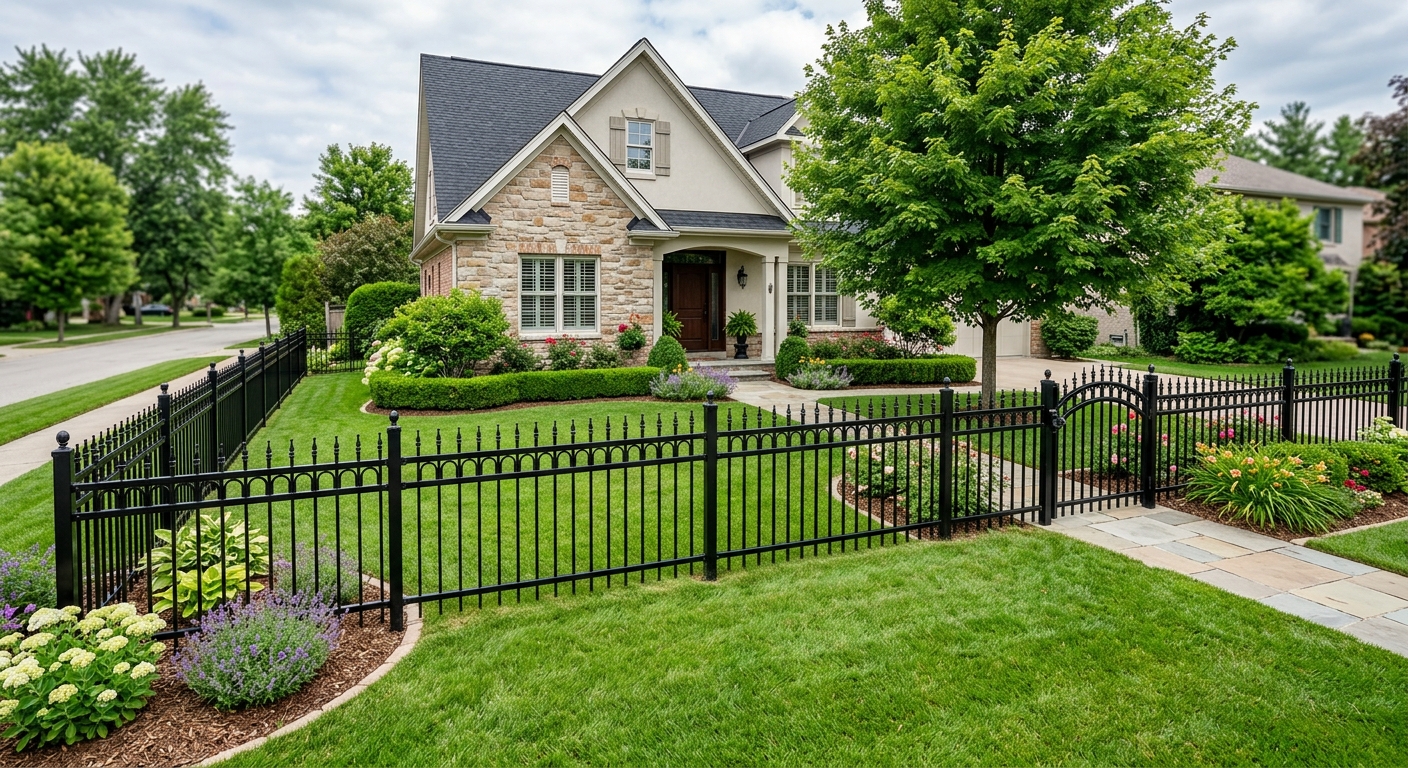
Fencing options and costs in The Glebe
The Glebe is a character-rich neighbourhood in Ottawa, and that usually means homeowners want fences that look good from the street while still handling freeze-thaw winters. With a 2021 population of 13,055 (Statistics Canada, 2021 Census), there’s steady demand for perimeter upgrades, backyard privacy, and replacement of older, weathered sections. In practical terms, this means contractors who can set solid posts properly—and finish cleanly along mature landscaping—tend to stay busy. Toronto’s broader market context also matters for pricing because supplier lead times and crew availability are shaped across Ontario’s major building hubs, including the Toronto economic region.
In Southern Ontario, frost depth is commonly planned around about 42"–48", and fence posts are typically set roughly 4–6 inches below that design frost line to reduce the risk of frost heave. For 6–8 ft privacy fences, that usually translates into deeper holes, more concrete-set work, and longer posts—so “same fence, different ground” can swing the final total by thousands. If you’re in areas with heavier clay soils or near low spots that stay wet, you’ll also see crews factor in extra base prep and stronger hardware to reduce leaning and racking.
In The Glebe, the trade is especially in demand around the older residential pockets where property lines meet established gardens and driveways—think tight access, frequent gate work, and more frequent replacement requests. Below is a realistic comparison to help you match material to your priorities before we break down the drivers of cost.
| Material |
Lifespan |
Maintenance |
Privacy Rating |
Price per Linear Foot |
| Pressure-treated pine (standard wood) |
10–15 years |
Stain/seal every 2–3 years; check posts after winter |
7/10 (board-on-board typical) |
$18 – $30 |
| Cedar (natural rot resistance) |
15–25 years |
Seal every 2–3 years; occasional boards replace |
8/10 (solid board styles) |
$22 – $38 |
| Vinyl / PVC (no-maintenance) |
25–35 years |
Rinse as needed; rare hardware checks |
9/10 (solid privacy panels) |
$25 – $45 |
| Chain-link (galvanized steel) |
20–30 years |
Minimal; keep tension and touch up if needed |
3/10 (security only) |
$13 – $22 |
| Aluminum ornamental |
25–40 years |
Occasional cleaning; check for loose fittings |
4/10 (decorative) |
$24 – $40 |
| Composite / recycled material |
20–30 years |
Low; wash and inspect top rails/hardware |
8/10 (privacy plank styles) |
$26 – $48 |
Prices are estimates only and vary by project scope, site access and material selection.
What affects the price of fencing in The Glebe
Even when two neighbours request “a 6 ft wood privacy fence,” quotes in and around Ontario can differ by roughly 30–50% because the work is rarely identical: post type and depth, gate count, demolition needs, soil conditions, and how crews handle line changes all add cost. In the Toronto economic region, local best practice leans heavily toward concrete-set posts for stability in clay and mixed soils, which increases labour time and ready-mix usage—but it also reduces the long-term risk of leaning or frost heave.
One of the biggest cost drivers is the frost line. Southern Ontario frost planning is commonly around 42"–48", and fence posts are usually set about 4–6 inches below that design depth. In practical terms, that often means posts going roughly 1.5–2.0 m into the ground, especially for taller panels. Deeper holes mean more excavation labour, longer posts, and more concrete—so the same fence line can cost far more than a contractor who uses shallow or driven posts.
Wind and racking still matter in Ontario even if we’re not dealing with the extreme exposures you see across the Prairies. That said, solid privacy fences (wood or vinyl) typically need heavier posts and closer spacing (commonly 6–8 ft centres) to resist uplift and lateral movement. Coastal BC accelerates rot and degrades wood without proper treatment, but here in Ontario we mostly see freeze-thaw damage, ground movement, and gradual hardware corrosion—so choosing treated lumber and correct post setting really shows up in the quote.
Concrete examples you’ll recognize in The Glebe: (1) a 60 ft run on firm ground may fit closer to the lower end of wood installs (often in the $65–$120 range), while (2) the same length on soft clay with deeper concrete-set holes and extra bracing can push you toward the higher end; and (3) adding a double drive gate increases material and labour more than most people expect, often moving you from a base “privacy panel” budget into a premium installation tier similar to Toronto’s vinyl/PVC pricing band ($75–$130) depending on hardware and gate style.
| Price Factor |
Why It Matters |
Cost Impact |
| Fence length in linear feet |
Every component (posts, rails, panels) scales directly with length |
Highest driver; small per-foot changes become big totals |
| Post depth required |
Frost line determines how long posts must be and how deep holes go |
Concrete-set work increases labour and material substantially |
| Post setting method |
Concrete vs gravel pack vs driven posts affects stability and longevity |
Concrete-set is usually the most durable; often higher cost |
| Material choice |
Vinyl/cedar/chain-link differ in hardware, panel weight, and installation approach |
Can swing overall budgets by multiple dollars per foot |
| Gate count and type |
Walk-through vs double drive gates require stronger frames and hinges |
Gates can add a disproportionate amount to the total |
| Grade and terrain |
Sloped yards require stepped posts, raked rails, and extra layout time |
More labour and sometimes more material trimming/waste |
| Old fence removal and disposal |
Demolition and hauling varies with accessibility and anchor depth |
Adds labour hours and disposal fees; can be significant |
| Permit fees and survey / property line locate |
Some installs require permits; accurate lines reduce dispute risk |
May add a few hundred to over a thousand depending on scope |
Permits & regulations in Ontario
In Ontario, fencing rules are largely tied to property lines, setbacks, and height limits, and in many cases a permit is required for taller fences. As a practical guideline, fences above a height threshold—typically around 2.0 m (6.5 ft) at the rear and about 1.0–1.2 m (3–4 ft) toward the front or corner—often require a building permit (the exact threshold can vary by municipality). If your plan is near a corner lot, adjacent to an easement, or involves a taller privacy wall-style installation, it’s worth confirming before digging.
Before any post hole is dug, call for utility locates through Ontario One Call to mark underground services. This is essential even for “small” fences because fence lines commonly cross old service trenches and drainage runs. Next, get a survey or at least a locate of your property pins so you’re confident you’re building within your property boundaries. In Ontario, shared fence ownership rules and line-fence responsibilities are governed by provincial line-fences legislation, so documenting the line up front reduces conflicts with neighbours.
What typically DOES require a permit: taller-than-threshold fences, substantial fence structures, and certain fence locations that fall within stricter frontage/corner or setback considerations. What typically does NOT: replacement-in-kind of a fence that remains within the usual height limits and setbacks, when the design and location don’t change.
To verify a contractor for The Glebe project work, request their licence number (where applicable in Ontario trades), a certificate of liability insurance naming you as additional insured, and proof of WSIB/WCB coverage. You should be able to view credentials through the relevant online registry for licensing and review the clearance/coverage documents directly on request.
Choosing the right fence material for The Glebe
Your best material choice in The Glebe comes down to balancing privacy, maintenance time, and the realities of Ontario freeze-thaw. Pressure-treated pine is the budget-friendly route, but it typically needs staining or sealing every 2–3 years to manage grey weathering and keep surface protection intact. Cedar looks great and resists rot better, yet it still benefits from regular sealing to maintain colour and slow down uneven weathering.
Vinyl/PVC offers the “set it and forget it” appeal—very low maintenance and strong privacy options—but it can become more brittle in extreme cold, so quality profiles and correct installation matter. Chain-link is the most economical and longest-life option for security fencing, but it won’t provide privacy unless you add screens or privacy slats. Aluminum ornamental fencing gives a clean, rust-resistant look, while composite/recycled boards aim for privacy with low upkeep, though installation quality and hardware selection are still critical.
For Toronto-area ground conditions that also show up across Southern Ontario—clay mixes and frost movement—post depth is where materials really meet cost. With frost planning around 42"–48", posts often need to be set around 4–6 inches below that design depth, frequently meaning deeper holes and concrete-set posts for 6–8 ft privacy styles. That’s why many contractors steer homeowners toward concrete-set solutions; the difference in stability is worth it when winters lift and shift soil.
To make the decision concrete: if wood privacy installed runs in the $65–$120 range and vinyl privacy lands closer to the $75–$130 band, the extra upfront spend can be justified if you want fewer yearly maintenance tasks and a longer clean appearance. If you’re okay with maintenance and want to control the initial budget, treated pine or cedar privacy boards can be the smarter first-cost choice—especially when the post setting is done correctly.
| Material |
Cold Tolerance |
Lifespan |
Annual Maintenance |
Best For |
Price Band |
| Pressure-treated pine |
Good with proper sealing and hardware checks |
10–15 years |
Light: inspect twice a year; stain every 2–3 years |
Budget privacy with acceptable maintenance |
$65 – $120 |
| Cedar |
Good; resists rot through freeze-thaw cycles better than most softwoods |
15–25 years |
Light: seal every 2–3 years; periodic hardware checks |
Premium look privacy without extreme material stiffness |
$75 – $130 |
| Vinyl / PVC |
Very good when installed to manufacturer guidance in cold weather |
25–35 years |
Minimal: rinse and inspect fasteners |
Low-maintenance privacy |
$75 – $130 |
| Chain-link |
Excellent; galvanized steel handles cold cycles well |
20–30 years |
Minimal: tension checks, occasional coating touch-ups |
Security with long life |
$45 – $85 |
| Aluminum ornamental |
Excellent; rust-resistant with stable hardware |
25–40 years |
Minimal: clean as needed; check fit-up |
Decorative front-yard fencing |
$90 – $160 |
| Composite / recycled |
Good; performs well in Ontario winters when hardware is correct |
20–30 years |
Low: wash and inspect rails/hardware |
Privacy with reduced maintenance |
$75 – $130 |
How to choose a fencing contractor in The Glebe
Choosing a fencing contractor in The Glebe is less about marketing and more about proof. For Ontario projects, verify licensing when applicable, and always request liability insurance and WSIB/WCB coverage. Start by asking for the exact certificate of insurance (with coverage limits) and confirming the expiry date. For WSIB/WCB, ask for a clearance letter or coverage proof—your contractor should be able to provide it without hesitation. If they can’t produce paperwork immediately, that’s a red flag.
Next, get 2–3 itemised written quotes that break down labour and materials rather than giving you a single lump sum. The best quotes show: fence type, post size, post spacing, the post setting method (concrete vs gravel pack), rail count, gate materials, and how slopes are handled. Also confirm what’s excluded: permit pulls, utility locate costs, disposal of old fencing, and any landscaping reinstatement. A “cheap” bid often excludes demolition or assumes easy access—then the change orders arrive after work begins.
Warranty matters too. Ask for the workmanship warranty length (how long they stand behind installation) and the manufacturer warranty (materials). Confirm whether the warranty is transferable to a new homeowner, especially if you might sell soon.
For payment, never pay more than 10–15% upfront. I recommend holding back a portion until the entire job is complete and inspected. Finally, ensure your start date and estimated completion timeline are in writing so you can plan around winter delays and material lead times.
- Ask for proof of liability insurance and the WSIB/WCB clearance/coverage letter before signing.
- Confirm the post depth approach for frost stability and whether concrete-set posts are included.
- Require itemised quotes showing labour hours, material quantities, and hardware.
- Get a written scope: rails, panel style, post spacing, and gate hardware details.
- Check whether utility locates and permit pulls are included or billed separately.
- Confirm old fence removal, disposal, and whether the site is restored after digging.
- Ask how they handle slopes: stepped panels vs raked rails and how it affects spacing.
- Ensure the quote names the exact material type (pressure-treated vs cedar vs vinyl profile).
- Verify warranty: workmanship term, manufacturer term, and transferability.
- Review payment schedule—limit upfront deposit to 10–15% and hold a final completion holdback.
- Request a site plan or layout sketch including start/end points and gate placement.
- Get start date and completion estimate in writing, including an allowance for weather.
Red flags I see too often in The Glebe: contractors who refuse to put post depth and setting method in writing, quotes that omit gate hardware details, no proof of insurance/WSIB, “we’ll figure it out later” language for property lines, and change orders that add costs without documenting what changed and why.
Frequently asked questions — fencing in The Glebe
How long does fence installation take in The Glebe?
Most fence installs in The Glebe take about 1–3 days for a straightforward run, assuming clear access and that utility locates don’t reveal surprises. In Southern Ontario conditions, the schedule can stretch when deeper post holes and concrete-set posts are required for 6–8 ft privacy fences—because crews need time for excavation, setting, and proper curing before final bracing and panel alignment. Bigger jobs with multiple gates or significant old fence removal can add time, and winter weather can slow digging. As a reference point for homeowners budgeting, typical fencing projects often fall within the standard wood or vinyl price bands (for example, wood installs commonly align with $65–$120 depending on scope), and the timeline generally follows the same complexity drivers: length, gate count, and ground conditions. (Statistics Canada, 2021 Census)
Can I install a fence on a slope in The Glebe?
Yes, but it needs the right layout. In The Glebe, sloped yards are common enough that good contractors will offer stepped fence sections (post-by-post height changes) or raked panels (matching the slope with angled rails). Stepped designs usually look cleaner and keep consistent post spacing, while raked styles can vary depending on the fence type. The key is that posts still need correct depth—Ontario frost planning means holes often go roughly 4–6 inches below design frost depth, so slope doesn’t eliminate the frost requirement; it just changes how the top line is measured. Plan on slightly higher labour and sometimes more material trimming waste. If you’re comparing quotes, make sure they specify how they’ll handle the slope and whether that method is included in the price.
What is the most weather-resistant fence for The Glebe's climate?
For long-term weather resistance in Ontario’s freeze-thaw climate, vinyl/PVC and concrete-set styles tend to perform very well, particularly when paired with proper post depth and strong bracing for privacy fences. Vinyl is low maintenance and doesn’t rot, but it still depends on correct installation in cold temperatures so panels and hardware aren’t under stress. Cedar is also a strong performer thanks to natural rot resistance, though it usually still needs periodic sealing to maintain appearance and slow surface breakdown. Chain-link is highly durable for security because it’s galvanized, but it won’t provide privacy without additions. If you want a simple budget marker, vinyl installs often sit in the $75–$130 range depending on details, whereas wood privacy installations commonly fall into the $65–$120 range; the best choice is usually the one that pairs your preferred look with correct post setting for frost stability.
How do I prevent wood fence rot in The Glebe?
Wood rot prevention is mostly about what happens below grade and at the top edges. In The Glebe and across Southern Ontario, correct post installation is critical: posts should be set using a durable method (commonly concrete-set posts) so water doesn’t pool at the base and freeze-thaw doesn’t loosen footing. Treating the wood matters too—pressure-treated lumber helps, and cedar benefits from natural oils, but both still need sealing and proper ventilation. Avoid touching the ground: keep the first few inches of wood out of standing moisture. Hardware is another common failure point; use exterior-rated fasteners and ensure the fence is installed with correct spacing and alignment to reduce trapping water behind boards. Finally, plan for maintenance: staining/sealing every 2–3 years is the routine that keeps wood looking good and extending service life.
What is the cost per linear foot for fencing in The Glebe?
Costs vary by material, fence height, gate count, and especially post setting depth. In The Glebe, many homeowners land in the material-based ranges shown in common Toronto-area budget bands. As a quick reference: chain-link typically comes in around $45–$85 per linear foot band, while wood installations often fall in the $65–$120 range and vinyl/PVC commonly sits in the $75–$130 range depending on height and hardware. For more visual separation, aluminum ornamental frequently trends higher, roughly $90–$160, because of post and panel hardware complexity. When comparing quotes, look past the per-foot headline and confirm what’s included: concrete-set posts, removal/disposal, gate build quality, and whether slope work and property line locating are accounted for. Those items are the usual reasons two bids on the same “length” don’t match.
Should I repair or replace my old fence in The Glebe?
Repair is often the right choice when the posts are solid and the damage is limited to a few boards or rails. In The Glebe, I usually recommend repair if: the fence line is straight, the posts are firmly set (no wobble), and rot is localized rather than widespread at post bases. Replace is the better move if you have leaning sections, multiple failing posts, significant rot near ground level, or hardware that’s rusted through—because patching tends to cost more over time once the structure is compromised. Before deciding, have the contractor check post integrity (not just surface boards), especially where frost movement may have lifted weak foundations. Pricing-wise, replacing a privacy run can land in the wood/vinyl ranges (for example, $65–$120 for wood installs or $75–$130 for vinyl/PVC depending on scope), so the math favours repair when the base structure is still sound.