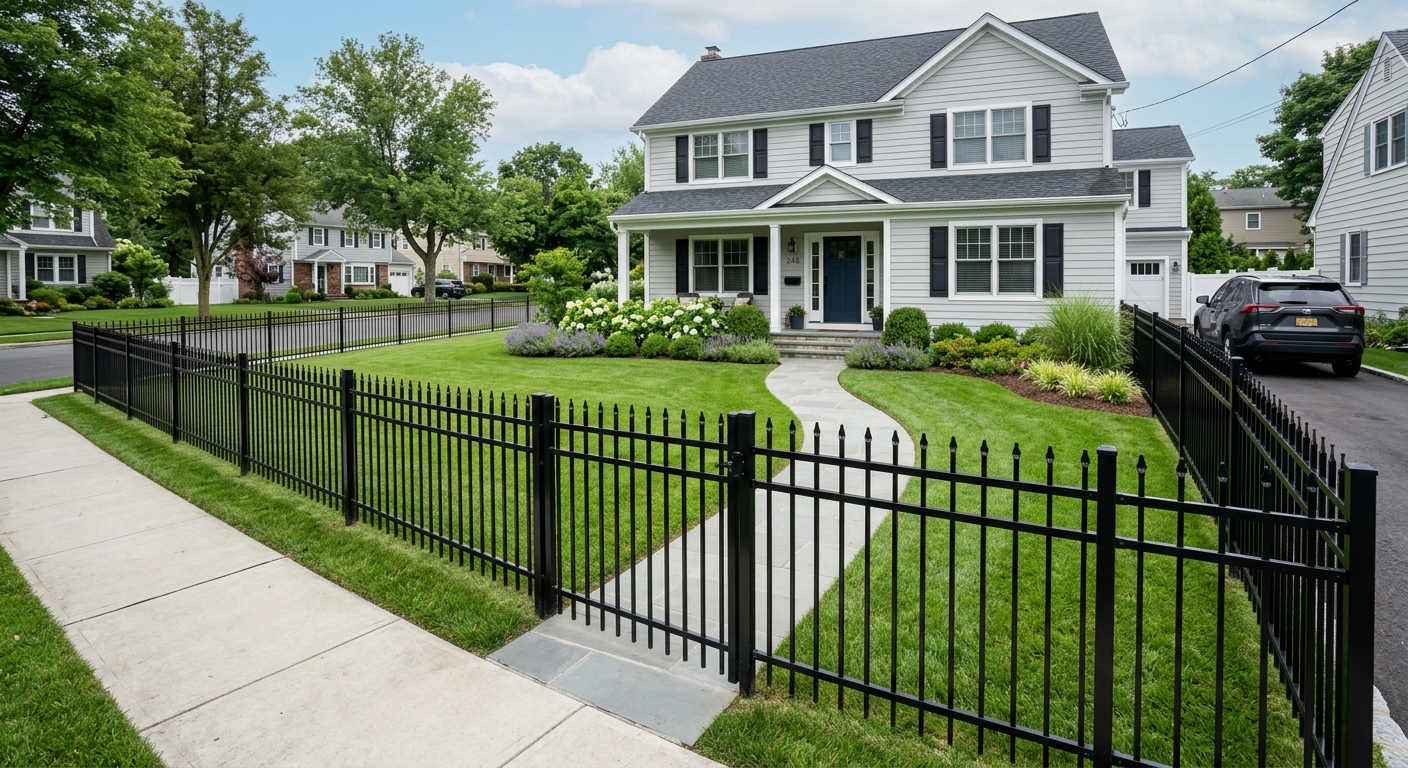
Fencing options and costs in Smiths Falls
Smiths Falls homeowners usually start by comparing fence materials first, then quickly notice that final installed costs can swing based on ground conditions and how deep posts must go. With 9,254 people and about 2,360 homeowner households, demand is steady—especially because 54.8% of local households own their homes. Add in that 53.0% of dwellings are single-detached homes, and you have plenty of yards where families want privacy, pets control, and a clean boundary line year-round.
Most homes in the area were built before 1981 (79.8%), which often means older lots, mature trees, and sometimes uneven grades—details that affect layout, post holes, and pick-up/disposal of an existing fence. In the Kingston–Pembroke region, pricing is also shaped by frost line depth. Southern/eastern Ontario frost penetration is commonly treated as about 1.2 m, so contractors typically set posts around 36–48 inches deep to reduce freeze–thaw heaving. Along with local soil that can hold moisture, that translates into more labour (augering deeper holes, concrete where needed) and stronger post/rail setups for gates.
In Smiths Falls, these projects tend to run especially busy around the residential corridors close to the downtown and along higher-traffic streets where access is easier—while rural edges and larger back lots still need careful planning for grading and gate locations. Use the table below to compare typical material choices and expected ranges, then we can narrow it to your property size, wind exposure, and fence style.
| Material |
Lifespan |
Maintenance |
Privacy Rating |
Price per Linear Foot |
| Pressure-treated pine (standard wood) |
10–15 years |
2–3-year staining/sealing; inspect posts |
Medium–High |
$55–$95 |
| Cedar (natural rot resistance) |
15–25 years |
Annual visual checks; stain as desired |
High |
$65–$110 |
| Vinyl / PVC (no-maintenance) |
25–35 years |
Occasional wash; no staining |
Medium–High (solid styles) |
$75–$140 |
| Chain-link (galvanized steel) |
20–30 years |
Minimal; rinse debris; straighten as needed |
Low (privacy requires screening) |
$40–$80 |
| Aluminum ornamental |
25–40 years |
Occasional cleaning; no rusting |
Low–Medium |
$80–$160 |
| Composite / recycled material |
25–35 years |
Low; wash and check for warping |
Medium–High |
$90–$150 |
Prices are estimates only and vary by project scope, site access and material selection.
What affects the price of fencing in Smiths Falls
In Smiths Falls, even when neighbours choose the “same” fence type, quotes can differ by 30–50% across the Kingston–Pembroke region and Ontario. The biggest reason is that fencing isn’t just materials—it’s ground conditions, how posts are installed, and how labour is scheduled (especially when deeper holes and gate hardware are involved). Current supply costs for lumber, PVC resin, and steel also influence the spread, but the local installation variables tend to be what push bids toward the low end or the top of the provincial bands.
First, frost line depth sets how deep posts must be. For southern/eastern Ontario, frost penetration is commonly treated around 1.2 m, so contractors often set posts roughly 4–6 inches below that design depth to prevent heaving. In practical terms, that frequently means posts need to go about 1.2–1.5 m into the ground with concrete-set sections, which raises both material (longer posts) and labour (more auger time and concrete). Second, wind exposure and fence rigidity matter. While Smiths Falls isn’t the most wind-battered area in Canada, gusty days near larger open lots can still encourage tighter post spacing or sturdier frames for 6–8 ft privacy fences—especially around gates.
Two local examples that commonly change the cost: (1) clayey, moisture-holding soil can make deeper holes messier and slower, so the crew time increases; and (2) older lots and mature trees can mean more hand-digging for clearance, which pushes labour cost higher. On the other hand, if you’re replacing an existing fence on fairly level ground with easy access, you can often stay closer to the mid-range for wood like $55–$95 per linear foot or keep PVC closer to $75–$140 by standardizing panels and avoiding extra concrete sections.
| Price Factor |
Why It Matters |
Cost Impact |
| Fence length in linear feet |
Every post, rail, and panel scales directly with length |
Largest driver; small design changes multiply over distance |
| Post depth required |
Frost line depth affects hole depth, post length, and concrete volume |
Deeper posts increase materials + labour substantially |
| Post setting method |
Concrete-set posts resist movement better than gravel packs in wet/frost soils |
Concrete increases cost but improves stability for gates/structural lines |
| Material choice |
Vinyl, aluminum and cedar have different raw costs and installation methods |
Vinyl/PVC often runs higher; chain-link and standard wood are lower |
| Gate count and type |
Gates require heavier hinges, bracing, and sometimes concrete footings |
Multiple walk-through gates can add noticeable labour and hardware |
| Grade and terrain |
Slopes require stepped sections, raked rails, or extra labour to align panels |
Raked/stepped work adds time and reduces material efficiency |
| Old fence removal and disposal |
Hauling, dismantling, and dump fees vary by condition |
Can add cost and schedule time, especially with dense debris |
| Permit fees and survey / property line locate |
Improper offsets can trigger rework; some projects need permits |
Moderate add-on; avoidance of disputes saves money long-term |
Permits & regulations in Ontario
In Ontario, fences above the usual height thresholds—often about 2.0 m (6.5 ft) at the rear and around 1.0–1.2 m (3–4 ft) at the front or corner—commonly require a building permit. Exact thresholds and any special rules depend on location and lot configuration, so your contractor should confirm the applicable bylaw and permit requirements before work starts. Regardless of height, your fence must respect property lines and municipal setback bylaws.
Before digging any post holes, call for utility locates through Ontario One Call (1-800-400-2255). Even if you “know” where services run, locates protect you from underground electrical, gas, and telecom lines. Next, obtain a survey or locate your property pins before installing to avoid encroachment disputes—especially important for older properties where fences from past decades may not match current markers. Shared fence ownership is handled under provincial line-fences legislation, so if your fence is on or near a boundary with a neighbour, clarify ownership responsibilities before you replace or upgrade.
What typically requires a permit: new fences at or above the common height thresholds, and projects that involve major changes at the front/edge of a lot. What typically does not: like-for-like replacements of lower fences that stay within local height limits and don’t change setbacks or property-line conditions. To verify your contractor in Smiths Falls, check (1) an Ontario licence/registration where applicable through provincial/industry listings, (2) certificate of insurance showing general liability and naming you as certificate holder if required, and (3) WSIB coverage (or the appropriate clearance letter/confirmation if they’re exempt). Request these documents in writing before paying for materials.
Choosing the right fence material for Smiths Falls
Choosing the right fence in Smiths Falls is mostly about matching material performance to your priorities: privacy, low maintenance, budget, and lifespan. Pressure-treated pine is usually the lowest upfront option, but it typically needs staining or sealing every 2–3 years to slow grey weathering and protect the boards in freeze–thaw cycles. Cedar looks great and naturally resists rot better than many standard woods, but it still benefits from periodic maintenance to keep a consistent colour and extend service life. Vinyl/PVC is popular in Ontario because it’s low maintenance—wash it when needed—though in extreme cold it can become more brittle if panels are installed without proper bracing and clearance.
Chain-link is the most budget-friendly and very durable, but it won’t give privacy unless you add slats or a mesh/screening system. Aluminum ornamental provides an attractive, rust-resistant look and good longevity, but it offers limited privacy. For Kingston–Pembroke’s winter conditions, all materials must be installed with correct post depth: in this region, posts often need to be set around 36–48 inches (and sometimes deeper where conditions demand) to reduce heaving. Concrete-set posts are commonly used for structural sections and gates, particularly when the soil is wet or when the fence line crosses uneven ground.
Wind and snow load can also affect how rigid the system feels. If you’re building near open areas, fewer wind-load “weak points” (solid post spacing and sturdier rails) can reduce racking, which is one reason 6–8 ft privacy fences tend to cost more than basic runs. A practical dollar example: if pressure-treated pine comes in around the lower end of the $55–$95 range, moving to vinyl in the $75–$140 range can be justified if you want 20+ years of low upkeep—especially when you’d otherwise be paying for stains and repairs every few seasons. The best value is the material you can realistically maintain.
| Material |
Cold Tolerance |
Lifespan |
Annual Maintenance |
Best For |
Price Band |
| Pressure-treated pine |
Good (with proper staining/sealing) |
10–15 years |
Low–medium (visual checks; stain/seal every 2–3 years) |
Budget-friendly boundary + decent privacy |
$55–$95 |
| Cedar |
Good (naturally rot-resistant in moisture) |
15–25 years |
Low–medium (optional staining; regular inspection) |
Appearance + stronger wood rot resistance |
$65–$110 |
| Vinyl / PVC |
Very good (avoid over-flexing; proper bracing) |
25–35 years |
Very low (wash/check hardware) |
Low maintenance + long-term look |
$75–$140 |
| Chain-link |
Excellent (steel coating resists weather) |
20–30 years |
Very low (routinely clear debris; straighten) |
Security + pets control on a budget |
$40–$80 |
| Aluminum ornamental |
Excellent (coated metal) |
25–40 years |
Low (occasional cleaning) |
Attractive curb appeal with durable posts |
$80–$160 |
| Composite / recycled |
Good (watch for installation and expansion gaps) |
25–35 years |
Low (wash/check for warping) |
Consistent appearance + lower upkeep |
$90–$150 |
How to choose a fencing contractor in Smiths Falls
When you’re hiring a fencing contractor in Smiths Falls, verify licensing/coverage first, then demand itemized details in the quote. For Ontario projects, confirm liability insurance with a current certificate of insurance and check that the coverage is appropriate for fencing work (not just general home services). Next, verify WSIB coverage: ask for WSIB/WCB clearance or confirmation letter/number before work begins. A reputable contractor will provide these documents without pushing back, and they should match the company name on their written estimate and contract.
Get 2–3 itemised written quotes that break out labour and materials—especially for posts (length and depth), concrete quantities (if used), rails, pickets/panels, gate hardware, and any demolition/disposal. Avoid lump-sum quotes that don’t specify fence height, style, and installation method. Carefully check what’s excluded: stump removal, rock excavation, required permits, and survey/property locate can all add cost later if they’re not written into the scope. Ask whether permit pull is included (or who files it), and whether old fence removal and dump fees are part of the price.
Warranty matters too. Look for a workmanship warranty (often for fence alignment and post stability) and a separate product/manufacturer warranty for materials like vinyl rails or metal components; also ask if warranties are transferable to the homeowner. For payment scheduling, avoid large deposits—never more than 10–15% upfront—and hold back a portion until the job is complete and materials are verified. Finally, insist on a start date and completion estimate in writing so you’re not left guessing during the short Ontario outdoor season.
- Confirm the company name on insurance certificates matches the contractor’s legal name on the contract.
- Request WSIB/WCB clearance or coverage confirmation before any digging.
- Ask for insurance limits and proof it includes fencing installation and site work.
- Require an itemised quote with labour + materials (posts, concrete, rails, pickets/panels, hardware).
- Have post depth specified in writing (not just “below frost”).
- Clarify concrete-set vs gravel pack vs driven posts, especially for gates and structural lines.
- Confirm gate hardware type and whether double-drive-through gates include proper bracing.
- Ask whether disposal of old fence materials is included and where debris goes.
- Verify whether permit filing and any required inspections are included or billed separately.
- Request start date, estimated completion date, and weather-related contingency language.
- Get a workmanship warranty term and understand what defects are covered.
- Don’t pay more than 10–15% upfront; hold back funds until walk-through acceptance.
Red flags to watch for in Smiths Falls: quotes that only show a total price without post depth/concrete details; refusal to provide WSIB/WCB and liability proof in advance; “we’ll figure it out later” language about permits/locates; vague warranty wording (no written term for workmanship); and requests for large upfront payments or cash-only deals.
Frequently asked questions — fencing in Smiths Falls
How long does fence installation take in Smiths Falls?
In Smiths Falls, most standard residential fence installs take anywhere from 1–3 days, depending on fence length, gate count, and ground conditions. A straight run with consistent grade can move quickly, while sloped yards, tree roots, or rock can add time for hand-digging or coring. Post depth requirements are a major schedule factor in Kingston–Pembroke: crews typically need to set posts below frost penetration to reduce heaving, which means deeper holes and sometimes concrete-set sections. If you’re replacing an old fence too, demolition and disposal can add a day or more. As a rough guide, a mid-sized job often lines up with the same material pricing bands—like standard wood around $55–$95 per linear foot—but timeline is more sensitive to excavation and gates than the material alone.
Can I install a fence on a slope in Smiths Falls?
Yes, you can install a fence on a slope in Smiths Falls, and most contractors will do either stepped panels (more “stair-step”) or raked rails (a smoother diagonal line). Which method is best depends on your chosen style, the fence height, and how the posts land on the slope while still achieving proper post depth below frost. If you step the fence, you’ll usually see more distinct changes in height from section to section; raked systems look cleaner but require careful measuring so boards line up. For safety and durability, the contractor still needs to excavate each post hole to the correct depth, rather than trying to “cheat” one side. This is one reason quotes can vary—two slopes with the same fence length can cost differently if the crew has to do more precise layout and extra rail/panel adjustments.
What is the most weather-resistant fence for Smiths Falls's climate?
For Smiths Falls and eastern Ontario freeze–thaw conditions, the most weather-resistant options are typically vinyl/PVC and properly installed aluminum or cedar. Vinyl/PVC performs well because it’s not prone to rot like wood, and aluminum is coated and won’t rust in the way raw metals might. Cedar has better rot resistance than many softwoods, but it still needs maintenance so it doesn’t degrade prematurely in moisture-rich cycles. The real-world durability also depends on installation: correct post depth to reduce heaving and solid gate bracing matter as much as the material. In pricing terms, vinyl often sits around the $75–$140 per linear foot band, while aluminum can be higher (often $80–$160) due to hardware and structural requirements. Chain-link is also very durable but won’t provide privacy without added screening.
How do I prevent wood fence rot in Smiths Falls?
To prevent wood fence rot in Smiths Falls, focus on two areas: board protection and post stability. First, pressure-treated pine should be stained/sealed on a maintenance rhythm (commonly every 2–3 years) because weathering exposes wood and accelerates moisture absorption. Cedar is more resistant, but it benefits from periodic finishing to keep surfaces protected through winter cycles. Second, rot often starts at the posts where moisture collects and where movement allows gaps. That’s why correct post depth and the right setting method (often concrete-set for structural sections and gates) are critical in Kingston–Pembroke frost conditions. A good contractor will also use proper hardware and install to keep water shedding from the boards. If you’re trying to stay budget-conscious (wood often starts around $55–$95), don’t skip installation details—those are what separate a fence that lasts 10 years from one that lasts 15–20.
What is the cost per linear foot for fencing in Smiths Falls?
Typical installed fencing costs in Smiths Falls follow the local price bands for the Kingston–Pembroke area. As a homeowner reference, standard wood (pressure-treated pine) generally lands around $55–$95 per linear foot. Vinyl/PVC is usually higher, often around $75–$140, while chain-link can be lower at about $40–$80. Aluminum ornamental often ranges from $80–$160, depending on style and gate requirements. Your final number is affected by post depth tied to frost penetration, whether concrete is used, gate count, and how difficult the excavation is (clay, moisture, rocks, or tight access). That’s why two quotes for “the same length” can differ—labour for digging and bracing gates can swing the total even when material choices match.
Should I repair or replace my old fence in Smiths Falls?
Repair makes sense when the fence is mostly sound—meaning posts are solid (not leaning or soft at the base), rails aren’t broken, and only a few boards or sections are damaged. Replace is usually the better route if multiple posts have rotted, the fence line has significant sag, or you’re seeing widespread movement after winter freeze–thaw. In Smiths Falls, the decision often comes down to how many structural components are compromised: a small repair might involve swapping boards, but a fence with post failure typically needs replacement for stability and safety. If you’re considering replacing, compare options using real installed pricing bands (for example, wood around $55–$95 vs vinyl around $75–$140) and ask your contractor to assess whether the current layout can be reused. Also consider whether removal/disposal is included—hidden demolition costs can make “repair” look more expensive than it seems.