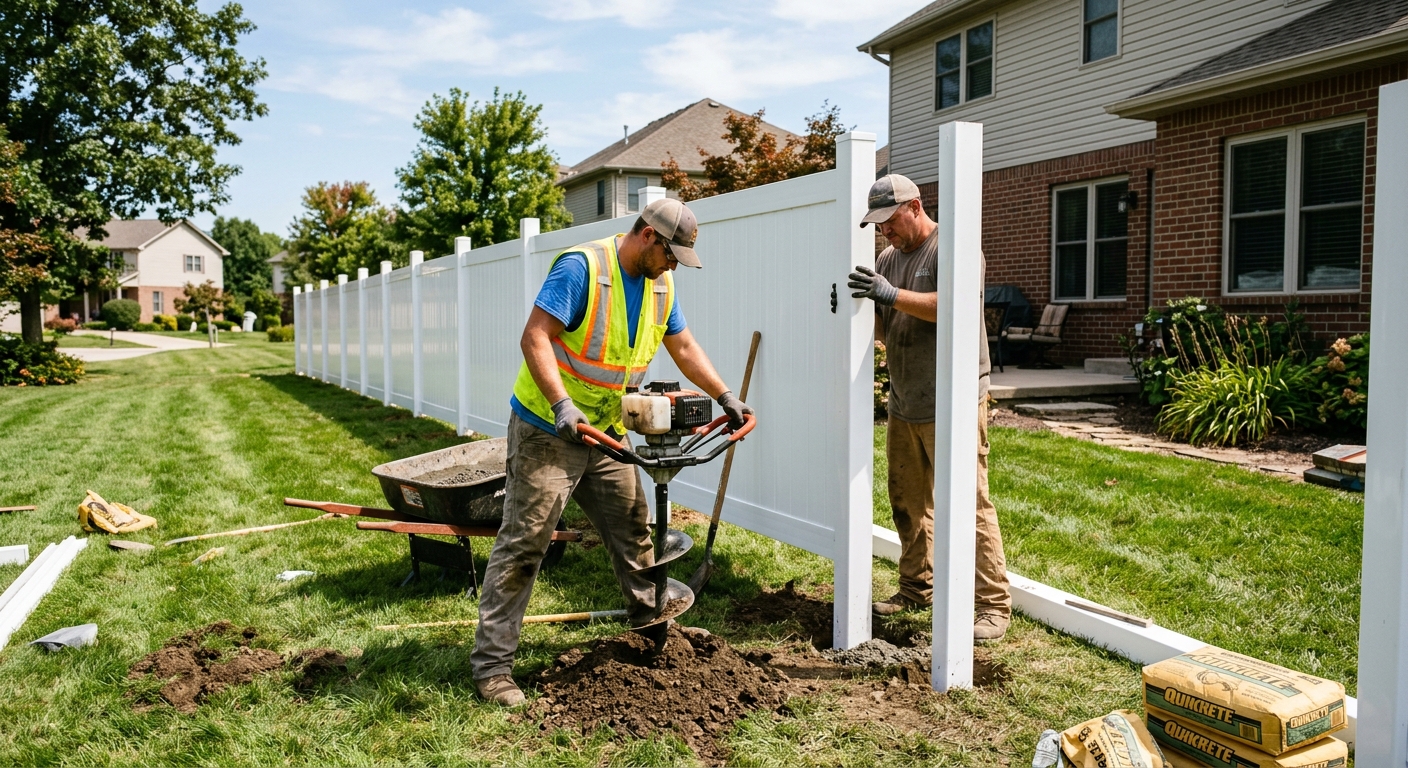
Fencing options and costs in LaSalle
LaSalle is a fast-growing community in the Windsor–Sarnia corridor, and fencing demand tracks closely with how many homes are owned locally: in the 2021 Census, 91.4% of households own their homes (Statistics Canada, 2021 Census). With 84.4% of dwellings being single-detached houses, most customers are upgrading side yards and back patios with practical, long-lasting fencing that can stand up to our freeze–thaw cycles.
In Windsor–Sarnia, the big cost driver is the southern Ontario frost line. For most residential installs, posts must be set deep enough to prevent heaving—typically at least 3 ft deep, and often 4 ft embedment where soils are clay-heavy or exposed. That depth means more digging, more concrete, and longer post material, which is why crews price depth and access carefully. Wind also matters near open fields and areas closer to the lake influence; solid privacy panels can catch gusts, so we may tighten post spacing or upgrade hardware even when the fence “looks” similar from the street.
In LaSalle, the trade is especially busy around the residential pockets near the downtown core and the newer subdivisions along major east–west routes, where driveways are wide but lots can be tight for equipment. If you’re comparing options, start with your privacy and maintenance goals, then let the table below match typical lifespan and budget ranges for LaSalle installations.
| Material |
Lifespan |
Maintenance |
Privacy Rating |
Price per Linear Foot |
| Pressure-treated pine (standard wood) |
10–15 years |
Stain/seal every 2–3 years; watch for warping |
Medium to high (solid panels) |
$45–$80 |
| Cedar (natural rot resistance) |
15–25 years |
Light staining/cleaning every 2–4 years |
Medium to high (solid boards) |
$60–$105 |
| Vinyl / PVC (no-maintenance) |
20–30 years |
Rinse annually; replace damaged sections if impacted |
High (solid stockade styles) |
$65–$110 |
| Chain-link (galvanized steel) |
20–35 years |
Minimal; occasional tightening/patching |
Low (see-through) |
$30–$55 |
| Aluminum ornamental |
25–40 years |
Wash as needed; paint touch-ups rarely required |
Low to medium (open pickets) |
$70–$130 |
| Composite / recycled material |
25–35 years |
Rinse; no staining |
High (solid privacy boards) |
$80–$135 |
Prices are estimates only and vary by project scope, site access and material selection.
What affects the price of fencing in LaSalle
In LaSalle and the wider Windsor–Sarnia corridor, the same “type” of fence can land 30–50% apart once you account for how deep we must set posts, how wind loads are managed, and what the site requires to be safe and straight. Across Ontario, labour availability and the amount of concrete work also swings quotes—especially when a job involves excavation in clay, removal of an old fence, or gate-heavy layouts. In a market where the median household income is $119,000 (Statistics Canada, 2021 Census), many homeowners are willing to invest in concrete-set posts and better hardware, which increases upfront cost but reduces long-term sag and panel failure.
Frost depth is the key Ontario factor. Best practice in our region is to set posts deep enough to avoid heaving—commonly 4–6 inches below the design frost depth. That often translates to roughly 1.2 m (about 4 ft) embedment in exposed or clay-heavy soils, with structural footings placed below the frost line. Deeper holes mean longer posts and more concrete volume, pushing you toward higher ends of the wood and vinyl bands (for example, wood work can land from $45–$80 per linear foot depending on complexity).
Local conditions can also raise or lower cost quickly. For example, a straight back lot with easy access may stay close to the chain-link band ($30–$55) because posts are efficient. A corner property in clay that needs stepped panels for grade changes and two drive gates will cost more due to extra setouts and heavier post bracing. Similarly, jobs near open fields can require closer post spacing and wind-rated rails for privacy styles—materials and labour add up, even if the fence height looks unchanged.
| Price Factor |
Why It Matters |
Cost Impact |
| Fence length in linear feet — the primary cost driver |
More panels means more posts, rails, and hardware |
Directly scales total price; often the biggest driver |
| Post depth required — frost line determines post length and hole depth |
Deeper embedment prevents heaving and panel misalignment |
Higher digging time and longer materials; concrete often required |
| Post setting method — concrete vs. gravel pack vs. driven posts |
Concrete improves stability in clay and under heavy gate loads |
Concrete setting increases material and labour cost, but reduces future repairs |
| Material choice — vinyl vs. cedar vs. chain-link |
Different material costs and installation methods |
Vinyl and cedar typically higher than chain-link; aluminum sits mid-to-high |
| Gate count and type — walk-through vs. drive-through (double) |
Gates require reinforced posts, hinges, and stronger framing |
Can add a significant premium; double gates are the costliest |
| Grade and terrain — sloped yards require stepped or raked panels |
Uneven grades increase labour and cut waste |
Moderate to high add-on depending on slope and style |
| Old fence removal and disposal |
Demolition, hauling, and prep time |
Adds labour and dump fees; can be substantial for larger removals |
| Permit fees and survey / property line locate |
Ensures correct setbacks and reduces encroachment disputes |
May add a few hundred dollars; survey can increase more on larger projects |
Prices are estimates only and vary by project scope, site access and material selection.
Permits & regulations in Ontario
In Ontario, a fence may require a building permit when it exceeds height thresholds—commonly around 2.0 m (6.5 ft) at the rear and 1.0–1.2 m (3–4 ft) at the front or corner (local municipal rules can vary). Even when a permit isn’t required, all fences must respect property lines and municipal setback bylaws. Before any post holes are dug, you should arrange utility locates through Ontario One Call so your contractor won’t hit buried services.
To avoid disputes, verify where your property line actually sits. If you don’t have clear markers, get a survey or a professional property-line locate before installation. Shared fence ownership and maintenance responsibilities are handled under Ontario’s line-fences framework—so it’s smart to confirm whether the fence is truly “shared” with your neighbour and who is responsible for upkeep.
Here’s what typically DOES require a permit in Ontario: fences over the applicable height limits, structural fencing tied to a deck/guard where safety is involved, and any project that triggers review by your municipality. What typically does NOT require a permit: standard-height backyard fences under the threshold that stay within set boundaries.
For contractor checks in LaSalle: (1) confirm the contractor is properly licensed for fence-related work where applicable through provincial/industry registration pathways; (2) request a certificate of insurance showing liability coverage for property damage and bodily injury; and (3) verify WSIB coverage (or the appropriate exemption/coverage documentation, if applicable) before work starts. Ask for the documents in writing and match names to the quote and invoice.
Choosing the right fence material for LaSalle
Choosing the right fence in LaSalle is mostly about matching material to your priorities—privacy, low maintenance, and how long you want the fence to look straight through winter. Pressure-treated pine can be the most budget-friendly path, but it typically needs staining or sealing every 2–3 years to prevent grey weathering and slow surface cracking. Cedar looks great and resists rot better than standard wood, yet it still needs periodic staining. Vinyl/PVC is the “set it and forget it” option for many homeowners, but in deep cold it can become brittle if panels are improperly braced or exposed to constant impact; correct post depth and good rail alignment are non-negotiable. Chain-link has the lowest upfront cost and long service life, but it won’t give you true privacy unless you add privacy slats. Aluminum ornamental offers a clean, rust-resistant look and strong longevity, though it’s naturally more open.
Post depth matters across all materials because Windsor–Sarnia’s frost line drives embedment. Practically, that means posts need to be set deep enough to resist heaving—often around 1.2 m (about 4 ft) in exposed or clay-heavy soils—plus quality concrete setting when soil conditions call for it. For privacy styles, we also design for wind and snow load: stronger rails, tighter spacing where gusts are frequent, and properly engineered gate frames reduce bounce and sag.
To make the budget decision tangible: if you price a pressure-treated privacy fence versus vinyl, the vinyl option often lands in the $65–$110 per linear foot range, while wood work can start around $45–$80. The difference is justified when you want fewer annual tasks and longer “appearance life” without staining—especially on longer runs where maintenance becomes time-consuming.
| Material |
Cold Tolerance |
Lifespan |
Annual Maintenance |
Best For |
Price Band |
| Pressure-treated pine |
Good when properly installed and sealed |
10–15 years |
Light inspection; stain/seal every 2–3 years |
Lowest upfront cost with acceptable upkeep |
$45–$80 |
| Cedar |
Good; stable when posts are set below frost line |
15–25 years |
Clean and stain every 2–4 years |
Natural look and better rot resistance |
$60–$105 |
| Vinyl / PVC |
Very good; needs correct bracing in cold |
20–30 years |
Rinse; replace damaged sections if hit |
Low maintenance and consistent appearance |
$65–$110 |
| Chain-link |
Excellent for freeze–thaw |
20–35 years |
Minimal; tighten/patch as needed |
Security, pets, and budget-conscious runs |
$30–$55 |
| Aluminum ornamental |
Excellent; powder-coated systems |
25–40 years |
Wash as needed |
Low rust risk and curb-appeal fencing |
$70–$130 |
| Composite / recycled |
Good; stable with proper post spacing |
25–35 years |
Rinse; no staining |
Privacy with reduced maintenance |
$80–$135 |
Prices are estimates only and vary by project scope, site access and material selection.
How to choose a fencing contractor in LaSalle
Choosing the right fencing contractor in LaSalle starts with documentation. First, verify Ontario licensing or trade registration as applicable to the contractor’s business category, and ask for their legal business details to match the quote. Next, request a certificate of insurance (liability) and confirm the coverage is active for the job date range. Finally, confirm WSIB coverage (or the appropriate documentation for exemption/coverage status) before work begins—don’t accept “we’re covered” without seeing the paperwork.
Get 2–3 itemised written quotes, not just a lump sum. A good fence quote breaks out labour and materials (posts, rails, panels, gates, hardware, concrete), plus excavation and any disposal. Read the scope carefully: what’s excluded (old fence removal, utility locates, re-staking property lines, permit pulling)? If permits are required, confirm whether the contractor pulls them or whether you’re responsible. Ask about warranty terms: workmanship warranty length, product/manufacturer warranty, and whether the warranty is transferable to you if you sell your home.
For payment, keep it conservative—never pay more than 10–15% upfront, and hold back a portion until the fence is fully complete and cleaned up. Require a clear start date and an estimated completion timeline in writing, including curing time if concrete is part of the installation. In winter-adjacent projects, timelines matter because post setting and panel alignment depend on curing and working conditions.
- Ask for proof of liability insurance before signing anything.
- Confirm WSIB coverage status with written documentation.
- Request an itemised quote showing posts, rails, panels, concrete, and gates.
- Verify that frost-depth embedment and post setting method are included.
- Confirm whether utility locates are arranged or if you’re expected to do it.
- Check if old fence removal and disposal are included (and where it’s hauled).
- Review how gates are engineered (reinforced posts, hardware grade).
- Ask how they handle sloped yards (stepped vs. raked panels).
- Confirm who is responsible for property line locating/survey coordination.
- Get the warranty in writing (workmanship vs. manufacturer coverage).
- Set a payment schedule with a holdback until final walkthrough.
- Ensure the quote includes cleanup and final grading around post holes.
Red flags I see in LaSalle include: contractors quoting unusually low pricing without mentioning post depth or concrete setting, refusing to provide insurance/WSIB documentation, providing only a lump-sum estimate with no material breakdown, delaying written timelines, and leaving out how they’ll deal with property lines, gates, or old fence removal.
Frequently asked questions — fencing in LaSalle
How much does a fence cost in LaSalle?
Fence costs in LaSalle depend mainly on length, gate count, and how deep posts must be set for frost protection. In the Windsor–Sarnia area, most structural footings are designed below the frost line, which usually means around 1.2 m (about 4 ft) embedment in typical residential installs, especially in exposed or clay-heavy soils. If you’re installing chain-link, many projects land around $30–$55 per linear foot, while vinyl/PVC commonly sits around $65–$110 per linear foot depending on height and gate complexity. Wood fences can range roughly $45–$80 per linear foot depending on whether you’re using cedar, the rail build, and how many fence corners/gates you have. For accurate pricing, we always recommend an on-site measure and a quote that itemises concrete setting and any removal work.
How deep should fence posts be for LaSalle's frost?
For LaSalle and southern Ontario frost conditions, posts generally need to be set deep enough to prevent heaving from freeze–thaw cycles. As a practical rule in the Windsor–Sarnia corridor, posts are typically set at least 3 ft deep, and 4 ft embedment is commonly used where soils are clay-heavy or the fence line is exposed. This aligns with best practice to set footings below the local design frost depth so the ground movement doesn’t lift posts and cause panel misalignment. The depth requirement also affects post length, concrete volume, and labour time, so it’s one reason quotes can vary significantly even when the fence height looks the same. If you’re ordering cedar, vinyl, or aluminum, the depth requirement still applies—material doesn’t change frost physics, and the strongest fences rely on solid post setting.
Wood vs vinyl vs aluminum fence — which is best?
The “best” choice depends on what you value most. Wood (pressure-treated pine or cedar) offers a warmer look and can be budget-friendly, but wood typically needs maintenance—staining or sealing every 2–3 years for treated pine to reduce weathering, and periodic upkeep for cedar. Vinyl/PVC is often the lowest-maintenance option; it usually costs more upfront (commonly $65–$110 per linear foot) but doesn’t require staining and keeps a consistent appearance. Aluminum ornamental is rust-resistant and long-lived, with mid-to-high pricing (often $70–$130 per linear foot), but it’s usually less private because of the open picket design. In LaSalle’s winter climate, the most important factor isn’t only the material—it’s how the posts are set below the frost line and how gates are braced for wind and impact. If privacy is a priority, vinyl or wood privacy styles usually beat open aluminum.
Do I need a permit to build a fence in Ontario?
In Ontario, permits can be required if a fence exceeds height thresholds—often around 2.0 m (6.5 ft) at the rear and 1.0–1.2 m (3–4 ft) at the front or corner, though your municipal rules govern the final requirements. Even without a permit, you must respect property lines and municipal setbacks. For LaSalle homeowners, the best practice is to confirm the required approvals with your contractor and the municipality before digging. Also, don’t skip utility locates: contact Ontario One Call before any post holes are dug. A homeowner-level step that prevents headaches is verifying property pins or getting a locate/survey before installation, so the fence doesn’t encroach. Shared fence responsibilities are handled under Ontario line-fences principles, so it’s worth discussing boundaries and maintenance with neighbours early.
How long does a wood fence last in LaSalle?
With proper installation—especially correct post depth below the frost line—wood fences in LaSalle typically last about 10–15 years for pressure-treated pine and 15–25 years for cedar, depending on exposure, drainage, and upkeep. Southern Ontario’s freeze–thaw cycles can cause posts to heave if embedment is too shallow, which leads to leaning boards and gaps. Wind gusts in open areas can also accelerate wear on rails and pickets if spacing and bracing aren’t built for the load. Maintenance matters: staining/sealing every 2–3 years (pressure-treated pine) and periodic care for cedar helps slow greying and cracking. If you keep sprinklers from wetting fence faces constantly and allow good airflow, you’ll usually stretch the lifespan toward the high end.
Who owns and maintains a shared fence?
In Ontario, shared fence ownership and maintenance responsibilities are addressed under provincial line-fences legislation. Practically, that means the “who maintains it” question depends on whether the fence is located on the boundary and whether both properties treat it as a shared fence. If the fence was erected strictly on one side inside a lot line, that owner typically handles repairs. If it’s built on the boundary, neighbours may share responsibilities, including costs for repair or replacement, subject to the legislation and any agreements. For LaSalle homeowners, the best first step is to confirm the boundary using property pins or a professional locate before signing off on costs—misaligned fences create disputes quickly. It’s also wise to document conversations in writing so expectations about maintenance, replacement timing, and fencing style are clear.