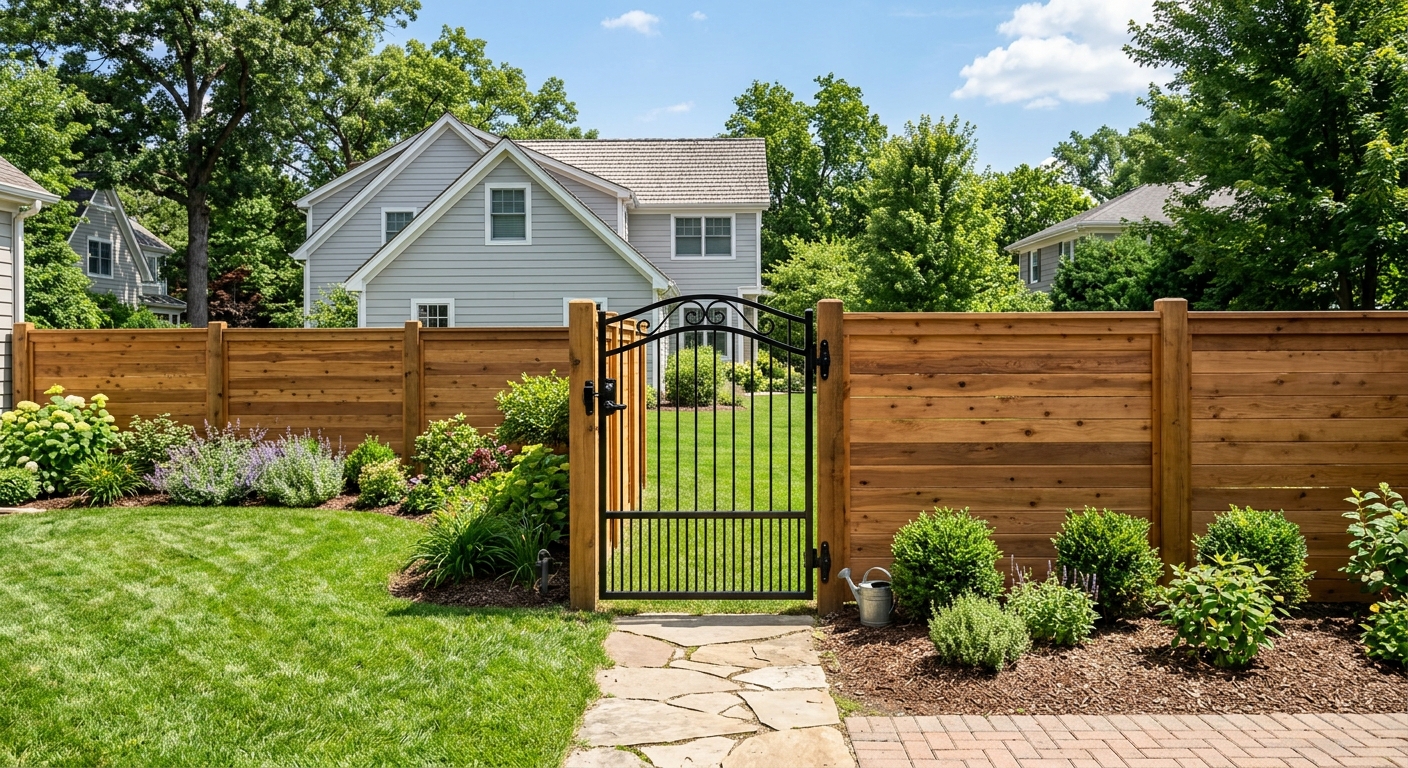
Fencing options and costs in Banbury-Don Mills
Banbury-Don Mills is a busy pocket of Toronto, and that shows up in how homeowners plan and price fencing. With a population of 27,695 (Statistics Canada, 2021 Census), demand is steady—especially in residential pockets where yard boundaries are common and lots are actively maintained. The neighbourhood’s mix of older homes and well-kept properties creates a regular flow of installs and replacements, and every second-year spring clean-up tends to translate into new projects for contractors. That’s why fence work can feel “competitive” here: more crews are available than in smaller Ontario towns, but pricing still moves with access, material, and how much groundwork is needed.
In Southern Ontario, the frost line is commonly treated as roughly 42"–48" for design purposes, so fence posts usually need to be set minimum 3.5–4 feet deep to avoid frost heave. For taller privacy fences (often 6–8 ft), that depth—and the fact that Toronto-area soils can be clay/mixed—pushes most installers toward concrete-set posts rather than simple driven posts. Panel strength also matters: even though the GTA isn’t the prairie’s open-field wind zone, wind loads still influence post size and spacing, particularly for solid wood and vinyl privacy styles.
In Banbury-Don Mills, trades are especially busy around the Don Mills/Don Valley Parkway edges and nearby commercial-to-residential transitions, where wind exposure and property line complexity can increase labour. Use the table below to compare typical options and where the cost bands generally land for Toronto-area installs.
| Material |
Lifespan |
Maintenance |
Privacy Rating |
Price per Linear Foot |
| Pressure-treated pine (standard wood) |
10–15 years |
Stain/seal every 2–3 years |
7/10 |
$65–$120 |
| Cedar (natural rot resistance) |
15–25 years |
Light stain/reseal every 3–4 years |
8/10 |
$75–$130 |
| Vinyl / PVC (no-maintenance) |
20–30 years |
Rinse occasionally; no painting |
9/10 |
$75–$130 |
| Chain-link (galvanized steel) |
20–35 years |
Wash as needed; inspect tension |
3/10 |
$45–$85 |
| Aluminum ornamental |
25–40 years |
Occasional cleaning; no rust |
4/10 |
$90–$160 |
| Composite / recycled material |
25–35 years |
Minimal—clean and inspect for warping |
8/10 |
$100–$170 |
Prices are estimates only and vary by project scope, site access and material selection.
What affects the price of fencing in Banbury-Don Mills
In Banbury-Don Mills, the same fence can come in anywhere from one quote to the next because Toronto-area work is priced around real site variables and installation method—not just the final material. That’s why differences of about 30–50% across the wider Toronto market are common when teams price (1) post depth and concrete work, (2) how they handle gates and corner hardware, and (3) whether old fence removal and disposal are included. Even when you choose a vinyl or chain-link option, the labour and groundwork can dominate the budget if your yard requires re-grading, extra bracing, or deeper footings.
Local frost conditions drive post installation depth. While Southern Ontario is commonly treated at a 42"–48" design frost line, posts are typically set about 4–6 inches below the design frost depth to reduce frost heave risk—meaning many Toronto projects end up with roughly 1.5–2.0 m (about 5–6.5 ft) of hole depth. That often leads to longer posts, more concrete, and additional labour time. In higher-exposure corners, panel style and spacing also matter: tighter spacing (commonly 6–8 ft centres) and stronger posts are used to resist racking and uplift. When wood is installed without correct treatment and sealing, Toronto’s freeze-thaw swings can also speed surface checking and grey weathering.
Concrete examples: (1) a 40 ft run on a flat lot with chain-link may land closer to the $45–$85 per linear foot band because set-up is faster and fence fabric is lighter; (2) a 60 ft 6 ft privacy fence with vinyl privacy panels and two gates can push toward the $75–$130 per linear foot range due to deeper concrete-set posts and heavier hardware. (3) If you need step/rail adjustments on a sloped backyard common in some Don Mills side streets, labour increases as panels are raked or stepped, rather than “straight-run” framing.
| Price Factor |
Why It Matters |
Cost Impact |
| Fence length in linear feet — the primary cost driver |
Every extra foot adds posts, rails, and hardware |
Can change the total by thousands |
| Post depth required — frost line determines post length and hole depth |
Deeper holes and longer posts prevent frost heave |
Raises material and labour time |
| Post setting method — concrete vs. gravel pack vs. driven posts |
Concrete-set is more stable in Toronto-area soils |
Concrete adds cost and increases install time |
| Material choice — vinyl vs. cedar vs. chain-link |
Different weights, fastening systems and longevity |
Vinyl/cedar generally higher than chain-link |
| Gate count and type — walk-through vs. drive-through (double) |
Gates require heavier framing, hinges, and latches |
Each gate can add a meaningful chunk to price |
| Grade and terrain — sloped yards require stepped or raked panels |
More measuring and custom cutting |
Labour increases even if linear footage is the same |
| Old fence removal and disposal |
Demolition and hauling are time-consuming |
Can add hundreds to over a thousand depending on scope |
| Permit fees and survey / property line locate |
Some heights require a permit; setbacks must be verified |
Adds administrative and survey-related costs |
Permits & regulations in Ontario
In Ontario, whether you need a permit often depends on fence height and location relative to your property line. As a practical guideline, fences above roughly 2.0 m (6.5 ft) at the rear and about 1.0–1.2 m (3–4 ft) at the front or corner often trigger permit requirements under municipal rules. Even when a permit isn’t required, fences still must respect property lines and municipal setback bylaws—so “good faith” placement isn’t enough if pins or survey data weren’t verified.
Before any post holes are dug, you should complete utility locates through Ontario One Call to reduce the risk of striking buried services. Next, confirm your exact property line using a survey or a property locate so you don’t end up with encroachment disputes (especially around corner lots or where past fences drifted over time). For shared fencing, line-fences responsibilities are governed by provincial line-fences legislation—meaning maintenance and cost-sharing are handled under the rules applicable to your circumstance.
Contractor verification is also part of staying compliant: ask for proof of Ontario licensing (when applicable to the contractor’s trade scope), WSIB clearance, and liability insurance. Where to look is straightforward: review the contractor’s information online where required, and request a current certificate of insurance (liability) plus WSIB/WCB clearance or a status letter. If you’re pulling a permit, confirm whether it’s included in the quote and who signs the paperwork.
Choosing the right fence material for Banbury-Don Mills
Choosing the right fence material in Banbury-Don Mills is less about what looks best on day one and more about how it performs through Toronto’s freeze-thaw weather and seasonal freeze conditions. Pressure-treated pine is typically the budget starter: it’s practical, but it generally needs staining or sealing every 2–3 years to prevent grey weathering and early surface wear. Cedar is a step up for homeowners who want better appearance and natural rot resistance; it still benefits from periodic maintenance, but it tends to hold up more gracefully in damp/freeze cycles.
For low day-to-day maintenance, vinyl/PVC is usually the best fit. It won’t need painting, and it stands up well to the wet-to-freeze transitions common in Ontario winters. One caution: in very cold snaps, some vinyl can become more brittle than wood—so good installers use proper post and rail hardware and keep spacing and fastening correct. Chain-link is the lowest upfront cost and long-lived, but it won’t deliver privacy on its own—privacy plants or screens would be a separate add-on. Aluminum is attractive and rust-resistant, but it’s also more ornamental than private. Composite/recycled products can offer strong longevity and solid visual privacy, though they’re often priced closer to the higher bands.
On installation stability: because the local frost line is typically treated around 42"–48", concrete-set posts are commonly recommended for privacy height fences. This helps prevent post movement that can later cause rails to loosen or panels to rack. If you’re comparing costs, the difference can be justified: a vinyl privacy fence often runs in the $75–$130 range per linear foot, but the reduced maintenance versus pine in the $65–$120 range can be worth it when you value fewer annual tasks.
| Material |
Cold Tolerance |
Lifespan |
Annual Maintenance |
Best For |
Price Band |
| Pressure-treated pine |
Good with proper sealing |
10–15 years |
Minor inspections; stain/seal every 2–3 years |
Lower upfront budget |
$65–$120 |
| Cedar |
Very good when kept properly finished |
15–25 years |
Clean and re-stain/reseal every 3–4 years |
Appearance + natural rot resistance |
$75–$130 |
| Vinyl / PVC |
Good; relies on correct spacing and hardware |
20–30 years |
Rinse and inspect fasteners occasionally |
Low maintenance privacy |
$75–$130 |
| Chain-link |
Good |
20–35 years |
Wash as needed; check tension |
Security where privacy isn’t required |
$45–$85 |
| Aluminum ornamental |
Excellent (no rust) |
25–40 years |
Occasional cleaning |
Front yards and curb appeal |
$90–$160 |
| Composite / recycled |
Good; choose quality blends |
25–35 years |
Minimal cleaning; periodic inspection |
Durable, solid privacy without frequent upkeep |
$100–$170 |
How to choose a fencing contractor in Banbury-Don Mills
Picking the right fencing contractor in Banbury-Don Mills starts with proof and process, not just a nice rendering. In Ontario, verify liability insurance (request a current certificate of insurance showing the limits), and confirm WSIB coverage (or the applicable clearance/status documentation). For licensing, fencing companies may not all operate under one identical “licence type” the way some construction trades do, so the best approach is to confirm the contractor’s credentials relevant to their work scope and ensure they’re properly registered for their business operations where required. Ask for documents before signing: certificate of insurance, WSIB clearance (or status letter), and any company registration details they can provide.
Next, get 2–3 itemised written quotes—not lump sums. A strong quote breaks down labour and material separately, includes the number of posts and method (concrete-set versus other methods), states fence height and panel spacing, and lists gates as separate line items. Scope clarity matters: confirm what’s excluded (for example, permit pulls, survey/property locate, demolition of old fencing, disposal/hauling, and repairs to existing landscaping). Warranty should be written: workmanship coverage length, product/manufacturer warranty duration, and whether the warranty is transferable if you sell your home.
Payment scheduling should protect you. Never pay more than about 10–15% upfront. Hold back a portion until completion and final walk-through. In Toronto-area weather, a clear timeline in writing also helps: request a start date target and a completion estimate, plus what happens if freeze-thaw conditions interrupt exterior work.
- Ask for proof of liability insurance and confirm the policy is current.
- Confirm WSIB clearance/status in writing before work begins.
- Request an itemised quote showing posts, rails, fasteners, and concrete quantities.
- Ensure the quote specifies post-setting method (concrete-set where frost depth requires it).
- Confirm gate hardware type (hinges, latch style) and whether gates are single or double drive-through.
- Verify whether permits, if required due to height, are included or billed separately.
- Clarify who handles utility locates and whether they’ll pause if locates require changes.
- Include old fence removal and disposal explicitly (and where material is hauled).
- Confirm warranty terms for workmanship and product, including duration and exclusions.
- Check the payment schedule: keep the deposit to 10–15% and hold back until completion.
- Get a written start/completion schedule and identify weather-related contingencies.
- Look for detailed measurements and confirmation of property line approach (survey vs. locate).
Red flags I’ve seen in Banbury-Don Mills include quotes that don’t state post depth or setting method, offers that push driven posts for tall privacy fences without considering frost heave, vague “all-in” pricing with no breakdown of gates or hardware, refusing to provide insurance/WSIB documentation, and starting without a written agreement covering scope, timeline, and warranty.
Frequently asked questions — fencing in Banbury-Don Mills
Who owns and maintains a shared fence?
In Ontario, shared fencing responsibilities are generally handled under provincial line-fences legislation, which applies when fences serve as boundary structures and both properties benefit from the boundary. Practically in Banbury-Don Mills, this means you and your neighbour may share costs and ongoing maintenance depending on how the fence functions as a boundary and what was agreed historically or legally. If there’s a dispute, the most productive step is to document current conditions (photos), measure against your property line, and confirm whether the fence is truly shared or sits entirely on one lot. A contractor can help with an accurate assessment, but cost-sharing rules are ultimately tied to the provincial framework, not just the estimate.
How do I find my property line before fencing?
The safest approach in Ontario (including Banbury-Don Mills) is to get a survey or a property locate before you dig any post holes. Many disputes happen because an older fence “seems” aligned, but stakes and pins are not where the existing fence was built. Start by locating your property pins or records; if you don’t have recent survey documentation, hire a surveyor or request a property locate that references your boundary markers. Before construction begins, ensure the contractor confirms the layout in writing and uses those markers for string-line placement. Also schedule utility locates (Ontario One Call) so you can avoid services during hole digging.
What's the most low-maintenance fence?
For most Banbury-Don Mills homeowners, the lowest-maintenance option is typically vinyl/PVC or high-quality composite, because they don’t require staining or annual paint work. Vinyl privacy fences are commonly quoted within the $75–$130 per linear foot band depending on height, post spacing, and gate hardware. Compare that to pressure-treated pine, which often lands in the $65–$120 per linear foot range but usually needs staining or sealing every 2–3 years to limit weathering. Chain-link can also be low maintenance (within the $45–$85 band), but it’s not privacy-oriented unless you add screens or plants.
How tall can my fence be in Banbury-Don Mills?
Fence height rules in Ontario are enforced at the municipal level, and your exact allowance can vary by location (front/corner vs rear) and setbacks. As a guideline commonly used in Ontario planning, fences above about 2.0 m (6.5 ft) at the rear and about 1.0–1.2 m (3–4 ft) at the front or corner often require a permit. Even if the design fits within those typical thresholds, you still must respect property lines and setbacks. For privacy projects common in Banbury-Don Mills backyards, it’s smart to confirm the requirement before ordering materials, because permitting timelines and required documentation can affect your start date.
Should fence posts be set in concrete here?
In Banbury-Don Mills and the broader Toronto area, concrete-set posts are commonly recommended for privacy fences and taller installations because Southern Ontario freeze conditions can cause frost heave if posts aren’t set deep enough. With the design frost line often treated around 42"–48", many installers set posts at roughly 3.5–4 feet deep or deeper (about 1.5–2.0 m hole depth) depending on design and soil conditions, typically with concrete to lock the post in place. For homeowners comparing quotes, don’t rely only on the material price band—ask how the post holes are built, how deep they go, and whether concrete is included. Cutting corners on footing is one of the fastest ways to get leaning rails and panel racking later.
What's the best fence for privacy?
The best privacy fence for Banbury-Don Mills usually depends on your willingness to maintain and how solid you want the look. For “maximum privacy,” solid wood (pressure-treated or cedar) and vinyl/PVC privacy styles are the most common choices, typically with heavier posts and tighter spacing to resist wind-driven racking. Vinyl/PVC privacy fences often land in the $75–$130 per linear foot range, while cedar privacy projects frequently trend higher than standard pine due to material cost and finishing choices. Pressure-treated pine privacy can be a more budget-friendly option in the $65–$120 per linear foot range, but you should plan for staining/sealing every 2–3 years. If you want privacy with the least upkeep, vinyl or composite is generally the easiest long-term fit for Ontario winters.