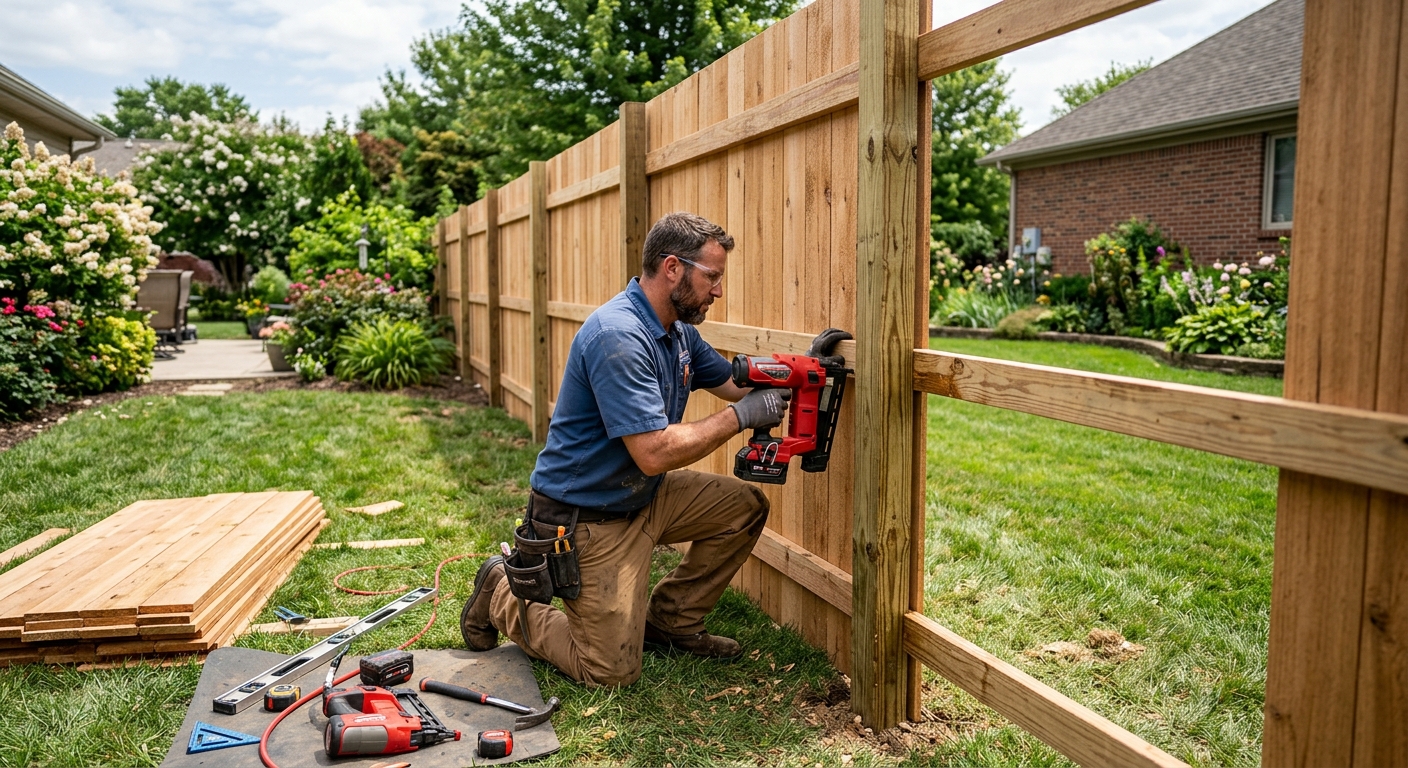
Fencing options and costs in Stonegate-Queensway
Stonegate-Queensway homeowners typically start their search the same way: they want better privacy, clearer boundaries, and a fence that can handle Toronto’s freeze–thaw cycles without turning into a yearly maintenance project. With 25,051 residents (Statistics Canada, 2021 Census), the neighbourhood has steady demand, and the housing mix means many lots have backyard areas where fencing is a practical upgrade for families and pets. That’s why material choice and post installation method—more than décor—often decide whether a fence stays solid for the long run.
In the Toronto area, pricing is shaped heavily by ground conditions and the common frost-depth practices contractors use. Southern Ontario’s frost line is commonly planned around 42"–48", which typically means posts need to be set at least 3.5–4 feet deep for 6–8 ft privacy fences. On clay and mixed soils, that depth, plus concrete-set posts, increases labour time and ready-mix costs, but it reduces the risk of heaving and leaning after winter. Access in established streets can also matter—driveway proximity, narrow gates, and whether old fencing must be removed can add hours even when the fence length is unchanged.
Trade demand is especially strong around the denser pockets near the Queensway corridor, where backyards often back onto busy lanes and homeowners prioritize privacy screens. From there, the decision usually becomes “what material fits my priorities?”—and that’s what the table below is designed to make easy.
| Material |
Lifespan |
Maintenance |
Privacy Rating |
Price per Linear Foot |
| Pressure-treated pine (standard wood) |
10–15 years |
Stain/seal every 2–3 years |
Good (solid or close-board) |
$65–$120 |
| Cedar (natural rot resistance) |
15–20 years |
Stain/oil every 2–4 years |
Good (solid boards) |
$85–$135 |
| Vinyl / PVC (no-maintenance) |
25–30 years |
Wash as needed |
High (solid privacy panels) |
$75–$130 |
| Chain-link (galvanized steel) |
20–30 years |
Occasional rinse/tighten |
Low (privacy only with inserts) |
$45–$85 |
| Aluminum ornamental |
25–35 years |
Wash/clean 1–2x per year |
Medium (decorative pickets) |
$90–$160 |
| Composite / recycled material |
20–30 years |
Wash only; no staining |
High (solid boards) |
$95–$165 |
Prices are estimates only and vary by project scope, site access and material selection.
What affects the price of fencing in Stonegate-Queensway
In Stonegate-Queensway, two quotes for the “same looking” fence can differ by 30–50% because the biggest cost drivers are structural, not cosmetic: how long the fence really is, how deep the posts must go for stable footing, and how your site affects labour time. Even within the Toronto economic region, one backyard may be straightforward (wide access, flat grade), while another needs stepped panels, heavier hardware for wind resistance, and careful post placement around existing utilities—especially where older homes share tight side yards.
Toronto’s climate also pushes costs upward in winter-ready ways. The design frost depth commonly used in Southern Ontario means posts are set roughly 4–6 inches below that planning depth to help prevent heaving. Practically, that often turns into post-hole depths around 1.5–2.0 m, which usually requires longer posts, proper concrete-set installation, and more ready-mix. That’s one reason privacy fences (wood or vinyl) often land higher than chain-link installations; for many projects, vinyl/PVC tends to track within the $75–$130 range, while standard wood often sits around $65–$120 depending on board spacing and hardware.
Concrete examples from Toronto-area jobs: (1) a 6 ft privacy run on clay soil can require full concrete-set posts even if the ground “looks firm,” adding labour and materials; (2) a sloped lot needing raked/stepped panels increases labour time because rails and pickets must be cut and aligned differently; and (3) removing an old fence can raise costs—dismantling, hauling, and disposal often add half-days to the schedule. In short, if the ground and detailing are complex, the quote rises; if the site is accessible and flat, costs stay closer to the baseline bands.
| Price Factor |
Why It Matters |
Cost Impact |
| Fence length in linear feet |
Most fencing costs scale directly with run length. |
High (typically the main driver) |
| Post depth required |
Frost line determines hole depth and post length. |
High (concrete and labour increase) |
| Post setting method |
Concrete vs. gravel pack vs. driven posts affects stability. |
Medium to high (concrete usually costs more) |
| Material choice |
Vinyl, cedar, and chain-link have different hardware needs and costs. |
Medium (shifts the whole budget) |
| Gate count and type |
Double gates and drive-through gates require heavier frames. |
Medium to high |
| Grade and terrain |
Slopes require stepped panels or raked rail systems. |
Medium |
| Old fence removal and disposal |
Demolition and hauling are labour-heavy. |
Medium (can add days, not just hours) |
| Permit fees and survey / property line locate |
Required documentation and locating time add administrative cost. |
Low to medium (depends on situation) |
Permits & regulations in Ontario
In Ontario, fences above height thresholds often trigger a building permit requirement—commonly around 2.0 m (6.5 ft) at the rear and about 1.0–1.2 m (3–4 ft) at the front or corner, depending on the property and municipal rules. Regardless of height, all fences must respect property lines and any municipal setback bylaws that apply to the lot. If you’re planning a taller privacy fence in Stonegate-Queensway, it’s smart to assume a permit may be required before excavation starts.
Before any post holes are dug, homeowners should arrange utility locates so you don’t hit buried services. In Ontario that typically means calling Ontario One Call. Also, get a survey or at least a proper property locate (pin confirmation) before installing—this prevents encroachment disputes with neighbours and reduces the chance of costly rework.
Shared fence ownership is addressed under Ontario line-fences principles (commonly handled through agreements and how responsibilities are shared between adjoining owners). Practically, the safest approach is to confirm where the boundary is and document any shared portion in writing.
To verify an Ontario fencing contractor, ask for: (1) licence/registration information where applicable on their business profile and (2) current liability insurance (certificate of insurance naming you as additional insured if offered). Confirm WSIB/WCB coverage or a clear exemption, and ask for proof—don’t accept verbal confirmation. Finally, request a written scope that specifies who pulls permits (if required) and whether utility locate costs are included.
Choosing the right fence material for Stonegate-Queensway
Choosing the right fence material in Stonegate-Queensway is mostly about matching durability to your tolerance for maintenance. Pressure-treated pine is the budget-friendly way in, but it typically needs staining or sealing every 2–3 years to prevent fast greying and surface breakdown. Cedar looks great and naturally resists rot better, yet it still benefits from periodic oil or stain to keep colour and reduce warping. Vinyl/PVC offers low upkeep and works well for privacy, but in extreme cold snaps it can be more prone to cracking if the system is underbuilt—especially if post spacing is too wide or panels aren’t properly braced.
Chain-link is the longest-lasting low-cost option with minimal upkeep, but it’s not true privacy unless you add slats, mesh privacy screens, or plant-integrated solutions. Aluminum ornamental fences are rust-resistant and maintenance-light, yet they provide limited privacy because of the open picket style. For Toronto winter conditions, all privacy styles benefit from correct post-depth and concrete-set installation; with frost depth planning in the 42"–48" range, most privacy fences perform best when posts are set roughly 3.5–4 feet deep (often 1.5–2.0 m hole depth on many installs) to reduce heave and racking.
To see where the price difference is justified: if a cedar privacy fence is priced at a premium over standard wood, the “win” is often longevity and appearance—so the extra cost makes sense when you want a natural look without replacing boards every decade. If your main goal is straightforward privacy with minimal work, vinyl/PVC in the $75–$130 band can be worth it versus standard wood closer to $65–$120, especially when you factor in maintenance time.
| Material |
Cold Tolerance |
Lifespan |
Annual Maintenance |
Best For |
Price Band |
| Pressure-treated pine |
Good with correct sealing and solid posts |
10–15 years |
Light to moderate (stain/seal every 2–3 years) |
Budget privacy with planned upkeep |
$65–$120 |
| Cedar |
Good; needs periodic coating for best results |
15–20 years |
Light to moderate (oil/stain every 2–4 years) |
Natural look and better rot resistance |
$85–$135 |
| Vinyl / PVC |
Very good; depends on proper installation and bracing |
25–30 years |
Low (wash as needed) |
Low-maintenance privacy |
$75–$130 |
| Chain-link |
Excellent; consistent in freeze–thaw conditions |
20–30 years |
Low (rinsing and occasional tension checks) |
Security and containment on a budget |
$45–$85 |
| Aluminum ornamental |
Excellent; powder-coated systems resist corrosion |
25–35 years |
Very low (seasonal wash) |
Front-yard aesthetics with durability |
$90–$160 |
| Composite / recycled |
Good; system quality matters most |
20–30 years |
Low (wash; no staining) |
Privacy with minimal upkeep |
$95–$165 |
How to choose a fencing contractor in Stonegate-Queensway
Choosing the right contractor matters as much as the fence material. In Ontario, confirm they carry liability insurance and that they have proper WSIB/WCB coverage (or a legitimate exemption). To check: ask for a certificate of insurance and verify coverage dates and that it’s for fencing work (not just general commercial activity). For WSIB/WCB, request proof of account clearance or coverage documentation—don’t rely on a photo of a policy number alone. A reputable fencing company will provide these without pressure.
Next, get 2–3 itemised written quotes. You want labour and materials broken out separately (posts, rails, panels, hardware, concrete, gates, and accessories). Make sure the quote isn’t a single lump number with “and other items” language. Carefully review scope exclusions: who handles permit pulling if required, whether utility locate costs are included, and whether old fence removal and disposal are part of the job. For Stonegate-Queensway, I also recommend confirming how they’ll manage tight side-yard access and whether they’ll protect landscaping during concrete-set installs.
Warranty should be in writing: workmanship warranty length (how long they stand behind installation), product/manufacturer warranty (material defect coverage), and whether the warranty is transferable if you sell the home. For payment, never pay more than 10–15% upfront; use milestones and hold back a portion until completion and final cleanup. Finally, obtain a start date and estimated completion timeline in writing, including weather contingencies typical for Toronto winters.
- Ask for proof of liability insurance and WSIB/WCB coverage before signing.
- Request an Ontario-suitable written scope with site measurements and post-depth plan.
- Get 2–3 quotes that itemise concrete, posts, rails, and hardware separately.
- Confirm whether permits are included or excluded in the price.
- Confirm whether demolition and disposal of the old fence are included.
- Ask how they locate property lines (survey pin locate vs. estimate).
- Require a clear gate price breakdown (single vs. double, latches, closers).
- Check that the quote states post setting method (concrete-set vs driven).
- Verify warranty terms for workmanship and materials, in writing.
- Ensure they list payment schedule milestones (limited upfront, holdback at completion).
- Ask for a construction timeline and how they handle weather delays.
- Confirm who supplies and sets any stepped/raked hardware for sloped yards.
In my experience around Stonegate-Queensway, red flags include: contractors who won’t provide insurance/WSIB documentation, quotes that omit post-depth and concrete-set details, unclear language about property-line responsibility, “cash only” payment pressure with high upfront deposits, and warranties that are mentioned verbally but not written into the contract.
Frequently asked questions — fencing in Stonegate-Queensway
How do I find my property line before fencing?
Before you install a fence in Stonegate-Queensway, confirm the boundary—not just where the last fence “seems” to be. The reliable approach is to book a survey or at least a professional property pin locate so you can verify where your pins are relative to your proposed fence line. If you have an older fence, it can be on or off the line; wind and frost can also shift posts over decades. Also call for utility locates (Ontario One Call) before digging any holes. When you compare contractor proposals, ask them how they’ll verify the line (pin locate vs. string-line estimation) and whether they’ll adjust the layout if markers don’t match expectations.
What's the most low-maintenance fence?
For most Ontario homeowners, the lowest day-to-day maintenance is typically vinyl/PVC or composite boards, because they don’t require staining. In Toronto’s freeze–thaw climate, the long-term win comes from correct installation—especially properly set posts. If your goal is privacy with minimal upkeep, vinyl/PVC privacy fencing is often a strong fit; it commonly falls in the $75–$130 per linear foot band depending on height, style, and hardware. Chain-link is also low maintenance, but it won’t give privacy unless you add slats/screens. If you prefer wood aesthetics, cedar can be manageable, but you should still expect periodic oil/stain to keep the boards looking their best.
How tall can my fence be in Stonegate-Queensway?
Height limits depend on where the fence sits on your lot (front/corner versus rear) and local rules, but Ontario commonly uses thresholds around 2.0 m (6.5 ft) for rear fences and about 1.0–1.2 m (3–4 ft) for front or corner areas, where a permit may be triggered. In practice, taller privacy fences in Stonegate-Queensway often require permits, especially when you’re exceeding those common thresholds. The safe step is to ask your contractor to confirm whether a permit is required for your specific layout and height, and to document who will apply for it. Make sure your fence also respects setbacks and property lines—encroachments can become expensive even if the fence height is within the rules.
Should fence posts be set in concrete here?
For many fences in Stonegate-Queensway—particularly 6–8 ft privacy fences—concrete-set posts are strongly recommended. Toronto-area freeze–thaw and frost-depth practices mean posts should be set deep enough to avoid heaving. Southern Ontario frost planning commonly falls around 42"–48", and most contractors plan roughly 3.5–4 feet of embedment (often aligning with about 1.5–2.0 m hole depth), then set posts in concrete for stability. Driven posts may work in some conditions, but on clay or mixed soils, concrete-set installation reduces the chance of leaning after winter. Concrete-set posts usually increase labour and ready-mix cost, which is one reason privacy fencing tends to land at the higher end of the wood/vinyl bands.
What's the best fence for privacy?
The best privacy fence is usually a solid-board or solid-panel style with close spacing—wood privacy, cedar close-board, vinyl/PVC privacy panels, or composite solid boards. Material matters less than structure: correct post depth for frost stability and adequate rail support to resist racking from wind and the weight of winter conditions. In Toronto, privacy fences are typically built on concrete-set posts to reduce heaving risk. If you want a “set it and forget it” approach, vinyl/PVC privacy often fits well and commonly sits in the $75–$130 per linear foot range depending on height and complexity. If you want a natural look and don’t mind periodic upkeep, cedar privacy can be worth the additional cost.
How do I compare fencing quotes?
When comparing quotes in Stonegate-Queensway, don’t look only at the bottom line. Ask for itemised breakdowns: labour, materials (posts, rails, pickets/panels), hardware, concrete/footings, gate count, and disposal/removal of the old fence. Confirm the post setting method (concrete vs gravel pack vs driven) and the planned post depth, because frost requirements can change the true installed cost. Also compare scope details like permit pulling, utility locate coordination, and whether stepped/raked panels are included for sloped yards. Finally, check warranty wording and payment schedule—legitimate contractors shouldn’t demand more than 10–15% upfront. A quote that’s “cheap” but skips concrete-set depth often costs more later in repairs.