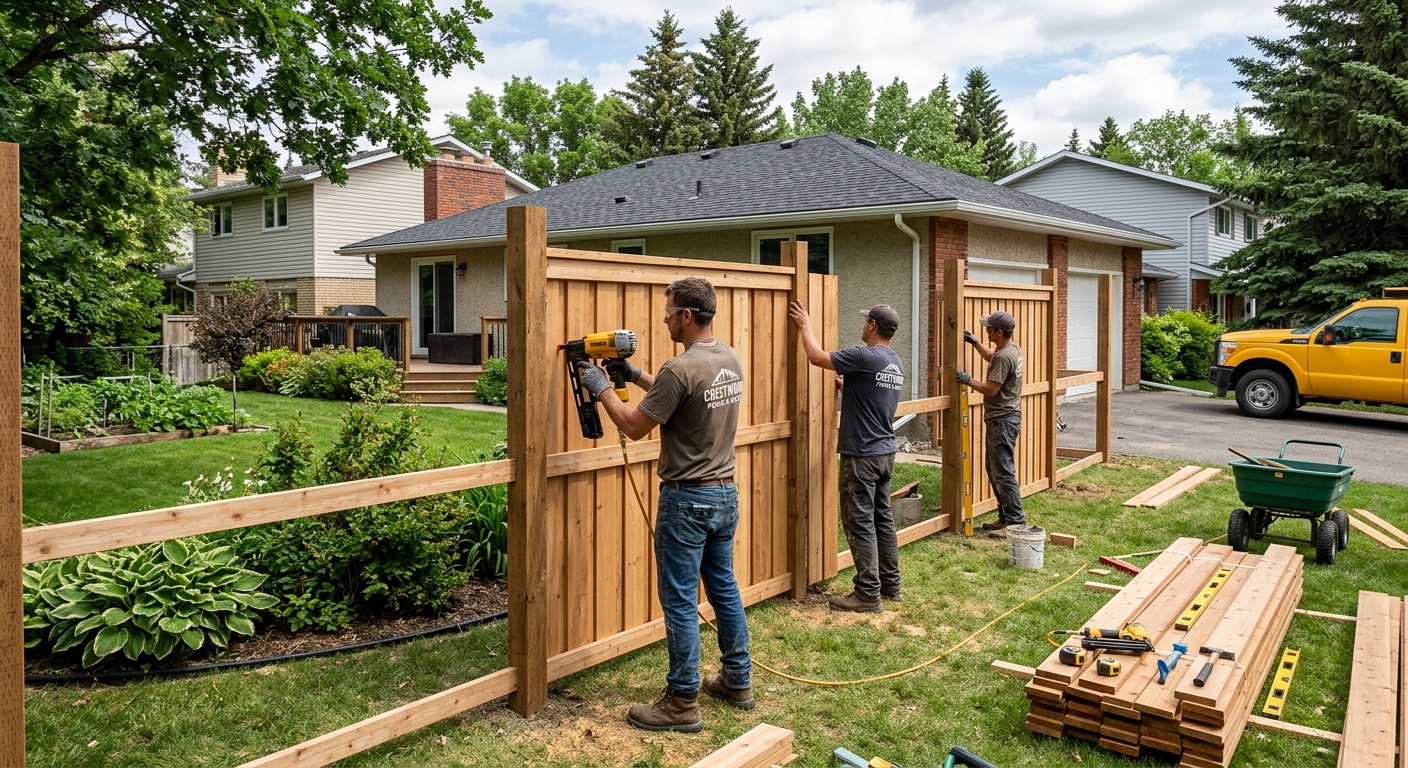
Fencing options and costs in Humbermede
In Humbermede, choosing the right fencing starts with balancing privacy, maintenance, and long-term stability for a neighbourhood that’s grown with steady homebuilding around the Toronto economic region. With a population of 15,545 (Statistics Canada, 2021 Census), there’s consistent local demand for boundary upgrades, especially where detached homes and expanding yards create frequent “refresh” projects. In practice, each 6–8 ft privacy run tends to be a significant investment—so how posts are set and what material you pick matters as much as the look.
Toronto-area frost and freeze-thaw cycles are the cost drivers most homeowners feel. In Southern Ontario, the design frost line is commonly handled around 42"–48", which means fence posts usually need to be set about 3.5–4 ft deep to avoid frost heave. For tall solid fences, that typically pushes contractors toward concrete-set posts rather than simple driven installs, raising labour time and ready-mix costs. You’ll also see pricing affected by wind resistance and panel racking: in more exposed pockets (open corners and wider lots), we often recommend tighter post spacing and heavier hardware even when the fence is “just” a standard 6 ft privacy layout.
Here in Humbermede—particularly around the busier residential streets where yards back onto larger lots—privacy fences and gates are especially in demand. Next, here’s a clear side-by-side of common materials, what they’re built to last, and the typical installed price range per linear foot for this area.
| Material |
Lifespan |
Maintenance |
Privacy Rating |
Price per Linear Foot |
| Pressure-treated pine (standard wood) |
10–15 years |
Stain/seal every 2–3 years |
High (solid panels) |
$65 – $120 |
| Cedar (natural rot resistance) |
15–20 years |
Stain/finish every 2–4 years |
High (solid panels) |
$75 – $130 |
| Vinyl / PVC (no-maintenance) |
20–30 years |
Rinse as needed; check for expansion gaps |
High (solid or close-lath) |
$75 – $130 |
| Chain-link (galvanized steel) |
20–30 years |
Occasional rinse; inspect tension |
Low–Medium (infill only) |
$45 – $85 |
| Aluminum ornamental |
25–40 years |
Wash annually; tighten hardware |
Low–Medium (decorative spacing) |
$90 – $160 |
| Composite / recycled material |
20–35 years |
Low; wash and inspect for warping |
Medium–High (style dependent) |
$110 – $170 |
Prices are estimates only and vary by project scope, site access and material selection.
What affects the price of fencing in Humbermede
In Humbermede and across the broader Toronto region, you can see the same fence concept come back 30–50% apart because the real quote depends on how the contractor handles the “invisible” parts: footing depth, post materials, hardware upgrades, gate construction, and whether old fence removal is included. Even when two estimates use the same material name, one crew may concrete-set posts to frost depth best practice, while another uses faster installation methods that cost less today but can shift later with Ontario freeze-thaw movement.
Frost line depth is the big Ontario variable. Contractors typically set posts about 4–6 inches below the design frost depth to prevent heaving during freeze. In cold Ontario winters, that often means posts going roughly 1.5–2.0 m into the ground. The practical result is longer posts, deeper auger drilling, and more concrete—so labour and ready-mix cost rises accordingly. Wind exposure still matters here even though the GTA isn’t as severe as the Prairies: taller solid privacy fences need heavier posts and closer spacing (often 6–8 ft centres) to reduce racking and uplift, especially along windier edges of lots.
Two or three local site conditions can move your price quickly. A sloped backyard that needs stepped rails can add labour (and material) versus a flat run. Poor access for a trailer or skid steer can slow the install and increase minimum labour charges. If you’re replacing an older fence that’s cemented-in, removal becomes more labour-intensive, and disposal costs add up.
That’s why your budget might land nearer the wood/vinyl band (for example, wood running $65 – $120 per linear foot), or push toward mid-to-high ranges when concrete setting, upgraded posts, and solid panels are included. Next, we’ll break down the cost factors that show up line-by-line in itemised proposals.
| Price Factor |
Why It Matters |
Cost Impact |
| Fence length in linear feet |
Most materials and labour scale directly with run length |
Highest driver (more than any single upgrade) |
| Post depth required |
Frost line determines how long posts must be and how deep holes go |
Can increase labour and materials significantly |
| Post setting method |
Concrete vs. gravel pack vs. driven posts affects stability |
Concrete-set usually costs more but reduces long-term movement |
| Material choice |
Vinyl/cedar/chain-link differ in cost and how they’re installed |
Vinyl typically higher upfront than chain-link |
| Gate count and type |
Gates require heavier framing, hinges, latches, and sometimes reinforced posts |
One double drive gate can add a meaningful premium |
| Grade and terrain |
Slopes require stepped or raked panel layouts |
More labour + potential material waste |
| Old fence removal and disposal |
Removal time varies dramatically by whether posts are cemented |
Often increases cost 10–25% depending on condition |
| Permit fees and survey / property line locate |
Locates help prevent encroachment disputes and rework |
Small-to-moderate add-on, but avoids costly fixes later |
Permits & regulations in Ontario
In Ontario, permits can apply when you’re planning a fence above the height threshold—commonly around 2.0 m (6.5 ft) for rear yards, while front or corner yard heights are often lower (around 1.0–1.2 m or 3–4 ft), depending on local rules. Even when a permit isn’t required, all fences must respect property lines and municipal setback bylaws. For Humbermede homeowners, the safest path is to confirm the applicable height and placement requirements with your municipality before digging.
Before installing any post holes, call for utility locates through Ontario One Call (and follow the locate markings carefully). If you don’t already have a survey, consider obtaining a property line locate or using your property pins to confirm where the fence should sit. This helps prevent disputes with neighbours if the existing fence or landscaping was placed off-line.
Shared fence responsibilities generally fall under Ontario’s line-fence principles, but your best protection is clear written agreement with any neighbour you’re sharing responsibility with.
What typically requires a permit: fences that exceed common height thresholds (especially around rear yard height), and certain situations involving complex layouts or restrictions. What typically does not: like-for-like replacements that stay within allowed heights and setbacks, and standard fence work when it’s below the threshold—however, it still must comply with bylaw requirements.
To verify a contractor in Humbermede, check (1) Ontario licensing status through the contractor’s appropriate online registry listing, (2) a valid certificate of liability insurance showing fence-install coverage, and (3) WSIB coverage clearance (or the applicable equivalent documentation) so you’re not liable for workplace incidents. Ask for current certificates and match names to the contract before work starts.
Choosing the right fence material for Humbermede
Choosing a fence material in Humbermede is mostly about matching your priorities to Toronto-area weather realities—freeze-thaw movement, snow loading, and the way solid panels act in wind. Pressure-treated pine is the budget-friendly option, but it needs staining or sealing every 2–3 years to limit grey weathering and reduce surface cracking. Cedar looks better longer and offers natural rot resistance, though it still benefits from periodic finishing. Vinyl/PVC is popular because it’s low maintenance, but it requires correct installation clearances and post/rail setup to manage expansion in extreme cold. Chain-link is the lowest initial cost and generally has the longest life for fencing that doesn’t need privacy. Aluminum ornamental provides a clean, rust-resistant look with minimal upkeep, but it won’t deliver the privacy most homeowners want for backyard use.
Post depth matters across all materials. In the Toronto climate, frost line practice commonly means posts set about 3.5–4 ft deep (roughly 1.5–2.0 m into the ground depending on soil and design), especially for 6–8 ft privacy fences. Concrete-set posts are usually recommended because they resist frost heave better than simple driven posts in mixed soils and clay pockets common in the region. For tall solid fences, wind and snow can increase stress at rails—so heavier posts and closer spacing help prevent racking.
As a practical example, if wood is coming in around the lower band (roughly $65 – $120 per linear foot) and vinyl lands at the higher end of its band (often $75 – $130), the vinyl price premium can be justified if you want to avoid re-staining cycles and prefer a cleaner look through multiple seasons. However, if budget is tight and you’re willing to maintain it, cedar can be a middle ground where appearance and rot resistance are improved over standard pine.
| Material |
Cold Tolerance |
Lifespan |
Annual Maintenance |
Best For |
Price Band |
| Pressure-treated pine |
Good with proper sealing |
10–15 years |
Low in summer; re-stain every 2–3 years |
Lower upfront cost privacy fencing |
$65 – $120 |
| Cedar |
Good; needs finishing to prevent surface wear |
15–20 years |
Light wash; finish every 2–4 years |
Beauty + better rot resistance |
$75 – $130 |
| Vinyl / PVC |
Very good; rely on correct expansion gaps |
20–30 years |
Minimal—rinse and inspect hardware |
No-maintenance privacy |
$75 – $130 |
| Chain-link |
Very good |
20–30 years |
Occasional rinse; check tension |
Security with open visibility |
$45 – $85 |
| Aluminum ornamental |
Excellent; no rust with proper coating |
25–40 years |
Wash annually; tighten as needed |
Front yard curb appeal |
$90 – $160 |
| Composite / recycled |
Good; depends on board system |
20–35 years |
Low; wash and inspect for warping |
Long-life privacy with less upkeep |
$110 – $170 |
How to choose a fencing contractor in Humbermede
Choosing the right contractor matters in Humbermede because fencing performance is won or lost at the post and footing stage. Start by verifying Ontario licensing where applicable to the contractor’s role, then confirm liability insurance—ask for the certificate of insurance and check that it includes fencing installation activities. Next, verify WSIB (or the applicable coverage clearance documentation) so you’re protected if a worker is injured on site. Don’t accept “we’re covered” verbally; request current documentation before the first hole is dug.
Get 2–3 itemised written quotes. You want labour and material breakdowns, not a single lump sum that hides assumptions. The scope should clearly state: fence line length, number of posts, post depth and setting method, hardware grade, and the exact gate count and type. Ask whether permits are included (and who pulls them), and whether disposal of old fencing and post removal is included. If the estimate assumes “easy access,” it should explain how it accounts for locked gates, narrow driveways, or limited crane/trailer options.
Warranty is equally important. Ask for (1) the workmanship warranty length (typically for post setting and installation), (2) the manufacturer/product warranty details, and (3) whether the warranty is transferable if you sell your home. For payment, never pay more than about 10–15% upfront—hold back the balance until the job is complete and you’ve done a walkthrough. Also require a start date and a realistic completion estimate in writing.
- Ask for proof of insurance and WSIB coverage before signing.
- Confirm post depth plan for Toronto frost conditions (no “quick-driven” promises).
- Request a site plan or line layout sketch showing fence locations and gates.
- Ensure quotes specify concrete-set posts vs gravel pack vs driven posts.
- Get a detailed hardware list (hinges, latches, tensioners, post caps).
- Check whether fencing height includes top caps and rail spacing.
- Confirm grade handling (stepped vs raked) for sloped yards.
- Verify old fence removal and disposal is included or priced separately.
- Ask who is responsible for locating property lines and utility marks.
- Confirm permit pull responsibility if height/setback triggers it.
- Review the warranty terms in writing and what voids coverage.
- Confirm the payment schedule and holdback amount before work starts.
In Humbermede, common red flags include: vague quotes with no post-depth or setting method, refusal to provide insurance/coverage documents, promises to “avoid concrete” without an engineered alternative for frost movement, unclear gate pricing (especially double drive gates), and schedules that start without a written completion date or a signed scope.
Frequently asked questions — fencing in Humbermede
What's the most low-maintenance fence?
For most homeowners in Humbermede, vinyl/PVC is usually the lowest-maintenance option because it doesn’t require staining and typically holds up well to Toronto’s wet-to-freeze cycle. Chain-link is also low maintenance, but it doesn’t give privacy—so many people pair it with screening. If you want “set it and forget it” privacy, vinyl often lands in the mid band (commonly around $75 – $130 per linear foot, depending on style and gate count). The key is correct installation: proper expansion gaps, solid post setting (often concrete-set for tall privacy fences), and hardware that’s rated for wind loads. Otherwise, even vinyl can suffer from warping or loosening over time.
How tall can my fence be in Humbermede?
Fence height limits in Ontario commonly trigger stricter rules as you approach larger backyard heights. A common threshold used in Ontario practice is about 2.0 m (6.5 ft) for rear yards, while front or corner yard fences are often limited to roughly 1.0–1.2 m (3–4 ft), depending on the municipality’s bylaw. In Humbermede, the safest approach is to confirm the exact height allowance for your yard location (front vs rear vs corner) and any setback requirements before ordering materials. If you’re planning a tall privacy fence, it’s wise to ask your contractor to state the exact finished height on the quote, including any caps and how rails are measured.
Should fence posts be set in concrete here?
In Humbermede and the wider Toronto area, concrete-set posts are usually recommended for stability, especially for 6–8 ft fences and privacy panels. The reason is Ontario’s freeze-thaw conditions: post holes should be deep enough to resist heaving, typically setting posts about 4–6 inches below the design frost depth. In practical terms, that often means about 1.5–2.0 m into the ground, and concrete helps lock the post in place. Concrete doesn’t automatically mean “better forever” if the contractor skimped on hole depth or hardware, but it’s a proven best practice for frost movement. If an estimate is priced like driven posts but includes 6 ft privacy, ask for the post-depth and setting method details.
What's the best fence for privacy?
For privacy in Humbermede, solid wood (pressure-treated pine or cedar), vinyl/PVC, and composite privacy panels are typically the best choices because they block sightlines almost entirely. Your best material depends on how much maintenance you can handle and your tolerance for upfront cost. Pressure-treated pine is often the budget privacy route (commonly around $65 – $120 per linear foot in this region), but it needs periodic staining/sealing every 2–3 years to look sharp and resist weathering. Vinyl privacy tends to cost a bit more (often $75 – $130) but reduces maintenance and keeps a consistent appearance through Toronto winters. For maximum stability, ensure posts are set for frost conditions and spacing is tight enough to prevent racking.
How do I compare fencing quotes?
When comparing quotes in Humbermede, don’t compare only the total or only the per-linear-foot number. Compare the scope: fence length, number of posts, post depth and setting method, gate count (walk-through vs double), and whether old fence removal/disposal is included. Ask whether the quote specifies concrete-set posts for tall fences and whether it accounts for grade changes (stepped vs raked panels). Also check the material spec—type and thickness of boards/slats, rail size, and hardware grade. A lower-priced quote is often cheaper because it skips disposal, reduces post depth, or uses a lighter construction. Request itemised labour vs materials so you can see what you’re truly buying.
How long does fence installation take in Humbermede?
Timelines depend mainly on length, access, number of gates, and whether the crew is removing an old fence first. In Humbermede, a straightforward chain-link or shorter section privacy install may take a day to two, while longer 6–8 ft privacy runs with concrete-set posts and multiple gates typically take several days. Weather matters too: heavy rain can slow post-hole drilling and concrete work, and winter conditions may shift schedules if the ground is frozen. The best approach is to ask your contractor for a written start date and completion estimate based on their planned post-setting method. If a quote doesn’t mention staging (demo first, then layout/locates, then post setting), ask for a clearer schedule before confirming.