Fencing options and costs in Madoc
Madoc is a small community where yard privacy and property definition matter, especially when many homes sit on long lots. In Madoc, single-detached houses make up 98.3% of dwellings, and 87.4% of households own their home (Statistics Canada, 2021 Census). That combination is why fencing demand is steady: most owners want their fence to look right, hold up in freeze–thaw cycles, and stay serviceable for years without constant repairs.
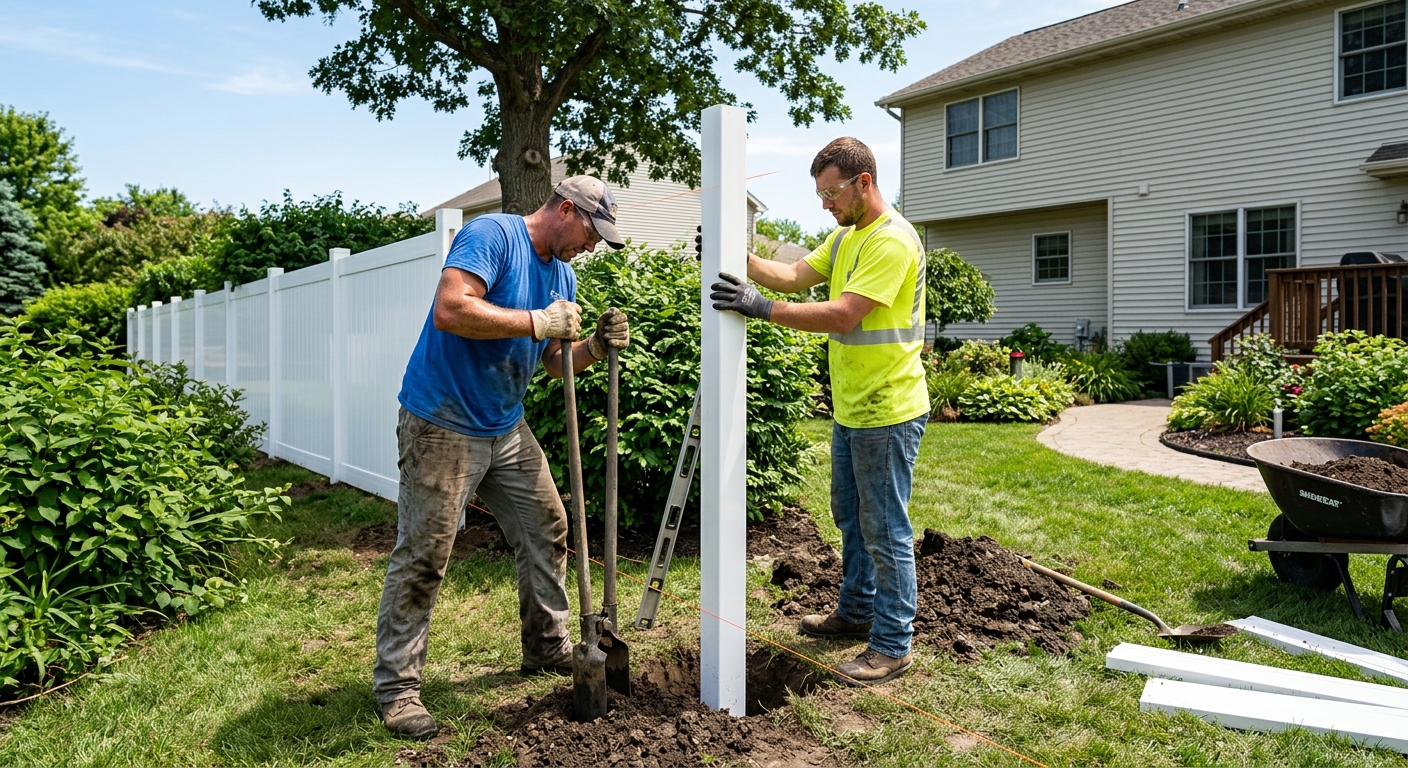
In the Kingston–Pembroke economic region, fencing cost is shaped heavily by frost depth and local soil conditions. Southern and eastern Ontario commonly sees frost penetration of about 1.2 m (4 ft), so contractors typically set posts roughly 36–48 inches deep to reduce heaving. Along wetter, silty pockets found in parts of the broader Quinte–St. Lawrence corridor, deeper auger holes plus concrete-set posts for key runs and gates can be required—raising both labour and material use. Wind also plays a role: areas closer to Lake Ontario and the Bay of Quinte can experience stronger gusts, which may mean tighter post spacing and sturdier frames for 6–8 ft privacy fences.
Within Madoc, trade activity often concentrates around established residential pockets near the downtown core and along the main approach roads—where replacement fences and gate work are common as properties are upgraded.
Below is a practical cost comparison so you can benchmark your quote before we talk about what changes price the most.
| Material |
Lifespan |
Maintenance |
Privacy Rating |
Price per Linear Foot |
| Pressure-treated pine (standard wood) |
10–15 years |
Stain/seal every 2–3 years; inspect bottom rails and fasteners |
8/10 (solid board/typical privacy panels) |
$55 – $95 |
| Cedar (natural rot resistance) |
15–25 years |
Light sealing/staining as needed; cleaner look with less warping |
9/10 (solid board privacy) |
$70 – $115 |
| Vinyl / PVC (no-maintenance) |
20–30 years |
Wash only; check fittings after extreme cold snaps |
8/10 (solid privacy styles) |
$75 – $140 |
| Chain-link (galvanized steel) |
25–35 years |
Occasional rinse; tighten tension and inspect posts |
3/10 (privacy only with slats) |
$40 – $80 |
| Aluminum ornamental |
25–40 years |
Wash; check gate alignment and hardware |
4/10 (best for visibility/security, not privacy) |
$80 – $160 |
| Composite / recycled material |
20–30 years |
Minimal upkeep; occasional cleaning |
8/10 (board or solid systems) |
$85 – $145 |
Prices are estimates only and vary by project scope, site access and material selection.
What affects the price of fencing in Madoc
Homeowners in Madoc often find that two quotes for what sounds like the “same fence” can differ by 30–50% across the Kingston–Pembroke region and Ontario overall. The biggest reasons aren’t just brand differences—they’re how frost depth, ground conditions, and wind exposure translate into deeper holes, more concrete, and more labour time per post. Even with the same material, a crew that budgets for tough augering (or hand-digging) and properly frames gate openings will price differently than a crew that estimates on surface conditions.
First, frost line depth controls post depth. In cold Ontario regions, posts typically need to go about 4–6 inches below the design frost depth to prevent heaving. That commonly means setting posts roughly 1.5–2.0 m into the ground, which increases material length, concrete volume, and labour per hole. In practice, that depth requirement can push wood pricing toward the mid-to-upper end (for example, $55–$95/ft for pressure-treated where access is average), while privacy-heavy vinyl jobs often land higher (within $75–$140/ft) because sturdier rails and bracing are paired with deep structural posts.
Second, wind exposure shapes structure. While Madoc isn’t the most wind-racked part of Ontario, gusts near the Lake Ontario / Bay of Quinte areas can still stress wide panels. For taller privacy fences, contractors may tighten post spacing and upsize framework—especially for 6–8 ft sections.
Concrete examples from Kingston–Pembroke: (1) a wet, silty run that needs deeper augering and extra concrete can add labour equivalent to multiple extra post-hours; (2) a yard with bedrock encountered during drilling can shift pricing upward quickly due to slower coring/hand work; (3) a mostly level, well-drained run on older streets can reduce base prep and keep you nearer the lower end of the local bands.
| Price Factor |
Why It Matters |
Cost Impact |
| Fence length in linear feet |
The more footage you fence, the more posts, rails, fasteners, and labour time are required. |
Major driver; small changes in total length can shift the whole budget. |
| Post depth required |
Frost protection typically needs deeper settings to reduce heaving risk. |
Often moves the project toward the upper range when posts approach ~1.5–2.0 m. |
| Post setting method |
Concrete-set posts cost more than gravel pack, but they’re more stable for structural runs. |
Can add a noticeable premium on gate areas and longer runs. |
| Material choice |
Vinyl, cedar, aluminum, and chain-link have different supply costs and framing requirements. |
Switching materials can move you between provincial price bands. |
| Gate count and type |
Drive-through (double) gates require heavier frames, stronger posts, and more hardware. |
Higher labour and materials; gates frequently become the budget spike. |
| Grade and terrain |
Slopes may require stepped panels or raked rails, which increases layout and cutting. |
Moderate to high impact depending on how uneven the yard is. |
| Old fence removal and disposal |
Demolition, haul-away, and prep time vary widely based on what’s already there. |
Can add cost even if linear footage is unchanged. |
| Permit fees and survey / property line locate |
Some larger fences or special situations require formal approvals or locating work. |
Usually a smaller portion, but can be meaningful for complex boundary cases. |
Permits & regulations in Ontario
In Ontario, whether you need a permit depends mainly on fence height and location. As a practical guideline used across many municipalities, fences above roughly 2.0 m (6.5 ft) at the rear and about 1.0–1.2 m (3–4 ft) at the front or corners often trigger a building permit requirement. Regardless of height, all fences must stay within property lines and follow municipal setback rules (which can vary by street and lot configuration).
Before you dig any post hole, call for utility locates through Ontario One Call to mark underground services. If you’re unsure of your exact boundary, get a survey or at least a property pin locate before installing—fencing disputes frequently start with misplaced posts, especially on older lots where boundaries are less obvious.
Shared fence ownership is also governed by Ontario’s line-fences framework, but the safest approach is to confirm in writing what both neighbours expect for costs and ongoing repairs.
What typically DOES require a permit: taller fences near the rear above common thresholds (around 2.0 m), as well as special cases where the municipality flags height, visibility, or boundary conditions.
What typically does NOT: straightforward fence replacements under common height limits that remain within your property line and follow setbacks, provided the municipality doesn’t require review for your exact location.
To verify a contractor in Madoc, ask for: (1) their Ontario business information and licence details (confirm using the appropriate public registry listing for their legal business name), (2) a certificate of insurance showing liability coverage, and (3) WSIB/WCB clearance evidence for the work crew. A good contractor can email a COI and any clearance documentation promptly—before you sign.
Choosing the right fence material for Madoc
Choosing a fence in Madoc is less about looks alone and more about matching the material to freeze–thaw cycles, wind, and the way you plan to maintain it. Pressure-treated pine is the budget-friendly choice, but it typically needs staining or sealing every 2–3 years to prevent grey weathering and to keep boards protected around fasteners. Cedar looks great and resists rot naturally, yet it still benefits from periodic sealing to keep colour and reduce moisture-related splitting at the ends.
Vinyl/PVC is popular for low maintenance—no annual staining—and many homeowners like that it stays clean with occasional washing. The trade-off is upfront cost and the need for careful installation in extreme cold: panels must be handled correctly and expansions accounted for so boards and rails don’t become stressed. Chain-link offers the longest, most economical service life and is ideal for secure boundaries without privacy; you can add privacy slats if you truly need coverage later. Aluminum ornamental provides a durable, rust-resistant fence with good curb appeal, but it doesn’t deliver the privacy rating of solid board systems.
For Kingston–Pembroke frost conditions, deep post settings matter regardless of material. Posts are commonly set roughly 36–48 inches deep (and in many situations deeper—often about 1.5–2.0 m for stable frost protection), and concrete-set posts are frequently used for structural runs and gates to improve long-term alignment. Wind and snow load considerations also favour solid privacy systems with proper bracing and correctly spaced posts, especially if you’re doing 6–8 ft runs.
As a simple decision example: if a pressure-treated privacy fence lands around $55–$95/ft but vinyl lands around $75–$140/ft, the extra $20–$45/ft can be justified when you want to avoid recurring staining labour and want a long maintenance-free stretch—particularly valuable for older homes where owners prefer fewer recurring upkeep visits.
| Material |
Cold Tolerance |
Lifespan |
Annual Maintenance |
Best For |
Price Band |
| Pressure-treated pine |
Good when posts are set deep and boards are properly fastened |
10–15 years |
Inspect and spot-treat; staining typically every 2–3 years |
Lower upfront cost with acceptable maintenance |
$55 – $95 |
| Cedar |
Very good for Ontario moisture cycles; best with correct end-grain care |
15–25 years |
Light sealing/staining as needed |
Natural look and improved rot resistance |
$70 – $115 |
| Vinyl / PVC |
Good with proper installation spacing and hardware |
20–30 years |
Wash and check fittings after harsh winters |
Low maintenance and consistent appearance |
$75 – $140 |
| Chain-link |
Excellent; steel frame handles cold well |
25–35 years |
Occasional rinse and tension checks |
Security and budget control |
$40 – $80 |
| Aluminum ornamental |
Excellent; corrosion-resistant in Ontario winters |
25–40 years |
Wash; tighten hardware periodically |
Decorative curb appeal and long service life |
$80 – $160 |
| Composite / recycled |
Good; performs best when installed with correct post spacing and fasteners |
20–30 years |
Minimal cleaning; occasional inspections |
Low maintenance with a solid privacy look |
$85 – $145 |
How to choose a fencing contractor in Madoc
Start by verifying the contractor can legally perform work in Ontario and has the right protections. Ask for: (1) their licence/business registration information under their legal business name, (2) proof of liability insurance (a current certificate of insurance showing coverage amounts), and (3) WSIB/WCB coverage information for workers. To check, look for their certificate documents directly from the contractor, confirm the insurer details are current, and ensure the clearance status corresponds to the work you’re hiring them for. Don’t accept verbal assurances—request documents before signing.
Next, get 2–3 itemised written quotes. A strong quote separates labour and materials (posts, rails, gate hardware, concrete, disposal, and any special coring/hand digging). Make sure it states exactly what’s included and excluded: Is permit pulling included or your responsibility? Is old fence removal and hauling-away included? Are utility locate costs included? Are there provisions for rock or uneven grade (stepped/raked panels)? Clarity here is where you prevent “quote drift” later.
Warranty matters too. Ask for two pieces: a workmanship warranty length (how long they stand behind installation) and a product/manufacturer warranty (for the fence system components). If coverage is transferable to a new owner, confirm that in writing.
Payment schedule: never pay more than 10–15% upfront. Hold back a reasonable portion until the job is complete, gates align properly, and post caps/finishing details are done. Finally, insist on a start date and completion estimate in writing—fencing is weather-dependent in Madoc, so timelines should reflect frost-safe scheduling.
- Request current liability insurance and read the certificate details
- Confirm WSIB/WCB clearance for the crews doing the work
- Require itemised pricing (labour + materials, not one lump sum)
- Verify who pays for Ontario One Call locates
- Ask how they handle rock, roots, and wet/silty soil
- Confirm post depth targets for frost protection in your yard
- Clarify gate hardware and whether frames are reinforced
- Get the warranty terms in writing (workmanship vs product)
- Check cleanup and disposal is included (especially old fence removal)
- Confirm permit responsibility if your fence height triggers review
- Use a payment schedule with a holdback until completion
- Ensure the quote includes measurements and a site layout plan or sketch
Red flags to watch for in Madoc: (1) a contractor who won’t provide proof of insurance or WSIB/WCB coverage; (2) quotes that ignore post depth or frost-set requirements and only talk about “standard spacing”; (3) no itemisation for gates, removal, concrete, or disposal; (4) requests for large upfront payments beyond 10–15%; and (5) vague timelines like “sometime in spring” without start/completion targets.
Frequently asked questions — fencing in Madoc
How do I handle a fence dispute with a neighbour in Ontario?
In Madoc and across Ontario, the safest approach is to focus on boundary accuracy first. If posts are in doubt, request a property pin locate or a survey to confirm the line before arguing style or placement. Next, communicate in writing: propose a solution that addresses safety, maintenance responsibility, and cost sharing. Ontario’s line-fences framework can apply to shared boundary fences, but disputes typically escalate when ownership/repair responsibilities aren’t agreed clearly. Keep photos of the fence condition and any changes over time, especially where frost heaving or gate sag may have caused misalignment. If the issue can’t be resolved informally, you may need legal advice based on your exact boundary and the neighbour’s actions.
What fence style offers the best wind resistance in Madoc?
For Madoc, wind resistance usually comes down to structure: solid fences that are properly braced with correctly spaced posts tend to perform well, but the best “wind management” depends on how wide the panels are and how deep the posts are set. In the Kingston–Pembroke region, contractors commonly tighten post spacing and reinforce frames for taller privacy fences (often 6–8 ft) because gusts can put stress on rails and gate hardware. If you want strong wind performance with less wind loading, more open styles (like aluminum ornamental) can catch less pressure than fully solid board privacy. If privacy is the priority, choose a design with good bracing and deep concrete-set posts at gates and structural sections.
How much does a fence cost in Madoc?
Madoc fencing costs typically track Ontario price bands, with local differences driven by frost-set depth, ground conditions, and gate complexity. For example, a pressure-treated wood fence often lands around $55–$95 per linear foot installed, while vinyl/PVC privacy commonly runs about $75–$140 per linear foot. Chain-link can be lower at roughly $40–$80 per linear foot, and aluminum ornamental often sits higher at $80–$160 per linear foot. If your yard has wet soil that requires deeper augering and concrete-set posts, or if rock slows digging, you can expect pricing to move toward the top of the band. The most accurate way to budget is an itemised quote that counts every post, rail run, and gate.
How deep should fence posts be for Madoc's frost?
Madoc experiences winter freeze–thaw, and the frost line depth is a key driver of post depth. In Kingston–Pembroke, a common planning value for southern/eastern Ontario frost penetration is about 1.2 m (4 ft). To reduce heaving risk, posts are typically set roughly 36–48 inches deep, which is why many contractors plan deeper holes than just “below the surface.” Where conditions require extra stability (for example, wetter silty ground or heavy gate loads), posts may be set deeper—often in the ~1.5–2.0 m range—with concrete-set installation in structural sections. Your exact depth should be confirmed in the quote based on your soil, fence height, and whether you have gates.
Wood vs vinyl vs aluminum fence — which is best?
There isn’t a single best material for every Madoc homeowner—each choice trades upfront cost, maintenance, and privacy. Pressure-treated wood is usually the lowest initial price (often about $55–$95/ft), but you’ll need staining/sealing every 2–3 years to manage grey weathering. Cedar is a step up in longevity and appearance, though it still requires periodic maintenance. Vinyl/PVC is popular for low maintenance and durability, typically around $75–$140/ft installed; however, correct installation matters in cold snaps. Aluminum ornamental is strong against rust and tends to last a long time (often $80–$160/ft), but it offers limited privacy compared with solid board systems. For wind performance and longevity, matching the design (post depth, bracing, gate hardware) to the material is more important than the label alone.
Do I need a permit to build a fence in Ontario?
Often, yes—sometimes, no. In Ontario, many municipalities require a building permit for fences above common height thresholds, particularly when you’re near the rear above about 2.0 m (6.5 ft) or near the front/corners above roughly 1.0–1.2 m (3–4 ft). Even when a permit isn’t required, you still must follow property line placement and municipal setback rules. Before work starts, utilities must be located through Ontario One Call, and it’s smart to verify your boundary with survey pins if there’s any uncertainty. A reputable Madoc contractor will tell you whether your specific height/location likely triggers a permit and whether they include permit administration in the scope.