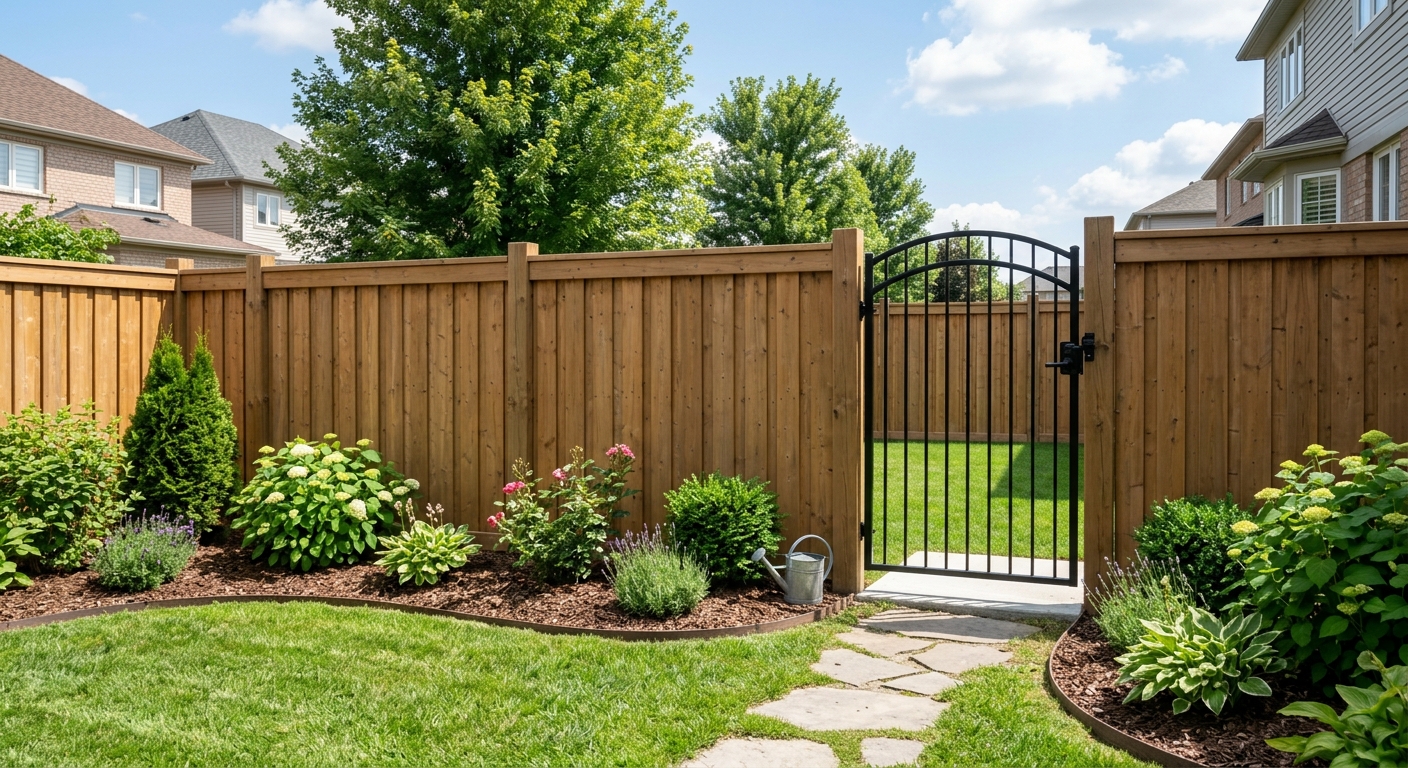
Fencing options and costs in Mount Hope Huron Park
Mount Hope Huron Park, Ontario is where yard borders matter—whether you’re keeping pets in, defining a property line, or adding privacy for summer evenings. With a total population of 5,030 (Statistics Canada, 2021 Census), demand is concentrated around neighbourhood pockets where detached homes and family lots are common—each property can become a fencing customer after landscaping updates, pool installs, or weather-driven board replacements. In practice, fencing demand is also helped by local housing turnover: new builds and renos tend to follow a similar timeline, so you’ll often see multiple fence projects running in parallel through the warmer months.
In the Toronto economic region, pricing is shaped by cold-weather footing needs and typical backyard access. Frost heave risk is a major cost driver: the design frost line is commonly taken at about 42″–48″, so posts are typically set 3.5–4 feet deep for 6–8 ft privacy fences using concrete-set methods. That means more excavation, more ready-mix, and heavier posts, but it improves stability for winter freeze-thaw cycles. Wind loads aren’t as extreme as the Prairies, yet taller solid fences still need correct post spacing and hardware to resist racking and uplift.
Contractors in Mount Hope Huron Park are especially busy in established residential areas closer to main-lane streets where gate access is tighter and customers want privacy quickly—often when replacing older, leaning wood fences. Below is a practical comparison of common options and typical installed price ranges.
| Material |
Lifespan |
Maintenance |
Privacy Rating |
Price per Linear Foot |
| Pressure-treated pine (standard wood) |
10–15 years |
Stain/seal every 2–3 years |
High (solid privacy panels) |
$65–$120 |
| Cedar (natural rot resistance) |
15–25 years |
Light staining yearly or every 2 years |
High (solid privacy panels) |
$80–$140 |
| Vinyl / PVC (no-maintenance) |
20–30 years |
Occasional wash only |
High (solid board vinyl) |
$75–$130 |
| Chain-link (galvanized steel) |
20–35 years |
Rinse as needed |
Low–medium (add privacy slats if desired) |
$45–$85 |
| Aluminum ornamental |
25–40 years |
Minimal (wash 1–2 times/year) |
Low–medium (open pickets) |
$90–$160 |
| Composite / recycled material |
20–30 years |
Occasional cleaning; no staining |
High (solid boards) |
$95–$155 |
Prices are estimates only and vary by project scope, site access and material selection.
What affects the price of fencing in Mount Hope Huron Park
In Mount Hope Huron Park and across the Toronto economic region, two quotes for the “same” fence can differ by 30–50% because installation isn’t just materials—it’s labour intensity, site constraints, and how posts are founded for our freeze-thaw cycle. In many cases, the biggest swing comes from how deep and how securely posts are set, plus whether a crew must retrofit around old footings, trees, and narrow walkways. Toronto-area access and scheduling also matter: peak-season availability can change labour rates, and that pushes total costs even when the fence height looks identical.
Frost line depth is the controlling variable. Best practice in Southern Ontario is commonly to set posts roughly 4–6 inches below the design frost depth to reduce heaving. With typical Southern Ontario frost assumptions of about 42″–48″, many privacy fence projects end up with post holes in the 1.5–2.0 m range (about 5–6.5 feet total depth including clearance), which means longer posts and more concrete—particularly for 6–8 ft fences. Wind also influences pricing: while Mount Hope Huron Park doesn’t face Prairies-grade exposure, solid panels still need sturdier posts and tighter spacing to reduce racking and uplift.
Here are a few real-world examples that commonly raise or lower costs in this area: (1) a longer run with normal ground can stay close to the wood band of $65–$120 per linear foot; (2) a stepped yard or heavy grade change adds labour for raked panels and sometimes redesign; and (3) converting from a simple chain-link layout at $45–$85 per linear foot to solid privacy with concrete-set posts will usually move you into the higher installed ranges. If your yard needs multiple gates, hardware upgrades and extra bracing also add cost—commonly several hundred dollars per gate depending on whether you need a walk-through or double drive gate.
| Price Factor |
Why It Matters |
Cost Impact |
| Fence length in linear feet |
Most materials and labour scale directly with total run |
Highest impact across nearly every quote |
| Post depth required |
Frost line requirements determine post length and hole depth |
Can add notable excavation + concrete cost |
| Post setting method |
Concrete-set posts resist frost heave better than gravel packs or driven posts |
Concrete vs driven can swing total cost materially |
| Material choice |
Vinyl, cedar, and chain-link have different hardware, fabrication, and replacement expectations |
Vinyl/cedar typically costs more than chain-link |
| Gate count and type |
Gates need heavier frames, hinges, and often diagonal bracing |
Each additional gate increases labour and hardware |
| Grade and terrain |
Slope requires stepping/racking, extra labour and cut precision |
Can add time and materials beyond base pricing |
| Old fence removal and disposal |
Demo, hauling, and stump/anchor removal take time |
Usually adds a separate line item |
| Permit fees and survey / property line locate |
Some projects require documentation and locating before digging |
May increase overall project budget |
Permits & regulations in Ontario
In Ontario, fence permitting depends mainly on height, location (front versus rear), and local municipal rules. As a practical benchmark, fences above about 2.0 m (6.5 ft) at the rear and around 1.0–1.2 m (3–4 ft) at the front or corner often trigger a building permit requirement. Even when a permit isn’t required, you must still follow property-line rules and any municipal setback bylaws.
Before you dig any post holes in Mount Hope Huron Park (or anywhere in Ontario), call for utility locates through Ontario One Call. This is critical because buried services can sit where you expect a post—especially near older service runs, downspouts, and driveway edges. Also plan to obtain a survey or property line locate to confirm where your pins are. This avoids the most common dispute I see: “we thought it was our land” after a fence is installed.
Shared fence ownership is governed by provincial line-fences legislation, so it’s wise to coordinate with neighbours about responsibility for upkeep and replacement where applicable.
What usually DOES require a permit: taller fences (especially at rear over the common 2.0 m guideline), fences with special conditions (retaining walls/structures attached), or projects flagged by your municipality due to location. What typically does NOT: lower boundary fences that stay within common front/rear height thresholds and don’t include special structures—though rules can vary by municipality, so it’s smart to confirm with your local office.
To verify contractor compliance in Ontario, check: (1) the Ontario licence/registration status where applicable for your scope; (2) a current certificate of liability insurance (general liability) naming you as certificate holder where offered; and (3) WSIB coverage (for employers/contractors who perform the work as required). If you’re unsure, ask for clearance documentation or proof of coverage—then confirm the document dates match the project timeline.
Choosing the right fence material for Mount Hope Huron Park
Choosing the right fence material in Mount Hope Huron Park comes down to balancing privacy, low maintenance, budget, and how the fence performs through Toronto’s freeze-thaw weather. Pressure-treated pine is the budget-friendly option, but it typically needs staining every 2–3 years to slow grey weathering and protect the surface. Cedar is naturally more rot resistant and looks premium for longer, though it still benefits from periodic staining or oiling to maintain colour and reduce warping. Vinyl/PVC is the classic “set it and forget it” choice: it needs no staining, but it can become brittle in extreme cold if the product quality or installation details aren’t right—so correct expansion allowances and solid post spacing matter.
Chain-link is the lowest-cost way to add perimeter security and it lasts a long time, but it won’t give true privacy unless you add privacy slats, windscreens, or grow-through options. Aluminum ornamental provides a neat, no-rust look and works well where you want visibility and curb appeal; it won’t block views like a solid wood/vinyl privacy fence.
For Toronto-area frost conditions, most privacy fences use concrete-set posts for long-term stability. That means materials that depend on solid post anchoring—like solid privacy panels—often justify stronger post sizing and proper concrete setting. Where wind racking is a concern, panel style and closer spacing help more than chasing a cheaper grade.
As a dollar example: if you’re comparing a budget wood privacy fence (often landing in the $65–$120 per linear foot band) to vinyl privacy (commonly $75–$130 per linear foot), the $10–$30 per foot difference can be justified if you want fewer maintenance weekends and you’re planning to keep the fence for 15–25 years. If you’re replacing only a short run, however, vinyl’s higher upfront cost may not feel as worthwhile—especially if you’re already staining wood fences successfully.
| Material |
Cold Tolerance |
Lifespan |
Annual Maintenance |
Best For |
Price Band |
| Pressure-treated pine |
Good (needs regular sealing/staining) |
10–15 years |
1–2 checks; stain/seal every 2–3 years |
Budget privacy with acceptable upkeep |
$65–$120 |
| Cedar |
Good (improved rot resistance) |
15–25 years |
Light staining every 1–2 years |
Premium look and longer life |
$80–$140 |
| Vinyl / PVC |
Very good (quality + installation matter in cold) |
20–30 years |
Wash 1–2 times/year |
Low maintenance privacy |
$75–$130 |
| Chain-link |
Excellent with galvanized steel |
20–35 years |
Rinse as needed |
Security and airflow |
$45–$85 |
| Aluminum ornamental |
Excellent (no rust) |
25–40 years |
Wash 1–2 times/year |
Curb appeal with boundary definition |
$90–$160 |
| Composite / recycled |
Good (check product rating for cold impact) |
20–30 years |
Clean as needed; no staining |
Privacy with reduced upkeep |
$95–$155 |
How to choose a fencing contractor in Mount Hope Huron Park
Choosing a fencing contractor in Mount Hope Huron Park is mostly about risk control: if they’re sloppy on footing depth, hardware, or paperwork, the fence won’t last through winter. First, verify Ontario compliance and coverage. Ask for proof of general liability insurance (a certificate of insurance showing the policy is active) and ensure the certificate can list you as the certificate holder if available. If the contractor is an employer doing the work, confirm WSIB/WCB coverage and request a current clearance letter or proof of account status—don’t rely on verbal assurances. For fencing, your safest approach is to treat documentation like part of the “materials” for the job.
Next, get 2–3 itemised written quotes, not a lump sum. A good quote breaks down: excavation and post setting method (concrete-set vs gravel pack vs driven posts), line posts and gate posts, rails, pickets/panels, hardware (hinges, latches, brackets), and disposal/dump fees. Ask specifically what’s excluded: permit pull fees (if needed), survey/property line locate, removal of old fencing, stump grinding, and any tree/landscape restoration.
Warranty should be clear and separate: workmanship warranty (how long the contractor stands behind installation) and manufacturer/product warranty (how long the material is covered). Ask whether the warranty is transferable if you sell your home.
On payment schedule, never pay more than 10–15% upfront, and hold a portion until the job is complete and inspected. Confirm a start date and realistic completion estimate in writing, accounting for Toronto-region weather and concrete cure time. For context, if a quote claims a “low” installed rate within the $45–$85 chain-link band but plans to do concrete-set posts for a privacy fence, you should question whether the scope is accurate.
- Ask if posts will be concrete-set (and where concrete depth/hole size is specified)
- Confirm fence height, panel layout, and post spacing in writing
- Require an itemised labour + materials breakdown (no vague “materials supplied”)
- Clarify whether permit pull is included or is homeowner’s responsibility
- Confirm utility locates are arranged (or you’re expected to call)
- Verify survey/property line locate responsibility
- Request a disposal/hauling line item if removing an old fence
- Get gate hardware details: hinges, latches, stops, and any diagonal bracing
- Confirm warranty length for workmanship and what voids coverage
- Check insurance: certificate of liability is current; WSIB/WCB proof is provided
- Use a payment schedule with only 10–15% upfront and holdback on completion
- Get a written timeline including concrete cure/return-to-install steps
Concrete red flags I see around the Mount Hope Huron Park area: a quote that skips or downplays post depth/concrete setting for tall privacy fences; refusing to provide proof of WSIB/WCB coverage or liability insurance; offering “one price” without itemising labour, gate hardware, and disposal; pressuring you to pay large deposits upfront; or starting excavation before discussing utility locates and property line verification.
Frequently asked questions — fencing in Mount Hope Huron Park
What fence style offers the best wind resistance in Mount Hope Huron Park?
For Mount Hope Huron Park (Ontario) wind conditions, the best wind resistance usually comes from rigid post spacing and a solid privacy layout that’s engineered with proper bracing. In the Toronto region, tall solid fences can catch wind like a sail at the top edge, so crews typically use concrete-set posts and thicker rails/bracing rather than thin frames. A well-built wood or vinyl privacy fence generally performs better than lightweight slatted designs when it’s installed with correct hardware and tight line-post spacing (often 6–8 ft centres depending on height and design). If you want a more “wind-shedding” approach, semi-privacy systems with partial openness can reduce uplift forces, but they won’t fully replace a solid fence for privacy. For best results, choose a contractor who specifies post depth for Southern Ontario frost and demonstrates how their spacing reduces racking.
How much does a fence cost in Mount Hope Huron Park?
Fence costs in Mount Hope Huron Park typically land inside the common Toronto-region bands, depending on material, height, and how hard the site is to access. For example, chain-link often comes in around $45–$85 per linear foot for a basic run, while solid wood privacy projects commonly fall in the $65–$120 per linear foot band. Vinyl/PVC privacy often sits around $75–$130 per linear foot, and aluminum ornamental is commonly $90–$160 per linear foot. Your total price will also change based on the number of gates (walk-through vs double), whether the contractor removes and hauls the old fence, and how deep posts must be set for frost stability. In many Ontario yards, concrete-set posts for privacy fences are the difference between a fence that holds up season after season and one that shifts after freeze-thaw.
How deep should fence posts be for Mount Hope Huron Park's frost?
In Mount Hope Huron Park and the rest of Southern Ontario, the design frost line is commonly estimated around 42″–48″. Best practice is to set fence posts roughly 4–6 inches below the design frost depth to reduce the risk of frost heaving. In practical terms, many 6–8 ft privacy fences end up with post holes in the 1.5–2.0 m range (about 5–6.5 feet total), especially when contractors allow for proper concrete footing and stable embedment. That depth is why most reputable fence installers recommend concrete-set posts here rather than only gravel packs or driven posts for solid privacy fences. The exact depth should still be confirmed based on your soil condition and frost assumptions, but if a contractor suggests shallow post holes for a tall privacy fence, it’s a major warning sign for long-term stability.
Wood vs vinyl vs aluminum fence — which is best?
“Best” depends on your goal. Wood (pressure-treated pine or cedar) is a strong choice if you want solid privacy and don’t mind periodic maintenance—pressure-treated typically needs staining every 2–3 years, while cedar benefits from regular upkeep but often looks better for longer. Vinyl/PVC is usually the best “low maintenance privacy” option in Ontario: it won’t need staining, and cleaning is mostly just wash-downs, though installation quality and spacing matter in cold weather. Aluminum is ideal when you want boundary definition and curb appeal without rust—however, it’s not comparable to wood or vinyl for privacy because it’s ornamental and open-picket by design. If your priority is privacy in Mount Hope Huron Park, wood or vinyl will generally outperform aluminum. If your priority is minimum upkeep and long service life, vinyl often wins. If your budget is tight, wood can be the most cost-effective starting point, commonly in the $65–$120 per linear foot range for many privacy installs.
Do I need a permit to build a fence in Ontario?
In Ontario, permits depend on height and location, plus municipal rules. A common benchmark is that rear fences above about 2.0 m (6.5 ft) may require a building permit, while front or corner fences around 1.0–1.2 m (3–4 ft) can also trigger permitting depending on the specifics. Even if a permit isn’t required, you still must respect property lines and municipal setback bylaws. For Mount Hope Huron Park homeowners, the key steps are: confirm your fence height and placement, call for utility locates through Ontario One Call before digging, and consider a survey/property line locate to verify pin locations. Also remember that shared fence ownership responsibilities can be affected by provincial line-fences legislation. A good contractor should ask the height/location details and tell you whether they expect a permit to be required or not.
How long does a wood fence last in Mount Hope Huron Park?
A properly installed wood fence in Mount Hope Huron Park can last roughly 10–15 years for pressure-treated pine and about 15–25 years for cedar, assuming good post setting, quality lumber, and realistic maintenance. The biggest Ontario-season factor is freeze-thaw stability: if posts aren’t set deep enough and/or aren’t concrete-set where needed, the fence can shift after winters, causing leaning boards and hardware failures. Maintenance also matters. Pressure-treated wood usually needs staining or sealing about every 2–3 years to reduce grey weathering and surface damage. Cedar resists rot better, but it still benefits from periodic staining or oiling. If you’re planning for long service life, invest in correct footings and hardware first—those choices often make the “cheap vs expensive” lumber difference less dramatic than you’d expect.