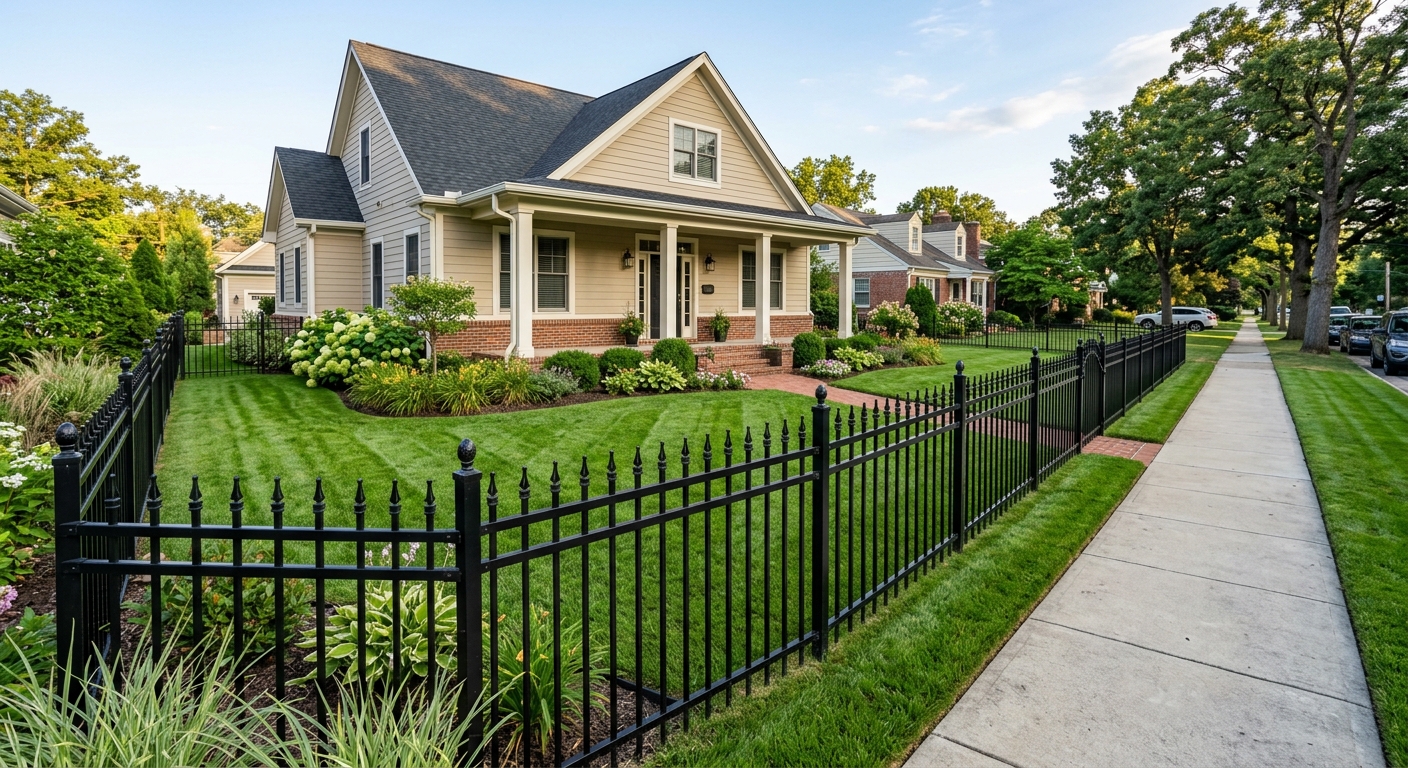
Fencing options and costs in Omemee
In Omemee, choosing a fence is as much about planning for long winters as it is about looks and privacy. With a 2021 population of just 1,323 (Statistics Canada, 2021 Census), most fencing demand comes from surrounding residential growth—especially households in detached neighbourhoods where yards are actively enclosed and maintained. In practice, the local “customer pool” tends to grow and refresh as more homeowners upgrade perimeter boundaries or add gates as their properties mature (Statistics Canada, 2021 Census). That matters because in the Toronto economic region, contractor schedules and material lead times are influenced by citywide demand, not just your community.
Toronto-area costs are driven by Ontario’s freeze/thaw cycle. The frost line is commonly treated as about 42"–48" in Southern Ontario, so posts typically need to be set roughly 3.5–4 feet deep—particularly for taller 6–8 ft privacy fences. That requirement pushes many installers toward concrete-set posts (ready-mix, labour time, longer posts), which raises your installed cost versus surface-level or driven-post systems. Wind and snow also affect picket/panel racking; in more exposed corners of the lot, you’ll often see tighter spacing or heavier framing.
In Omemee, demand is especially noticeable around the older residential pockets where homeowners are re-lining backyards and side yards, and where accessibility (driveway width, gate width, and staging space) can make a big difference to labour hours. Use the comparison below as a starting point, then we can fine-tune your quote based on height, length, and site access.
| Material |
Lifespan |
Maintenance |
Privacy Rating |
Price per Linear Foot |
| Pressure-treated pine (standard wood) |
10–15 years |
Stain/seal every 2–3 years; replace fasteners as needed |
High (solid panels) |
$15 – $30 |
| Cedar (natural rot resistance) |
15–20 years |
Light staining/sealing every 2–3 years; occasional board replacement |
High (solid panels) |
$18 – $35 |
| Vinyl / PVC (no-maintenance) |
20–30 years |
Occasional wash only; inspect posts and panels after impacts |
High (solid or privacy lattice styles) |
$20 – $38 |
| Chain-link (galvanized steel) |
20–35 years |
Minimal; tighten hardware and touch up damaged areas |
Low to Medium (privacy slats optional) |
$10 – $22 |
| Aluminum ornamental |
25–40 years |
Wash and occasional touch-up (rare) |
Low (decorative pickets) |
$18 – $40 |
| Composite / recycled material |
20–30 years |
Minimal; occasional cleaning; check for board warping |
High (solid styles) |
$22 – $45 |
Prices are estimates only and vary by project scope, site access and material selection.
What affects the price of fencing in Omemee
In Omemee, it’s common to see quote differences of 30–50% for what looks like the “same” fence. The spread usually comes down to how each contractor handles Toronto-area realities: post depth for frost protection, wind-stable framing, and the labour involved in setting, bracing, and aligning panels on real yards (not flat drawings). Even when your total linear footage is identical, access can change everything—walkways, driveways, tree removal, and how far crews must carry materials can add hours quickly.
Here’s the big cost driver: Ontario’s frost line. In Southern Ontario it’s commonly taken around 42"–48", and good practice is to set posts about 4–6 inches below the design frost depth to reduce frost heaving risk. For many 6–8 ft privacy fences, that typically means roughly 1.5–2.0 m into the ground, plus concrete-set posts. Concrete setting adds ready-mix cost, longer posts, and more excavation time—so a job that might start in the wood band (about $65–$120) can climb toward the upper end depending on your footing needs and fence height.
Two local examples that often move costs up in the Omemee area: (1) clay or mixed soils—posts need deeper, more carefully tamped concrete footings for stability; (2) drive-through gate upgrades—hinged hardware, bracing, and heavier posts for gate loads can increase labour and material. Conversely, costs can drop if you can reuse a well-planned layout, minimize corners, and keep excavation straightforward (shorter runs, fewer posts, easier access).
Another reason quotes diverge is material labour efficiency. Vinyl/PVC privacy fences often price more like the $75–$130 band once posts and alignment hardware are accounted for, while chain-link projects may sit closer to the $45–$85 band when the site is open and fencing lines are short and straight.
| Price Factor |
Why It Matters |
Cost Impact |
| Fence length in linear feet |
Every additional foot adds posts, rails, hardware and installation time |
Highest driver |
| Post depth required |
Frost line dictates hole depth and required post length |
Can add 10–25%+ on tall runs |
| Post setting method |
Concrete vs. gravel pack vs. driven posts affects labour and longevity |
Concrete set increases labour/material costs |
| Material choice |
Vinyl/cedar/cables/frames have different labour and installation requirements |
Shifts you between typical Toronto bands |
| Gate count and type |
Drive-through (double) gates require stronger framing and hardware |
Often adds significant labour and bracing |
| Grade and terrain |
Slopes require stepping panels or racking; it changes material and time |
Can increase material waste and install time |
| Old fence removal and disposal |
Demolition, hauling, and dump fees vary with condition and access |
May add a separate line-item cost |
| Permit fees and survey / property line locate |
Paperwork and locate services prevent encroachment and rework |
Small to moderate, but reduces risk/costly changes |
Permits & regulations in Ontario
In Ontario, fence height and location commonly determine whether you need a permit—particularly when you’re aiming for a tall privacy fence. A typical threshold homeowners run into is around 2.0 m (6.5 ft) at the rear, while front or corner-side fences are often limited closer to about 1.0–1.2 m (3–4 ft) before a permit may be triggered. Your municipality in the Omemee area may also have setback and visibility rules, so it’s important to confirm the applicable bylaw for your exact street and corner conditions.
Before any post holes are dug, you must call for utility locates through Ontario One Call to prevent damage to buried services. If your property lines aren’t obvious, get a survey or at minimum a property pin locate before installing. This protects you from encroachment disputes—especially where neighbours share fence lines or where yards were landscaped after the original lot was created.
Step-by-step, verify your contractor and protect yourself:
- Request their certificate of insurance (liability) and confirm it covers fencing work and that the expiry date is current.
- Ask for proof of WSIB coverage (or acceptable clearance/coverage documentation where applicable) for labour on your site.
- Confirm they carry workmanship coverage or a written warranty for installation.
- Have them provide an Ontario licence/reference number if your scope triggers any licensing requirements in your area.
- Keep everything in writing: the fence layout, height, gate hardware, post setting method, disposal plan, and permit responsibilities.
Shared fence maintenance is typically handled through line-fences legislation and local agreements—clarify who supplies and replaces which sections before construction starts.
Choosing the right fence material for Omemee
To choose the right fence material in Omemee, match the product to your priorities: privacy, low maintenance, budget, and how long you want to avoid repairs. In the Toronto market, the climate punishes weak post foundations. Because the frost line is commonly treated around 42"–48", many installed privacy fences rely on concrete-set posts set roughly 3.5–4 feet deep to reduce frost heave. That means material choice isn’t the only decision—post depth and framing quality determine whether your fence stays straight after freeze/thaw cycles.
Pressure-treated pine is the budget option, but expect maintenance: staining/sealing every 2–3 years to prevent grey weathering and to slow splitting near fasteners. Cedar looks better longer and has better natural rot resistance, but it still benefits from periodic staining. Vinyl/PVC offers the lowest day-to-day maintenance and won’t rot, but in extreme cold it can be more brittle if panels are not properly braced and installed with the right hardware. Chain-link is typically the least expensive and very durable, but it won’t provide privacy unless you add slats or an additional privacy screen. Aluminum ornamental gives a clean, no-rust look—ideal for security and aesthetics, but not for privacy.
Where the price difference is justified: if you’re building a tall privacy run and want to reduce future upkeep, a vinyl/PVC privacy fence often fits the higher band (commonly around $75–$130 per installed foot) better than pressure-treated wood that may sit closer to $65–$120 but will likely need more attention over time. On the other hand, if your goal is containment and durability rather than privacy, chain-link (often $45–$85) can be the smarter value.
Wind and snow load matter too. In exposed backyard corners or where snow drifts against the fence, heavier posts and tighter panel spacing help limit racking—especially for solid wood or vinyl privacy styles.
| Material |
Cold Tolerance |
Lifespan |
Annual Maintenance |
Best For |
Price Band |
| Pressure-treated pine |
Good when properly sealed and fastened |
10–15 years |
Low to moderate (inspect + stain/seal every 2–3 years) |
Budget privacy with planned upkeep |
$65 – $120 |
| Cedar |
Good; handles freeze/thaw better than many pines |
15–20 years |
Low to moderate (stain/seal every 2–3 years) |
Premium look and rot resistance for privacy runs |
$80 – $130 |
| Vinyl / PVC |
Very good if properly installed for cold |
20–30 years |
Very low (wash and check hardware) |
Low-maintenance privacy in Ontario winters |
$75 – $130 |
| Chain-link |
Excellent for cold climates |
20–35 years |
Very low (tighten/repair after impacts) |
Security and containment with optional screening |
$45 – $85 |
| Aluminum ornamental |
Excellent; resists rust |
25–40 years |
Low (periodic wash; occasional touch-ups) |
Curb appeal/security without heavy upkeep |
$90 – $160 |
| Composite / recycled material |
Good; depends on board design and installation |
20–30 years |
Low (clean; inspect after seasonal movement) |
Privacy with minimal maintenance |
$95 – $160 |
How to choose a fencing contractor in Omemee
When you’re hiring a fencing contractor in Omemee (and across Ontario), start by confirming coverage and accountability. First, ask for their liability insurance certificate—look for fencing/contracting coverage and make sure it includes your address as the job site. Next, verify WSIB coverage: request proof of active WSIB account coverage or an acceptable clearance/coverage document before work begins. For labour-intensive projects (privacy fences with concrete-set posts), this is non-negotiable because posthole excavation and material handling increase on-site risk.
Then get 2–3 itemised written quotes, not just a single lump sum. A proper fencing quote should break out: materials, labour, excavation, concrete/footings, rail and post assembly, gates, and removal/disposal if included. Pay attention to scope exclusions like “permit responsibility,” “property line verification,” and “rock/clay conditions.” In Ontario, the wrong assumptions about frost-depth footing can turn a cheap quote into an expensive change order, so ask how deep posts are set and whether concrete is used.
Warranty should be clear in writing: ask for a workmanship warranty length (typically for installation/settling issues) and any manufacturer warranty for materials. Also confirm whether the warranty is transferable to you as the homeowner.
For payment, don’t front-load the job. A good rule is never more than 10–15% upfront, with a holdback until the fence is completed, cleaned up, and any punch-list items are done. Finally, request a start date and completion estimate in writing.
- Ask for current certificate of liability insurance and confirm jobsite coverage.
- Verify WSIB coverage (or valid clearance documentation) before excavation starts.
- Request WSIB/coverage proof in the same name as the contracting entity on the quote.
- Confirm post setting method: concrete-set vs. gravel pack vs. driven posts.
- Ask how they handle frost-depth requirements for tall privacy fences.
- Get exact fence layout: linear footage, number of posts, and corner treatments.
- Ensure quotes specify gate type, hardware, and whether gates are single or double.
- Check whether disposal/removal of the old fence is included and where it goes.
- Clarify permit pull responsibility and who pays the fees if a permit is required.
- Look for stated warranty terms for workmanship and for materials (if applicable).
- Confirm payment schedule: small deposit, holdback until final walkthrough.
- Require a written timeline with estimated completion date.
Red flags I’ve seen in Omemee and the surrounding Toronto region: contractors who won’t put post depth and concrete setting in writing; quotes that are “materials only” with unclear labour scope; no proof of WSIB/insurance before digging; vague warranties (“best effort” or no duration); and payment requests that exceed 10–15% upfront or avoid a holdback.
Frequently asked questions — fencing in Omemee
How long does a wood fence last in Omemee?
In Omemee and across Ontario’s freeze/thaw zone, wood longevity is mostly about two things: post foundations and maintenance. For pressure-treated pine, a typical lifespan is around 10–15 years when posts are set properly and hardware is corrosion-resistant. If the fence is cedar, you can often see closer to 15–20 years, because cedar resists rot better in damp seasons. However, if a fence uses shallow footings or only gravel/driven posts, frost heave can loosen sections after winters—shortening the life regardless of the wood type. In quotes, wood projects often sit in the $65–$120 per installed foot range, but the true value is tied to concrete-set posts and periodic staining (usually every 2–3 years).
Who owns and maintains a shared fence?
Shared fence ownership in Ontario is typically handled through line-fences legislation and any agreements between neighbours, plus practical realities like which side each owner benefits from. In many cases, if a fence sits on or near the property line, neighbours may share responsibility for maintenance and replacement, but the split can vary based on who built the fence, how it was agreed, and where the boundary actually runs. In Omemee, it’s especially important to confirm your property pins or get a locate before installing anything, because building on the wrong side can create disputes. A good contractor will help you plan the layout and provide clear documentation of where posts will go. Before starting work, discuss cost-sharing for materials, labour, and disposal—don’t rely on assumptions.
How do I find my property line before fencing?
Before you install posts, confirm your property line using property pins and a professional locate if needed. If you have a recent survey, start with that and check whether pins are visible. If they aren’t, request a locate service or use your survey plan to identify pin locations. For Omemee homeowners, this step prevents encroachment issues—particularly when fences affect shared boundaries or when landscaping has shifted over the years. It also helps contractors plan post locations accurately, which reduces rework and avoids expensive schedule changes. Since fence prices in Ontario can swing based on scope and corrections, property line clarity protects your budget, especially on longer privacy runs where post count is high.
What's the most low-maintenance fence?
For low day-to-day maintenance in Ontario winters, vinyl/PVC privacy fences are usually the easiest: no staining, no rot, and only occasional washing and hardware checks after storms. Aluminum ornamental is also very low maintenance, but it won’t provide privacy like a solid wood/vinyl board fence. Chain-link is durable and low maintenance, but it’s not privacy-focused unless you add slats or screening. In many Omemee-area projects, vinyl/PVC pricing commonly falls in the $75–$130 per installed foot band depending on height, post spacing, and gate hardware. The trade-off is higher upfront cost versus pressure-treated pine, which may land in the $65–$120 band but typically needs staining every 2–3 years to keep it looking good.
How tall can my fence be in Omemee?
Fence height rules in Ontario are often location-specific—rear yard versus front yard/corner matters. A common Ontario planning guideline homeowners encounter is that fences around 2.0 m (6.5 ft) at the rear may require a building permit, while front or corner areas are often limited to roughly 1.0–1.2 m (3–4 ft) before permit rules may apply. In Omemee, confirm the exact thresholds with your municipality because bylaw details can vary by street orientation and visibility requirements. Also consider practical height: taller privacy fences increase wind load and require heavier framing and tighter post spacing, which can raise your installed cost. If you’re planning 6–8 ft privacy, expect concrete-set posts as a standard best practice in the Toronto region due to frost depth.
Should fence posts be set in concrete here?
For most taller privacy fences in the Toronto economic region—where Southern Ontario frost is commonly estimated at about 42"–48"—concrete-set posts are usually the best practice to prevent frost heave and keep the fence stable. That typically means setting posts roughly 4–6 inches below the design frost depth, often landing around 1.5–2.0 m into the ground for 6–8 ft fences. Concrete setting increases labour and ready-mix material costs, so it can push projects toward the upper end of wood ($65–$120) or vinyl ($75–$130) ranges depending on access and footing conditions. In clay/mixed soils common in the area, concrete is especially helpful. If a contractor proposes driven posts only for a tall privacy run, ask how they address frost depth and soil movement in writing.