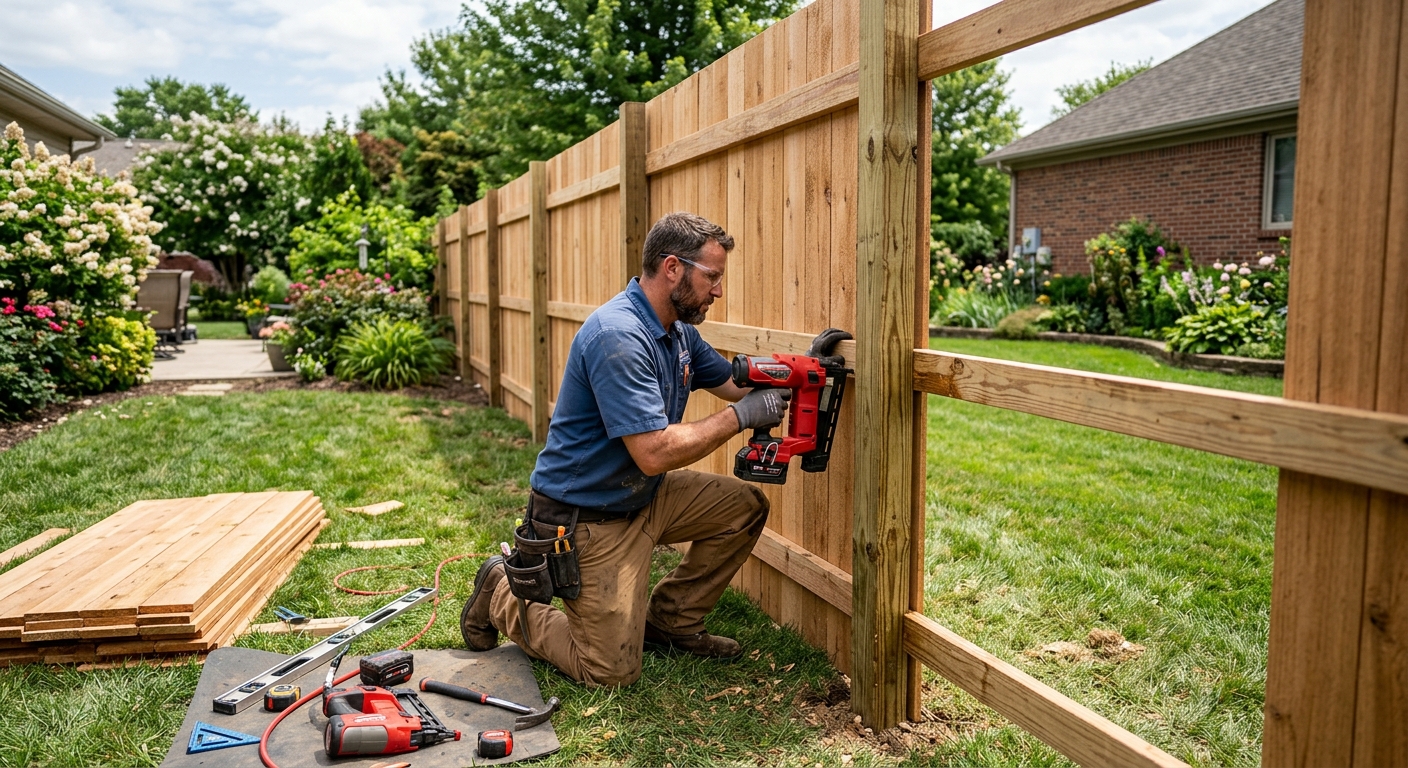
Fencing options and costs in Waterdown
Waterdown homeowners typically start their fencing search with a simple goal: more privacy, safer pets and kids, and a cleaner boundary line. With a population of 24,400 (Statistics Canada, 2021 Census), local demand stays steady, especially in neighbourhood pockets where families and retirees alike invest in backyards. In Hamilton–Niagara Peninsula, the mix of housing types (including plenty of detached and semi-detached homes) means fence replacement and upgrades are a frequent service call—your exact home style often ends up driving the scope, gate count, and even the access plan for crews.
Cost is shaped by Ontario’s freeze–thaw cycle. In this region, frost penetration is roughly 1.2 m (4 ft), so fence posts must be set below the design frost line. For typical 6 ft residential fences, many contractors use 36–42 inch post depths, and that often pushes deeper for local clay soils. Because crews commonly concrete-set posts for long-term stability, you’ll see higher labour and material costs compared with “tamped backfill” installs.
Wind load also matters in Waterdown. While we’re not dealing with open-Prairie extremes, hilltop and lakeshore-adjacent lots can still see heavier wind pressure, which influences post spacing and sometimes pushes you toward heavier posts or a less “kitestring” panel design. Trade activity is especially strong around Waterdown’s growing core areas and established residential streets where backyard privacy upgrades are common. From there, the comparison below helps you sanity-check quotes before you book a site visit.
| Material |
Lifespan |
Maintenance |
Privacy Rating |
Price per Linear Foot |
| Pressure-treated pine (standard wood) |
10–15 years |
Stain/seal every 2–3 years |
High (solid board) |
$45–$80 |
| Cedar (natural rot resistance) |
15–25 years |
Light staining/sealing every 3–4 years |
High (solid board) |
$60–$105 |
| Vinyl / PVC (no-maintenance) |
25–30 years |
Occasional wash only |
High (solid panels) |
$70–$120 |
| Chain-link (galvanized steel) |
20–30 years |
Rinse/inspect annually |
Low–Medium (add privacy slats if needed) |
$35–$60 |
| Aluminum ornamental |
25–40 years |
Wash as needed |
Low (semi-privacy with slats options) |
$80–$150 |
| Composite / recycled material |
20–30 years |
Minimal cleaning; no staining |
Medium–High (depends on panel design) |
$85–$135 |
Prices are estimates only and vary by project scope, site access and material selection.
What affects the price of fencing in Waterdown
In Waterdown and across the Hamilton–Niagara Peninsula, two quotes for the “same” fence can differ by 30–50% because the real drivers are often installation mechanics: how deep posts must go, how crews set them in local soils, how many gates you’re adding, and how hard it is to access the backyard. That’s why you may see one contractor land near the $45–$80/linear foot range for standard wood, while another comes in closer to $70–$120/linear foot for vinyl—sometimes for similar-looking results, but with different post depth, concrete amount, and hardware grade.
First, the frost line depth governs how deep you must set posts. In cold Ontario sites, contractors typically go 4–6 inches below the design frost depth, which lands around 1.5–2.0 m of hole depth in practice. That means longer posts, deeper auger time, more concrete and backfill, and more labour—especially where clay slows drilling. Second, repeated freeze–thaw cycles push most installers toward concrete-set posts for long-term stability, which adds mix and labour versus simple tamped backfill.
Third, wind exposure affects the “skeleton” of the fence. While Hamilton–Niagara isn’t the windy Prairies, hilltop or lakeshore-influenced lots can still require tighter post spacing, heavier rails, and less flexible panel layouts to reduce wind load and avoid panel sag. In Waterdown, that’s commonly noticeable on sloped yards and corner lots near main roads, where gusts hit the fence face-on.
Concrete examples from local jobs: (1) a clay-heavy perimeter with 90 ft of fence often costs more because drilling time rises and post hole prep is slower; (2) replacing only upper pickets on an older, already-set run can be cheaper than full section rebuilds because you avoid new concrete; (3) adding a double drive gate can swing the budget because steel frame fabrication and bracing increase labour and material. All of these are why the final number sits where it does within the local $35–$60 chain-link and $80–$150 metal-aluminum bands.
| Price Factor |
Why It Matters |
Cost Impact |
| Fence length in linear feet |
More sections require more posts, rails, and fasteners |
High (primary driver) |
| Post depth required |
Frost line determines hole depth and post length |
High (adds drilling + concrete) |
| Post setting method |
Concrete set stabilizes against freeze heave |
Medium–High (concrete vs alternatives) |
| Material choice |
Vinyl, cedar, or chain-link each carry different hardware and cost |
Medium–High (wide band differences) |
| Gate count and type |
Drive gates need heavier bracing and stronger hardware |
Medium–High (often the swing factor) |
| Grade and terrain |
Slopes require stepped or raked panels |
Medium (extra layout + material waste) |
| Old fence removal and disposal |
Demolition, hauling and dump fees add time and equipment |
Medium (can be significant on long runs) |
| Permit fees and survey / property line locate |
Required checks prevent encroachment and rework |
Low–Medium (varies by situation) |
Permits & regulations in Ontario
In Ontario, permits can apply depending on fence height and location. As a practical rule of thumb in many Ontario municipalities, fences above roughly 2.0 m (6.5 ft) at the rear and about 1.0–1.2 m (3–4 ft) at the front or corner often trigger a building permit requirement. The key is that you must follow municipal setback bylaws and respect your property line—especially where fences run near sidewalks, easements, or corner lots.
Before you dig any post hole in Waterdown, always complete utility locates. In Ontario, you can use Ontario One Call to mark underground services. Also, get a survey or at least a property pin locate so you know your true boundary. This prevents the most common fencing disputes: building on a neighbour’s side, fencing into a drainage easement, or misaligning gates at drive access.
For disputes, Ontario line-fences legislation covers shared fence responsibilities, but outcomes still depend on the facts on the ground—location, whether the fence is mutually beneficial, and each party’s contribution. Step-by-step, here’s how homeowners verify a contractor: ask for their Ontario business registration information (if applicable for the firm you hire), request proof of liability insurance (certificate of insurance with your job address listed if possible), confirm their WSIB coverage (or valid clearance letter), and ensure they provide written scope and start date. You can generally verify WSIB status through WSIB’s clearance processes and verify insurance directly via the certificate and policy details supplied.
In short: permits are most likely when you’re building higher/privacy-heavy fences, and utility locates plus boundary confirmation should happen before the first auger bit turns.
Choosing the right fence material for Waterdown
Choosing the right fence material in Waterdown is mainly about matching your priorities—privacy, low maintenance, budget and lifespan—to the realities of Southern Ontario winters. Pressure-treated pine is often the budget starting point, but it typically needs staining or sealing every 2–3 years to slow grey weathering and keep the boards looking sharp. Cedar offers natural rot resistance and a warmer appearance, yet it still benefits from regular maintenance to preserve colour and reduce surface checking. Vinyl/PVC gives true low maintenance (wash and inspect), but in extreme cold it can become brittle if the system isn’t installed properly—post depth, hardware, and temperature-aware fastening matter. Chain-link is the lowest-cost per linear foot and is very durable, but it provides little privacy unless you add slats or a privacy screen. Aluminum ornamental looks clean year-round, resists rust, and lasts a long time, but it’s typically not a privacy fence.
For all materials in Hamilton–Niagara Peninsula, frost considerations drive the build. With frost penetration around 1.2 m (4 ft), contractors commonly set posts about 36–42 inches deep for typical 6 ft fences, often deeper in clay soils, and many choose concrete-set posts to resist freeze heave and leaning. That concrete foundation choice is one reason long-term stability costs more upfront but reduces rework later.
Wind and snow load also influence rail sizing and post spacing. On lots exposed to prevailing winds, heavier posts and tighter spacing can reduce panel flex. Here’s where price differences become “justified”: if you’re comparing standard wood at about $45–$80/linear foot to vinyl around $70–$120/linear foot, vinyl can be worth it on long privacy runs where you’d otherwise pay for staining labour, and where you want fewer maintenance calls during Ontario’s wet shoulder seasons. If budget is tight, cedar can be a strong middle ground for appearance and longevity—provided you’re willing to maintain it.
| Material |
Cold Tolerance |
Lifespan |
Annual Maintenance |
Best For |
Price Band |
| Pressure-treated pine |
Good (if installed with correct post depth and hardware) |
10–15 years |
Inspect yearly; stain/seal every 2–3 years |
Budget privacy runs |
$45–$80 |
| Cedar |
Good (rot-resistant, stable with proper fastening) |
15–25 years |
Inspect yearly; light stain/seal every 3–4 years |
Attractive privacy with mid-level maintenance |
$60–$105 |
| Vinyl / PVC |
Good (best with correct installation and spacing) |
25–30 years |
Wash/inspect; no staining |
Low-maintenance privacy |
$70–$120 |
| Chain-link |
Excellent (galvanized steel endures freeze–thaw) |
20–30 years |
Inspect ties and tension; rinse as needed |
Security with minimal upkeep |
$35–$60 |
| Aluminum ornamental |
Excellent (won’t rust) |
25–40 years |
Wash/inspect |
Decorative security and long service life |
$80–$150 |
| Composite / recycled |
Good (depends on product system and installation) |
20–30 years |
Minimal cleaning; inspect hardware |
Stable look with low maintenance |
$85–$135 |
How to choose a fencing contractor in Waterdown
Start by verifying the basics. In Ontario, ask your contractor for proof of liability insurance and confirmation of WSIB coverage (or a valid clearance letter). A homeowner should request the certificate of insurance (with the correct company name and coverage details) and verify WSIB status through the WSIB clearance documentation they provide. If the contractor is subbing labour, you still want to see coverage that protects the work being performed at your address. Don’t rely on “we’re insured” as a statement—ask to see the paperwork.
Next, get 2–3 itemised written quotes—not just a single lump sum. The best fence quotes break down materials (boards/panels, posts, rails, concrete, hardware), labour, fence line measurement, gate components, and whether disposal is included. Confirm whether the quote includes permit pull (when required), utility locate costs, and property line locate/survey support if it’s part of the scope. Also confirm what’s excluded: common exclusions are replacing rotted framing, adding slope raking, concrete overages, or repairs to nearby landscaping and irrigation lines.
Warranty matters. Ask for the workmanship warranty length (how long they stand behind installation), the product/manufacturer warranty period, and whether it transfers if you sell your home. Then set a fair payment schedule: never pay more than 10–15% upfront, and use a holdback until the job is complete and cleaned up.
Finally, insist on a written timeline: a start date window and a completion estimate, along with a plan for weather delays. In our freeze–thaw region, crews may schedule concrete-set post work carefully to avoid issues during cold snaps, so the written plan prevents surprises.
- Confirm liability insurance with your address or project description.
- Verify WSIB clearance letter/status before work begins.
- Get 2–3 itemised quotes with materials and labour separated.
- Ensure the quote lists post depth approach and whether posts are concrete-set.
- Ask how they handle clay soils and uneven grade (stepped vs. raked panels).
- Confirm gate hardware type and whether hinges/bracing are included.
- Check if utility locates are scheduled and who pays for them.
- Ask whether disposal/removal of the old fence is included.
- Review the warranty for workmanship and product, and whether it’s transferable.
- Confirm payment schedule: 10–15% max upfront, holdback on completion.
- Request a written start date and completion estimate.
- Verify the scope includes correct fence line layout and property line confirmation.
Red flags I see in Waterdown: quotes that don’t specify post depth or setting method; “cheap” pricing that relies on tamped backfill in frost-heave conditions; missing proof of WSIB/insurance or vague certificate dates; lump-sum quotes with unclear exclusions for gates, disposal, or concrete; and pressure for large upfront payments that exceed 10–15%.
Frequently asked questions — fencing in Waterdown
What is the cost per linear foot for fencing in Waterdown?
For Waterdown, fencing pricing typically lands in the same Ontario bands used across the Hamilton–Niagara Peninsula, with the installation method and post depth being the real differentiators. As a quick expectation, wood installations often price around $45–$80 per linear foot, while vinyl/PVC usually comes in closer to $70–$120 per linear foot depending on gate count, height, and rail complexity. Chain-link is generally the budget option at about $35–$60, while aluminum ornamental tends to be higher at roughly $80–$150. Always compare quotes by asking how many posts are being set, whether concrete is used, and how they handle frost-depth requirements for your soil type and yard access.
Should I repair or replace my old fence in Waterdown?
In Ontario, the frost-driven question is whether your fence posts are still solid. If the posts are leaning, moving, or the base looks compromised, repairing boards often becomes a short-term fix—new panels won’t solve the underlying post movement. If the fence line has localized rot on a few rails or pickets, a targeted repair can be worthwhile, especially if the post spacing and post depth were installed correctly. A practical approach is to ask for an on-site assessment focused on post integrity (wobble test, visible concrete at grade, and base rot). If you’re planning privacy upgrades, replacing the full run can also reduce future labour because you’ll align height and panel spacing consistently.
How do I handle a fence dispute with a neighbour in Ontario?
Start by documenting everything: photos of the fence line from multiple angles, measurements, and any correspondence. In Waterdown, boundary issues usually tie back to incorrect alignment or misunderstandings about property pins and setbacks. Before you act, verify the location of property lines via survey/locate and confirm where the existing fence actually sits. Ontario’s line-fences framework addresses shared responsibilities, but the outcome depends on the facts—who benefited, what was agreed, and the fence’s placement. The smartest next step is a calm, written proposal to your neighbour describing the problem and a practical fix, such as a joint upgrade or a clear agreement on one party installing and the other contributing. If necessary, consult a mediator or professional surveyor rather than escalating through contractors.
What fence style offers the best wind resistance in Waterdown?
Wind resistance in Waterdown is mostly about reducing “sail” effect and keeping the structure rigid. Typically, solid privacy designs with proper rail bracing and correct post spacing perform better than overly open, lightweight panels that can flex. That said, an extremely solid wall can catch wind at the leading edge, so a contractor should balance panel opacity with bracing and post spacing. For exposed lots or corner properties, you’ll often get the best results with heavier posts, tighter spacing, and concrete-set posts to prevent movement over repeated freeze–thaw cycles. If privacy isn’t essential, chain-link with tensioned fabric and well-braced line posts is durable, but it won’t stop wind-driven debris as well as solid systems.
How much does a fence cost in Waterdown?
“How much” depends on length, height, gates, and your installation conditions—especially post depth and whether concrete-set posts are included for long-term stability. As a homeowner-friendly estimate, shorter sections (like 30–60 ft) can still land in the mid-range, because gates and access add labour. For typical 6 ft privacy fencing, wood often begins around $45–$80 per linear foot, while vinyl/PVC privacy commonly lands around $70–$120. Chain-link can be significantly lower at $35–$60, and aluminum ornamental typically starts higher around $80–$150. The best way to get a reliable number is to request an itemised quote that shows posts, concrete, rails, gate hardware, and disposal for your exact fence line.
How deep should fence posts be for Waterdown's frost?
In Waterdown and across Southern Ontario, frost penetration is about 1.2 m (4 ft), so posts need to be installed below the design frost zone to reduce the risk of frost heave and leaning over time. Practically, many professional installs use 36–42 inch post depths for typical 6 ft residential fences, and deeper settings are common where local soils are clay or where conditions demand it. A contractor should explain the hole depth and post length they’re using, and whether they’re using concrete-set posts for stability in repeated freeze–thaw cycles. Ask specifically: “How deep will you set the post below frost and what is your post-setting method?” A well-documented answer is a strong sign you’re getting a long-lasting install.