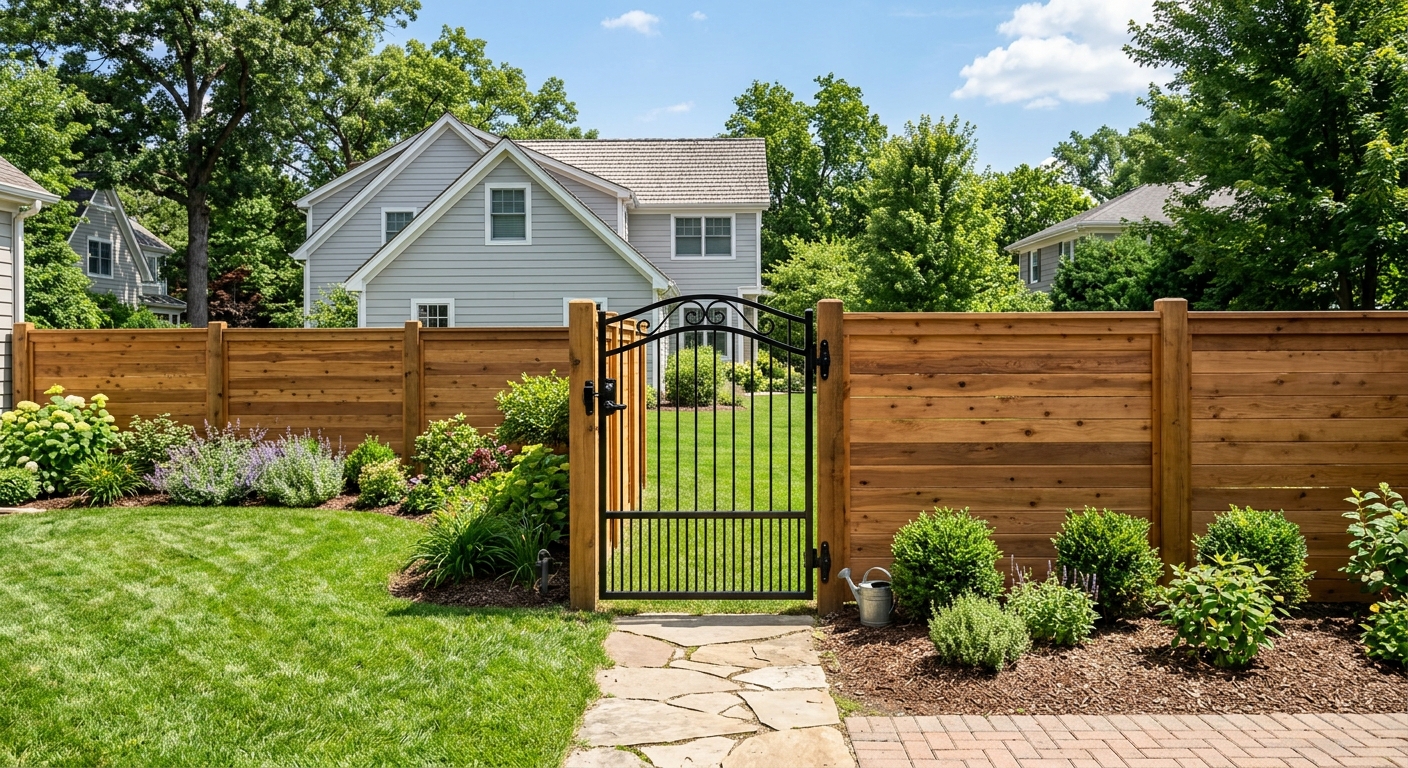
Fencing options and costs in Ionview
Ionview homeowners often start their fencing search by comparing looks, privacy, and how long the fence will last through Toronto-area freeze–thaw cycles. With a 2021 population of 13,641 (Statistics Canada, 2021 Census), the community has a steady mix of families and long-term properties, and detached homes tend to create consistent year-round demand for backyard upgrades and perimeter fencing. In the Toronto economic region, fence pricing is shaped by local building practice and climate: the frost line in Southern Ontario is commonly estimated around 42"–48", which means most posts must be set well below grade for stability. For taller privacy fences (often 6–8 ft), contractors typically recommend concrete-set posts rather than simple driven posts, especially in clay and mixed soils where heaving risk is higher.
You’ll also see neighbourhood-level demand in Ionview where backyards are more exposed to wind corridors and where lot lines are frequently adjusted by upgrades—areas near major roads and open corners often need sturdier posts, closer spacing, and heavier hardware to prevent racking. Availability of crews can tighten in peak spring-to-early summer, which can add labour pressure to estimates, especially when old fence removal and disposal are included. That’s why two neighbours can receive quotes 30–50% apart for what looks like the “same” fence.
Use the comparison below as a baseline for installed cost ranges in Ionview, then we’ll break down the key cost drivers next.
| Material |
Lifespan |
Maintenance |
Privacy Rating |
Price per Linear Foot |
| Pressure-treated pine (standard wood) |
10–15 years |
Stain/seal every 2–3 years; annual inspection |
High (solid pickets/panels) |
$65–$120 |
| Cedar (natural rot resistance) |
15–20 years |
Light staining or oiling every 2–3 years |
High (solid style options) |
$75–$135 |
| Vinyl / PVC (no-maintenance) |
20–30 years |
Minimal cleaning; inspect posts/hardware |
High (solid or semi-solid panels) |
$75–$130 |
| Chain-link (galvanized steel) |
20–35 years |
Rare; rinse and tighten as needed |
Low to medium (security only) |
$45–$85 |
| Aluminum ornamental |
25–40 years |
Occasional wash; check gates |
Low (open look) |
$90–$160 |
| Composite / recycled material |
20–30 years |
Very low; clean and check for warping/cracks |
High (solid board styles) |
$85–$145 |
Prices are estimates only and vary by project scope, site access and material selection.
What affects the price of fencing in Ionview
In Ionview and across the broader Toronto region, fence quotes can swing by 30–50% even when the fence “looks the same” on paper. The reason is that installed cost isn’t just the material—it’s the ground conditions, the post depth needed for frost, how crews stage equipment, and how many gates or sections must be rebuilt. In practice, a 40–60 linear-foot job can become a very different build once concrete-set posts, old fence demolition, and accurate line locating are included.
Southern Ontario’s frost line is commonly planned at about 42"–48". Best practice is to set fence posts roughly 4–6 inches below the design frost depth; in cold Ontario that often means post embedment around 1.5–2.0 m. Deeper holes require longer posts, more concrete, more labour per station, and more time for layout and curing. That’s why a wood privacy fence that might land near the wood band of $65–$120 per foot can rise toward the high end when we switch from gravel packing to concrete-set posts on clay. Conversely, chain-link security fencing, often near $45–$85 per foot, may stay more stable because it typically uses lighter posts and has simpler footing requirements.
Two common Ionview examples I see: (1) clay/mixed soils with soft spring ground—concrete-set posts still need excavation but the ground cleanup and re-leveling time increases; (2) sloped or uneven lots—stepped/raked rail systems increase hardware and labour versus straight grade. Wind is usually less extreme than the Prairies, but tall solid privacy fences still need closer post spacing and stronger bracing where lots sit on open corners or near traffic corridors. Material can also shift labour intensity: cedar and composite boards are heavier and require more careful handling than vinyl panels, affecting build time.
| Price Factor |
Why It Matters |
Cost Impact |
| Fence length in linear feet |
Most costs scale directly with linear footage |
High (primary driver; can change total by thousands) |
| Post depth required |
Frost planning dictates hole depth and post length |
High (more excavation and material) |
| Post setting method |
Concrete-set posts resist frost heave better than gravel/driven methods |
Medium to high (concrete + labour time) |
| Material choice |
Vinyl/cedar and heavier privacy systems cost more than basic chain-link |
Medium to high (shifts you between pricing bands) |
| Gate count and type |
Gates require reinforced frames, hinges, and often stronger posts |
Medium (each gate can add significant install time) |
| Grade and terrain |
Slopes require stepped sections or raked panel systems |
Medium (more cutting, alignment time, hardware) |
| Old fence removal and disposal |
Demolition, hauling, and sometimes extra footing work |
Medium (often underestimated) |
| Permit fees and survey / property line locate |
Higher fences or complicated lines can add admin and locate time |
Low to medium (varies by your exact layout) |
Permits & regulations in Ontario
In Ontario, fence rules are tied to property lines, setbacks, and (in many municipalities) height thresholds. As a practical homeowner guideline, fences above a height threshold—often about 2.0 m (6.5 ft) at the rear and around 1.0–1.2 m (3–4 ft) at the front or corner—may require a building permit, especially where fencing visually impacts intersections or walkways. Regardless of height, all fences must stay within your property lines and follow municipal setback bylaws.
Before you dig a single post hole, call for utility locates through Ontario One Call. That’s not optional—hitting buried electrical or communication lines can create major repair costs and dangerous conditions. If your property lines are unclear (for example, with mature vegetation, older boundary fences, or past renovations), obtain a survey or at least a property pin locate before installing to avoid encroachment disputes with a neighbour.
Shared-fence ownership rules are governed by Ontario’s line-fences legislation. Typically, when a fence is shared, neighbours may share responsibilities for maintenance and replacement, but the exact terms can vary with how the fence is treated in your area and how it was historically built.
Licensing checks: In Ontario, confirm the contractor’s trade or business registration where applicable, verify liability insurance by reviewing the certificate of insurance (COI) for coverage amounts and jobsite location, and ask for proof of WSIB coverage (if the company employs workers). If they can’t provide current clearance/coverage documentation, or if the COI is expired, treat it as a major red flag before signing a contract.
Choosing the right fence material for Ionview
Choosing the right material in Ionview is mostly about balancing privacy and low maintenance against Toronto-area freeze–thaw wear. Pressure-treated pine is the budget-friendly route, but the boards weather as the finish breaks down; in practice, that usually means staining or sealing about every 2–3 years to avoid grey weathering and early surface checking. Cedar looks better and resists rot naturally, but it still needs periodic maintenance if you want a consistent finish. Vinyl/PVC is popular because it’s low maintenance, yet extreme cold snaps can cause brittle failure if the fence is under-engineered—especially around corners and gate points—so proper post spacing and hardware matter.
Concrete-set posts are commonly necessary in Southern Ontario because frost heave can loosen shallow posts over time. With embedment planned around 1.5–2.0 m (based on local frost depth planning), the footing costs become similar across many wood and vinyl privacy builds; that’s why material price differences often show up as relatively smaller portions of the total once the ground system is properly engineered. For privacy fences, wind racking during spring storms and snow load brushing can stress tall solid panels, so stronger posts (or closer spacing) and solid bracing are key, especially along open corners.
For a dollar example: if your project is in the wood band near $65–$120 per linear foot but you can step up to vinyl near $75–$130, that extra upfront can be justified when you want to avoid two to three years of repeated staining cycles. On the other hand, if you’re budget-constrained and okay with maintenance, pressure-treated pine remains a practical choice—provided we build with correct post depth and concrete setting for long-term stability.
| Material |
Cold Tolerance |
Lifespan |
Annual Maintenance |
Best For |
Price Band |
| Pressure-treated pine |
Good (with proper concrete-set posts and staining) |
10–15 years |
1 inspection; stain/seal every 2–3 years |
Budget privacy with willingness to maintain |
$65–$120 |
| Cedar |
Very good (natural rot resistance) |
15–20 years |
1 inspection; stain/oil every 2–3 years |
Appearance-focused privacy |
$75–$135 |
| Vinyl / PVC |
Good (crack risk if under-supported in cold) |
20–30 years |
Minimal cleaning; hardware checks |
Low-maintenance privacy |
$75–$130 |
| Chain-link |
Excellent (metal survives winters) |
20–35 years |
Occasional wash and tension check |
Security and boundary marking |
$45–$85 |
| Aluminum ornamental |
Excellent (rust-resistant finish) |
25–40 years |
Occasional wash; check gates |
Decorative perimeter with visibility |
$90–$160 |
| Composite / recycled |
Good (varies by brand; supports matter) |
20–30 years |
Low; inspect for stress points |
Premium privacy with low upkeep |
$85–$145 |
How to choose a fencing contractor in Ionview
When you’re hiring a contractor in Ionview, verify coverage and credentials before you compare prices. Start with Ontario licensing/trade registration where applicable for the work being performed, then ask for liability insurance and request a certificate of insurance (COI) showing current policy dates and adequate limits. If the company uses workers, confirm WSIB coverage by requesting current WSIB clearance evidence (or equivalent documentation) that matches the legal entity named on the contract. Don’t rely on verbal confirmation; ask for documents you can review.
Next, get 2–3 itemised written quotes—not one-line estimates. You want a labour and materials breakdown that shows excavation/post installation method (concrete-set vs gravel pack), the post spacing, gate hardware, and whether demolition and disposal are included. Scope clarity matters because exclusions (like hauling old fencing, patching damaged sod, or additional post holes for line corrections) can easily add hundreds to thousands after signing.
Warranty should be in writing. Ask for a workmanship warranty length (commonly 1–2 years), plus manufacturer product warranty terms for materials. Confirm whether the warranty is transferable if you sell the home, and what conditions void it (for example, improper staining on wood or hardware substitutions).
On payment schedule, never pay more than about 10–15% upfront. Hold back a portion until the final walkthrough and cleanup. Finally, insist on a start date and completion estimate in writing, including ordering lead times for privacy panels or gates.
- Ask for COI and WSIB clearance evidence before scheduling excavation.
- Ensure the quote states post depth plan suitable for frost conditions (concrete-set details if needed).
- Confirm whether the layout is based on a survey/locate and how property line disputes are handled.
- Require an itemised list for materials: boards/panels, posts, rails, fasteners, brackets, and gates.
- Check post setting method and whether it’s concrete vs gravel pack vs driven posts.
- Confirm gate types (walk-through vs double) and that the quote includes reinforced hardware.
- Ask how they’ll deal with slopes (stepped vs raked panels) and who supplies extra rail/hardware.
- Verify if old fence removal and hauling/disposal are included.
- Confirm site protection: driveway protection mats, landscaping protection, and cleanup standards.
- Ask for the warranty in writing with start date and coverage limits.
- Ensure the contract includes a payment schedule with retainage at completion.
- Get an installation timeline with a realistic start/completion window and notification plan if weather delays occur.
In Ionview, four practical red flags are contractors who: (1) can’t produce a current COI/WSIB documentation, (2) won’t specify post embedment depth or concrete-set details, (3) quotes “per foot” without stating gate hardware and post spacing, and (4) includes no line-item for disposal/demolition but expects payment as if removal is included.
Frequently asked questions — fencing in Ionview
What is the cost per linear foot for fencing in Ionview?
In Ionview, pricing typically follows the Toronto-region installed ranges. For example, wood privacy fencing commonly lands around $65–$120 per linear foot depending on height, post depth (often requiring concrete set), and gate count. Vinyl/PVC is often in the $75–$130 per foot band for privacy styles. If you’re looking for security with chain-link, many projects come closer to $45–$85 per foot. Final cost shifts with ground conditions (clay vs loam), access for equipment, and whether you need old fence removal and disposal.
Should I repair or replace my old fence in Ionview?
Repair can be the right move when posts are still solid and straight, rails aren’t significantly rotted, and the damage is limited to a few boards or fasteners. In Ionview/Ontario, though, frost heave and freeze–thaw can gradually loosen older, shallow-set posts, and what looks like “small rot” can mean the fence is leaning or the post bases are compromised. If you’re seeing repeated sagging, loose gate latches, wobbling panels, or multiple areas of rot at ground contact, replacement usually performs better long-term. A good contractor will probe post stability, check hardware corrosion, and compare the cost of patching versus re-building with proper embedment and post setting.
How do I handle a fence dispute with a neighbour in Ontario?
Start with a calm conversation and a clear fact check. Confirm property lines using your survey or a pin locate, then document the condition of the fence (photos, dates, and measurements). Ontario’s line-fences legislation covers shared fence responsibilities, but outcomes depend on how your fence is treated and maintained historically. If the dispute involves a height or boundary issue, municipal setback rules may also apply, especially around corners or front areas. If agreement isn’t possible, consider mediation or legal advice rather than unilateral work that could be seen as encroachment. A practical step: ask contractors for written assessments that specify what’s within your property and what would be required to restore alignment.
What fence style offers the best wind resistance in Ionview?
In Ionview, the best wind resistance usually comes from a properly engineered privacy fence—solid or semi-solid panels with correctly sized posts, solid bracing, and post spacing appropriate for panel height. While Ontario isn’t the same extreme wind environment as the Prairies, racking still happens during spring storms and with snow buildup and ice. For taller fences, ensure posts are set deep enough for frost (often planned around 1.5–2.0 m embedment in cold Ontario) and that the fastening system is rated for the wind loads expected in your area. Chain-link is strong but less effective as a “wind blocker” in practice. Aluminum and open designs are durable but let wind pass through, which reduces uplift and racking risk—just not privacy.
How much does a fence cost in Ionview?
Most Ionview fencing projects land in a range driven by linear feet, fence height, post depth, gate count, and whether demolition is included. As a baseline, if you build a typical wood privacy section, you might budget from $65–$120 per linear foot depending on specs. Vinyl/PVC privacy often sits near $75–$130 per foot, while chain-link security can be closer to $45–$85. Taller fences with concrete-set posts and multiple gates are where totals can jump quickly—especially if the yard has limited access requiring more labour time for excavation and alignment. For an accurate total, ask for an itemised quote that breaks down post setting, materials, and disposal.
How deep should fence posts be for Ionview's frost?
For Ionview and Southern Ontario, frost-planning is the key. The design frost line is commonly estimated around 42"–48", and best practice is to set fence posts roughly 4–6 inches below the design frost depth to reduce frost heave risk. In cold Ontario conditions, that typically translates to about 1.5–2.0 m of embedment depending on the fence height, soil, and how the base is built. Many contractors therefore recommend concrete-set posts for 6–8 ft privacy fences, particularly in clay or mixed soils common around the GTA. If a quote only proposes gravel packing or shallow driven posts for a tall privacy fence, ask how they’re addressing frost depth and post stability.