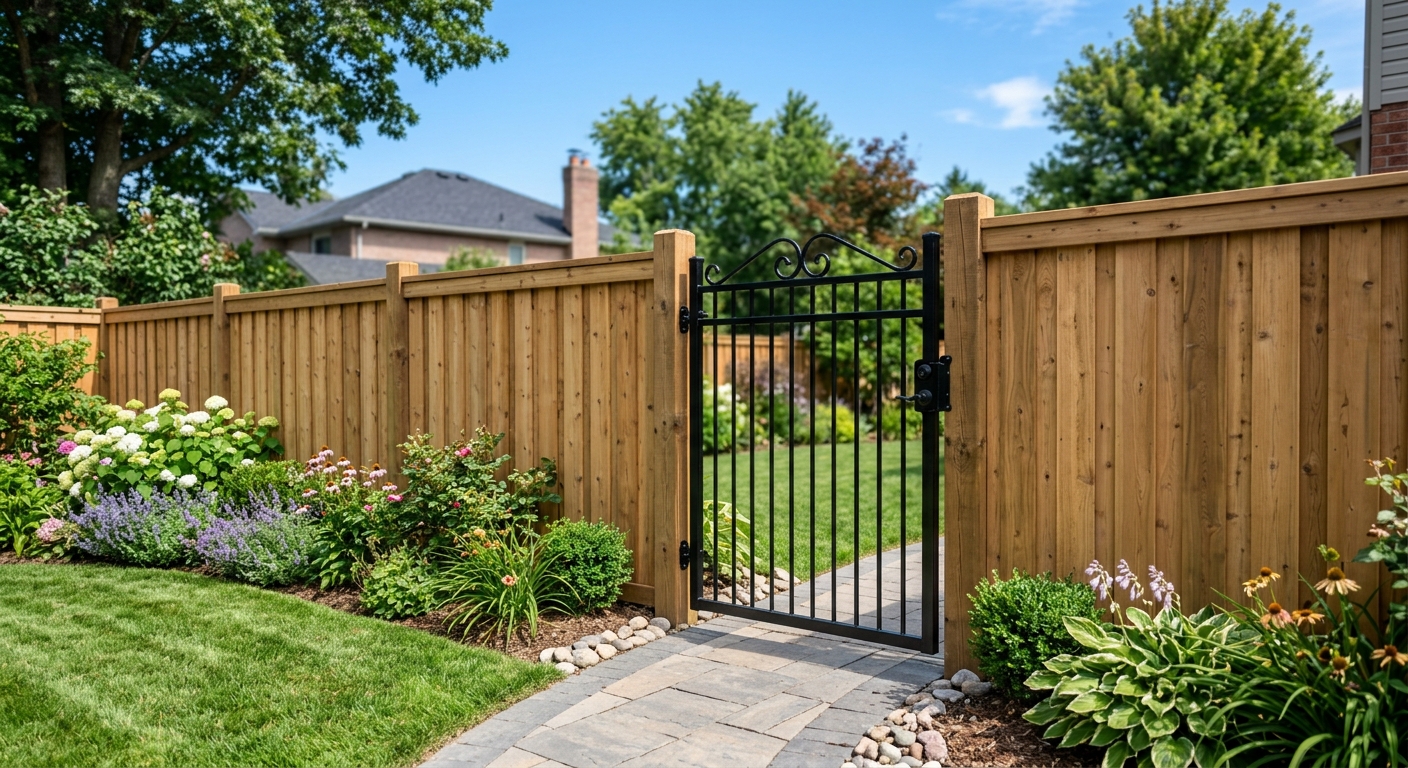
Fencing options and costs in Fallingbrook
Fallingbrook homeowners often ask what their best fencing option is, and the honest answer is that the right choice depends on how much privacy you want, how much maintenance you can handle, and how your yard sits through Toronto-area freeze–thaw cycles. With a population of 25,000 (Statistics Canada, 2021 Census), Fallingbrook is busy enough that contractors can usually schedule steady seasonal work—but the demand is still shaped by local housing stock. In communities across the Toronto economic region, many detached and backyard-focused properties translate into frequent fence projects, particularly around family streets and school corridors where yard boundaries are most visible from sidewalks. (Statistics Canada, 2021 Census)
In Southern Ontario, fencing costs are driven heavily by ground conditions and frost depth. The common frost-line assumption in the Toronto area is about 42"–48", which means posts typically need to be set a minimum of 3.5–4 feet deep to reduce frost heave—especially for 6–8 ft privacy fences. That requirement pushes many bids toward concrete-set posts and longer, heavier materials, which raises both labour time and ready-mix usage. Wind and rain aren’t as punishing as the Prairies or coastal climates, but solid privacy panels still need proper post sizing and spacing to avoid racking during gusts. If you’re near busier family-adjacent areas like the residential fringes commonly found along the Fallingbrook park-and-trail connections, privacy fencing is often in higher demand because more neighbours view their yards from shared paths.
Use the table below as a baseline, then we’ll break down why your quote can land higher or lower depending on footing depth, gates, and site complexity.
| Material |
Lifespan |
Maintenance |
Privacy Rating |
Price per Linear Foot |
| Pressure-treated pine (standard wood) |
10–15 years |
Stain or seal every 2–3 years |
High (solid rails/boards) |
$65 – $120 |
| Cedar (natural rot resistance) |
15–20 years |
Light staining every 2–4 years |
High (solid boards) |
$75 – $130 |
| Vinyl / PVC (no-maintenance) |
20–30 years |
Occasional wash (no staining) |
High (solid privacy styles) |
$75 – $130 |
| Chain-link (galvanized steel) |
25–35 years |
Rinse as needed; tension checks |
Low to Medium (option for slats) |
$45 – $85 |
| Aluminum ornamental |
25–40 years |
Wash as needed; inspect hardware |
Low (open pickets) |
$90 – $160 |
| Composite / recycled material |
20–30 years |
Minimal; clean with mild soap |
High (solid composite panels) |
$85 – $140 |
Prices are estimates only and vary by project scope, site access and material selection.
What affects the price of fencing in Fallingbrook
In Fallingbrook and the broader Toronto economic region, it’s common to see the “same” fence come back with bids that differ by 30–50%. That gap usually isn’t about the material brand—it’s about how the contractor plans for frost depth, panel strength, and site constraints. Two crews can both call for 6 ft of privacy fencing, but one may price conservative post depth, heavier hardware, and proper concrete-set footings, while another tries to reduce labour by cutting corners on setup, layout time, or disposal. In a market where projects often ramp up during spring and early summer, labour availability and scheduling logistics can also affect unit pricing, especially on jobs requiring extra mobilization, longer site protection, or tight access.
Here are the biggest Ontario drivers. First, frost line depth sets how deep posts must be set—typically 4–6 inches below the design frost depth—to prevent heaving. In practical terms, that often means posts need to be set around 1.5–2.0 m into the ground, which usually requires concrete setting and longer posts. Second, even though Toronto isn’t the windier Prairies, wind still influences panel style, post size, and spacing; solid tall fences (wood/vinyl) usually need closer spacing and sturdier posts to resist racking. Coastal BC’s wet winters can accelerate wood rot without treatment, but in the GTA we still see rot when staining and drainage details are missed.
Concrete examples from typical Fallingbrook sites: (1) A straight backyard run with easy access may land in the wood band of $65–$120 per linear foot, but (2) a fence that needs concrete-set posts and stepped grade adjustments can push to the high end because the contractor must excavate more carefully, often with raked panels and extra labour time. (3) If you add a double drive gate, hardware and framing can lift costs noticeably, commonly bringing projects closer to the vinyl or even mid metal ranges (e.g., $75–$130) depending on the build.
Next we’ll translate these realities into a clear list of what changes your invoice line-by-line.
| Price Factor |
Why It Matters |
Cost Impact |
| Fence length in linear feet |
The primary material and labour driver |
Most projects scale directly with length |
| Post depth required |
Frost line determines post length and hole depth |
Deeper holes and extra concrete increase cost |
| Post setting method |
Concrete vs. gravel pack vs. driven posts |
Concrete-set typically costs more but reduces failure risk |
| Material choice |
Vinyl vs. cedar vs. chain-link changes hardware and longevity |
Higher-end materials generally price at the top of their bands |
| Gate count and type |
Walk-through vs. drive-through (double) adds framing and hinges |
Gates can add a significant labour and hardware premium |
| Grade and terrain |
Sloped yards require stepped or raked panels |
More layout time, extra lumber/panels, and trimming |
| Old fence removal and disposal |
Hauling and demolition time is labour-intensive |
Can meaningfully increase total by several line items |
| Permit fees and survey / property line locate |
Up-front compliance avoids encroachment disputes |
Adds direct admin and locating costs when required |
Permits & regulations in Ontario
In Ontario, fences above certain height thresholds often require a building permit, and local setback rules can apply. As a practical starting point, fences above a typical rear threshold of about 2.0 m (6.5 ft) and above about 1.0–1.2 m (3–4 ft) at the front or corner may trigger permit requirements depending on the municipal rules. Even if you think you’re “under the limit,” the permit outcome can still change if your location is a corner lot or if the fence runs near a property line with tighter setbacks. Regardless of height, all fences must respect property lines and municipal setback bylaws.
Before digging any post hole, call for utility locates. In Ontario, this is done through Ontario One Call (often referred to in conversation as “One Call”). Also, obtain a survey or locate your property pins before you install—this is the simplest way to avoid expensive encroachment disputes with neighbours when fences aren’t built exactly where a pin indicates.
Step-by-step for verifying a contractor in Fallingbrook: (1) Ask for their Ontario business/contractor licensing details if applicable for the work they’re doing; confirm the registration details through the official online registry they provide. (2) Request a current certificate of insurance showing liability coverage and the policy effective dates. (3) Verify WSIB coverage (or the appropriate clearance letter/coverage status) before work begins; fencing crews should be able to provide documentation without hesitation.
Typically does NOT require a permit: small, low fences that fall under the applicable height thresholds and do not alter required setbacks, and minor repairs/replacement in the same footprint. Typically DOES require a permit: taller fence installations (especially above the common thresholds), new fence runs that alter location/setbacks, and projects where accessory structures or extensive groundwork are involved.
Choosing the right fence material for Fallingbrook
Choosing a fence in Fallingbrook is mostly about matching material performance to Toronto-area weather: cold winters, freeze–thaw cycles, and the reality that posts must be set deep enough for frost protection. Pressure-treated pine is the budget-friendly option, but it isn’t a “set and forget” product—expect staining or sealing roughly every 2–3 years to avoid grey weathering and premature wear at the fasteners. Cedar looks great and resists rot better due to natural oils, but it still benefits from periodic maintenance to keep the finish even and to slow down surface breakdown. Vinyl/PVC is popular for low maintenance because it doesn’t need staining, yet very cold snaps can cause panel contraction; proper installation and correct post spacing help prevent warping or stress on boards. Chain-link is the lowest-cost, longest-life choice for security, but privacy requires slats or adding screening, which changes both cost and airflow characteristics. Aluminum ornamental offers a rust-resistant, no-rust look, but it won’t give the privacy level you get from solid wood or vinyl.
Post depth matters as much as material here. With Toronto’s frost assumptions around 42"–48", most installs use concrete-set posts and excavate to roughly 1.5–2.0 m depending on local conditions. That’s why a “cheap” material can still end up at the higher end of the price band—footings and labour are a major portion of your real cost. Solid privacy fences also need solid framing for wind and snow impacts; we typically size posts and choose spacing to reduce racking, particularly on longer runs and exposed corners.
Example: If your yard is a straightforward 6 ft privacy run with good access, moving from pressure-treated pine ($65–$120) to vinyl/PVC ($75–$130) may be worth it if you’re avoiding staining labour every few years. But if you’re budget-sensitive and you’re comfortable with periodic maintenance, cedar or pressure-treated wood can justify the lower upfront spend—especially when your primary goal is privacy, not ornamental curb appeal.
| Material |
Cold Tolerance |
Lifespan |
Annual Maintenance |
Best For |
Price Band |
| Pressure-treated pine |
Good (with proper post setting and staining) |
10–15 years |
Light inspection; plan for staining every 2–3 years |
Budget privacy with manageable upkeep |
$65 – $120 |
| Cedar |
Good (natural resistance; still needs finishing) |
15–20 years |
Inspect; typically stain every 2–4 years |
Longer-lasting privacy with better appearance |
$75 – $130 |
| Vinyl / PVC |
Very good (avoid improper spacing and over-tight framing) |
20–30 years |
Minimal—wash and check hardware occasionally |
Low maintenance privacy |
$75 – $130 |
| Chain-link |
Very good (galvanized steel resists cold wear) |
25–35 years |
Low—tension checks and cleaning as needed |
Security on a tight budget |
$45 – $85 |
| Aluminum ornamental |
Excellent (no rust) |
25–40 years |
Low—wash and inspect once or twice yearly |
Curb appeal with moderate boundary definition |
$90 – $160 |
| Composite / recycled |
Good (stable boards when properly installed) |
20–30 years |
Low—periodic cleaning and hardware checks |
Privacy with reduced upkeep |
$85 – $140 |
How to choose a fencing contractor in Fallingbrook
Choosing the right fencing contractor in Fallingbrook comes down to paperwork, workmanship standards, and how clearly they scope the job. Start by verifying Ontario licensing/registration details where applicable, then confirm liability insurance (ask for a certificate of insurance) and verify WSIB/WCB coverage before work begins. For insurance, you’re looking for the policy effective dates and proof that fencing subcontractors are covered; if they can’t provide a current certificate or they rush you past it, that’s a major warning sign. For WSIB/WCB, request documentation such as a clearance letter or coverage status proof—reputable contractors will have it ready because it’s a standard part of doing business safely.
Next, get 2–3 itemised written quotes that break out labour and materials separately rather than a single lump sum. A strong fence quote shows: post type and depth assumptions, how posts will be set (concrete vs. gravel pack), panel style and material thickness, gate hardware, and whether demolition and disposal of your old fence are included. Read the exclusions carefully: ask whether permits (when required), property line locate/survey, site cleanup, and utility locate calls are included or billed separately.
For warranty, confirm both workmanship and product coverage. Ask how long the workmanship warranty lasts, whether the manufacturer warranty is tied to the purchaser, and if it’s transferable if you sell your home. For payment, never pay more than 10–15% upfront; a holdback until completion is a common, reasonable protection. Finally, request a start date and an estimated completion window in writing so you know how scheduling changes will be handled.
- Confirm liability insurance and ask for the certificate before any site work starts
- Verify WSIB/WCB clearance or coverage status (don’t accept “we’re covered” without proof)
- Ask how posts will be set for frost protection and whether concrete is included
- Require itemised labour + materials (not just total price)
- Confirm disposal/hauling of old fencing and debris is included
- Ask whether utility locates are arranged and documented
- Check if the quote includes gates, frames, hinges, latches and alignment hardware
- Verify warranty terms in writing (workmanship vs. product)
- Ensure the scope mentions grade conditions: stepped vs. raked panels
- Get the exact fence height and style details (privacy board spacing, cap rails, post spacing)
- Agree on a payment schedule with a 10–15% deposit maximum and a completion holdback
- Require a written start date and estimated completion timeline
Red flags in Fallingbrook include: (1) refusing to put post depth and setting method in writing, (2) asking for large upfront payments (well above 10–15%), (3) a quote that includes “fence only” while excluding disposal and site restoration, (4) no documented insurance/WSIB proof, and (5) vague timelines like “sometime in spring” without a completion estimate.
Frequently asked questions — fencing in Fallingbrook
Should fence posts be set in concrete here?
In Fallingbrook and the wider Toronto region, concrete-set posts are typically the best practice for long-term stability because you’re dealing with freeze–thaw and frost-line movement. With common Toronto frost assumptions around 42"–48", posts usually need to be set roughly 3.5–4 feet deep (about 1.5–2.0 m) to reduce the risk of frost heave. That depth, plus local soil conditions, is why many contractors recommend concrete setting rather than simple driven posts for privacy fences 6–8 ft tall. If your contractor only offers driven posts on a tall solid fence, ask how they address frost protection and how they prevent wobble/racking during winter cycles. A good quote should spell out post depth and setting method clearly, not leave it as a vague assumption.
What's the best fence for privacy?
For privacy in Ontario backyards around Fallingbrook, a solid panel style—such as cedar or vinyl privacy with closely spaced boards/pickets—is usually the top choice. Cedar gives a natural look with better rot resistance than basic pressure-treated wood, while vinyl/PVC offers low maintenance. Both can achieve a high privacy rating when built as a solid run with proper post spacing and sturdy framing. Chain-link can be privacy-rated only when you add slats or screening, and aluminum ornamental is typically more decorative than private. In terms of typical budgeting, wood and cedar commonly fall around the $65–$120 band for wood and up to roughly $75–$130 for cedar or comparable options, depending on height, access, and gate count. The real difference is often less about the material sticker price and more about the footing depth and hardware needed for a stable 6–8 ft privacy fence.
How do I compare fencing quotes?
When you compare quotes in Fallingbrook, don’t just look at the final number—compare the scope. Ask whether each quote includes concrete-set posts (or another frost-protection method), the assumed post depth, and post spacing for solid privacy panels. Confirm the material type (pressure-treated pine vs. cedar; vinyl brand/grade; galvanized wire weight for chain-link) and whether caps, rails, and hardware are included. Also verify what’s excluded: old fence removal and disposal, utility locates, grading/step treatment on slopes, and whether gates include latches and proper framing. Good quotes are itemised with labour + materials; lump-sum estimates hide differences that create change orders. If one contractor’s price is much lower but doesn’t specify post setting depth or warranty terms, that “savings” often disappears after the first winter when boards loosen or panels rack.
How long does fence installation take in Fallingbrook?
Timing depends mostly on length, gate count, access, and whether you need demolition and concrete-set footings. For a typical backyard run, installation can often happen within a few days once crews are on site, but concrete-set work and detailed layout (especially near property lines) can add time. In winter or late fall, frost and ground conditions can slow things down; most Ontario fence work is planned for spring through early fall to ensure post holes can be excavated safely and footings cure reliably. If your project includes a double drive-through gate or a run with slopes requiring stepped/raked panels, expect longer layout and extra material trimming. Your contractor should give you a start date and a realistic completion estimate in writing, including how disposal and cleanup are handled.
Can I install a fence on a slope in Fallingbrook?
Yes, you can install a fence on a slope in Fallingbrook, but the method matters for both appearance and structural performance. The two common approaches are stepped panels (with height changes in discrete sections) or raked panels (following the slope continuously). Stepped builds are usually simpler to keep boards aligned and can better manage uneven ground with less specialized framing. Raked builds may be visually smoother in certain yards, but they require careful planning to keep panel heights consistent and to reduce stress on fasteners during temperature swings. For any sloped yard, make sure the quote includes how they will handle grading and whether you’ll get racking-resistant spacing for tall privacy panels. Also remember that fence placement still needs to respect property lines and municipal setbacks, so a survey or property pin locate is especially important on uneven lots.
What is the most weather-resistant fence for Fallingbrook's climate?
For Fallingbrook’s freeze–thaw weather and Ontario winters, the most weather-resistant choices are usually vinyl/PVC for low maintenance and longevity, or properly built cedar with correct post setting and periodic finishing. Vinyl doesn’t require staining, and when installed with appropriate post depth and spacing for the region’s conditions, it performs well through winter temperature swings. Cedar also stands up well because of its natural rot resistance, though it still needs surface protection to look its best. If you want maximum “weather resistance” with minimal thinking, vinyl often wins on upkeep; if you want a more natural look and can manage maintenance, cedar is a strong alternative. Chain-link is extremely durable for weather exposure but won’t provide the same privacy level unless you add screening. For budgeting, homeowners often compare options in bands like $75–$130 for vinyl/PVC against wood ranges of $65–$120, but the biggest long-term determinant is still proper frost-depth footing and solid workmanship.