Fencing options and costs in Preston Centre
Preston Centre is a compact, busy part of the Toronto economic region, and that shows up in the fencing market: when homeowners upgrade front boundaries or add backyard privacy, crews are often scheduling multiple jobs per week around existing driveways, sidewalks and mature landscaping. With a population of 10,441 (Statistics Canada, 2021 Census), the local demand is steady rather than sporadic—meaning availability is generally good, but busy seasons can still tighten timelines.
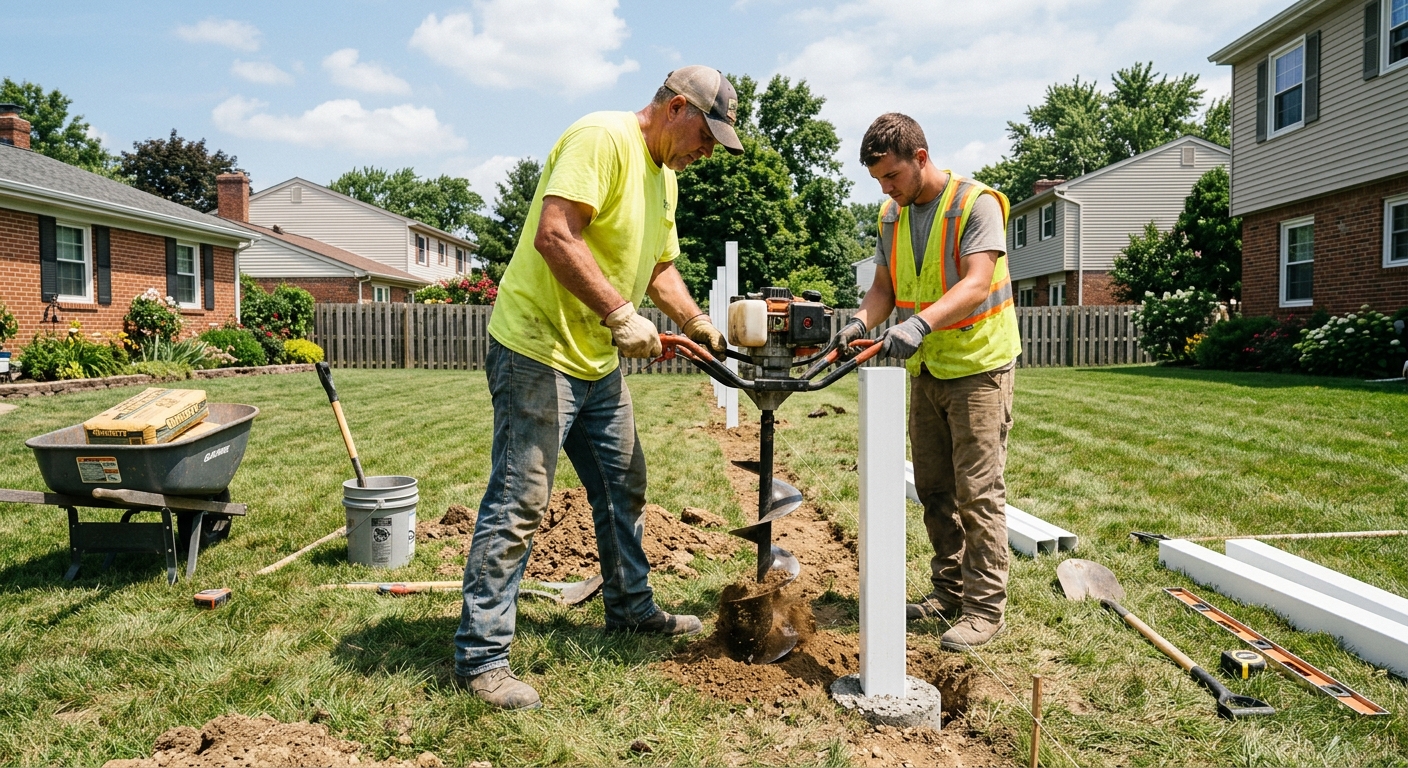
Toronto-area housing mix also drives fence choices. In many Preston Centre blocks, fenced yards attached to single-family living create a high need for practical privacy fencing—especially where kids, pets or home offices need screen-off space. At the same time, local soil conditions and the common frost-line practice in Southern Ontario mean most 6–8 ft privacy fences require concrete-set posts, which increases labour time and ready-mix costs compared with simple driven-post installs.
In practical terms, you’ll see the biggest price shifts between wood, vinyl/PVC and chain-link because of post depth, panel style and wind-stability expectations. Around the Preston Centre commercial strip and nearby residential streets, privacy upgrades are especially common where yards are exposed to cross-breeze or where homeowners want a cleaner line along properties shared by older lots.
Below is a realistic comparison of common fence types you’ll see quoted in Preston Centre, including typical lifespan, maintenance and unit pricing—then we’ll break down what changes your quote later.
| Material |
Lifespan |
Maintenance |
Privacy Rating |
Price per Linear Foot |
| Pressure-treated pine (standard wood) |
10–15 years |
Stain/seal every 2–3 years; check for loose rails |
High (solid panels) |
$65 – $120 |
| Cedar (natural rot resistance) |
15–20 years |
Reseal/stain every 3–4 years; monitor fasteners |
High (solid boards) |
$75 – $130 |
| Vinyl / PVC (no-maintenance) |
25–30 years |
Occasional wash; inspect for impact damage |
High (solid styles) |
$75 – $130 |
| Chain-link (galvanized steel) |
20–30 years |
Minimal; hose off and check tension |
Low–medium (visibility) |
$45 – $85 |
| Aluminum ornamental |
25–35 years |
Occasional cleaning; tighten hardware |
Low–medium (decorative) |
$90 – $160 |
| Composite / recycled material |
20–25 years |
Low; rinse and check for warping at posts |
High (solid or semi-solid systems) |
$95 – $160 |
Prices are estimates only and vary by project scope, site access and material selection.
What affects the price of fencing in Preston Centre
In Preston Centre, you can easily see fencing quotes swing by 30–50% for what looks like the same “6 ft privacy fence” on a similar lot. The gap usually comes down to post depth, how posts are set (and how much concrete is used), the exact panel style, and whether the contractor includes excavation, disposal, and hardware upgrades for wind stability in the Toronto economic region.
Frost line depth is a major driver in Southern Ontario. Even though Toronto isn’t the Prairies for open-field wind, contractors still plan for winter freeze/thaw cycles. The common practice is to set posts about 4–6 inches below the design frost depth to prevent heaving—meaning you’re typically digging deeper (often 1.5–2.0 m into the ground) and using longer posts. When that depth is required, concrete-set posts become the default, pushing total labour time and ready-mix costs higher than a gravel-pack or driven-post approach.
Two local examples that raise cost: (1) clay/mixed soils near many GTA lots can hold excavation more tightly, slowing trenching and increasing backfill time; (2) where yards have mature landscaping or tight gates, we may need careful hand-digging around roots, which adds labour hours. Cost can drop when access is easy and the run is straight—less time aligning posts and fewer hardware adjustments.
Material selection matters too. A cedar or vinyl privacy fence often prices near the higher end of typical bands (for instance, roughly $75–$130 per linear foot), but it can still be economical over time if you avoid frequent refinishing. Chain-link can land lower (often $45–$85 per linear foot), especially when you’re only trying to define a boundary rather than block views.
Finally, any slope or terrain change affects layout—stepped sections take time and increase labour, even if total linear footage looks similar on paper.
| Price Factor |
Why It Matters |
Cost Impact |
| Fence length in linear feet |
Every additional foot multiplies materials and labour; it’s the core measure |
High |
| Post depth required |
Frost line planning determines hole depth, post length and excavation volume |
High |
| Post setting method |
Concrete-set posts stabilize against heaving; driven posts generally reduce stability |
Medium–High |
| Material choice |
Vinyl/cedar systems cost more but can reduce long-term upkeep |
Medium |
| Gate count and type |
Gates require heavier frames, hinges, latches and often bracing |
Medium |
| Grade and terrain |
Sloped yards require stepped or raked panel layouts and extra layout time |
Medium |
| Old fence removal and disposal |
Demolition, haul-away and potential salvage time impact the scope |
Medium |
| Permit fees and survey / property line locate |
Locates and admin time prevent encroachment issues and rework |
Low–Medium |
Permits & regulations in Ontario
In Ontario, fence permits and rules can apply when you’re building beyond certain height thresholds and depending on where the fence sits on your property. As a practical guideline for many homeowners in the Preston Centre area, fences above a rear threshold of about 2.0 m (6.5 ft) often need a building permit, while front or corner-side fencing commonly has lower height limits (often around 1.0–1.2 m or 3–4 ft). Setbacks can also apply, and the fence must be on your property—not over the property line—so municipal setback bylaws matter even when the fence is “only a boundary” in appearance.
Before any digging, call for utility locates through Ontario One Call to prevent damaging buried services. If you don’t already know where your pins are, obtain a survey or a property locate so the contractor can place posts correctly. This step is one of the easiest ways to avoid disputes with neighbours later.
Shared fence ownership in Ontario is typically handled under provincial line-fences legislation principles, meaning the practical expectations between adjoining owners can affect who pays for repairs or replacement—especially if the boundary fence is shared.
When verifying an Ontario contractor, confirm they carry appropriate liability insurance and WSIB/WCB clearance (where applicable). Ask for (1) an Ontario contractor licence details (where required for your job), (2) a current certificate of insurance showing your address as applicable, and (3) proof of WSIB/WCB coverage or clearance letter. Then keep the paperwork with your contract and quote.
Choosing the right fence material for Preston Centre
For Preston Centre homeowners, the “best” fence material usually comes down to how much privacy you need, how hands-on you’re willing to be for maintenance, and whether you want to pay once or pay repeatedly over time. In Toronto’s freeze/thaw climate, post stability is as important as surface material. Most 6–8 ft privacy fences should be built with proper footing depth for frost protection, which is why concrete-set posts are commonly recommended.
Pressure-treated pine is typically the budget option, but in Southern Ontario it’s not “set-and-forget.” You should plan to stain or seal every 2–3 years to reduce grey weathering and protect the surface. Cedar looks better longer and has natural rot resistance, but it still benefits from maintenance—often resealing/staining around every 3–4 years. Vinyl/PVC is very popular for low-maintenance privacy: it doesn’t need painting and usually only needs occasional washing, though extreme cold can make boards more impact-sensitive, so careful installation and proper posts matter. Chain-link is the lowest-cost way to mark a boundary and keep it secure, but it won’t give privacy unless you add slats or privacy screen. Aluminum ornamental offers an attractive, no-rust appearance and great longevity, but it’s not a privacy solution.
Here’s a real-world example of where spending more can be justified: if a pine privacy fence is quoted around the middle of the typical wood band (roughly $65–$120 per linear foot), vinyl privacy may come in closer to the higher end of the vinyl band (roughly $75–$130). If you’ll be refinishing pine multiple times over 10–15 years, the long-term effort can make the vinyl difference worthwhile—particularly when your yard has limited access for repeated service visits.
Wind and snow also influence hardware choices. Taller solid privacy systems need stronger posts and closer spacing to reduce racking and uplift, even though the Toronto area doesn’t see the prairie-style open wind extremes.
| Material |
Cold Tolerance |
Lifespan |
Annual Maintenance |
Best For |
Price Band |
| Pressure-treated pine |
Good (surface protection matters) |
10–15 years |
Seasonal inspection; stain/seal every 2–3 years |
Lowest upfront cost for privacy |
$65 – $120 |
| Cedar |
Good (naturally rot-resistant) |
15–20 years |
Reseal/stain every 3–4 years; tighten hardware |
Better curb appeal with manageable upkeep |
$75 – $130 |
| Vinyl / PVC |
Good (can chip on impact in deep cold) |
25–30 years |
Occasional wash; check for impact damage |
Low maintenance privacy |
$75 – $130 |
| Chain-link |
Excellent (galvanized steel) |
20–30 years |
Minimal; hose off and inspect tension |
Security on a budget |
$45 – $85 |
| Aluminum ornamental |
Excellent (coated metal) |
25–35 years |
Occasional cleaning; tighten hardware |
Decorative boundaries with long life |
$90 – $160 |
| Composite / recycled |
Good (needs correct post support) |
20–25 years |
Low; rinse and inspect for alignment |
Privacy with reduced upkeep |
$95 – $160 |
How to choose a fencing contractor in Preston Centre
Choosing a fencing contractor in Preston Centre is mostly about verification and scope clarity—because fencing problems are expensive to fix after the fact. In Ontario, you should verify licensing/registration where applicable, but more importantly for homeowners you need proof of liability insurance and WSIB/WCB coverage or clearance. How to check: request a current certificate of insurance and ensure the policy is active for the contract period (and that the company name matches the quote). For WSIB/WCB, ask for a clearance letter or proof of coverage that shows the work is being performed under proper coverage.
Next, get 2–3 itemised written quotes. Avoid lump sums. Ask for a breakdown showing labour, concrete/post setting method, fence materials, hardware (hinges, latches, bracing), gate components, excavation, and haul-away/disposal. Then read what’s excluded: Is the permit included? Does the quote include utility locate costs and any re-digging if lines are found? Clarify whether post-hole digging is by hand or auger, and whether concrete is included for all posts.
Warranty matters in two parts: workmanship and the product. Confirm workmanship warranty length (commonly tied to post stability and install standard), and whether manufacturer warranty is separate and transferable if you sell the home. Also confirm how warranty claims are handled if damage occurs after installation.
Payment schedule should be conservative. Avoid paying more than 10–15% upfront. If possible, use a holdback until the gate operates correctly and the final line is inspected. Always get the start date and completion estimate in writing, including weather contingencies for winter ground conditions.
- Provide proof of liability insurance (active dates) before work starts.
- Show WSIB/WCB clearance letter or proof of coverage.
- Give an itemised quote (labour, posts/footings, concrete, materials, hardware, gates).
- Specify post depth and the post-setting method (concrete-set vs gravel pack vs driven).
- Confirm fence layout is based on a survey or property pin locate.
- List what happens if utilities are encountered during excavation.
- Include old fence removal and disposal if needed (or clearly state “not included”).
- State whether gates include heavy-duty hinges, proper latching and diagonal bracing.
- Confirm warranty terms for workmanship and the product, and whether warranties are transferable.
- Set a payment schedule with a holdback until final inspection and cleanup.
- Provide a written start date and completion target.
- Use hardware meant for Ontario winter exposure (corrosion-resistant fasteners, proper bracing).
Concrete red flags I see in Preston Centre are: (1) quotes that don’t specify post depth and rely on “driven posts” for tall privacy fences; (2) omission of concrete or unclear footing details; (3) refusal to provide insurance/WSIB proof; (4) “lump sum only” pricing with exclusions buried in conversation; and (5) no written timeline or vague “we’ll be done when it’s done” scheduling.
Frequently asked questions — fencing in Preston Centre
How long does fence installation take in Preston Centre?
Most residential fences in Preston Centre are completed in about 2–5 working days once materials arrive, depending on length, gate count and whether we’re setting posts in concrete. Straight runs with good access typically go faster, while tight side yards, mature trees or steep sections slow excavation and alignment. Post depth is also a factor: frost-protection planning means proper holes and concrete-set posts, which takes time for placement and curing before rails are installed. If you’re starting from an existing fence, add time for removal and disposal. For budget planning, many homeowners find costs land in the wood band (for example, around $65–$120 per linear foot) and timelines align with how many posts and gates are involved.
Can I install a fence on a slope in Preston Centre?
Yes—sloped yards are common around Preston Centre—but you’ll want the fence built with stepped or raked sections. Stepped panels follow the grade in discrete height changes, while raked systems keep the top rail angled; which approach is best depends on your fence style and how noticeable the grade change is. For privacy fences in Ontario winter conditions, I also recommend bracing and using correct post embedment depth so the fence stays plumb where possible. When soil is uneven or clay holds water, excavation can take longer, which can affect both schedule and price. It’s normal for quotes to change if the slope requires more posts, special panel cuts or extra hardware to prevent racking in wind.
What is the most weather-resistant fence for Preston Centre's climate?
For long-term weather resistance in Ontario’s freeze/thaw climate, vinyl/PVC and properly installed cedar are usually strong contenders—especially when the contractor uses frost-safe post embedment and corrosion-resistant hardware. Chain-link is also very durable, but it won’t provide privacy. Wood can perform well, but it needs regular attention: pressure-treated pine typically requires staining or sealing every 2–3 years to prevent premature grey weathering and wear, whereas cedar generally holds up better visually and against rot while still benefitting from periodic sealing. In terms of typical pricing, homeowners often see vinyl privacy around the $75–$130 per linear foot range, which can be a good trade-off if you want minimal maintenance in Toronto winters.
How do I prevent wood fence rot in Preston Centre?
Wood rot prevention is mostly about installation details, not just the type of wood. First, use proper post depth and keep the bottom of posts and boards off prolonged standing water—rot accelerates when moisture stays trapped. Second, ensure adequate ventilation between boards where the design allows it, and use quality, corrosion-resistant fasteners to reduce splitting and loosening. For pressure-treated pine, plan maintenance: stain/seal every 2–3 years helps protect the surface through Ontario’s wet shoulder seasons and deep freezes. For best results in Preston Centre, I also recommend concrete-set posts (especially for 6–8 ft privacy fences) because stable posts reduce movement, which prevents joints from working loose during winter storms.
What is the cost per linear foot for fencing in Preston Centre?
In the Preston Centre area of the Toronto economic region, common installed price bands generally fall into these ranges: chain-link is often about $45–$85 per linear foot, pressure-treated wood around $65–$120 per linear foot, vinyl/PVC often about $75–$130 per linear foot, and aluminum ornamental around $90–$160 per linear foot. Your exact number moves based on total linear footage, post-setting depth (frost protection), gate count, and whether you need old fence removal. For privacy fences, concrete-set posts are a frequent requirement due to frost heave risk in Southern Ontario, which increases labour and ready-mix costs but improves long-term stability.
Should I repair or replace my old fence in Preston Centre?
It depends on what’s failing. If the posts are still solid (not leaning, not soft at the base) and only a few boards or rails are damaged, repair can be cost-effective—especially when you can match the existing style and height. If posts have shifted, the bottom sections are rotting, or you see repeated leaning after minor straightening, replacement is usually the better long-term move because post stability is what governs frost-movement issues. In Preston Centre’s Ontario winters, patchwork can also be undermined if drainage is poor or if the old fence was installed with minimal footing depth. As a rule of thumb, if multiple sections are failing and you’re budgeting near $65–$120 per linear foot for wood or $75–$130 for vinyl privacy, replacing can prevent repeat labour over the next few seasons.