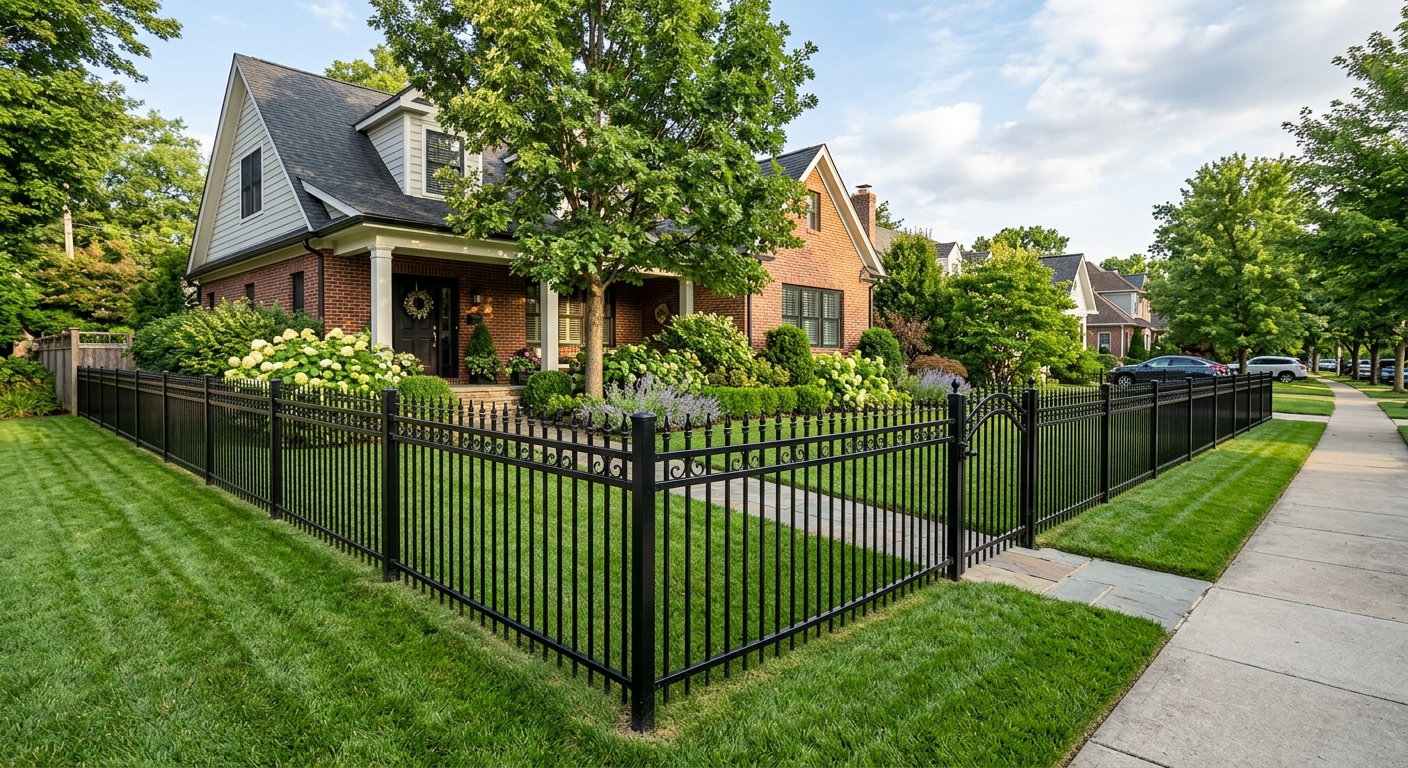
Fencing options and costs in High Park-Swansea
High Park-Swansea is one of those Toronto neighbourhoods where fencing is more than curb appeal—it’s about privacy, pets, and keeping yards useable through the long cold season. With a local population of 23,925 (Statistics Canada, 2021 Census), there’s steady demand from homeowners and families upgrading backyards, side yards, and dog runs. In this part of the city, detached and semi-detached streets alike create plenty of fence touchpoints, especially around high-traffic community edges and busier blocks where homeowners want visual separation.
In the Toronto economic region, frost and freeze-thaw cycles are a major reason fence projects cost what they do. Southern Ontario frost depth is commonly considered about 42"–48", which translates into posts set roughly 3.5–4 feet deep for typical 6–8 ft privacy runs. That usually means concrete-set posts (more labour and ready-mix cost), plus longer treated boards and more hardware for taller solid fences. Wind isn’t as punishing as the Prairies, but racking still matters for panel-style wood and heavier vinyl privacy systems.
Trade demand is especially noticeable in areas closer to High Park and the wider Swansea/“Swansea Village” streets where properties often have older landscaping, more established boundaries, and easier access for crews—so there are more appointment openings for replacements and gate adds. If you’re comparing options, the table below is a practical starting point for common materials and the range you’ll see from contractors in High Park-Swansea.
| Material |
Lifespan |
Maintenance |
Privacy Rating |
Price per Linear Foot |
| Pressure-treated pine (standard wood) |
10–15 years |
Stain/seal every 2–3 years; tighten boards annually |
High (solid/close picket) |
$10–$18 |
| Cedar (natural rot resistance) |
15–20 years |
Light staining every 2–4 years; inspect posts/rails yearly |
High (solid/close picket) |
$12–$24 |
| Vinyl / PVC (no-maintenance) |
20–30 years |
Rinse as needed; no staining |
High (solid privacy styles) |
$13–$26 |
| Chain-link (galvanized steel) |
20–35 years |
Occasional rinse; replace bent sections |
Low–Medium (privacy slats optional) |
$8–$14 |
| Aluminum ornamental |
25–40 years |
Minimal; occasional wash and hardware check |
Low–Medium |
$15–$30 |
| Composite / recycled material |
20–30 years |
Low; rinse and occasional inspection |
High (solid composite boards) |
$16–$32 |
Prices are estimates only and vary by project scope, site access and material selection.
What affects the price of fencing in High Park-Swansea
In High Park-Swansea, it’s common to see quotes for what looks like “the same fence” swing by 30–50% across Toronto and other parts of Ontario. The difference usually isn’t the material alone—it’s the site conditions, how posts are installed below the frost line, how many gates you need, and whether the contractor has to remove an old fence and handle disposal.
Toronto’s freeze-thaw cycle is the big driver. Frost depth is commonly treated as about 42"–48" in Southern Ontario, so posts typically go roughly 4–6 inches below the design frost depth, which often puts hole depth and post length in the 1.5–2.0 m range. With 6–8 ft privacy fences, that usually means concrete-set posts rather than simple gravel packs or driven posts, increasing labour time and ready-mix costs. On top of that, taller solid fences need sturdier post sizing and closer spacing (often 6–8 ft centres) to reduce racking, especially when wind pressures hit panel edges.
Two real-world examples I see often in High Park-Swansea: (1) yards with clay-heavy soils and shallow topsoil layers usually require more careful footing prep before concrete is poured, which can raise labour hours; (2) properties with narrow side access or lots of hardscape (walkways, garden beds, or retaining edges) can reduce working space for trenching and increase install time. Meanwhile, jobs with clean, straight runs and easy gate access can come in nearer the lower end of the common wood and vinyl bands—wood often lands around $65–$120 total per linear foot-equivalent range depending on specs, while vinyl/PVC typically trends closer to $75–$130 when privacy styles and concrete-set posts are included.
| Price Factor |
Why It Matters |
Cost Impact |
| Fence length in linear feet |
Most materials and labour scale directly with total run |
Major—can swing the total by 25–60% |
| Post depth required |
Frost protection drives post length and hole depth |
High—adds labour + more post material; often concrete-set |
| Post setting method |
Concrete vs gravel pack vs driven posts changes labour and stability |
Medium–High—concrete-set is typically higher but longer-lasting |
| Material choice |
Hard costs and hardware differ by wood, cedar, vinyl, and chain-link |
High—vinyl/PVC and composite cost more up-front than chain-link |
| Gate count and type |
Gates require bracing, stronger hardware, and careful alignment |
Medium–High—each additional gate can add notable cost |
| Grade and terrain |
Slopes require stepped/raked panels or custom framing |
Medium—may add materials and layout time |
| Old fence removal and disposal |
Demolition, hauling, and dump fees can be significant |
Medium—often a hidden line item that changes the quote |
| Permit fees and survey / property line locate |
Compliance and locate work reduce disputes and rework |
Low–Medium—can still be decisive for final pricing |
Permits & regulations in Ontario
In Ontario, fences above common height thresholds often require a building permit—especially when the fence is tall enough to impact visibility, safety, or how the property interfaces with adjacent lands. A typical rule of thumb contractors use is that fences around 2.0 m (about 6.5 ft) at the rear and 1.0–1.2 m (roughly 3–4 ft) at the front or corner may trigger permitting requirements, depending on location and how the municipality interprets the plan. Regardless of height, your fence must respect property lines and any municipal setback requirements.
Before digging post holes, call for utility locates through Ontario One Call. Digging without locates isn’t just risky—it can also lead to costly delays or damage if there are buried services. Next, obtain a survey or at least a proper property line locate to confirm where the pins are. This is especially important in High Park-Swansea where older boundary lines and mature landscaping sometimes make “assumed” fences inaccurate. If you’re building or replacing a shared boundary fence, shared-fence responsibilities are governed by Ontario’s line-fences legislation, and disputes usually hinge on who maintains what and where the boundary actually runs.
What typically DOES require a permit: taller fences meeting or exceeding the threshold noted above, and projects where a municipality requests formal review. What typically does NOT: smaller repairs or like-for-like replacements under the threshold, provided no changes are made to height, location, or material where review would be required.
For contractor verification, ask for: (1) their Ontario business licence info or the correct registration details for the work they’re performing (your contractor should be able to provide it clearly), (2) a certificate of insurance showing general liability, (3) WSIB/WCB coverage documentation or a clearance letter. Don’t accept “we’re insured” without the paper—request the certificate dates to confirm they’re active.
Choosing the right fence material for High Park-Swansea
Choosing the right fence material in High Park-Swansea is mostly about matching your priorities—privacy, low maintenance, budget, and how long you want it to last—to Toronto’s freeze-thaw reality. Pressure-treated pine is usually the best entry price, but it’s not a “set and forget” option: expect to stain or seal every 2–3 years to slow grey weathering and protect boards from moisture cycling. Cedar looks better longer and resists rot more naturally, but it still benefits from periodic maintenance. Vinyl/PVC delivers the lowest day-to-day effort, yet in extreme cold it can become brittle if the system isn’t engineered properly and if it’s not installed with correct allowances—so reputable installers matter.
Post depth is also a material decision. For privacy fences in Toronto, concrete-set posts are commonly recommended because posts need to be set deep enough to resist frost heave; that typically means 1.5–2.0 m into the ground for taller runs. That requirement doesn’t disappear with vinyl or composite—your foundation work still drives the stability. In snowy winters, heavier solid panels also need solid spacing and hardware to keep alignment, since freeze-thaw and wind gusts can stress weaker framing.
To see when the price difference is justified: if you’re comparing a pressure-treated pine privacy fence versus vinyl, pine may feel cheaper up-front, but if you plan to sell or want consistent performance through winters, vinyl’s longer service life can pay back. In Toronto-area pricing, wood often comes in around $65–$120, while vinyl/PVC privacy commonly trends closer to $75–$130 when concrete-set posts and privacy panel systems are included. If you want low maintenance and maximum privacy, vinyl or composite is often the clearer choice; if you want the lowest cost and you can live with less privacy, chain-link is usually the budget winner.
| Material |
Cold Tolerance |
Lifespan |
Annual Maintenance |
Best For |
Price Band |
| Pressure-treated pine |
Good with proper staining and correct post depth |
10–15 years |
Inspect + tighten; stain/seal every 2–3 years |
Budget privacy with willingness to maintain |
$65–$120 |
| Cedar |
Very good; resists rot through wet seasons |
15–20 years |
Inspect; light stain every 2–4 years |
Better appearance, natural rot resistance |
$75–$125 |
| Vinyl / PVC |
Good when installed with correct expansion allowances |
20–30 years |
Minimal—rinse as needed; hardware check |
Low maintenance privacy |
$75–$130 |
| Chain-link |
Excellent (galvanized steel) |
20–35 years |
Low—rinse and repair bent sections |
Security and pet containment on a budget |
$45–$85 |
| Aluminum ornamental |
Excellent; no rust |
25–40 years |
Low—occasional wash and hardware check |
Decorative front/security fencing |
$90–$160 |
| Composite / recycled |
Good; stable boards with quality bracing |
20–30 years |
Low—inspect fasteners; rinse as needed |
Privacy with a wood-like look and lower upkeep |
$85–$150 |
How to choose a fencing contractor in High Park-Swansea
In High Park-Swansea, a good fencing contractor isn’t just about the final straight line—it’s about the subsurface details that keep your fence standing through Toronto winters. Start by verifying Ontario-related business details appropriate to the work they’re offering, then check liability insurance and WSIB/WCB coverage. How to check: request a current certificate of insurance showing general liability (and ensure the coverage dates are active), and ask for WSIB/WCB clearance documentation or the relevant active coverage proof. If they can’t provide documents promptly, that’s a major warning sign.
Next, get 2–3 itemised written quotes instead of a lump sum. Ask for a labour/material breakdown that clearly shows post type and size, post depth strategy (concrete-set vs other methods), gate hardware, rail configuration, and whether disposal and hauling are included. Confirm whether permits (if required) are part of the scope or your responsibility, and whether the quote includes a property line locate or assumes it’s already been done.
Warranty matters too: ask for the workmanship warranty length and whether it’s separate from the product/manufacturer warranty. Also confirm if warranties are transferable if you sell the home. For payments, don’t pay more than 10–15% upfront; hold back a portion until the job is complete and you’ve confirmed gate operation, line/bracing, and post alignment.
Finally, protect your timeline—get a start date and a completion estimate in writing, including allowances for weather delays typical in Southern Ontario (freeze-thaw days can affect concrete scheduling).
- Provide current insurance certificate with active dates and correct project address.
- Provide WSIB/WCB coverage proof or clearance letter before work starts.
- Use a written contract with line-by-line scope and exclusions.
- Include post depth plan consistent with frost protection for taller fences.
- State whether posts are concrete-set and what concrete/footing approach is used.
- Specify materials grade (pressure-treated vs cedar species; vinyl profile type).
- List gate count, dimensions, and hardware (hinges, latches, braces).
- Confirm whether old fence removal and disposal are included.
- Confirm grading approach for sloped yards (stepped vs raked panels).
- Include permit responsibility (who pulls it and who pays the fees, if required).
- Warranty details: workmanship term + product term; clarify transferability.
- Payment schedule: 10–15% maximum deposit; holdback at substantial completion.
Red flags in High Park-Swansea include: “We don’t need paperwork” (insurance/coverage refused), vague scope that doesn’t mention post depth or concrete-set posts, skipping a written permit discussion when fence height may cross thresholds, charging full payment upfront, and avoiding itemised pricing so you can’t compare apples to apples between options like wood versus vinyl/PVC.
Frequently asked questions — fencing in High Park-Swansea
How much does a fence cost in High Park-Swansea?
In High Park-Swansea, fencing cost depends mostly on total linear feet, fence height, gate count, and whether posts are concrete-set for frost protection. For typical Toronto backyard runs, wood installation often falls around $65–$120 per linear-foot-equivalent range, while vinyl/PVC privacy commonly trends toward $75–$130 when the project includes proper post depth and hardware for panel stability. Chain-link security fencing is usually lower, often around $45–$85, while aluminum ornamental can sit higher, commonly around $90–$160. If you’re pricing a tall, solid privacy fence (6–8 ft) in a clay-heavy yard, the foundation and labour portion typically makes the biggest difference, not just the material choice.
How deep should fence posts be for High Park-Swansea's frost?
For High Park-Swansea and the wider Southern Ontario Toronto region, posts must be set deep enough to resist freeze-thaw movement. Frost depth is commonly taken at about 42"–48", so many contractors plan to set posts roughly 4–6 inches below the design frost depth to reduce heaving risk. In practical terms, that often lands in the 1.5–2.0 m range (about 1.5–2.0 metres) for many privacy fence configurations, especially for taller 6–8 ft systems. Because of that depth requirement and the mixed soils/clay conditions common around the city, concrete-set posts are often recommended rather than driven posts. Your exact depth should follow your contractor’s plan and local best practice for your specific ground conditions.
Wood vs vinyl vs aluminum fence — which is best?
“Best” depends on what you value most in Ontario winters. Wood (pressure-treated pine) is usually the most budget-friendly, but you’ll typically need staining or sealing every 2–3 years to slow weathering and protect against moisture cycling. Cedar is nicer looking and resists rot better, but it still needs periodic maintenance. Vinyl/PVC is often the top pick for low maintenance and consistent privacy; it costs more up-front, commonly around $75–$130 in the Toronto pricing bands, but it avoids staining. Aluminum ornamental is usually best for front/security styles where you want a decorative look—less privacy than solid wood or vinyl, but it’s very durable and won’t rust, often in the $90–$160 band. For solid backyard privacy, vinyl or quality cedar often wins; for decorative boundaries, aluminum fits better.
Do I need a permit to build a fence in Ontario?
In Ontario, fencing permits can be required when the fence height exceeds common thresholds—often around 2.0 m (about 6.5 ft) at the rear and 1.0–1.2 m (about 3–4 ft) at the front or corner, depending on how the municipality applies its rules. Even if your fence falls below a threshold, it still must respect property lines and municipal setback bylaws. In High Park-Swansea, confirm the location and height before digging. Also call for utility locates via Ontario One Call before any post-hole work. If you’re replacing an existing fence “like-for-like” under the threshold, permits may not be required, but if the height or placement changes, you should expect review. A reputable contractor will discuss permitting early and specify whether they’re pulling it.
How long does a wood fence last in High Park-Swansea?
A wood fence in High Park-Swansea commonly lasts 10–15 years for pressure-treated pine when the posts are installed at proper frost depth and you keep up with sealing/staining. If you choose cedar, many homeowners see 15–20 years due to cedar’s natural rot resistance and better resistance to wet-season breakdown, though it still needs periodic maintenance. The biggest determinants are foundation quality (concrete-set posts vs inadequate footing), board spacing/rail stiffness (wind can rack weaker fences), and whether your yard holds moisture near the posts. If you neglect staining for too long, greying and moisture absorption can speed deterioration. Proper installation and routine maintenance are what keep a wood fence performing through Toronto’s freeze-thaw winters.
Who owns and maintains a shared fence?
In Ontario, shared fence ownership and maintenance are governed by provincial line-fences rules. Practically, that means the boundary and who is responsible for repairs depends on how the fence sits along the property line and how the parties have agreed or how the rules apply to your specific situation. For High Park-Swansea homeowners, the key first step is confirming the exact boundary location with a survey or pin locate—disputes often happen when a “shared” fence is actually offset. Once the boundary is clear, maintenance responsibility (repairs, replacement, and cost sharing) follows the provincial line-fences framework. If you’re planning replacement, communicate early with your neighbour, document the agreement in writing, and align on materials and whether the fence matches the existing shared standard.