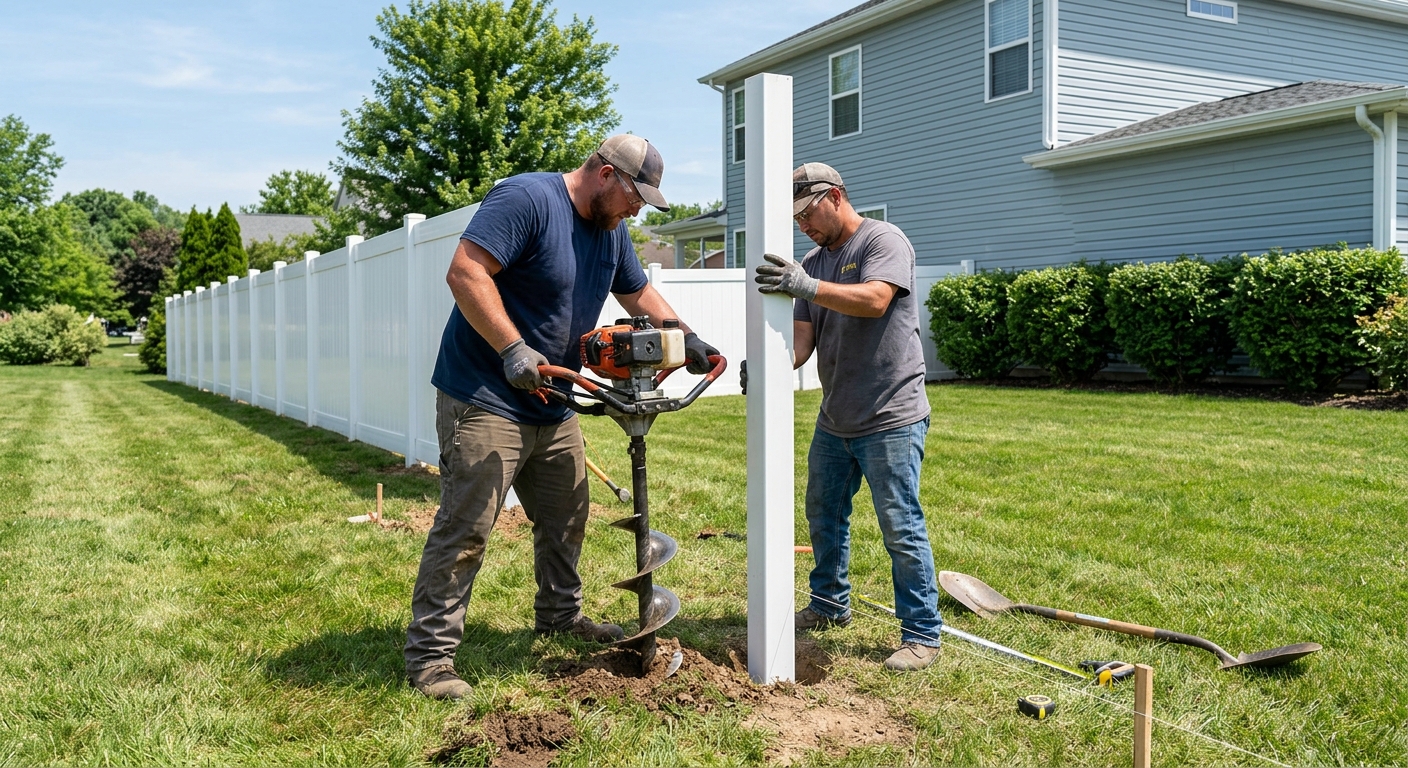
Fencing options and costs in Mayland Heights
Mayland Heights, Alberta is a neighbourhood where good fencing really matters—especially when you’re trying to balance privacy with wind exposure. With a population of 5,925 (Statistics Canada, 2021 Census), there’s a steady stream of owner-driven upgrades, and the strong mix of single-family homes means fences are often treated as “long-term yard infrastructure” rather than quick cosmetic work. That demand shows up most around newer in-fill and established residential pockets such as the Mayland Heights community streets near local greenspace routes, where homeowners want consistent privacy lines and reliable gates.
In the Calgary economic region, pricing is shaped by Prairie continental conditions: long freeze–thaw cycles mean posts must be set deep to resist heaving and racking. City expectations commonly align with setting posts around 4 ft (≈120 cm) deep (or deeper depending on frost considerations), and that translates into more excavation time, concrete, and labour—particularly for 6 ft privacy fences and for gate posts that take higher loads. At the same time, open Prairie exposure increases wind loading, so solid panels (wood/vinyl) generally need closer post spacing and fully concreted footings, which is why wood and vinyl often land mid-to-upper in the local price bands.
Contractor availability is also a factor: when crews are busy, schedules tighten and excavation work becomes the bottleneck, which can raise labour components even if material stays the same. Below is a practical comparison to help you set expectations before you request a quote.
| Material |
Lifespan |
Maintenance |
Privacy Rating |
Price per Linear Foot |
| Pressure-treated pine (standard wood) |
12–18 years |
Stain/seal every 2–3 years; hardware checks |
High (solid pickets/rails) |
$40–$80 |
| Cedar (natural rot resistance) |
18–25 years |
Occasional stain; inspect for warping |
High (board-and-board/solid panels) |
$55–$95 |
| Vinyl / PVC (no-maintenance) |
20–30 years |
Wash as needed; check level posts |
High (privacy panels available) |
$45–$90 |
| Chain-link (galvanized steel) |
25–35 years |
Minimal; tighten fittings, clear debris |
Low (airflow; limited visual privacy) |
$25–$55 |
| Aluminum ornamental |
30–40 years |
Occasional cleaning; inspect for damage |
Low–Medium (decorative spacing) |
$70–$120 |
| Composite / recycled material |
20–30 years |
Rinse/clean; check fasteners |
High (privacy styles) |
$75–$120 |
Prices are estimates only and vary by project scope, site access and material selection.
What affects the price of fencing in Mayland Heights
Homeowners in Mayland Heights can see surprisingly different numbers for what sounds like the same fence. It’s normal for quotes to vary by roughly 30–50% across Calgary and the wider Alberta market because the “hidden costs” are often excavation difficulty, how the fence is engineered for wind, and whether posts are set with concrete to handle frost movement. Even when materials are similar, labour scheduling and site conditions can swing the total.
The biggest driver in this region is frost and freeze–thaw. For long-lasting stability, posts must be set deep—often about 4–6 inches below the design frost depth—to prevent heaving. In colder Alberta regions, that commonly means posts roughly 1.5–2.0 m into the ground, which requires longer posts, deeper holes, and concrete setting (more material, more labour, more time). Chain-link can cost less because airflow reduces wind pressure, while solid privacy systems (wood/vinyl) usually need tighter post spacing and heavier bracing to resist racking.
Prairie wind also matters. With open exposure typical of Calgary-area neighbourhoods, a fence that looks “light” on paper may require stronger framing, additional corner bracing, and more robust gate hardware. By contrast, BC’s mild but wet coastal climate tends to raise wood rot concerns (treatment and coating become the cost focus), while the Prairies put your money into structural frost protection.
Concrete examples in Mayland Heights: (1) a 6 ft privacy run with two gates often increases costs more than adding the same length of chain-link, because gate posts typically need additional concrete volume and heavier reinforcement; (2) a backyard that requires hand-digging near mature trees or rocky soil can push labour higher even if the total linear feet is unchanged. For many homeowners, a 25–100 per linear foot local range lines up with wood/vinyl sitting mid-to-upper territory, while chain-link usually lands lower.
| Price Factor |
Why It Matters |
Cost Impact |
| Fence length in linear feet |
Labour and materials scale directly with total run length |
High (primary driver) |
| Post depth required |
Frost line determines post length and hole depth to prevent heaving |
High (especially for privacy fences) |
| Post setting method |
Concrete vs. gravel pack vs. driven posts changes excavation and material use |
Medium–High |
| Material choice |
Vinyl/cedar/wood and chain-link differ in strength, spacing and hardware |
Medium–High |
| Gate count and type |
Drive-through (double) gates need bigger posts and heavier hinges |
High (small footprint, high complexity) |
| Grade and terrain |
Slopes require stepped panels or raked sections for a level look |
Medium |
| Old fence removal and disposal |
Hauling, demolition time, and disposal fees add costs |
Medium |
| Permit fees and survey / property line locate |
Locates reduce encroachment risk; permits may be required for taller builds |
Low–Medium (project-dependent) |
Permits & regulations in Alberta
In Alberta, fencing can require a permit depending on height and location. As a rule of thumb for many residential situations in the province, fences above about 2.0 m (6.5 ft) at the rear and about 1.0–1.2 m (3–4 ft) near the front or corner often trigger a building permit requirement. Your municipality may also have setback rules that limit where the fence can sit relative to the property line, driveway visibility, or corner lots, so you should verify the current local requirements before materials are ordered.
Before any digging, call for utility locates using Alberta One-Call. Even if you think you know what’s where, fence lines commonly run near buried services, and a locate protects you from utility strike risk. Also, obtain a survey or at least a locate of your property pins before installation—this is how you avoid encroaching on a neighbour’s land (and the disputes that follow). Shared fence ownership is handled under provincial line-fences legislation, so if you’re building along a boundary, document who’s responsible for which portion and how maintenance should be handled.
Licence and insurance checks are part of responsible contracting. For a contractor in Mayland Heights, you should: (1) verify their Alberta business registration/licence details via the relevant online registry used for contractors; (2) request a certificate of insurance showing liability coverage; and (3) confirm they carry WCB coverage (WSIB/WCB-style coverage in Alberta is typically verified through their WCB clearance process). Keep copies of insurance certificates and clearance letters with your quote file.
Choosing the right fence material for Mayland Heights
Choosing a fence in Mayland Heights is really about matching material performance to Prairie conditions: freeze–thaw, wind loading, and snow impacts all influence how long your fence stays straight. Pressure-treated pine is usually the budget-friendly route, but it needs staining or sealing every 2–3 years to avoid grey weathering and to protect boards from moisture cycling. Cedar is more naturally rot-resistant and typically looks better as it ages, but it still benefits from periodic sealing and careful hardware choices to reduce warping.
Vinyl/PVC is popular for “set it and forget it” low maintenance. The trade-off is upfront cost and performance expectations in extreme cold: while quality vinyl systems handle Alberta winters well, poor installation (especially mis-set posts and insufficient bracing) can lead to misalignment over time. Chain-link is the lowest-cost option in the privacy-versus-budget conversation and has the longest life with minimal upkeep, but it does not provide privacy unless paired with slats or vegetation. Aluminum ornamental provides a rust-resistant, tidy look and mid-range pricing, but it won’t block sightlines like a solid wood or vinyl privacy fence.
For Calgary’s frost considerations, ask every installer about post depth and whether they plan to concrete-set the posts. For 6 ft privacy builds, concrete setting is often justified to resist heave and to handle wind bracing loads on corners and gates. A practical example: if a wood privacy fence is quoted in the $40–$80 per linear foot band and vinyl comes in closer to $45–$90, the extra cost is usually justified when you want fewer maintenance days over a long horizon and you’re also paying for strong post foundations that won’t settle unevenly.
| Material |
Cold Tolerance |
Lifespan |
Annual Maintenance |
Best For |
Price Band |
| Pressure-treated pine |
Good (with proper treatment and fastening) |
12–18 years |
Light inspection; stain every 2–3 years |
Budget privacy with reasonable upkeep |
$40–$80 |
| Cedar |
Good (natural resistance; needs coatings) |
18–25 years |
Inspect and re-stain as needed |
Appearance + rot resistance |
$55–$95 |
| Vinyl / PVC |
Very good (depends on installation quality) |
20–30 years |
Occasional wash and visual checks |
Low-maintenance privacy |
$45–$90 |
| Chain-link |
Excellent (rigid galvanized steel) |
25–35 years |
Minimal; tighten hardware as needed |
Security with airflow |
$25–$55 |
| Aluminum ornamental |
Excellent (no rust in freeze–thaw) |
30–40 years |
Clean and inspect after storms |
Decorative curb appeal, semi-open boundaries |
$70–$120 |
| Composite / recycled |
Good (installed on correct posts) |
20–30 years |
Clean and check fasteners |
Privacy without frequent staining |
$75–$120 |
How to choose a fencing contractor in Mayland Heights
When you hire a fencing contractor in Mayland Heights, verify credentials first—then read the scope line by line. In Alberta, fencing is excavation work plus structural installation, so you want a contractor who can prove they’re properly covered. Check their business licence/registration details through the relevant Alberta online registry, request a certificate of liability insurance (and confirm the dates and project address are covered), and verify WCB coverage with their clearance process through WCB. If they can’t provide current documentation quickly, that’s a practical red flag.
Next, get 2–3 itemised written quotes. “Itemised” should mean a breakdown of labour and materials, not one lump number. Ask whether the post depth follows regional frost expectations and whether the posts are concreted, especially for 6 ft privacy fences and any gate posts. Confirm what’s included: permit pull (if required), utility-locate responsibility, old fence removal, disposal/hauling, concrete disposal handling, and any re-landscaping or topsoil replacement.
Warranty matters in fencing because wind and freeze–thaw stress the connections. Ask for the workmanship warranty length, whether it covers posts/rails/racking, and whether the product/manufacturer warranty is transferable if you sell the home. For payment, don’t pay more than about 10–15% upfront; hold back a meaningful portion until the fence is complete and you’ve confirmed alignment, tension, and gate operation. Require a written start date and completion estimate (even if it’s a range) so you’re not waiting through multiple weather windows.
- Provide current certificate of liability insurance with your address listed
- Confirm WCB clearance and keep the clearance document for your records
- Verify business registration/licence details before work starts
- Get 2–3 written quotes with labour and materials separated
- Ask for post-hole depth method and whether concrete is included
- Confirm gate hardware (hinge size, latch quality, bracing) and who supplies it
- Clarify privacy panel spacing, post spacing, and corner bracing design
- Check how sloped yards are handled (stepped vs. raked) in writing
- Confirm utility-locate process and whether you’re paying or they are
- Ask if old fence removal and disposal is included or billed separately
- Verify warranty: workmanship length + product warranty terms
- Use a payment schedule with a holdback until final acceptance
Red flags I commonly see around Mayland Heights: contractors who won’t show insurance/WCB documentation, quotes that omit post setting depth or concreted footings, “all-in” numbers with no removal/disposal or permit clarification, vague warranty language, and crews that demand large upfront payments with no schedule in writing.
Frequently asked questions — fencing in Mayland Heights
Wood vs vinyl vs aluminum fence — which is best?
In Mayland Heights and the wider Calgary area, “best” depends on your priorities. If you want maximum privacy, wood and vinyl are usually the top choices, and they’re both affected by frost protection—good contractors will concrete-set posts deep enough to prevent heaving and ensure strong bracing. Vinyl costs more upfront; many installed quotes land in the $45–$90 per linear foot band, while pressure-treated wood commonly sits around $40–$80 per linear foot. Aluminum is typically best for curb appeal and boundary definition rather than privacy, since the open spacing won’t block sightlines; aluminum is often in the $70–$120 per linear foot range. If you’re tired of annual upkeep and want a long-maintenance-free stretch, vinyl can be a strong fit; if you’re comfortable with periodic staining and want a solid privacy look with a lighter wallet, wood is often the better value.
Do I need a permit to build a fence in Alberta?
Often, yes—depending on fence height and placement. In Alberta, fences above roughly 2.0 m (6.5 ft) at the rear and around 1.0–1.2 m (3–4 ft) near the front or corners commonly require a building permit. In addition, your fence must respect property lines and local setback bylaws, especially at corners where visibility matters. Before you dig, call for utility locates via Alberta One-Call. For Mayland Heights homeowners, the practical step is to ask your contractor to confirm the permit pathway during the quote process and to show you what (if anything) is included for permit pulling. A reputable fencing contractor will also recommend a survey or pin locate to reduce the risk of encroachment disputes.
How long does a wood fence last in Mayland Heights?
A properly installed wood fence in Mayland Heights can last about 12–18 years for standard pressure-treated pine, and cedar often stretches to around 18–25 years. The reason your lifespan can be shorter here than in milder regions is Alberta’s long freeze–thaw cycles: if posts are not set deep enough and if the fence isn’t braced for wind loads, you can see heaving, loose rails, and racking sooner. The good news is that the “structure decisions” that improve longevity—correct post depth, solid corner/gate bracing, and concrete setting—are often part of what you pay for in the $40–$80 per linear foot wood band. Maintenance also matters: staining or sealing every 2–3 years helps reduce grey weathering and helps boards manage moisture cycling.
Who owns and maintains a shared fence?
Shared fencing along a boundary is handled under provincial line-fences legislation in Alberta, so “who pays” can depend on the exact boundary arrangement and any existing agreement between properties. Practically, you’ll want to confirm whether the fence is truly on the property line, who is responsible for which side, and what maintenance obligations apply. In Mayland Heights, many disputes start when one neighbour assumes a fence is shared but the structure is actually on one lot or encroaches. That’s why getting a property line locate or a survey before work begins is so important. When you’re budgeting, ask your contractor to document what they’re building and where, and keep records of communications about responsibility for ongoing maintenance.
How do I find my property line before fencing?
Start with the most reliable method: a survey or a property pin locate. If you have survey documents from when the home was purchased, use that as your starting point, but confirm the pins are still where they should be because vegetation and minor ground changes can confuse estimates. In Alberta, you should also consider a locate of property pins/markers before digging fence holes—this reduces the risk of encroachment. For Mayland Heights homeowners, I recommend you verify the line before you commit to a contractor layout, especially if your fence plan includes gates or if the yard has slopes. Don’t rely only on visuals like neighbouring fence alignment; fences can be offset from true boundaries. A contractor who understands this will typically offer layout support once you’ve confirmed the boundary information.
What's the most low-maintenance fence?
For low day-to-day work in Mayland Heights, vinyl/PVC is usually the easiest: it typically needs only occasional washing and visual checks, with no sanding or staining like wood. In the local Calgary-area price bands, vinyl installed commonly lands around $45–$90 per linear foot, which can be worth it if you’d rather not plan maintenance every 2–3 years. Aluminum can also be low-maintenance because it won’t rust, but it still won’t provide the privacy of solid panels. Chain-link is often the lowest maintenance overall in terms of cleaning and repairs, and it typically sits around $25–$55 per linear foot; however, privacy is limited unless you add slats or screening. Whichever option you choose, proper post depth and wind-resistant bracing are what prevent “maintenance by repair” after Alberta freeze–thaw stress.