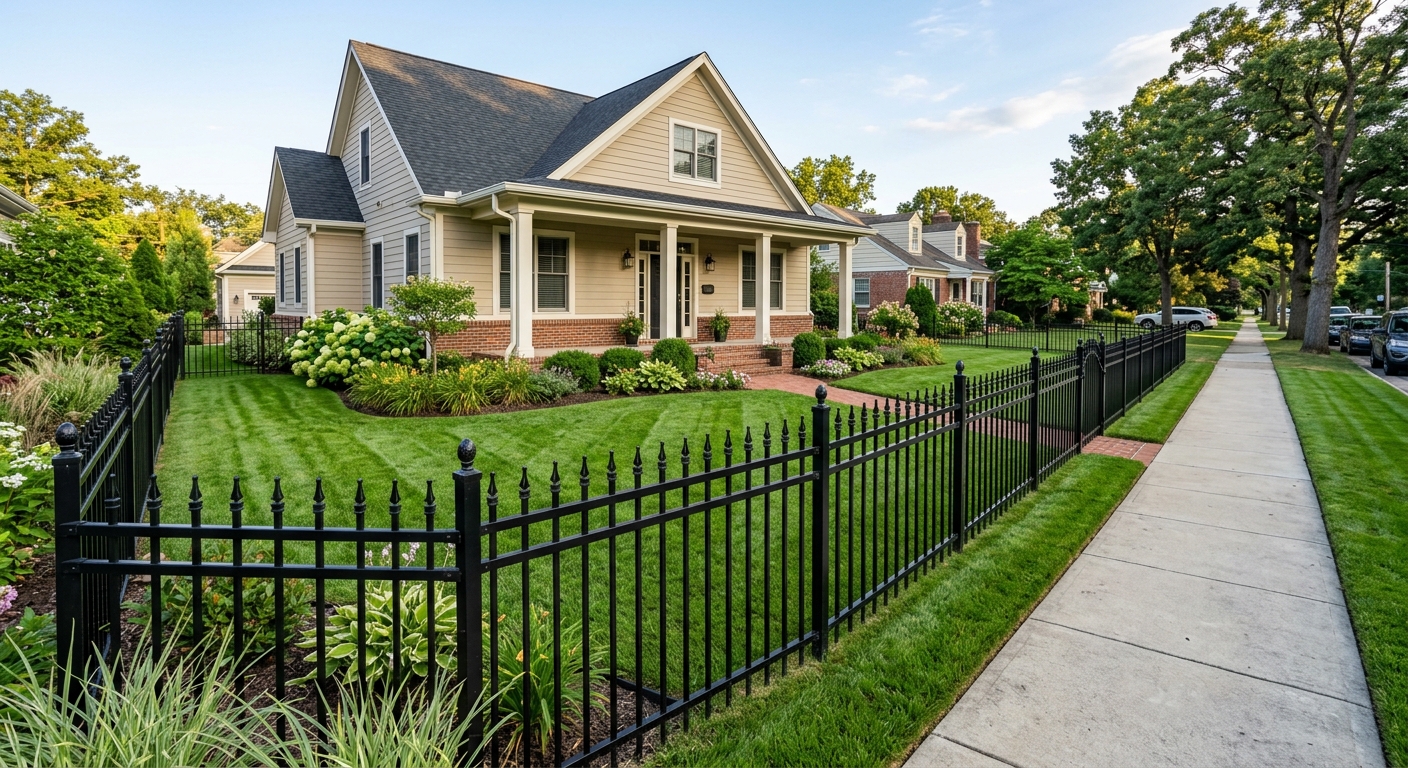
Fencing options and costs in Peachland
In Peachland, British Columbia, the right fence starts with matching material to the conditions your yard actually faces. With a population of 5,789 and about 81.8% of households owning their home (Statistics Canada, 2021 Census), fencing projects are a common part of maintaining curb appeal and protecting privacy on detached properties—where 69.0% of local dwellings are single-detached homes (Statistics Canada, 2021 Census). For many homeowners, that means planning for a fence that looks good today and still performs through the freeze–thaw swings typical of the Thompson–Okanagan.
Pricing in this region is shaped by frost depth, soil conditions, and wind exposure. In many parts of the interior valleys (think Kelowna and Kamloops), posts often need to be set deeper—commonly around frost-depth plus an allowance (our practice is typically 4–6 inches below the design frost depth)—to reduce heaving. Clay or poorly drained pockets can push costs upward because they require larger footings and more careful post-setting. Availability of skilled labour can also affect lead times during busy spring and early-summer installs, especially around areas like Bayview Bench and the lakeshore-access neighborhoods where lots tend to be more exposed to wind off Okanagan Lake.
Below is a practical cost snapshot to help you compare the main options, then we’ll break down what drives Peachland quotes next.
| Material |
Lifespan |
Maintenance |
Privacy Rating |
Price per Linear Foot |
| Pressure-treated pine (standard wood) |
10–15 years |
Stain or seal every 2–3 years; check for loose rails |
High (solid styles) |
$55,–$85 |
| Cedar (natural rot resistance) |
15–25 years |
Light staining or sealing every 2–4 years |
High (solid/board-on-board) |
$65,–$95 |
| Vinyl / PVC (no-maintenance) |
20–30 years |
Occasional wash; inspect hinges/brackets |
Medium to High (panel dependent) |
$75,–$115 |
| Chain-link (galvanized steel) |
25–40 years |
Minimal; rinse salts/dirt; keep tensioned |
Low (security only) |
$35,–$60 |
| Aluminum ornamental |
20–35 years |
Minimal; rinse and check fasteners |
Low to Medium (open pickets) |
$90,–$150 |
| Composite / recycled material |
20–30 years |
Low; clean as needed; avoid heavy impact |
High (solid composite panels) |
$85,–$130 |
Prices are estimates only and vary by project scope, site access and material selection.
What affects the price of fencing in Peachland
Fence quotes for the same overall height and length can swing by 30–50% across Thompson–Okanagan and other British Columbia areas because the “hidden” work changes: post depth, footing method, soil conditions, wind bracing, and whether you need extra hardware for gates. In practical terms, two yards that both measure “100 linear feet” can require different post lengths and different labour hours if one is clay-heavy or exposed to stronger prevailing winds.
The biggest driver is frost protection. Regional building practice sets posts below the design frost depth—commonly 4–6 inches below—to reduce heaving during freeze–thaw cycles. In colder Ontario and Alberta, that often translates to 1.5–2.0 m of embedment, which pushes costs up through longer posts, more digging, and more concrete-set work. In Peachland, we still treat frost seriously; if the grade is uneven or soil is clay/poorly drained, we may recommend deeper, larger-diameter holes and concrete setting to keep the fence plumb after winter.
Wind exposure also matters. More exposed lots typically need tighter post spacing, heavier rails, and sometimes open-style designs or upgraded bracing to prevent racking—especially where wind funnels between properties. Coastal BC’s mild but wet climate accelerates wood rot if you don’t use proper treatment and build details, which can shift costs toward longer-term durability choices rather than just lowest upfront price.
For example in Peachland: (1) on sloped lots near the lakeshore where you need stepped grading, you may lose material efficiency and increase labour for raked/stepped panels; (2) in wetter soils, the extra auger time plus concrete can move a wood install toward the mid-range of wood pricing; and (3) when you replace a weathered board fence, disposal and post removal can add hours that chain-link replacement wouldn’t. That’s why a vinyl job often lands in the $75,–$115 band, while chain-link security fencing can stay closer to $35,–$60 per linear foot—depending on gate and post requirements.
| Price Factor |
Why It Matters |
Cost Impact |
| Fence length in linear feet |
Labour and materials scale directly with total runs |
High: typically the single biggest component of the quote |
| Post depth required |
Frost line determines embedment depth and hole size |
High: deeper posts increase auger time, post material, and concrete |
| Post setting method |
Concrete-set is more robust in certain soils; gravel pack can be cheaper when conditions allow |
Medium to High: concrete setting generally costs more but reduces long-term movement |
| Material choice |
Vinyl, cedar, and chain-link have different install methods, weight, and longevity |
Medium to High: can shift projects between low and mid/high bands |
| Gate count and type |
Drive-through/double gates require more structure and often heavier hardware |
Medium: gates are commonly priced separately from the fence runs |
| Grade and terrain |
Slopes often require stepped or raked rails and extra layout time |
Medium: increases labour and can reduce material efficiency |
| Old fence removal and disposal |
Rotated posts and concrete footings take more labour to extract |
Medium: disposal and time can add a noticeable premium |
| Permit fees and survey / property line locate |
Required documentation and locating pins affect start date and layout accuracy |
Low to Medium: usually modest, but delays can cost you time |
Permits & regulations in British Columbia
In British Columbia, fence rules can vary by municipality, but the common baseline is that fences above certain height thresholds often require a building permit. As a practical homeowner guide for Peachland, treat rear-yard fences around 2.0 m (6.5 ft) and front or corner fences around 1.0–1.2 m (3–4 ft) as the “check it first” ranges, because many local rules start permitting and review processes around those heights. In all cases, your fence must respect property lines and municipal setback bylaws.
Before you dig any post hole, call for utility locates using the appropriate one-call service (BC 1 Call in British Columbia). Also, obtain a survey or at least a property line locate so you know where your pins are—this prevents encroachment disputes that can become expensive to fix.
Step-by-step for Peachland homeowners to verify a contractor’s British Columbia credentials: (1) ask for the contractor’s business licence or registration details (and confirm the business is active through the applicable public-facing business registry listings); (2) request a current certificate of insurance showing general liability; confirm the policy is not expired and the limits are appropriate for fencing work; (3) confirm workers are covered—have them provide proof of coverage under the relevant workplace coverage system for employment injuries (commonly referred to as WSIB/WCB coverage depending on the province’s program wording); and (4) keep copies of the insurance certificate and any clearance letter-like documentation they provide. Then, ensure the contract specifies who pulls permits (if required) and who is responsible for layout accuracy.
Choosing the right fence material for Peachland
Choosing a fence in Peachland is really about balancing privacy, maintenance effort, and how well the material survives our Thompson–Okanagan freeze–thaw cycles and wind. Pressure-treated pine is the budget-friendly option, but it typically needs staining or sealing every 2–3 years to prevent the grey, weathered look and to slow down surface cracking. Cedar offers better natural rot resistance and a warmer appearance, but it still needs maintenance—especially on fence faces that receive constant moisture. Vinyl/PVC has the biggest “set it and forget it” appeal because it requires little more than occasional washing, but in colder snaps it can become more brittle than wood; proper installation and post structure still matter. Chain-link is the lowest cost and typically the longest life option, but it won’t give you privacy unless you add privacy slats or screening. Aluminum ornamental provides curb appeal and won’t rust, but it’s mid-range in price and offers limited privacy.
For frost performance, the Thompson–Okanagan approach focuses on post depth first. In many interior valley yards, concrete-set posts are often recommended where soil is clay, drainage is poor, or the yard is exposed to seasonal movement; it also helps when you need deeper embedment to stay below frost. Wind and snow loads (where snow sits on rails) also influence spacing and bracing—especially for open panels.
A concrete way to justify price differences: if your priority is privacy and you’re comparing standard pressure-treated pine in the wood band (around $55,–$85) versus cedar (often higher but still practical), the extra spend can be worth it because cedar commonly holds up with less visible degradation, especially near damp microclimates. If you want the lowest long-term labour, vinyl’s typical band (about $75,–$115) can be cheaper in “years of upkeep” even if the upfront number is higher.
| Material |
Cold Tolerance |
Lifespan |
Annual Maintenance |
Best For |
Price Band |
| Pressure-treated pine |
Good (with proper embedment and sealing) |
10–15 years |
Check annually; stain or seal every 2–3 years |
Budget-focused privacy with planned upkeep |
$55,–$85 |
| Cedar |
Good (resilient to rot) |
15–25 years |
Inspect annually; stain/seal every 2–4 years |
Attractive, long-lasting privacy |
$65,–$95 |
| Vinyl / PVC |
Fair to good (installation quality matters in cold snaps) |
20–30 years |
Rinse/clean as needed; inspect hardware |
Low maintenance and durable privacy panels |
$75,–$115 |
| Chain-link |
Very good |
25–40 years |
Occasional rinse; re-tension if needed |
Security around yards/pets with minimal upkeep |
$35,–$60 |
| Aluminum ornamental |
Very good |
20–35 years |
Minimal cleaning; check fasteners |
Front-yard definition and curb appeal |
$90,–$150 |
| Composite / recycled |
Good (built for stability and weather) |
20–30 years |
Low; periodic washing and impact checks |
Privacy with reduced maintenance |
$85,–$130 |
How to choose a fencing contractor in Peachland
Choosing a fencing contractor in Peachland starts with confirming credentials and proof of coverage. In British Columbia, ask for the contractor’s licence/registration information for business operation, then request a certificate of general liability insurance. Make sure it lists fencing-related work and isn’t expired. For worker coverage, ask for documentation showing workplace injury coverage (commonly referred to as WSIB/WCB coverage); reputable crews provide it without hesitation because it’s part of normal jobsite compliance.
Next, get 2–3 itemised written quotes. You want labour and materials separated by line item: post materials, panels/rails, gates, concrete/gravel, hardware, and add-ons like removal/disposal. A proper quote also clarifies what’s excluded (for example, tree cutting, rock excavation beyond a stated limit, restoring landscaping, or utility locates). Confirm whether permit pulling is included, and whether the contractor handles property line locate costs or if you’re responsible. Don’t accept a vague lump sum without a scope sheet.
For warranty, ask for both workmanship and product warranty terms, including the length and whether it’s transferable if you sell your home. Payment schedules matter: never agree to more than 10–15% upfront, and hold back a portion until the work is complete and cleaned up. Finally, insist on a written start date and a completion estimate—especially important in spring when weather and scheduling can affect frost-safe post setting.
- Verify business licence/registration status before work starts.
- Request a current certificate of insurance with correct project address.
- Confirm workers are covered under the appropriate workplace injury coverage documentation.
- Get 2–3 itemised quotes (materials, labour, concrete/footings, gates, removal).
- Ensure post embedment depth and setting method are explicitly stated.
- Ask how they handle sloped yards (stepped vs raked panels) and document the approach.
- Confirm utility locates responsibility and who schedules BC 1 Call.
- Check whether disposal/haul-away for old fencing is included.
- Verify permit responsibility for fences near common height thresholds.
- Ask about product/manufacturer warranty and workmanship warranty length.
- Agree on holdback terms and a reasonable payment schedule (10–15% max upfront).
- Get a written timeline with start date and estimated completion.
Red flags I commonly see in Peachland include: contractors who won’t provide insurance paperwork on request, quotes that omit post depth/setting method, “cash-only” arrangements with no contract, vague scopes that don’t mention disposal or utility locates, and crews that start layout without confirming property line location (pins/locate) for fencing.
Frequently asked questions — fencing in Peachland
Can I install a fence on a slope in Peachland?
Yes, but it needs the right layout method to stay level-looking and structurally sound. In Peachland, many yards have gentle-to-moderate grade changes, so contractors typically use stepped fencing (each panel levelled to the grade) or raked rails (following the slope). Either approach must account for frost-safe post embedment—posts can’t be “shortened” just because the fence steps, or you can get movement after freeze–thaw cycles. If you’re near a common front-corner area where height thresholds may trigger permit review, confirm the applicable requirements before you build. When you request quotes, ask them to show how they’ll handle stepped/raked sections and confirm the post depth and setting method for each segment.
What is the most weather-resistant fence for Peachland's climate?
For pure weather resistance in British Columbia’s interior conditions, chain-link and vinyl tend to perform best long-term with minimal attention. Chain-link is very durable (often 25–40 years) and tolerates cold and moisture well, typically sitting in the $35,–$60 per linear foot band depending on height, tensioning, and gate hardware. Vinyl/PVC is also long-lasting (often 20–30 years) and weatherproof, commonly in the $75,–$115 band, but quality installation and solid post structure matter in colder snaps. Cedar can be excellent too, but it’s more maintenance-dependent—staining/sealing helps it keep its appearance and slows down weathering. If your yard is exposed to wind coming off the lake, ask for bracing and hardware sized for the conditions.
How do I prevent wood fence rot in Peachland?
Wood rot prevention is mostly about how the fence is built and maintained—especially post setting and drainage details. First, ensure posts are set below frost depth so freeze–thaw doesn’t loosen them over time; movement accelerates rot because water collects around gaps at the base. Second, use pressure-treated or cedar designed for outdoor exposure, and don’t trap moisture against raw cut ends—good sealing and correct fasteners help. Third, keep bottom rails slightly off damp ground when possible and trim vegetation that holds moisture against the fence face. Finally, plan a maintenance routine: pressure-treated pine usually needs staining/sealing about every 2–3 years to reduce weathering, while cedar generally needs periodic sealing every 2–4 years. If you’re comparing budgets, the wood band is typically $55,–$85, but maintenance time is part of the real cost.
What is the cost per linear foot for fencing in Peachland?
In Peachland, fencing costs vary by material, post depth, and gate complexity, but a good homeowner benchmark is the local Thompson–Okanagan price bands. Wood installation typically runs about $55,–$85 per linear foot. Vinyl/PVC is usually higher, around $75,–$115 per linear foot, while chain-link tends to be the lower end near $35,–$60. Aluminum ornamental generally sits higher at approximately $90,–$150. Your quote may be above or below these bands depending on soil type (clay vs. free-draining), wind exposure (bracing and spacing), and whether you’re removing an old fence with concrete footings. Always ask for an itemised quote so you can see what’s driving the total.
Should I repair or replace my old fence in Peachland?
Often you can repair portions, but rot, widespread post movement, or repeated failures usually signal it’s time to replace. Start by checking the posts: if they’re loose, leaning, or heaved after winter, repairs on rails alone won’t last because the structure keeps shifting. Next, look for rot at ground level, especially where water pools; if multiple posts show soft wood or significant discoloration, replacement is usually more cost-effective than patching. Gates are another deciding factor—if the hardware no longer aligns and the frame is sagging, a new gate section often performs better than repeated adjustments. If your fence is older and built before modern installation best practices—remember that 33.1% of homes were built before 1981 in the area (Statistics Canada, 2021 Census)—you may be dealing with older post spacing and footing methods. Compare a targeted repair quote versus full replacement with correct post depth and setting to decide.
How do I handle a fence dispute with a neighbour in British Columbia?
Fence disputes are common, and the best approach in British Columbia is to document first and communicate second. Start by confirming the exact property line using survey pins or a property line locate—don’t rely on “where it looks like the line is.” If you suspect an encroachment, avoid digging or adjusting posts until the line is verified. Next, get written quotes showing the proposed corrected layout and the cost to resolve the issue (including removal and reinstallation, not just “moving one section”). In conversations with your neighbour, be calm and specific: discuss the boundary, fence height, and what needs to change to bring the fence into compliance. Shared fence ownership rules follow provincial line-fences legislation, so ask your contractor to show the location and height measurements clearly on a site sketch. If you’re close to common permit-height ranges, confirm whether a permit is required before any changes are made.