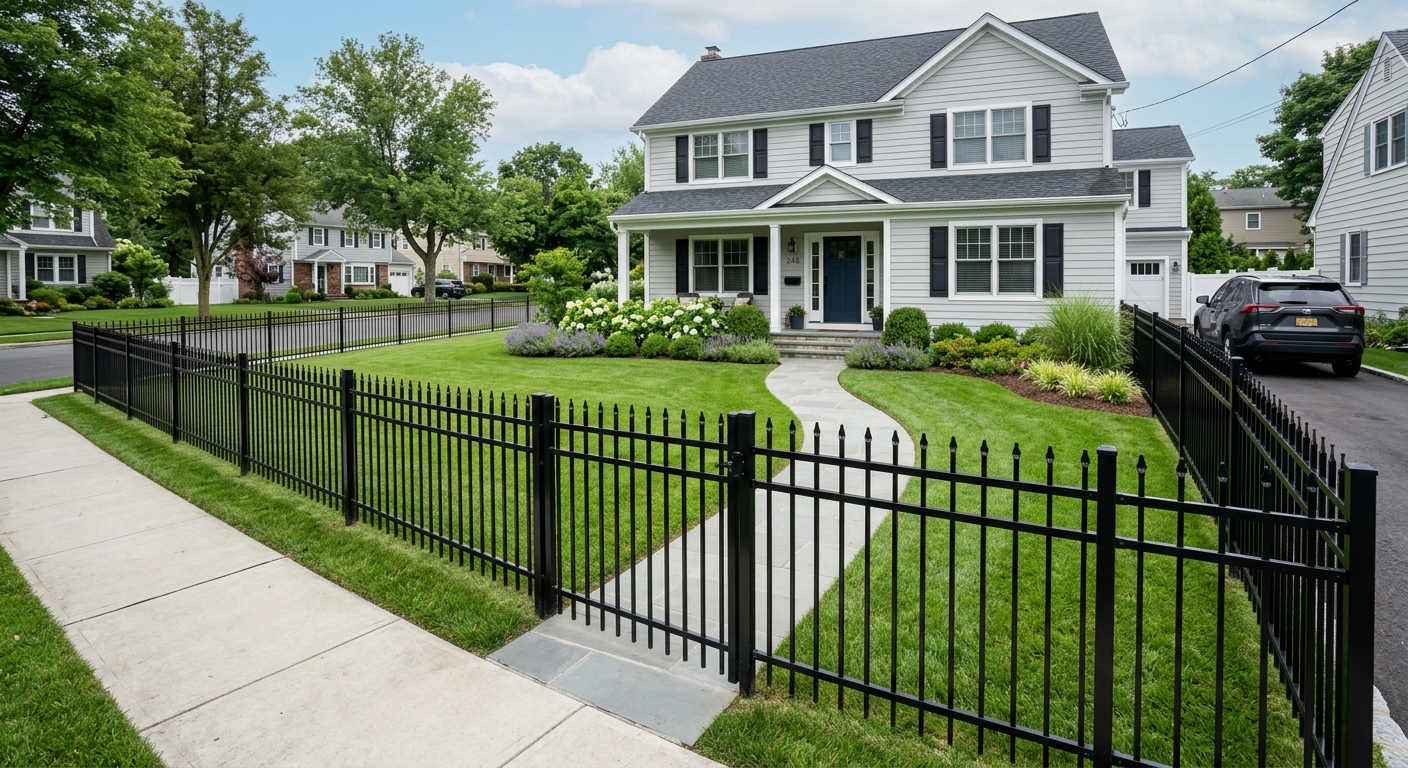
Fencing options and costs in Tillsonburg
Tillsonburg homeowners have plenty of fencing choices, but the “right” option usually comes down to how much privacy you want, how much upkeep you’ll tolerate, and how the ground behaves through winter. With 67.7% of local dwellings being single-detached houses (Statistics Canada, 2021 Census), fencing demand is strongest around detached properties and the back-yard boundary areas where privacy and pet containment matter most. Tillsonburg’s built landscape also influences timing and replacement cycles—nearly half of homes were built before 1981 (Statistics Canada, 2021 Census), so you’ll often see older fence lines being replaced as part of a broader exterior refresh.
In the London, Ontario region, frost depth is a cost driver because posts need to be set below the frost line to reduce freeze-thaw heaving. That typically means deeper post holes, more excavation and spoil removal, and sometimes concrete setting—especially in clay-heavy spots common around Middlesex County. Labour availability can also affect pricing: during peak spring and early summer installs (when most homeowners want their yards finished before yard season), scheduling can tighten. Areas where this trade tends to run consistently include west-side residential stretches toward Huron Park and other established neighbourhood pockets with long, straight runs and frequent driveway transitions.
Below is a practical cost comparison to help you benchmark contractor quotes before you call for measurements and a site walk. Use it as a starting point, not a final number.
| Material |
Lifespan |
Maintenance |
Privacy Rating |
Price per Linear Foot |
| Pressure-treated pine (standard wood) |
10–15 years |
Stain/seal every 2–3 years |
High (with solid boards) |
$14–$22 |
| Cedar (natural rot resistance) |
15–25 years |
Light stain every 3–5 years |
High (solid boards) |
$18–$28 |
| Vinyl / PVC (no-maintenance) |
20–30 years |
Occasional wash only |
Medium–High (depends on picket/solid) |
$20–$32 |
| Chain-link (galvanized steel) |
20–35 years |
Minimal; keep posts firm |
Low (privacy requires slats or screens) |
$10–$18 |
| Aluminum ornamental |
25–40 years |
Wash as needed |
Low–Medium |
$23–$40 |
| Composite / recycled material |
25–30 years |
Low; periodic cleaning |
High (solid styles) |
$26–$42 |
Prices are estimates only and vary by project scope, site access and material selection.
What affects the price of fencing in Tillsonburg
In Tillsonburg (and across the broader London, Ontario region), two contractors can quote the same fence line and still land 30–50% apart once you account for ground conditions, post setting depth, and how many site touches are required. Even when material choice stays the same, labour and installation detail can change the final total—particularly where frost depth forces deeper excavation, where clay increases dig and cleanup time, or where access limits equipment use.
First, frost line depth sets how deep posts must be set to prevent heaving during freeze-thaw cycles. In southern Ontario, posts are commonly buried about 3 feet deep, and practical minimums are often in the 2.5 to 3 feet range—though deeper embeds or concrete setting are used where exposure and soil conditions demand it. In metric terms, many installs end up around 1.5–2.0 m into the ground when the design and soil warrant longer posts and deeper holes. That increases material length (posts and hardware) and labour (digging, hauling spoil, and backfilling).
Second, wind exposure affects panel design. While the Prairies are the most extreme for wind-driven requirements, local experiences in Middlesex County still matter—especially with wider pickets, lighter frames, or fences exposed along open corridors. Coastal BC’s mild but wet climate tends to accelerate wood rot, but in Ontario we focus more on moisture management at the post (concrete vs. gravel pack) and on proper treatment/staining to slow weathering.
Concrete examples: (1) A straight 60 linear foot run on firm soil typically stays closer to wood installation pricing (often within the $40–$75 range per linear foot band depending on style), while (2) the same length on clay that “holds” water can push labour upward due to slower excavation and more careful post-setting. (3) If your property has two drive-through gates, hardware and framing time can shift a chain-link budget project closer to the $25–$50 band for materials, but the total labour can still climb when the gate approach requires precise alignment. With homes built before 1981—many with settled yards and older fences—plan on more line adjustments and sometimes partial removals that raise disposal time by a noticeable dollar amount.
| Price Factor |
Why It Matters |
Cost Impact |
| Fence length in linear feet — the primary cost driver |
More panels and posts means more labour, fasteners and materials |
Often the biggest driver; totals can change by thousands on longer runs |
| Post depth required — frost line determines post length and hole depth |
Deeper holes and longer posts increase excavation time and material cost |
Commonly adds significant labour and hardware; can push wood into higher bands |
| Post setting method — concrete vs. gravel pack vs. driven posts |
Concrete adds cost but improves stability in heavier soils and exposed lines |
Stability gains can reduce future repairs; short-term cost typically increases |
| Material choice — vinyl vs. cedar vs. chain-link |
Different rail/post systems, costs per panel, and lifespan expectations |
Can swing project budgets from chain-link to premium wood/composites |
| Gate count and type — walk-through vs. drive-through (double) |
Gates require stronger framing, hinges, latches and more precise alignment |
Drive-through gates often add disproportionate cost versus their linear-foot length |
| Grade and terrain — sloped yards require stepped or raked panels |
Raking/stepping changes layout, board cutting and labour time |
May add installation time and material waste; can increase quote by 10–25% |
| Old fence removal and disposal |
Hauling, tipping fees and labour for deconstruction |
Can add several hundred to over a thousand depending on height and debris |
| Permit fees and survey / property line locate |
Administrative steps reduce risk of encroachment and rework |
Small line items individually, but can affect total significantly on complex lots |
Permits & regulations in Ontario
In Ontario, fences may require a building permit when they exceed commonly used height thresholds—for example, rear fences around 2.0 m (6.5 ft) and front/corner fences around 1.0–1.2 m (3–4 ft). Exact requirements can vary by municipal bylaw, so for Tillsonburg you should confirm your fence height, location (front, corner, side, rear), and whether it’s near a lot line or regulated area. All fences must respect property lines and municipal setback rules.
Before you dig any post holes, you must protect underground services. In Ontario you should call for utility locates through Ontario One Call so contractors and homeowners avoid damaging gas, hydro, telecom and drainage lines. Also, obtain a survey or a locate of your property pins before installation—this reduces the risk of building over a line and avoids costly disputes with neighbours. Where fences are on a boundary, shared ownership rules are typically governed by Ontario’s line-fences framework, which can affect who pays for repairs or replacement.
As a rule of thumb: a permit is more likely required for taller installations (particularly higher privacy walls) rather than short, standard-height boundary fences. Steps to verify your contractor in Tillsonburg: ask for their licence details (if applicable to their contracting activity), request a current certificate of liability insurance, and confirm WSIB coverage (or WCB status where relevant for workers). Then check the clearance/coverage documentation directly—don’t rely on a verbal “it’s covered.”
Choosing the right fence material for Tillsonburg
Choosing fencing material in Tillsonburg is easier when you match it to how your yard is used—privacy needs, pets, sun exposure, and how often you’re willing to maintain. The local freeze-thaw cycle is hard on wood posts at the ground line, so your post depth and how the posts are set can matter as much as the fence material itself. With 67.7% of dwellings being single-detached homes (Statistics Canada, 2021 Census), many projects focus on backyard privacy, which typically pushes homeowners toward solid-board wood, vinyl privacy styles, or composite panels.
Pressure-treated pine usually wins on budget, but it needs staining or sealing every 2–3 years to slow grey weathering and surface cracking. Cedar looks better longer and has natural rot resistance, but it still benefits from periodic finishing (often every 3–5 years depending on exposure). Vinyl/PVC is the low-maintenance pick and is popular when people want to avoid annual staining; however, extremely cold snaps can cause boards to become brittle if systems aren’t installed with correct spacing and flexible handling. Chain-link is the lowest cost and longest-lived option, but it won’t provide true privacy without slats, screening, or a privacy screen. Aluminum ornamental is rust-resistant and mid-range priced, but it’s generally for aesthetics and boundary definition rather than privacy.
For post depth, London-area installs commonly bury posts around 3 feet to reduce heaving; on clay-heavy or unstable ground, concrete-set posts are often justified to keep fence lines plumb. If your yard has open wind corridors, heavier frameworks and correct spacing help reduce panel “racking” during winter storms and thaw cycles. If you’re comparing materials: moving from chain-link (often aligned with the $25–$50 band in this region) to wood privacy fencing (commonly falling in the $40–$75 range) is usually justified when you actually want privacy and you’re willing to maintain wood. If you want a long-term, low-touch approach, vinyl or composite can cost more upfront but reduce recurring labour costs.
| Material |
Cold Tolerance |
Lifespan |
Annual Maintenance |
Best For |
Price Band |
| Pressure-treated pine |
Good (if posts are set correctly and wood is sealed) |
10–15 years |
Stain/seal every 2–3 years (not yearly) |
Budget privacy with a willingness to maintain |
$40–$75 |
| Cedar |
Good (handles freeze-thaw better when properly finished) |
15–25 years |
Stain/finish every 3–5 years |
Natural look with better rot resistance |
$55–$95 |
| Vinyl / PVC |
Very good (requires proper installation for extreme cold) |
20–30 years |
Wash 1–2 times per year |
Low maintenance and consistent appearance |
$45–$80 |
| Chain-link |
Excellent (steel posts resist winter cycles) |
20–35 years |
Minimal; check tension/posts seasonally |
Security and pets (privacy added with slats/screens) |
$25–$50 |
| Aluminum ornamental |
Excellent (no rust, tolerant of freeze-thaw) |
25–40 years |
Occasional wash |
Aesthetics and boundary definition |
$70–$120 |
| Composite / recycled |
Very good (designed for outdoor climate swings) |
25–30 years |
Low; rinse/wash as needed |
Long-life privacy without staining |
$85–$135 |
How to choose a fencing contractor in Tillsonburg
Choosing a fencing contractor in Tillsonburg is mostly about verifying three things: the contractor’s legitimacy, their protection for your property, and whether they price the work in a way that reflects real site conditions. For licensing and coverage, ask for proof of general liability insurance (certificate of insurance) and confirmation of WSIB coverage for their workers. How to check: request the certificate and verify the policy is current and names the right business/insured, then look for the WSIB/WCB clearance documentation or coverage number as applicable. If they can’t provide it right away, that’s a major risk for you.
Next, get 2–3 itemised written quotes—ideally with a labour + materials breakdown, separate line items for posts (including concrete or alternative setting), rails/bracing, gate hardware, and any removals/disposal. A lump-sum quote can hide the reasons two prices differ. Carefully read the scope: is a permit included if required, is a property line locate included (or recommended), and is disposal of old fencing hauled away?
Warranty matters too. Ask for the workmanship warranty length (often longer than the product warranty), whether it covers post movement related to poor set, and whether the manufacturer warranty transfers to you if you sell your home. For payments, don’t pay more than about 10–15% upfront; hold back the balance until the job is complete and the final gates operate correctly. Finally, get a start date and an estimated completion timeline in writing, especially if your fence ties into landscaping or seasonal yard work.
- Provide proof of general liability insurance before signing.
- Provide WSIB/WCB clearance documentation for workers (not just “we’re insured”).
- Ask whether utility locates are called and confirmed before digging.
- Request an itemised quote with post depth and post-setting method clearly stated.
- Confirm whether concrete setting is used and where (line posts vs. corners/gates).
- Make sure the quote states disposal/hauling of removed fence is included or excluded.
- Verify gate hardware specs: latch type, hinge type, and whether it’s heavy-duty for drive-through gates.
- Check if the quote includes grading/stepping for slopes (raked vs. stepped panels).
- Confirm warranty terms: workmanship length, product warranty length, and transferability.
- Ask about material quality (grade, thickness, and whether boards are stained/treated to a specific standard).
- Review payment schedule: maximum deposit around 10–15%, with holdback until punch-list is complete.
- Get start and completion dates in writing, including weather contingency language.
In Tillsonburg, common red flags include: quotes that don’t specify post depth or how posts are set, missing insurance/WSIB documentation, vague language like “site work included” without details, schedules that don’t provide a realistic completion plan, and contractors who avoid discussing property line verification/survey or don’t address utility locates.
Frequently asked questions — fencing in Tillsonburg
What's the best fence for privacy?
For privacy in Tillsonburg, solid-board styles generally perform best, especially where you want uninterrupted screening from the street or neighbouring yards. Pressure-treated pine and cedar are common choices because they deliver a high privacy rating, and they’re compatible with the post-depth practices needed to reduce winter heaving. If you’d like to avoid staining and ongoing maintenance, vinyl/PVC privacy styles can be a good fit, though upfront cost is typically higher than standard wood. In the London, Ontario region, pricing commonly falls into the wood privacy range (often around $40–$75 per linear foot depending on design) or higher for low-maintenance materials. If you’re replacing an older fence line in a pre-1981 housing area, consider also budgeting for removal and careful re-alignment, because even small misplacements can affect how “private” the final layout feels.
How do I compare fencing quotes?
When comparing quotes in Tillsonburg, compare what’s included—not just the final total. Ask each contractor for an itemised breakdown: post depth (and whether it includes concrete setting), material type/grade, rails/bracing, gate count and gate hardware, and whether disposal of the old fence is included. Confirm whether the quote accounts for slope adjustments (stepped vs. raked panels) and if there’s any allowance for site conditions like clay-heavy soil. It’s also fair to compare alignment and finishing details—how posts are set at corners and near gates often affects long-term straightness. Pricing differences of 30–50% are usually justifiable when one quote includes deeper frost-conscious embeds or heavier hardware. Use regional material bands as a check: chain-link often aligns closer to $25–$50 per linear foot, while aluminum ornamental commonly sits around $70–$120.
How long does fence installation take in Tillsonburg?
For a typical residential fence line in Tillsonburg, many installs are completed in a few days once measurements are done, but the timeline depends heavily on length, gate complexity and whether old fence removal is required. Straight runs with no excavation surprises can move faster, while clay-heavy ground (common in parts of southern Ontario) can slow digging and spoil removal—especially when posts must be set below the frost line to reduce heaving. Gates add time because hardware installation requires precise alignment and heavier framing. If you’re starting in spring or early summer, scheduling can also influence timelines since many homeowners line up yard-season projects. Ask your contractor for a written start date and completion estimate, and confirm whether concrete setting affects how soon gates can be adjusted and the fence can be considered complete.
Can I install a fence on a slope in Tillsonburg?
Yes, you can install a fence on a slope in Tillsonburg, but the layout method matters for both appearance and structural performance. Contractors typically use stepped panels (individual sections rise/fall in increments) or raked panels (a continuous slope). Stepped fencing can look more “broken-up,” while raked fencing maintains a smoother line but needs careful calculations to keep posts properly embedded. The bigger risk on slopes isn’t the fence itself—it’s inconsistent post embed depth if the design isn’t followed. Because frost heaving is driven by freeze-thaw conditions, your post holes still need to be dug to the correct depth for stability, even when the yard surface changes. A professional quote should clearly state whether panels are stepped or raked and how that’s reflected in materials, cutting and labour.
What is the most weather-resistant fence for Tillsonburg's climate?
For weather resistance in Tillsonburg’s freeze-thaw climate, chain-link and aluminum are often the most resilient overall because the underlying materials handle winter cycles without rotting. Chain-link is galvanized steel and commonly performs well for long stretches, though it won’t provide privacy unless you add slats or a privacy screen. Aluminum ornamental also resists rust and can look good for decades with basic washing. For privacy-first homeowners, cedar is one of the better wood options because of natural rot resistance, but it still requires periodic maintenance to keep boards looking their best. Vinyl can also be durable, with the caveat that cold snaps need careful installation so panels don’t stress. The “most weather-resistant” answer often depends on whether you need privacy or just boundary/security—because wood and vinyl prioritize aesthetics and screening, while metal prioritizes longevity.
How do I prevent wood fence rot in Tillsonburg?
Preventing wood rot in Tillsonburg comes down to how posts are set and how the wood is finished. First, insist on correct post embed depth below the frost line to reduce heaving; movement at the ground line accelerates rot. Where soils hold water, concrete setting or a well-executed post-setting approach helps keep posts stable and reduces exposure of critical wood sections to trapped moisture. Second, use proper treatment: pressure-treated pine should be sealed/stained on schedule (often every 2–3 years), and cedar should be finished periodically (commonly every 3–5 years) to protect against grey weathering and surface breakdown. Third, make sure the bottom of boards aren’t consistently in contact with soil or standing water—good clearance and tidy grading matter. If you’re replacing an older fence built before 1981, check for long-term rot patterns and don’t just swap boards without addressing the post-setting detail.