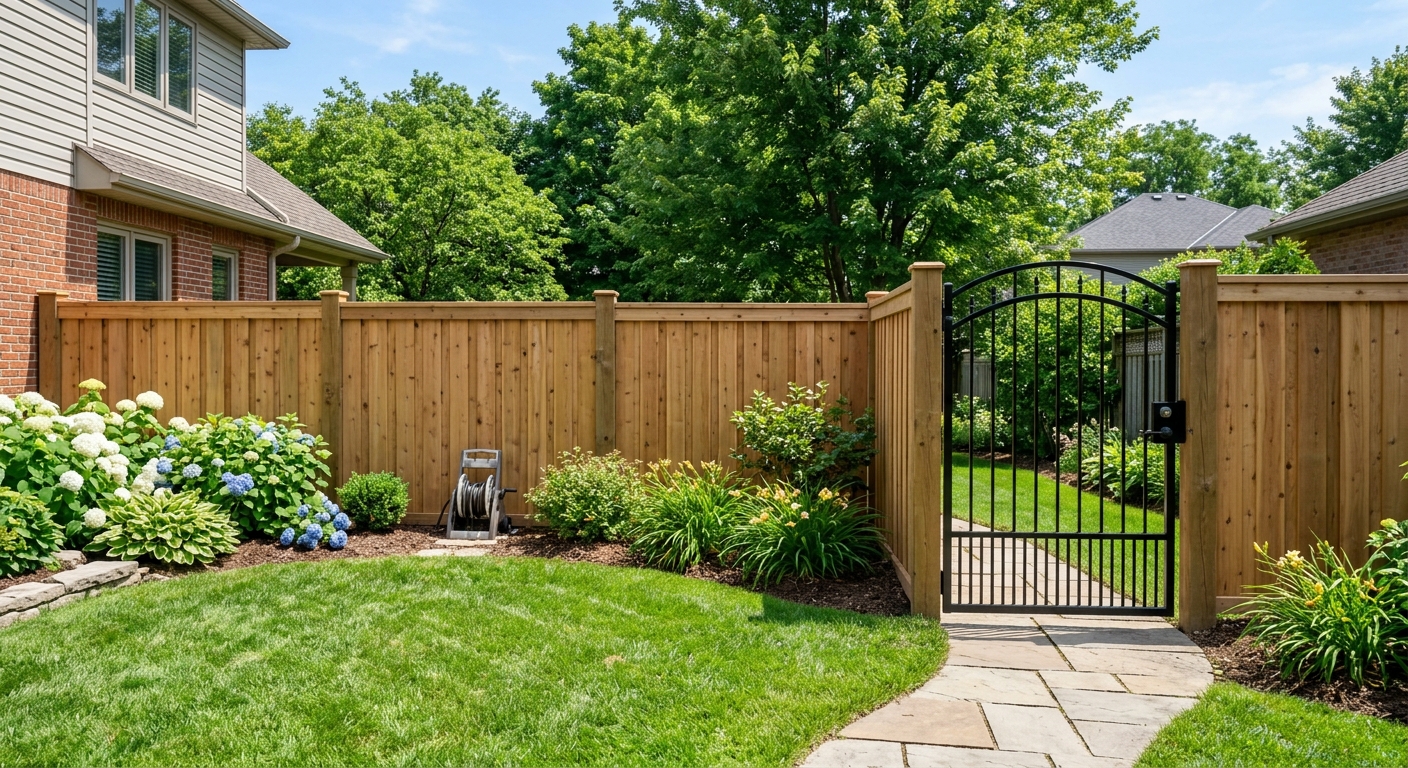
Fencing options and costs in Dalhousie
In Dalhousie, Alberta, fence choices largely come down to how much privacy you want, how often you’re willing to maintain materials, and how strongly you need the fence to resist Prairie winds. With a population of 8,530 (Statistics Canada, 2021 Census), local demand is steady for backyards and side-yard boundaries—especially where homeowners are investing in upgrades along established streets and mature lots. And because detached homes remain a common target for yard upgrades (every detached property is a potential fencing customer), fencing tends to move from “basic boundary” to “comfort and privacy” as houses are maintained and landscaped.
In the Calgary economic region, long freeze–thaw cycles are the real cost driver. For privacy fences and gate posts, contractor guidance and local expectations typically call for setting posts about 4 ft (≈120 cm) deep to get below the regional frost line and reduce heaving. That depth means more excavation, more concrete for footings, and longer posts—so solid-panel systems (wood privacy, vinyl privacy) usually cost more than airflow-friendly chain-link. In open Prairie exposure, wind loading also affects spacing and hardware choices, pushing up labour and sometimes the timber or post gauge you’ll need.
Trade interest is often highest around family-focused pockets near parks and schools—homeowners in those areas are more likely to add privacy screening for noise and wind break before landscaping matures. From there, the best next step is comparing materials side-by-side on lifespan, upkeep and price so you can match your budget to the realities of Dalhousie weather.
| Material |
Lifespan |
Maintenance |
Privacy Rating |
Price per Linear Foot |
| Pressure-treated pine (standard wood) |
12–18 years |
Stain/seal every 2–3 years; inspect posts and rails seasonally |
High (solid boards) |
$40–$70 |
| Cedar (natural rot resistance) |
18–25 years |
Typically stain every 2–4 years; keep bottoms clear of snow/soil |
High (solid boards) |
$55–$80 |
| Vinyl / PVC (no-maintenance) |
20–30 years |
Minimal cleaning; occasional hardware checks |
High (solid privacy styles) |
$50–$90 |
| Chain-link (galvanized steel) |
25–35 years |
Rinse off dust/salt; straighten sections if needed after storms |
Low to Medium (airflow; privacy slats optional) |
$25–$55 |
| Aluminum ornamental |
25–40 years |
Occasional cleaning; no rust paint required |
Low to Medium (ornamental spacing) |
$70–$120 |
| Composite / recycled material |
20–30 years |
Low maintenance; periodic wash; avoid abrasive staining products |
High (solid composite panels) |
$65–$110 |
Prices are estimates only and vary by project scope, site access and material selection.
What affects the price of fencing in Dalhousie
In Dalhousie, two contractors can quote the “same” fence and still come back with a gap of 30–50% once you factor in post depth, wind-rated layout, and how each company handles excavation and setting. Even within the Calgary area, crews price differently based on how quickly they can access the yard, whether they’ll need to bring equipment in (or work around mature landscaping), and how they plan for the Prairie weather extremes that hit the fence year after year. That’s why you’ll often see chain-link land near the lower–mid end of the pricing spectrum, while wood or vinyl privacy fences land mid–upper, especially where fully concreted footings are the standard for stability.
The big structural cost is frost protection. Calgary-area guidance often expects posts to be set roughly 4 ft (≈120 cm) deep for frost safety, and practically that means digging deeper than the average “short post” approach. In colder conditions, post holes are typically placed about 4–6 inches below the design frost depth to help prevent heaving—so you need longer posts, more concrete, and more labour time per location. The second driver is wind exposure: open Prairie lots push fences to higher lateral loads, so solid wood or vinyl privacy requires tighter post spacing and stronger rails to limit racking.
Concrete examples from typical Dalhousie sites: (1) a long back line with heavy privacy panels can cost notably more because every gate post and corner needs proper concrete footing depth; (2) a sloped yard may require stepped sections, extra labour, and additional framing components; (3) removing an old fence that’s concreted can increase labour and disposal—especially if posts are frozen or set below grade. If you’re comparing a chain-link run near $25–$55 per linear foot to a vinyl privacy system near $45–$90, the difference is usually not “material sticker price” alone—it’s the deeper, more engineered install that Prairie weather demands.
| Price Factor |
Why It Matters |
Cost Impact |
| Fence length in linear feet |
Most costs scale directly with linear footage (posts, rails, panels and labour) |
High (primary driver; can move total cost dramatically) |
| Post depth required |
Frost line depth determines hole depth to prevent heaving and movement |
High (more digging + longer posts + more concrete) |
| Post setting method |
Concrete setting vs gravel pack vs driven posts changes stability and excavation time |
Medium to High (concrete adds material and labour) |
| Material choice |
Wind resistance needs and panel type affect spacing, rail strength and hardware |
Medium to High (vinyl/wood typically exceed chain-link) |
| Gate count and type |
Gates require heavier hardware, stronger posts and often diagonal bracing |
Medium to High (each gate increases complexity) |
| Grade and terrain |
Sloped yards require stepped/raked panels and more layout time |
Medium (more labour and extra components) |
| Old fence removal and disposal |
Hauling and post extraction can be time-consuming |
Medium (often underestimated) |
| Permit fees and survey / property line locate |
Locates reduce boundary disputes; permits may apply for taller fences |
Low to Medium (can add fees; prevents costly rework) |
Permits & regulations in Alberta
In Alberta, fence rules are typically tied to height and location, and a building permit may be required for taller fences—often around 2.0 m (6.5 ft) at the rear, and roughly 1.0–1.2 m (3–4 ft) at the front or corner, depending on the municipal bylaws that apply to your lot. Even when a permit isn’t required, every fence must respect property lines and any setback requirements your city expects. For Dalhousie homeowners, the practical step is to treat it as a “plan first” project: confirm your lot lines and design your line so it doesn’t drift into a neighbour’s space.
Before digging post holes, arrange utility locates through the Alberta One-Call process so you don’t strike buried services. Also consider a survey or at least a locate of your pins before the first hole is dug—misalignment is one of the most common causes of boundary disputes and rework. Shared fence ownership follows provincial line-fences legislation, so if you’re replacing an existing shared fence or modifying it, clarify responsibilities early.
What typically does NOT require a permit: small maintenance like replacing rails in the same footprint, like-for-like fence panel swaps at the same height, and repairs that don’t increase height or change location. What DOES often require a permit: building a new fence above the applicable height threshold, or changing the fence so it’s taller or moved into a regulated setback.
To verify a contractor in Dalhousie: (1) check Alberta licence/registration status through the relevant online registry your contractor should list; (2) request a certificate of insurance showing liability coverage with your job named or clearly described; (3) confirm workers’ coverage via WSIB/WCB documentation (or the clearance letter where applicable) and ask for it before work starts. A reputable fence contractor will provide these documents without hesitation.
Choosing the right fence material for Dalhousie
Choosing a fencing material in Dalhousie is mostly about matching your priorities—privacy, low maintenance, and lifespan—to the realities of Alberta winters. Because Calgary’s Prairie climate brings deep freeze–thaw cycles and strong wind loading, post stability matters as much as the panel material. For that reason, all good installs plan around frost protection (often fully concreted footings for privacy fences and gate posts) rather than simply “setting posts in loose ground.”
Pressure-treated pine is the budget-friendly option, but you should plan on staining or sealing every 2–3 years to reduce grey weathering and keep the wood looking even. Cedar naturally resists rot and generally looks better for longer, yet it still benefits from periodic staining. Vinyl/PVC offers the best day-to-day convenience because it’s essentially no-maintenance—however, extreme cold can make some components more brittle, so proper rail alignment and quality hardware installation are important. Chain-link provides airflow and is often the most economical (and longest life by material longevity), but it doesn’t provide privacy unless you add slats or a privacy screen. Aluminum ornamental looks sharp and won’t rust, with mid-range pricing, but it won’t block wind the way a solid privacy fence does.
On cost justification: if a cedar privacy fence lands closer to $55–$80 per linear foot and a chain-link fence is around $25–$55, it can be worth the difference where you need a true wind break and privacy for outdoor space. If your goal is security and boundary definition rather than privacy, chain-link typically performs well because wind passes through the mesh rather than racking the fence.
For Calgary-area frost expectations, concrete-set posts are common for privacy heights and gate posts; it’s not only about cold—it’s about keeping everything plumb as the ground moves. Your contractor’s post depth, spacing and bracing approach will influence performance in snow and wind loads more than people expect when comparing materials.
| Material |
Cold Tolerance |
Lifespan |
Annual Maintenance |
Best For |
Price Band |
| Pressure-treated pine |
Good (stain helps protect in freeze–thaw) |
12–18 years |
Quick seasonal inspection; stain every 2–3 years |
Budget privacy and classic look |
$40–$70 |
| Cedar |
Good (natural rot resistance) |
18–25 years |
Inspect annually; stain every 2–4 years |
Privacy with better appearance |
$55–$80 |
| Vinyl / PVC |
Good with proper installation; can be more brittle in extreme cold |
20–30 years |
Rinse/clean as needed; check hardware |
Low-maintenance privacy |
$50–$90 |
| Chain-link |
Excellent (galvanized steel holds up to cycling) |
25–35 years |
Minimal; occasional straighten/repair |
Security and long-term durability |
$25–$55 |
| Aluminum ornamental |
Excellent (no rust in winter conditions) |
25–40 years |
Low; wash and check fasteners |
Front-yard definition and curb appeal |
$70–$120 |
| Composite / recycled |
Good (designed for weather cycling) |
20–30 years |
Low; periodic wash and inspection |
Low-maintenance solid privacy |
$65–$110 |
How to choose a fencing contractor in Dalhousie
Hiring well matters in Dalhousie because frost depth, wind exposure and gate hardware are where the “cheap” builds tend to fail. Start with licensing and coverage. In Alberta, ask for the contractor’s relevant Alberta registry details (so you know they’re active and eligible), then request a certificate of insurance that includes liability coverage for your job. Finally, confirm workers’ coverage through WSIB/WCB documentation—either a clearance letter where applicable or evidence of coverage—before work begins. If they can’t provide documents quickly, treat that as a major warning sign.
Next, get 2–3 written, itemised quotes. You want a labour + materials breakdown, not one lump-sum number. Good quotes list post depth expectations, the method of setting posts (often concrete-set footings for privacy/gates in frost-prone installs), rail count, gate hardware, and how they’ll handle sloped terrain. Confirm what’s excluded: is fence removal included, is disposal included, and is utility locate included or the homeowner’s responsibility? Also ask whether permits are included when needed and whether the contractor will handle the paperwork or just provide documentation.
Warranty should be specific: a workmanship warranty (commonly 1–2 years or longer depending on the company) and the product/manufacturer warranty for material defects. Ask if it’s transferable to a future owner if you sell.
For payment, never pay more than 10–15% upfront. Use a holdback until the job is fully complete and measured. Insist on a start date and completion estimate in writing, and make sure the quote includes an agreed fence line and height before crews mobilize.
- Ask for proof of Alberta registry status and confirm it matches the legal business name on the contract.
- Request a current certificate of insurance (liability) and verify coverage limits.
- Confirm WSIB/WCB clearance or coverage documentation before work starts.
- Get itemised pricing: posts/footings, rails, panels, gates, hardware, labour, and disposal.
- Require a written description of post depth and setting method (concrete vs gravel pack).
- Ensure quotes state who orders permits/utility locates and what’s included.
- Check whether slope transitions will be stepped or raked and how height will be maintained.
- Ask about gate reinforcement and post bracing—gates should not be “lighter than the fence.”
- Confirm hardware grade (hinges/latches, galvanized parts) and fastening method.
- Verify warranty terms in writing: workmanship length and material manufacturer coverage.
- Agree on a payment schedule with a holdback until final clean-up and walkthrough.
- Get a completion target and weather-related stop/start plan (important in Alberta winter swings).
Concrete red flags in Dalhousie: they won’t discuss frost-depth post setting; they quote unusually low without explaining post/footing details; they refuse to provide insurance/WSIB/WCB paperwork; they offer vague “lump sum” pricing with no line-item scope; or they ask for a large deposit upfront (beyond 10–15%) before any measurements or layout are confirmed.
Frequently asked questions — fencing in Dalhousie
How do I handle a fence dispute with a neighbour in Alberta?
Start by confirming the fence location and height with a proper property line locate (survey or pin locate). In Alberta, disputes often come from a fence being built on or near a boundary that wasn’t clearly established during layout, and in Dalhousie the deeper post settings can make later adjustments expensive. Keep communication calm and in writing: share your measurements, photos and any survey information. If the fence is shared, provincial line-fences legislation can guide responsibilities, but what you do next should align with your municipality’s approach to fencing and setbacks. Avoid removing posts first—if concrete-set footings are involved, sudden removal can create safety issues and increase conflict. If you can’t agree, consider mediation or professional surveying documentation before taking further steps.
What fence style offers the best wind resistance in Dalhousie?
In Dalhousie and the wider Calgary region, wind resistance comes from both the fence structure and the install, not just the material label. Solid wood and vinyl privacy styles generally resist wind by acting as a barrier, but they must be engineered for racking: tighter post spacing, stronger rails, and properly set posts below the frost line are essential. That’s why many installs include concrete-set footings for 6 ft privacy and gate posts, with posts set about 4 ft (≈120 cm) deep in frost-prone conditions. Chain-link can “handle” wind better in the sense that airflow reduces pressure, but it won’t block wind the same way. For the strongest wind-load performance as a wind break, a solid privacy fence with the right bracing and frost-safe footings is usually the most reliable choice.
How much does a fence cost in Dalhousie?
Fence costs in Dalhousie typically follow the same material bands you’d see across Calgary’s economic region, with Prairie frost and wind affecting the final install. As a rough guide, chain-link often comes in lower at about $25–$55 per linear foot, while wood and vinyl privacy usually land more mid-to-upper—wood commonly around $40–$80 and vinyl/pvc about $45–$90 per linear foot depending on height, terrain, gates and post depth requirements. The biggest swing factor is excavation and post setting: deeper frost-safe holes and concrete footings increase labour and concrete volume. Sloped yards, gate count, and old fence removal can add further cost. For an accurate number, ask for an itemised quote that details post depth, setting method and what’s included in disposal and any locate/permit work.
How deep should fence posts be for Dalhousie's frost?
For fencing in Dalhousie (within the Calgary economic region), frost protection is typically the reason posts must be set deeper than homeowners expect. Local guidance and municipal expectations commonly point to posts set about 4 ft (≈120 cm) deep for frost safety—especially for 6 ft privacy fences and gate posts. Practically, many contractors aim for post-hole depth around 4–6 inches below the design frost depth so the ground movement won’t heave posts and shift alignment. That depth increases excavation time, concrete volume and material length. Always have your contractor explain the planned post depth and setting method (concrete-set footings are common in these conditions). If a quote doesn’t address frost depth explicitly, it’s not detailed enough for a cold-climate install.
Wood vs vinyl vs aluminum fence — which is best?
“Best” depends on what you want the fence to do in Dalhousie. Wood pressure-treated pine is usually the most budget-friendly for privacy, with typical installed pricing around $40–$80 per linear foot, but it needs regular staining/sealing every 2–3 years to manage weathering. Vinyl/PVC is also popular for privacy; it’s generally no-maintenance and often priced around $45–$90 per linear foot, though proper hardware and installation details matter in extreme cold. Aluminum ornamental (often used for front yards) won’t rust and has mid-to-upper pricing around $70–$120 per linear foot, but it won’t give the same privacy or wind-blocking as solid-panel wood or vinyl. If privacy and wind break are your priorities, prioritize solid wood or vinyl and ensure frost-safe post setting.
Do I need a permit to build a fence in Alberta?
In Alberta, permits can be required based on fence height and location. A common threshold is around 2.0 m (6.5 ft) at the rear and roughly 1.0–1.2 m (3–4 ft) at the front or corner, though exact requirements follow municipal bylaws. If you plan to build a new fence or increase its height above the threshold, assume a permit may be needed and verify with your city. Even where a permit isn’t required, you must still follow property line and setback rules. For Dalhousie homeowners, also remember to arrange utility locates before digging post holes, and consider a survey or property pin locate so you’re not building on a disputed line. A reputable contractor should tell you early whether your fence design likely triggers a permit.