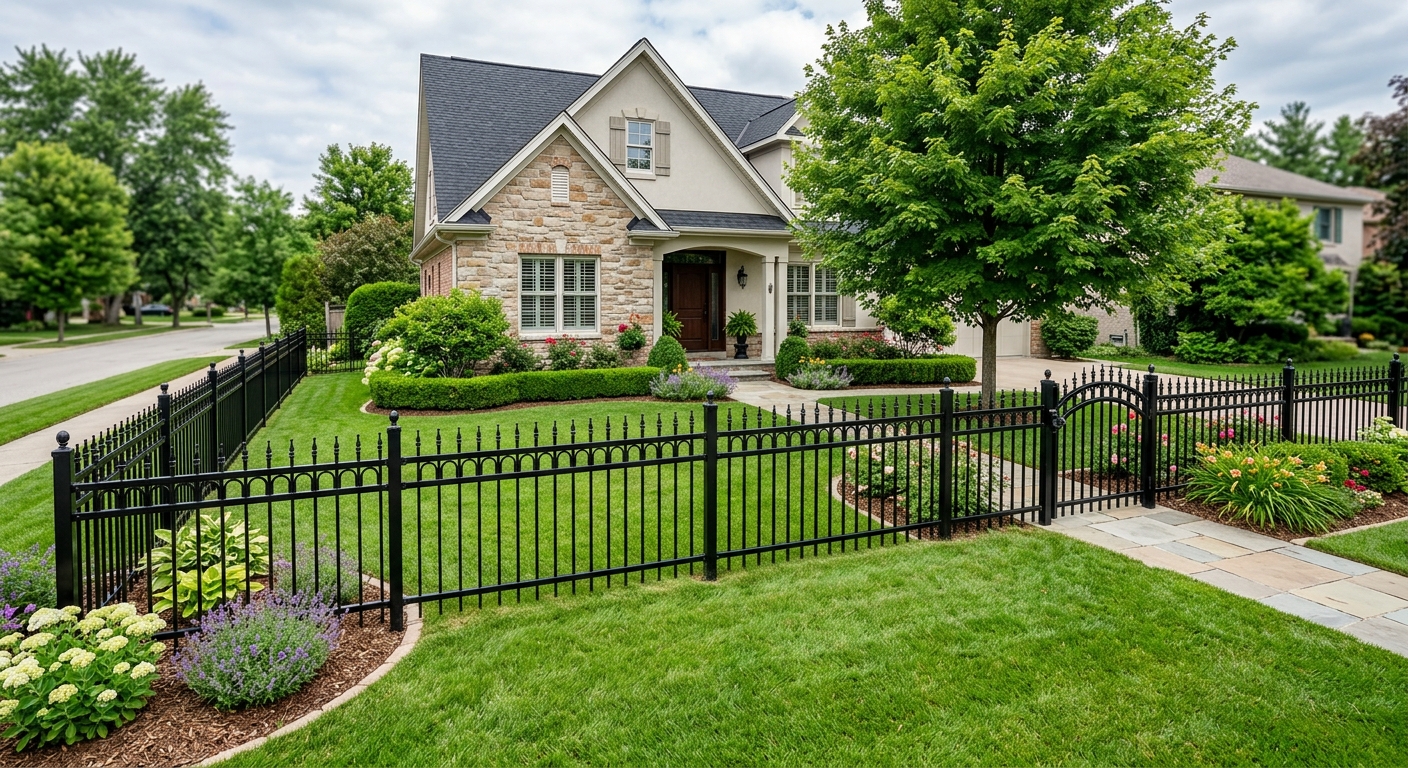
Fencing options and costs in Hidden Valley
Hidden Valley is a practical place to plan a new fence—especially when you’re balancing privacy, wind, and the freeze–thaw cycle that’s typical across the Calgary area. With a population of 11,540 (Statistics Canada, 2021 Census), demand tends to follow housing growth and yard renovations rather than “new build every day.” In a community like this, each detached home is a potential project site, which is why fencing contractors often stay busiest where backyards are actively being finished or reworked. You’ll notice the trade is especially busy along the more exposed lanes and yard edges where prairie winds push hard on fence lines and gates.
In the Calgary economic region, frost protection is a primary cost driver. Local guidance typically expects fence posts to be set about 4 ft (≈120 cm) deep to reduce the risk of heaving during Alberta’s deep freeze season. That affects excavation time, concrete volume, and the amount of labour needed—particularly for taller privacy fences (often 6 ft) and for gate posts. On top of that, open prairie exposure means solid panels rack if spacing and post sizing aren’t designed for wind loading. Chain-link systems usually cost less because airflow is higher, while wood and vinyl privacy panels sit mid-to-upper range. Pricing in Calgary commonly lands roughly within $25–$100 per linear foot depending on material, height, terrain, and access.
Below is a practical cost comparison for Hidden Valley, using typical installed ranges you can expect from local installers.
| Material |
Lifespan |
Maintenance |
Privacy Rating |
Price per Linear Foot |
| Pressure-treated pine (standard wood) |
12–20 years (varies with staining and detailing) |
Stain/seal every 2–3 years; check for warping at pickets |
High (solid board or close-spaced pickets) |
$40 – $80 |
| Cedar (natural rot resistance) |
20–30 years with proper finishing |
Light staining/finishing periodically; rinse and inspect annually |
High (best with close spacing) |
$55 – $95 |
| Vinyl / PVC (no-maintenance) |
25–35 years if installed with correct cold-weather technique |
Minimal (wash seasonally; avoid impacts) |
High (solid privacy styles) |
$45 – $90 |
| Chain-link (galvanized steel) |
20–30 years |
Minimal; occasional tightening/fastener checks |
Low to Medium (airflow through mesh) |
$25 – $55 |
| Aluminum ornamental |
25–40 years |
Minimal (wash; inspect for loose fittings) |
Low to Medium (open design) |
$70 – $120 |
| Composite / recycled material |
25–35 years |
Low (wash; inspect for fastener wear) |
High (board-style privacy) |
$60 – $110 |
Prices are estimates only and vary by project scope, site access and material selection.
What affects the price of fencing in Hidden Valley
In Hidden Valley, the same “average backyard fence” can come in 30–50% apart from one quote to another because costs aren’t just the panels—they’re the frost-proofing, excavation, and how the crew handles wind loading and gates. Two contractors may quote the same linear footage and height, but one may design for stronger rails, tighter post spacing, and deeper concrete-set posts where needed. When crews are busy, scheduling and material lead times also influence labour rates across the Calgary area.
The Prairie continental climate drives most of the variability. In Alberta, you typically need posts set about 4–6 inches below the design frost depth (which often works out to roughly 1.5–2.0 m of embedment depending on local frost calculations), so posts don’t heave and the fence line stays plumb after thaw cycles. That means longer posts and more concrete—pushing wood and vinyl privacy systems toward the mid–upper end of the $40–$80 (wood) and $45–$90 (vinyl) bands. Wind exposure on the Prairies also matters: privacy-style boards catch wind and can rack, so heavier components and closer spacing are common. In contrast, chain-link fences usually cost less (often within the $25–$55 range) because airflow reduces wind pressure.
Concrete examples from Hidden Valley jobs: (1) A 60 ft run with two gate posts often costs more than a similar run without gates because the gate openings require stronger posts and heavier concrete footings. (2) If your yard has a mix of soft topsoil and rock, excavation can shift from “easy dig” to longer labour time, which affects both steel footing readiness and concrete setting. (3) If you’re replacing an old fence that’s nailed into buried posts, removal and disposal can add time and dump fees. Housing in the Calgary area includes many mature lots with established fences, so removal is a frequent cost step—not just a “cleanup”.
| Price Factor |
Why It Matters |
Cost Impact |
| Fence length in linear feet |
Labour, posts, rails, and materials scale directly with length |
Largest driver; a 10% length increase often produces ~10–15% total cost change |
| Post depth required |
Frost line determines embedment and the amount of concrete/auger time |
Deeper frost-proofing can add 10–25% versus shallow-set designs |
| Post setting method |
Concrete-set posts resist heave better than gravel-only in freeze–thaw |
Concrete and extra excavation can move the job toward upper mid-range pricing |
| Material choice |
Vinyl/cedar often cost more than chain-link; wood may need frequent staining |
Can shift the project between the $25–$55 chain-link band and $70–$120 aluminum band |
| Gate count and type |
Gates require stronger posts, hardware, and often bracing |
Each gate can add a meaningful fixed labour cost on top of per-foot pricing |
| Grade and terrain |
Slopes require raked panels, stepped sections, or custom framing |
Custom detailing can add 5–20% depending on how uneven the run is |
| Old fence removal and disposal |
Existing posts can be difficult to extract; debris disposal adds costs |
Often adds 10–30% if removal is complex or dump access is limited |
| Permit fees and survey / property line locate |
High fences may require permits; locating pins prevents encroachment |
Can add several hundred to over $1,000 depending on what’s already available on-site |
Permits & regulations in Alberta
In Alberta, fence rules are typically tied to height thresholds, property-line setbacks, and how the fence impacts neighbours and visibility. As a practical homeowner reference for Hidden Valley, fences above a height threshold—often around 2.0 m (6.5 ft) at the rear and roughly 1.0–1.2 m (3–4 ft) at the front or corner—frequently require a building permit. Even when a permit isn’t required, the fence still must respect property lines and municipal setback bylaws.
Before digging any post holes, call for utility locates through Alberta One-Call so you don’t hit buried services. Then, confirm your property line. If you don’t already have a recent survey, obtain a survey or have pins/locates verified before installing—this is how many fencing disputes start. For shared fence ownership, line-fences rights and responsibilities are governed by provincial legislation; if you’re building along a shared boundary, discuss who maintains what and document any shared agreement.
What usually requires a permit: building a tall barrier that exceeds the typical front/rear thresholds (and any fence plan that triggers height or setback requirements). What typically does not require a permit: routine replacement of like-for-like fencing that stays within the usual height limits and setbacks, assuming no structural changes to gates, no boundary encroachment, and no other bylaw trigger.
To verify your contractor in Hidden Valley: check their Alberta business licence status online if your municipality provides that verification, review certificate of insurance for liability coverage (request the COI by email and confirm limits), and confirm workers’ compensation coverage (WSIB/WCB in Alberta is handled under the provincial system). Ask for proof of coverage in writing and a clearance letter, then keep copies for your records.
Choosing the right fence material for Hidden Valley
Choosing a fence material in Hidden Valley is really about matching your priorities to the realities of the Calgary area: wind pressure, deep freeze–thaw, and the need for properly embedded posts. Pressure-treated pine is the budget-friendly choice, but it usually needs staining or sealing every 2–3 years to reduce grey weathering and help it resist rot at the ground line. Cedar looks great and naturally resists rot better than many standard woods, but it still benefits from periodic finishing so it ages evenly. Vinyl/PVC is popular for low maintenance—however, in extreme cold it can become more brittle if panels and rails aren’t installed with the right temperature practice and correct fastening. Chain-link is the lowest upfront material cost and can last a long time, but it offers low privacy unless you add slats, mesh screening, or vegetation. Aluminum ornamental adds a clean look, won’t rust, and handles the climate well, but it’s not a privacy solution by default.
For privacy fences, solid board systems (wood, composite, or vinyl privacy styles) generally need robust framing and often concrete-set posts to handle Alberta’s frost movement—especially for taller installations. In Calgary’s region, embedment typically aligns with frost line protection (often around 4 ft deep, depending on design), which makes post setting a key part of your budget. Wind and snow load also influence rail sizing and post spacing; open-air designs like chain-link handle wind better because airflow reduces racking.
One dollar example: if you’re deciding between pressure-treated pine and vinyl for a 50 ft backyard run, you might see pine in the mid-range of the $40–$80 per linear foot band and vinyl in the $45–$90 band. If vinyl is only, say, $5–$15 more per foot (plus similar post-depth requirements), the “extra” can be justified when you value long-term low maintenance and don’t want annual staining schedules. If you’re comfortable maintaining wood and want to keep upfront cost down, pine can be the smarter value—provided it’s installed with correct panel height, proper post bracing, and proper ground clearance.
| Material |
Cold Tolerance |
Lifespan |
Annual Maintenance |
Best For |
Price Band |
| Pressure-treated pine |
Good when properly sealed and detailed at the base |
12–20 years |
Inspect yearly; stain/seal every 2–3 years |
Budget privacy with periodic upkeep |
$40 – $80 |
| Cedar |
Very good; performs well under freeze–thaw with finish |
20–30 years |
Inspect yearly; light finishing as needed |
Longer-lasting privacy and better natural appearance |
$55 – $95 |
| Vinyl / PVC |
Good in cold when installed correctly (proper expansion/fastening) |
25–35 years |
Low (wash; check for impacts/loose fittings) |
Low-maintenance privacy |
$45 – $90 |
| Chain-link |
Excellent (galvanized steel handles cold well) |
20–30 years |
Very low (tighten hardware; spot-check posts) |
Security/perimeter with minimal wind stress on panels |
$25 – $55 |
| Aluminum ornamental |
Excellent (no rust; withstands freeze–thaw) |
25–40 years |
Low (wash and inspect fittings) |
Curb appeal with moderate boundary definition |
$70 – $120 |
| Composite / recycled |
Good; resists rot and warping when installed with correct hardware |
25–35 years |
Low (wash; check for fastener wear) |
Privacy with low rot risk |
$60 – $110 |
How to choose a fencing contractor in Hidden Valley
Choosing the right fence contractor in Hidden Valley is mostly about verification and clarity. First, confirm Alberta coverage: ask for a certificate of insurance showing current liability coverage (and that the policy lists you/your property as an interested party if offered). Second, verify workers’ compensation coverage (WCB in Alberta) and request proof in writing or a clearance letter. Third, confirm their Alberta business details and ability to pull permits where required. Don’t rely on a verbal “yes”—a good contractor will email documents quickly before work starts.
Next, get 2–3 itemised written quotes rather than lump sums. You want a breakdown that shows materials and labour separately—especially post components (posts/rails/bracing), concrete/footings, gate hardware, and any racking/stepped panel adjustments for grade. Make sure the quote specifies what’s included in removal and disposal of your old fence, whether utility locates are coordinated, and whether permit pull costs and property line locate/survey requirements are included or extra.
Warranty matters: request the workmanship warranty length (for example, fence alignment, post setting, and fastening failures) and the manufacturer warranty for materials. Ask if the warranty is transferable to future homeowners—this can affect resale value.
Payment schedule should protect you: never pay more than 10–15% upfront, and hold back a portion until the final inspection, gate operation, and cleanup are complete. Finally, get a start date and estimated completion timeline in writing, including weather contingencies for digging and concrete curing.
- Ask for proof of Alberta liability insurance and confirm coverage limits.
- Request WCB clearance/coverage proof (don’t accept “we’re covered” verbally).
- Confirm they can follow Alberta frost-proofing practices for deep-set posts.
- Get a written scope that lists materials by type (pine vs cedar, rail size, and fasteners).
- Require an itemised quote: excavation, concrete, posts, rails, panels, gates, and hardware.
- Check whether utility locates are included or billed separately.
- Verify property line approach: survey/locate method and how they handle encroachment risk.
- Ensure gate hardware and hinges are listed (and whether self-latching is included).
- Ask how they handle slope: stepped vs raked panels and who measures the grade.
- Confirm disposal is included (dump fees, hauling, and removal of old panels/post debris).
- Review warranty terms for workmanship and manufacturer materials; ask about transferability.
- Lock the payment schedule: max 10–15% upfront and holdback until completion.
Red flags I’d watch for in Hidden Valley: (1) they won’t discuss post depth or frost-proofing; (2) quotes that aren’t itemised and only list a single “per foot” without footing details; (3) they push for large upfront payments (over 15%); (4) no proof of liability insurance/WCB coverage; (5) they dismiss permit/height and setback rules when you’re building a tall privacy fence.
Frequently asked questions — fencing in Hidden Valley
How tall can my fence be in Hidden Valley?
In Hidden Valley, fence height limits generally depend on whether the fence is in the front/corner area or the rear yard, and what height threshold triggers a permit requirement. A common practical guideline in Alberta is that rear fences around 2.0 m (6.5 ft) may be in the range where a permit is needed, while front or corner fences often have a lower typical threshold around 1.0–1.2 m (3–4 ft). Because bylaw rules can vary by local setback requirements, the safest approach is to confirm the exact height and location with your municipality before ordering materials. Your contractor should also tell you upfront if your plan is likely to require a permit before construction begins.
Should fence posts be set in concrete here?
For Hidden Valley and the broader Calgary area, it’s usually smart to set posts in concrete when you want long-term stability—especially for privacy fences and gate posts. The reason is Alberta’s deep freeze–thaw cycle: posts are typically set about 4 ft (≈120 cm) deep (or roughly 1.5–2.0 m embedment depending on frost design), so the fence doesn’t heave or rack after thaw. Concrete-set posts also help with wind loading on solid panels, where airflow is lower than chain-link. Some contractors use gravel packing in specific designs, but with prairie exposure and tall solid fences, concrete is commonly chosen to protect alignment.
What's the best fence for privacy?
For privacy in Hidden Valley, solid board privacy styles in wood or vinyl are typically your best options because they block sightlines and resist wind-driven racking when built with the right post spacing and bracing. Wood options often land in the $40–$80 per linear foot range, while vinyl/PVC privacy commonly falls within the $45–$90 band. Cedar privacy tends to sit on the higher side because of material cost, but it offers strong rot resistance and a premium look. If you want the most “set-and-forget” route, vinyl privacy is often preferred; if you’re comfortable with periodic staining, pressure-treated pine can be the better value.
How do I compare fencing quotes?
To compare quotes in Hidden Valley fairly, ask each contractor for an itemised breakdown: labour vs materials, and specific details about posts/rails, concrete or footing method, gate hardware, removal/disposal, and any slope adjustments. Look for whether they state post depth in relation to frost protection, because that’s a major driver of labour and concrete cost across the Calgary area. Also confirm whether permits are included (or extra) and whether utility locates and property line locating are covered. A quote that’s only a single “installed price” can hide missing concrete setting, thinner rails, or weaker gate framing—those choices can affect how the fence performs through winter.
How long does fence installation take in Hidden Valley?
Most residential fence installs in Hidden Valley can be completed in about 1–3 working days depending on length, gate count, and terrain. The biggest time variable is excavation and footing: deep post holes to reduce heaving, plus concrete setting time where required. Access matters too—tight side yards can slow unloading, measuring, and panel handling. If your project includes removing an old fence, expect extra time for disassembly and disposal. Weather can also extend timelines, particularly during freezing conditions that make digging or concrete work difficult.
Can I install a fence on a slope in Hidden Valley?
Yes, you can install a fence on a slope in Hidden Valley, but you should plan for stepped or raked construction so the fence stays level in appearance while still maintaining proper support. Contractors typically measure the grade, then decide between stepping the fence by sections or raking the rails/panels to follow the slope. On sloped lots, you may need more custom cutting and additional labour for alignment, which can move the project toward the upper end of the material price bands. A well-built sloped fence also helps reduce wind stress on the panels by keeping spacing consistent and ensuring posts are embedded correctly.