Fencing options and costs in Langford
Langford is a busy Vancouver Island community where fences are more than just curb appeal—they’re part of everyday privacy, pet containment, and property definition. With 12,335 homeowner households and 64.8% of households owning their home (Statistics Canada, 2021 Census), there’s steady demand for boundary fencing and backyards upgrades. You’ll also notice that single-detached homes make up 35.1% of dwellings, so many projects involve longer runs, gates, and back-yard privacy upgrades rather than short side-lot fixes.
On the Vancouver Island and Coast, fencing costs are shaped by moderate coastal frost (typically shallow at about 45–60 cm) plus frequent wind exposure off the Strait of Georgia and local inlets. That combination means posts still need to be set deep enough to limit heaving and long-term leaning—commonly around 75–90 cm for typical residential work, and deeper with concrete footings when the soil is wet, clay-rich, or disturbed. Wet winters also speed wood deterioration if you choose untreated or lightly treated components, so contractors often steer homeowners toward cedar or properly pressure-treated lumber with good hardware.
In Langford, demand is especially strong around Bear Mountain and nearby neighbourhoods where larger lots and landscaped yards create more gate work, privacy panels, and ongoing upgrades. If you’re comparing options, the table below breaks down the typical lifespan, maintenance expectations, and local price bands so you can match a fence to your budget and priorities.
| Material |
Lifespan |
Maintenance |
Privacy Rating |
Price per Linear Foot |
Price Range |
| Pressure-treated pine (standard wood) |
10–15 years |
Stain/paint every 2–3 years; inspect posts and rails annually |
Medium–High (solid panels) |
$55–$85 |
$3,850–$7,800 |
| Cedar (natural rot resistance) |
15–25 years |
Seal/stain every 3–4 years; keep bottoms clear of splashback |
High (board-on-board or solid panels) |
$70–$105 |
$4,900–$10,000 |
| Vinyl / PVC (no-maintenance) |
20–30 years |
Wash with hose; avoid harsh impact; inspect posts annually |
High (privacy or semi-privacy styles) |
$70–$110 |
$4,900–$11,000 |
| Chain-link (galvanized steel) |
20–35 years |
Occasional rinsing; check tension and fittings |
Low (open mesh) |
$35–$60 |
$2,450–$5,800 |
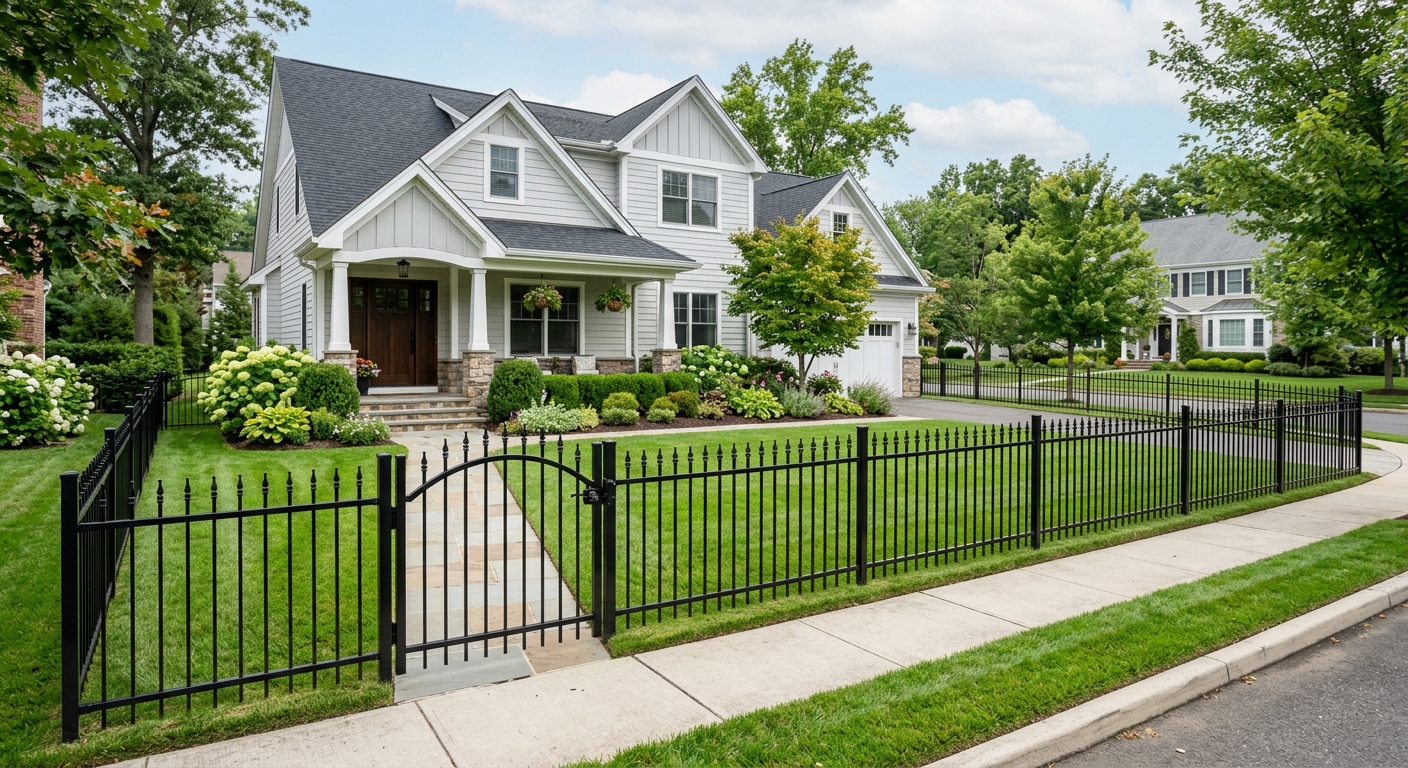
| Aluminum ornamental |
25–40 years |
Wash as needed; lubricate gate hinges if applicable |
Low–Medium (ornamental pickets) |
$80–$140 |
$5,600–$14,500 |
| Composite / recycled material |
20–30 years |
Low maintenance; wipe/detergent cleaning; inspect for warping |
High (solid boards) |
$85–$125 |
$5,900–$12,500 |
Prices are estimates only and vary by project scope, site access and material selection.
What affects the price of fencing in Langford
In Langford, you can see the same fence project come in 30–50% apart between contractors, even when the “materials” sound similar. The biggest reasons are hidden scope differences (post depth, concrete setting, disposal), site conditions (rock pockets, saturated soil, slopes), and how wind exposure is handled through post spacing, panel design, and hardware. Because Langford sits in the Vancouver Island and Coast region, contractors also factor in winter travel and scheduling—when crews are building simultaneously across Victoria-area communities, labour availability can tighten and quote timing can shift.
Frost line depth is a key driver for total cost. On Vancouver Island and the Coast, frost is shallow compared with colder provinces, but posts still need to go roughly 4–6 inches below the design frost depth to reduce heaving and long-term leaning. In practice, that often means burying posts around 75–90 cm; if you hit clay-rich or wet ground, concrete setting and deeper holes become common. By contrast, many Prairie jobs deal with deeper freezing and more wind-driven panel deflection, which typically pushes tighter post spacing and heavier panels there. Coastal BC is milder, but wet conditions can accelerate rot in wood if treatment and installation details aren’t right.
Concrete examples from Langford: a privacy fence on sloped lots may require stepped or raked panels, increasing labour and custom measuring; a run that includes three or more gates often costs significantly more than the same linear footage of straight fencing; and removing an old fence with buried posts usually adds disposal and excavation time. For budgeting, wood installs often track the $55–$85 per linear foot band, while vinyl commonly sits closer to $70–$110 depending on height and post system. If your yard has older homes (19.4% built before 1981, Statistics Canada, 2021 Census), you may also see older utilities, irregular property edges, and more frequent need for a careful locate and line confirmation—each adds time and can change the final price.
| Price Factor |
Why It Matters |
Cost Impact |
| Fence length in linear feet |
Materials, labour, posts, and rails scale directly with length |
Highest impact; drives most of the final total |
| Post depth required |
Frost management determines hole depth and post length |
Can add 10–25% depending on soil and height |
| Post setting method |
Concrete set posts cost more than gravel pack; driven posts vary by fence type |
Concrete setting commonly adds 5–20% on average projects |
| Material choice |
Vinyl and aluminum include higher upfront material costs and different hardware |
Shifts you between common bands (e.g., wood vs vinyl) |
| Gate count and type |
Gates need heavier frames, more hardware, and careful alignment |
Often +$400 to +$2,000 per gate depending on size/style |
| Grade and terrain |
Slopes require stepped/raked panels, extra measuring, and sometimes rail redesign |
Can add 5–20% based on how complex the yard is |
| Old fence removal and disposal |
Removing posts below grade adds excavation and hauling costs |
Commonly +$800 to +$3,500 for typical residential runs |
| Permit fees and survey / property line locate |
Higher fences and uncertainty about boundaries increase admin and verification time |
Often +$0 to +$1,500+ depending on what’s needed |
Permits & regulations in British Columbia
In British Columbia, fence rules can vary by municipality, but the permit concept is consistent: fences above a height threshold—often around 2.0 m (6.5 ft) at the rear and 1.0–1.2 m (3–4 ft) at the front or corner—may require a building permit. Regardless of permits, all fencing must respect property lines and any municipal setback requirements. In practical Langford terms, the biggest mistakes homeowners make are assuming “it’s my yard” without confirming pins/edges, and starting post holes without getting utility locates.
Before digging any post holes, call for utility locates through the provincial utility notification process (BC 1 Call). You should also obtain a survey or at least a property pin/locate confirmation before installing if boundary markers are unclear or if you’re replacing a fence that may have drifted over time. Shared fence ownership matters too: rules around line fences are governed by provincial line-fences legislation, so disputes typically get resolved by looking at who’s responsible for maintenance, replacement, and cost sharing.
How to verify a contractor in Langford (BC-wide):
- Check for the correct BC contractor registration/licence using the relevant provincial public registry.
- Request a Certificate of Insurance showing general liability coverage and ensure the expiry date is current.
- Confirm workers’ compensation coverage via WSBC/WCB proof if the contractor will have employees on site.
- Ask for the policy “clearance”/status letter where applicable, or for up-to-date documentation from WSBC.
- Keep copies of all documents with your contract and quote.
Choosing the right fence material for Langford
Choosing a fence in Langford is mostly about matching the material to how your yard behaves in wet winters and windy stretches. Pressure-treated pine is the most budget-friendly starting point, but it needs staining or painting every 2–3 years to slow grey weathering and keep moisture out of the wood. Cedar looks better longer because it has natural rot resistance, but it still benefits from sealing and regular inspection at post bases and rail joints. Vinyl/PVC is the low-maintenance favourite for many homeowners—no annual staining and it holds colour well—but it can crack or craze under repeated impact and can become brittle if products are installed without the right system for temperature expansion.
Chain-link is excellent for security with the longest, simplest lifecycle and typically the lowest installed cost. The trade-off is privacy: it’s open, so you’ll need slats or a secondary planting strategy if you want screening. Aluminum ornamental provides a rust-resistant, attractive look with mid-range pricing, but it won’t give the privacy of solid boards.
Post depth matters across Vancouver Island and the Coast. Even with shallow frost (roughly 45–60 cm), you should plan on burying posts below the frost line and often set them around 75–90 cm for typical residential runs; concrete-set posts are particularly useful on taller fences, heavier gate systems, saturated winter soils, and when soils are clay-rich or disturbed. In windy conditions, solid privacy panels act like sails, so contractors may choose vented designs or tighter spacing even when the material is the same.
For dollar context: a homeowner choosing pressure-treated wood might budget roughly the $55–$85 per linear foot range, while vinyl often lands closer to $70–$110. Paying the extra can be justified if you want to avoid re-staining and you’re building a fence intended to last 20+ years in Langford’s damp weather.
| Material |
Cold Tolerance |
Lifespan |
Annual Maintenance |
Best For |
Price Band |
| Pressure-treated pine |
Good (when properly installed) |
10–15 years |
Inspect annually; stain/paint every 2–3 years |
Budget-first privacy with solid panels |
$55–$85 |
| Cedar |
Good |
15–25 years |
Inspect annually; seal/stain about every 3–4 years |
Natural look, better rot resistance |
$70–$105 |
| Vinyl / PVC |
Moderate (avoid impact) |
20–30 years |
Rinse as needed; inspect posts/hardware |
Low maintenance privacy |
$70–$110 |
| Chain-link |
Good |
20–35 years |
Occasional rinsing; check tension |
Security and pet containment with minimal upkeep |
$35–$60 |
| Aluminum ornamental |
Excellent |
25–40 years |
Wash as needed; check gate hinges |
Attractive boundaries with durability |
$80–$140 |
| Composite / recycled |
Good (system-dependent) |
20–30 years |
Low; inspect for warping or fastener issues |
Solid screening with reduced upkeep |
$85–$125 |
How to choose a fencing contractor in Langford
Start by confirming the contractor meets BC requirements and is properly insured. For licensing/registration, look up the contractor in the applicable BC online registry for fencing/contracting status. Ask for a current Certificate of Insurance showing general liability and verify the coverage dates. If they employ workers, request proof of workers’ compensation coverage through WSBC/WCB documentation (and a clearance/status letter if provided). In Langford, a legitimate fence company should be comfortable supplying these documents before you sign anything.
Next, get 2–3 itemised written quotes. You want a breakdown of labour and materials (posts, rails, concrete, hardware, gates), plus a description of how they’ll handle frost-depth requirements and site access. Avoid quotes that only show a single lump sum for “installation.” Also confirm what’s excluded: permit pulling, property line locating, disposal of old fencing, surface restoration, staining/painting (if wood), and any adjustments for slopes or irregular layout.
Warranty matters in fencing. Ask for a workmanship warranty length (for example, post setting and panel alignment) and separate manufacturer/product warranty terms (for vinyl/composite hardware, pickets, or panels). Confirm whether warranties are transferable if you sell your home.
For payment schedule, never pay more than about 10–15% upfront. Holdback until completion is complete (or until key handoff items like gate alignment, cleaning, and final adjustments are done). Also request a start date and completion estimate in writing so you can plan around weather delays.
- Verify BC registration/licence status from the online public registry before the quote is final.
- Request Certificate of Insurance and confirm it covers fencing work and has valid dates.
- Confirm WSBC/WCB coverage with proof if the contractor uses employees.
- Get itemised labour + materials (posts, concrete, hardware, gates) rather than a lump sum.
- Ask how deep posts will be set for coastal frost conditions and soil type.
- Confirm whether concrete set posts are included for wet/clay soil areas.
- Ensure slope handling is described (stepped vs raked panels) in the scope.
- Confirm gate type and hardware specs (hinge grade, latch type, frame reinforcement).
- Clarify disposal: old fence removal and hauling are included or excluded.
- Ask whether permits are included (if required) and who files them.
- Check warranty terms: workmanship vs product/manufacturer warranty separately.
- Use a payment schedule with a small deposit and a holdback until final completion.
Red flags to watch for in Langford: (1) they won’t provide insurance/WSBC proof; (2) they quote “standard post depth” without discussing frost and site soil; (3) they provide non-itemised lump sums with vague exclusions for disposal or gates; (4) they ask for most of the payment upfront; and (5) they refuse to put the schedule and warranty terms in writing.
Frequently asked questions — fencing in Langford
What is the most weather-resistant fence for Langford's climate?
For Langford’s wet, coastal winters and frequent wind, the most weather-resistant choices are typically vinyl/PVC and well-installed cedar, with chain-link also performing extremely well for long-term durability. Vinyl tends to handle moisture and rot better because it doesn’t absorb water, but you still need good post setting and quality hardware so panels don’t loosen in wind. Cedar resists rot naturally and looks great, yet it still benefits from sealing and correct installation—especially at the post bases. Chain-link is the “set it and forget it” option for weather resistance, though it won’t provide privacy unless you add slats or a secondary screen. If you want a simple cost anchor, vinyl privacy often falls in the $70–$110 per linear foot range depending on height and post system.
How do I prevent wood fence rot in Langford?
Wood rot prevention in Langford comes down to details at the bottom of the fence. First, ensure posts are set below frost and in the right depth for coastal frost conditions—typically around 75–90 cm in many residential cases, sometimes deeper based on soil. Next, use proper drainage and hardware: keep wood off bare soil when possible, use appropriate fasteners (and not mixed-metal corrosion-prone hardware), and consider concrete-set posts when the ground is wet or clay-rich. Also, choose pressure-treated or cedar designed for exterior exposure, and plan for maintenance: staining/painting every 2–3 years for pressure-treated and sealing about every 3–4 years for cedar. Finally, confirm the contractor will handle gate and rail attachments so water doesn’t collect in end-grain. Even in mild coastal BC, ignoring the bottom edge is the fastest route to premature rot.
What is the cost per linear foot for fencing in Langford?
In Langford, you’ll usually see fencing priced in common local ranges that reflect material and installation complexity. Typical installed costs are approximately: wood at $55–$85 per linear foot, vinyl/PVC at $70–$110, chain-link at $35–$60, and aluminum/metal at $80–$140. Coastal BC pricing can rise when contractors must dig in rock pockets, set posts with concrete for wet soils, or build around slopes and wind loads. Gates are another cost amplifier, since they require reinforced frames and heavier hardware. If you’re getting quotes, compare itemised scope: post depth, post setting method, concrete included or not, and whether old fence removal and disposal are included. Two quotes that both say “wood fence” can still differ by 30–50% once these factors are accounted for.
Should I repair or replace my old fence in Langford?
Deciding between repair and replacement in Langford depends on whether the underlying structure is sound. If only a few boards are damaged and the posts are stable (no visible leaning or rot at the base), targeted repairs—board replacement, tightening rails, and re-sealing—can be the most cost-effective option. If you see post deterioration below grade, repeated rail failures, or frequent fastening issues, replacement is usually cheaper long-term because rotted posts won’t hold new pickets reliably in wind. Also consider age: if the fence is older and you’re seeing widespread hardware corrosion from coastal moisture and salinity, replacing may be the cleanest solution. If you’re budgeting, repairing a small section won’t change your overall per-foot cost the way a full replacement does, but the biggest comparison remains post condition. Ask contractors to assess post depth setting and whether the existing posts were installed below frost management depth.
How do I handle a fence dispute with neighbour in British Columbia?
Fence disputes in British Columbia are usually about boundaries, height, and cost sharing—so start with facts, not feelings. First, confirm the property line using survey pins or a locate, especially if your current fence seems offset. Next, document the issue with photos and measurements, and keep written notes about prior conversations. Provincial line-fences rules can affect who pays for what, but the exact approach depends on the nature of the line fence and responsibility. Before you dig, make sure utilities are located and that any plan changes are anchored to the correct boundary. A practical step in Langford is to request a joint inspection or at least separate written estimates so you both understand the scope. If you can’t agree, consider mediation or formal dispute processes—but avoid unilateral work that crosses the boundary or changes the fence without agreement or proper approvals where required.
What fence style offers the best wind resistance in Langford?
For wind resistance in Langford, the “best” style is usually the one that manages pressure rather than fully blocking it. Solid privacy fences can behave like sails, especially with wide panels and larger surface areas, so they may need closer post spacing, stronger posts, and heavier rails. Vented designs—such as lattice with openings, board-on-board with gaps, or privacy styles that allow some airflow—often perform better under frequent coastal gusts because wind can pass through the structure. Chain-link and aluminum pickets are inherently more wind-tolerant since they’re open, which is why they’re common where wind exposure is high. If you choose a tall solid fence, ask the contractor how they’re accounting for wind load in post spacing and whether you need concrete-set posts for stability. A well-installed fence in the $55–$85 wood band can still resist wind well when the build details are done for local exposure.