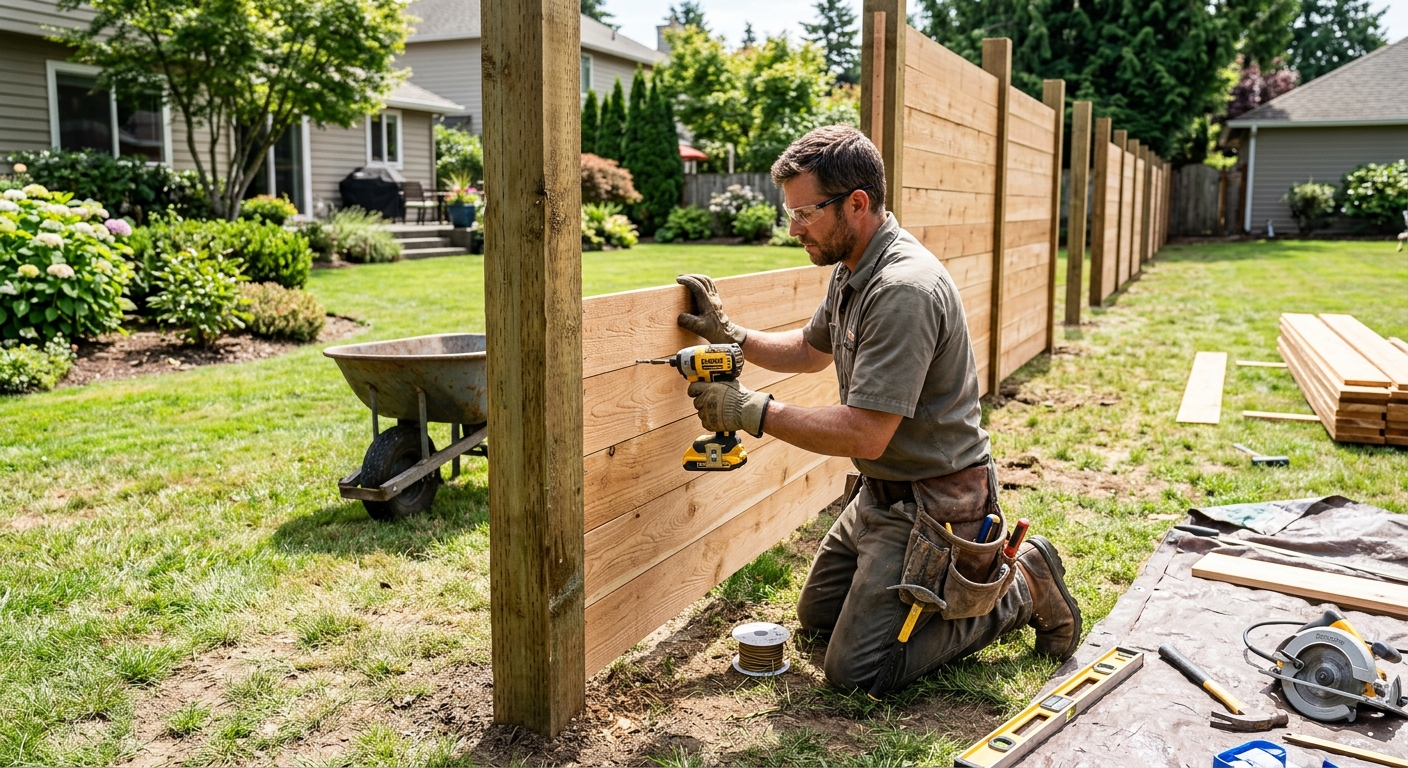
Fencing options and costs in Flemingdon Park
Flemingdon Park homeowners typically start their fencing search by balancing curb appeal with practical winter performance, and that sets the tone for the options and costs you’ll see. With a 2021 population of 21,933 residents in Flemingdon Park (Statistics Canada, 2021 Census), there’s steady demand for residential fencing—especially in established pockets where properties are closely spaced and neighbours care about sightlines, snow storage and shared boundaries. In an area with a mature housing mix, many fences go in during renovations around backyards and side yards, and that timing affects contractor availability and scheduling. Toronto-area winters also change the “real” price, because the frost line in Southern Ontario is commonly treated as roughly 42"–48", meaning posts must be set deeper to resist frost heave.
In practice, most Toronto contractors recommend concrete-set posts for 6–8 ft privacy fencing because clay and mixed soils can move when freeze-thaw cycles hit. That increases labour time and ready-mix costs, but it reduces the sag, leaning and panel racking that show up after two or three winters. In Flemingdon Park, trade activity tends to be especially busy near the Flemingdon Park/Overlea area where backyards back onto busier corridors and owners prefer solid privacy for sound buffering. If you’re planning a replacement, the price usually hinges on how many gates you need and whether old fence removal is included—then it’s easy to compare materials side-by-side.
Here are typical cost ranges and performance expectations for common fence types in the Toronto market.
| Material |
Lifespan |
Maintenance |
Privacy Rating |
Price per Linear Foot |
Price Range |
| Pressure-treated pine (standard wood) |
10–15 years |
Stain/seal every 2–3 years |
High (solid boards) / Medium (lattice) |
$18–$35 |
$65–$120 |
| Cedar (natural rot resistance) |
15–20 years |
Light staining every 2–4 years |
High (solid boards) |
$22–$42 |
$75–$130 |
| Vinyl / PVC (no-maintenance) |
20–30 years |
Rinse as needed; no staining |
High (solid panel) |
$20–$45 |
$75–$130 |
| Chain-link (galvanized steel) |
20–35 years |
Occasional rinse/touch-up |
Low (security only) / Medium with slats |
$15–$25 |
$45–$85 |
| Aluminum ornamental |
25–40 years |
No rust; occasional wash |
Low–Medium |
$22–$60 |
$90–$160 |
| Composite / recycled material |
20–30 years |
Minimal cleaning; avoid abrasive scrubbing |
High (solid profiles) |
$25–$55 |
$85–$150 |
Prices are estimates only and vary by project scope, site access and material selection.
What affects the price of fencing in Flemingdon Park
Even when neighbours compare the same “8 ft privacy fence” idea, Toronto-area quotes can swing by 30–50% once labour, post depth and hardware choices are accounted for. The main reason is that cold-weather installation details aren’t optional in Ontario: the design frost depth is commonly handled by setting posts roughly 4–6 inches below that frost depth line, so in practical Toronto installs you’re often looking at 1.5–2.0 m of embedment. That pushes the required post length up, increases excavation time, and almost always leads to concrete setting—so the same fence can land closer to wood rates (often cited around $65–$120) in straightforward yards, or climb toward vinyl/PVC territory (often cited around $75–$130) when heavier posts, more concrete, and upgraded panels are specified.
Frost and soil matter locally. Flemingdon Park soils can behave differently across the neighbourhood; if your soil is heavier clay or mixed fill, the hole walls can collapse and labour time increases, which raises total installed cost. Access also changes everything in the GTA—narrow gates, limited driveway staging, or needing temporary sidewalk/landing protection can slow crews and add labour hours. Two concrete examples: (1) a long back lot with fence runs behind the garage usually increases post-set time because we have to set forms and mix concrete more carefully; (2) a sloped yard can force stepped or raked panels, which increases material waste and labour for aligning top rails and pickets. By contrast, a straight run in a flat, easy-access yard can keep you nearer the lower end of the band.
Here’s what typically moves the needle most on your project.
| Price Factor |
Why It Matters |
Cost Impact |
| Fence length in linear feet |
Most components scale directly with length: rails, panels, posts and labour |
High (primary driver) |
| Post depth required |
Frost line determines embedment depth and the amount of excavation and post material |
High (can add days/labour) |
| Post setting method |
Concrete-set posts improve stability in freeze-thaw soils; driven/gravel packs vary by soil and design |
Medium–High |
| Material choice |
Vinyl/PVC and cedar cost more up-front than treated pine; chain-link is typically less expensive |
Medium (often largest after length) |
| Gate count and type |
Gates require heavier hardware, stronger frames and often diagonal bracing |
Medium–High |
| Grade and terrain |
Slopes require racking/stepping; uneven ground increases alignment labour |
Medium |
| Old fence removal and disposal |
Demo, hauling and dump fees vary; buried posts increase removal time |
Medium |
| Permit fees and survey / property line locate |
Some heights require permits; locating lines avoids redesign due to encroachment |
Low–Medium |
Permits & regulations in Ontario
In Ontario, fences can require a building permit depending on height and location. As a homeowner rule of thumb in Flemingdon Park, fences above a common threshold—often around 2.0 m (6.5 ft) at the rear and roughly 1.0–1.2 m (3–4 ft) near the front or corner—may trigger permit requirements. Even when a permit isn’t required, you must respect property lines and municipal setback bylaws, because Ontario disputes typically happen when posts or rails extend beyond the legal boundary.
Before any post holes are dug, arrange utility locates through Ontario One Call. Also, get a survey or verify property pins/locate services before installing. That step prevents expensive rework if the “existing fence line” is not actually the legal line. For shared boundaries, shared fence ownership rules are governed by Ontario’s line-fences legislation, which can affect who is responsible for costs and how disputes are handled.
What usually does require attention for permits: larger-height backyard/privacy fences and any fence being installed near special conditions where the municipality requires review. What typically does not require a permit: minor repairs, replacing like-for-like at the same height/location, and short, low fences that fall within the usual non-permit thresholds (though you should still confirm locally).
To verify your contractor in Ontario, check three things: (1) an Ontario business/contractor registration (where applicable) and their trade details via online registry results; (2) liability insurance—request the certificate of insurance showing your jobsite address and adequate limits; and (3) WSIB coverage (or the contractor’s applicable WCB clearance/registration documentation). Ask for copies before work begins and ensure the clearance letter matches the legal business name.
Choosing the right fence material for Flemingdon Park
Your best fencing material in Flemingdon Park depends on what you value most: privacy, low maintenance, lifespan, or budget—because Toronto’s freeze-thaw seasons demand good post stability and proper installation. Pressure-treated pine is the budget-friendly choice, but it needs staining or sealing every 2–3 years to slow grey weathering and surface checking. Cedar looks great and naturally resists rot better, yet it still benefits from periodic staining to maintain colour and reduce cracking. Vinyl/PVC is popular for its “set-and-forget” upkeep, but it can become brittle in extreme cold if the fence is undersupported—so proper post embedment and correct rail/hardware spacing matter. Chain-link is typically lowest-cost and long-lasting, but it offers no true privacy unless you add slats or a screening solution. Aluminum ornamental is rust-resistant and long-lived, but it’s more about boundary definition than privacy.
For Toronto installations, post-depth matters more than most homeowners expect. With a frost line commonly handled around 42"–48", set your posts deep enough (often about 1.5–2.0 m into the ground for typical designs) to reduce frost heave risk, and concrete-set posts are usually the safest recommendation in clay/mixed soils. A privacy fence in the $65–$120 wood band can become higher when you switch to heavier post systems and concrete setting, but that stability is what prevents your fence from leaning after a couple winters.
Example: if you’re comparing treated pine at around the lower $65–$120 range versus cedar tending toward the higher end (often near the $75–$130 band), cedar is sometimes justified when you’re replacing an older fence close to living areas and you want better appearance longevity without “tarp-and-stain” every year. If your priority is truly low maintenance, vinyl/PVC can be worth the mid-range premium—especially when crews already have the right footing approach for Toronto’s winters.
| Material |
Cold Tolerance |
Lifespan |
Annual Maintenance |
Best For |
Price Band |
| Pressure-treated pine |
Good (if properly sealed and installed on stable posts) |
10–15 years |
Seal/stain every 2–3 years (light yearly cleaning) |
Budget-conscious privacy |
$65–$120 |
| Cedar |
Good (better rot resistance; still needs UV/seal care) |
15–20 years |
Stain or recoat every 2–4 years |
Appearance + natural resistance |
$75–$130 |
| Vinyl / PVC |
Very good with correct support and temperatures |
20–30 years |
Rinse/inspect; no staining |
Low-maintenance privacy |
$75–$130 |
| Chain-link |
Excellent (galvanized steel holds up well) |
20–35 years |
Occasional wash and hardware check |
Security + pets |
$45–$85 |
| Aluminum ornamental |
Excellent (no rust; powder-coated) |
25–40 years |
Occasional wash |
Decorative boundaries |
$90–$160 |
| Composite / recycled material |
Good (freeze-thaw tolerant profiles) |
20–30 years |
Minimal cleaning; periodic inspection |
Modern look with low upkeep |
$85–$150 |
How to choose a fencing contractor in Flemingdon Park
Choosing the right fencing contractor in Flemingdon Park is mostly about proof: proof of coverage, proof of capability, and proof that the quote reflects how your fence will be built in Toronto’s conditions. Start with licensing and business standing. In Ontario, fencing businesses should be able to provide clear business registration information on request. Then check liability insurance: ask for a certificate of insurance showing adequate limits and the correct legal business name. Next, confirm WSIB/WCB coverage. For contractors, you should request the WSIB account details or a clearance letter where applicable—this is the document that shows the contractor is compliant at the time of the job. If a company can’t provide current documentation, that’s a major risk to your property and your wallet.
Get 2–3 itemised written quotes, not one lump-sum. A proper fencing quote breaks down labour and materials (posts, rails, panels, gate hardware, concrete/aggregate, fasteners, rails, and any staining or disposal). Confirm what’s excluded: excavation limits, whether you’re responsible for restoring sod, whether removal and dump fees are included, and whether a permit pull is handled. A solid warranty should specify workmanship coverage length (often one season or more, depending on the contractor) and the product/manufacturer warranty. Ask if the warranty is transferable to future owners—this can matter if you sell.
On payment, don’t let yourself get squeezed: never pay more than about 10–15% upfront. Hold back a portion until the fence is complete, straight, gates function and cleanup is finished. Finally, insist on a written timeline with an estimated start date and completion window.
- Ask for insurance certificate before signing anything.
- Request WSIB/WCB clearance documentation (or equivalent compliance proof).
- Verify the quote includes concrete quantities or post setting method details.
- Confirm post depth and whether it’s frost-safe for Toronto installs.
- Make sure gate count, gate width and latch style are listed.
- Check whether old fence removal and disposal are included.
- Look for a line item for permits (and who pulls them if required).
- Confirm survey/property line locate steps if there’s any doubt about boundaries.
- Ensure materials are specified (pressure-treated grade vs cedar grade vs vinyl profile).
- Ask for warranty terms in writing, including workmanship and product coverage.
- Require a payment schedule that keeps holdback until completion.
- Get start date and completion estimate in writing.
Red flags I commonly see in Flemingdon Park include: crews saying “we drive posts” for a tall privacy run without discussing frost-depth stability, quotes with missing line items (no concrete or no hardware breakdown), pressure to start before insurance/WSIB documents are provided, vague timelines that slip without written notice, and warranties that only cover “materials” while excluding workmanship and post-setting.
Frequently asked questions — fencing in Flemingdon Park
How do I find my property line before fencing?
In Flemingdon Park (Toronto), the safest way to find your property line is to use your survey and/or have a property pin locate completed before any post holes are dug. Many fence disputes come from “following the existing fence” when that fence isn’t on the legal line. Start by locating your survey documents (or order a new survey if you don’t have one). If you can access the property pins, note their positions and cross-check with a professional locate. Then, before digging, arrange utility locates through Ontario One Call so you don’t hit underground services. When your fence is near a shared boundary, confirm the boundary line carefully because shared fence ownership rules can affect who pays for what, and rework costs are high once posts are set.
What's the most low-maintenance fence?
For low maintenance in Ontario and specifically for Flemingdon Park backyards, vinyl/PVC is usually the first choice: it doesn’t require staining and you only need occasional rinsing and visual checks for loose caps or hardware. Aluminum ornamental is also very low maintenance because it won’t rust, but it typically isn’t used for full privacy. Chain-link is long-lasting and low maintenance too, though it won’t provide privacy unless you add slats or screening. If you want a “set-and-forget” privacy fence and you’re willing to pay a bit more upfront, vinyl/PVC commonly sits in the mid-range bands for the Toronto market—often around $75–$130 depending on height, gates and post setting. Remember: whichever you choose, stable concrete-set posts are what prevents winter movement.
How tall can my fence be in Flemingdon Park?
Fence height rules can vary by location (rear vs front/corner) and municipal bylaw context, and permit requirements can come into play. A common Ontario threshold homeowners hear is around 2.0 m (6.5 ft) at the rear and closer to about 1.0–1.2 m (3–4 ft) near the front or corners. In Flemingdon Park, if you plan a tall backyard privacy fence at the rear, you may need a building permit depending on the exact height and location. Even if a permit isn’t required, you must follow setback rules and respect your property line. Because enforcement is local, confirm the applicable requirements with your municipality before ordering materials—your fence contractor should be able to tell you whether permits typically apply to your specific layout and height.
Should fence posts be set in concrete here?
In Flemingdon Park and the broader Toronto area, concrete-set posts are strongly recommended for privacy fences because Southern Ontario freeze-thaw cycles can move soil and create frost heave. With frost line depth commonly treated around 42"–48" in the GTA, post holes are typically dug deeper so embedment lands below the design frost zone. That usually means deeper holes (often around 1.5–2.0 m embedment for tall runs), and concrete helps lock the post plumb and stable in clay/mixed soils. If a quote shows “driven posts” for an 6–8 ft privacy fence without discussing stability, that’s a common performance concern. Concrete does raise labour and ready-mix costs, but it usually reduces the expensive “fix it after two winters” scenario.
What's the best fence for privacy?
The best privacy fence in Flemingdon Park is typically a solid panel wood (cedar or pressure-treated), vinyl/PVC privacy fence, or another solid composite system—paired with correct post spacing and deep post embedment for winter stability. Chain-link generally won’t provide true privacy unless you add slats, screens or a secondary privacy layer. Wind in the GTA is usually less extreme than the Prairies, but racking still matters, so heavier posts and solid construction help your fence stay straight through snow seasons. For cost, treated pine privacy fences often fall in the $65–$120 band, while vinyl/PVC privacy commonly sits around $75–$130 once materials and installation details are included. If you want the privacy benefit without frequent re-staining, vinyl/PVC is often the best long-term balance.
How do I compare fencing quotes?
To compare fencing quotes in Ontario (including Flemingdon Park), insist on itemised bids and match apples-to-apples: same fence height, same material grade, same post size and spacing, and the same post setting method. Look for whether the quote specifies concrete setting, post embedment depth, gate count and hardware, and whether old fence removal and disposal are included. Confirm if permits are included or pulled by the contractor if required for your height/location. Check warranty details: workmanship coverage should be described separately from manufacturer/product warranty. Finally, compare payment schedules—avoid contractors asking for large upfront payments. A good contractor will provide a clear written scope and a reasonable timeline rather than hiding key costs.