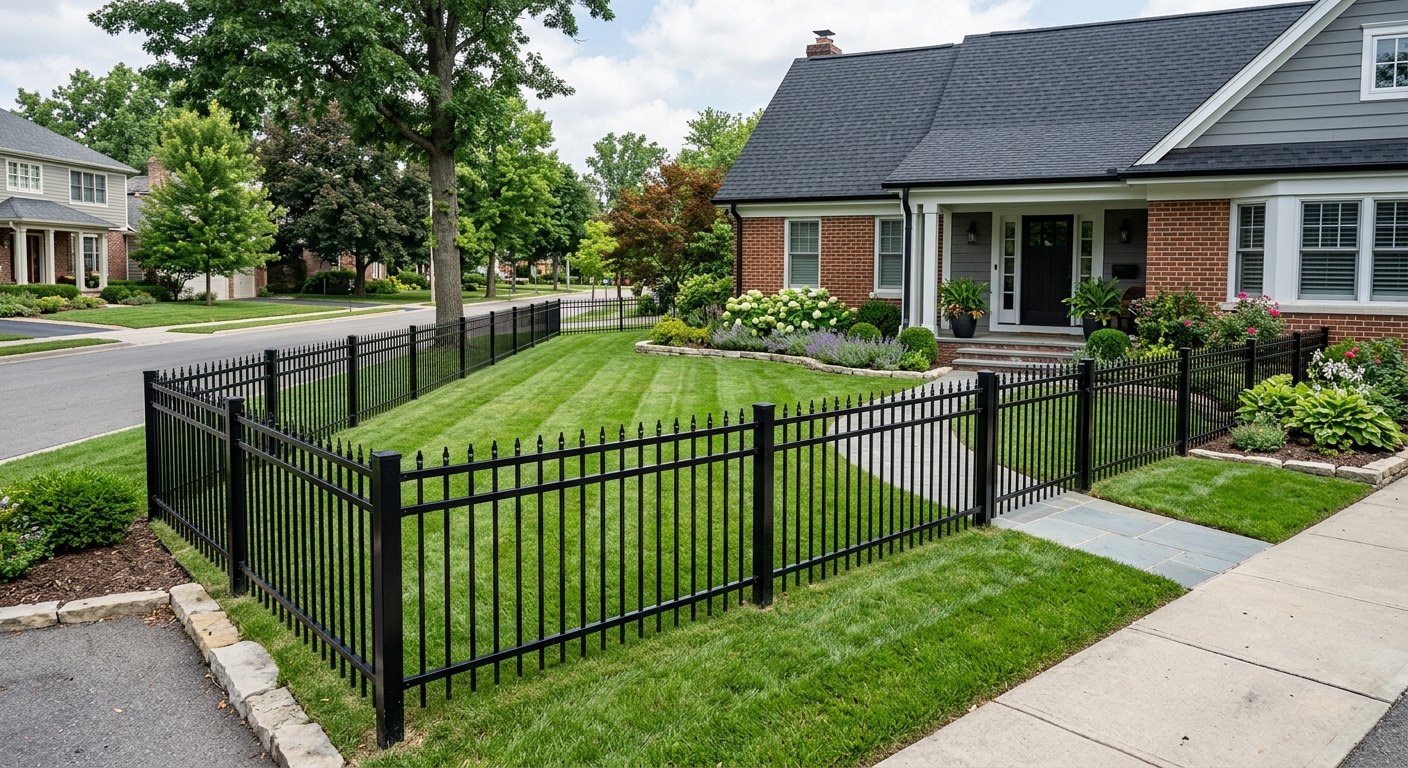
Fencing options and costs in Waterloo
Waterloo homeowners have plenty of fence choices, but the right option usually comes down to how much privacy you want, how hands-on you’re willing to be, and what your soil looks like after freeze–thaw cycles. With 61.3% of local households owning their homes (Statistics Canada, 2021 Census), demand is steady—especially around established neighbourhoods where yards have consistent lot lines and mature landscaping that benefits from a privacy perimeter. Single-detached homes account for 49.2% of dwellings, which typically means driveways, backyards, and side-yard runs where fences are installed or upgraded.
In the Kitchener–Waterloo–Barrie region, pricing is shaped by Ontario’s frost depth and winter freeze–thaw. To prevent heaving, posts are commonly set deeper and in concrete for most fence types—particularly 6 ft privacy builds—so contractors plan for more labour, auger time, and materials per post. Wind isn’t as punishing as the Prairies, but it can still rack tall panels in open subdivision pockets, so privacy systems often need tighter post spacing (often 6–8 ft centres) and sturdier rails. Because Waterloo has a mix of older housing stock—32.9% of homes built before 1981—many projects also include replacing aging fences that can’t be salvaged cleanly, which affects disposal and install time.
If you’re comparing budgets, most projects land within Ontario mid-range pricing. Use the table below to benchmark typical lifespan, maintenance expectations, privacy performance, and per-foot costs before you request an itemised quote.
| Material |
Lifespan |
Maintenance |
Privacy Rating |
Price per Linear Foot |
| Pressure-treated pine (standard wood) |
10–15 years |
Stain/seal every 2–3 years |
7/10 (depends on board spacing) |
$20 – $30 |
| Cedar (natural rot resistance) |
15–25 years |
Light staining/toning every 2–4 years |
8/10 (solid panels) |
$25 – $40 |
| Vinyl / PVC (no-maintenance) |
20–30 years |
Occasional wash only |
9/10 (with privacy style) |
$28 – $45 |
| Chain-link (galvanized steel) |
20–35 years |
Low—rinse and inspect tension |
3/10 (privacy only with slats/planters) |
$16 – $25 |
| Aluminum ornamental |
25–40 years |
Occasional wash |
5/10 (open pickets) |
$25 – $50 |
| Composite / recycled material |
20–30 years |
Minimal; follow manufacturer cleaning |
8/10 (privacy boards) |
$30 – $55 |
Prices are estimates only and vary by project scope, site access and material selection.
What affects the price of fencing in Waterloo
In Waterloo and the wider Kitchener–Waterloo–Barrie area, two quotes for the “same” fence can differ by 30–50% because the site conditions and build details rarely match. On paper, contractors may quote the same material band, but deeper post holes, extra concrete per post, rail reinforcement, gate upgrades, and disposal can quickly move you from the lower end of a price band to the upper end—or beyond it. That’s why an Ontario-wide wood privacy job (often paced within the $45–$70 installation band) might come in noticeably higher once you factor in frost-depth set requirements and harder-to-access backyards.
Frost line depth is a major driver in Waterloo. In cold Ontario, posts are typically set about 4–6 inches below the design frost depth—meaning you often see 1.5–2.0 m into the ground for many builds. Concrete-set posts are standard because freeze–thaw can lift dry-set posts or those set too shallow, leading to lean and gaps. In practical terms, deeper holes increase auger time, concrete volume, and labour, which raises both material and installation costs.
Concrete examples from local conditions: (1) a 6 ft cedar privacy fence with concrete-set posts in clay can require more effort to maintain straight alignment—often raising the per-foot cost versus a chain-link run with lighter posts. (2) An aluminum or vinyl fence in a sloped yard may need stepped panels and extra hardware, adding cost even when material band looks similar to wood. In open subdivision pockets, wind can rack taller panels, pushing contractors toward tighter post spacing and heavier rails, which again lifts labour time. That’s why vinyl can land around the $55–$90 band when you’re building tall privacy, while chain-link is often closer to the $35–$60 band when the run is straightforward.
| Price Factor |
Why It Matters |
Cost Impact |
| Fence length in linear feet |
Every extra foot adds posts, rails, and labour. |
High (primary driver) |
| Post depth required |
Frost line dictates hole depth and post length. |
High (labour + materials) |
| Post setting method |
Concrete-set is more reliable in freeze–thaw than gravel pack or dry set. |
Medium–High |
| Material choice |
Vinyl and aluminum use different framing, fittings, and hardware. |
Medium–High |
| Gate count and type |
Drive-through/double gates need heavier framing and alignment work. |
High (often adds significant labour) |
| Grade and terrain |
Slope requires stepped/raked panels and extra layout time. |
Medium |
| Old fence removal and disposal |
Demolition, hauling, and sorting affect schedule and cost. |
Medium (can be high on cluttered lots) |
| Permit fees and survey / property line locate |
Locates reduce encroachment risk; permits may apply for taller fences. |
Low–Medium (project-dependent) |
Permits & regulations in Ontario
In Ontario, whether you need a building permit often depends on fence height and location relative to your house and property line. As a practical homeowner rule in Waterloo, fences above a typical threshold—commonly around 2.0 m (6.5 ft) for rear areas and about 1.0–1.2 m (3–4 ft) for front or corner sections—may require a permit, while lower fences often do not. You still must respect property lines and any municipal setback requirements that apply to your address and zoning.
Before any digging, call for utility locates so your post holes don’t hit buried services. In Ontario this is handled through Ontario One Call. Also, don’t skip a survey or property-pin locate: confirming where your pins sit helps avoid fence disputes (and costly rework) if the prior owner built slightly off line.
Shared fence ownership is addressed under provincial line-fences rules. If you’re upgrading a boundary fence, it’s smart to document what you’re proposing, who benefits from the boundary, and how costs are shared.
To verify a contractor before they start: ask for their Ontario licence details (where applicable), request a certificate of insurance with liability coverage matching their scope, and confirm they carry WSIB coverage. If you can’t get a clear certificate of insurance and WSIB clearance, treat that as a stop sign. For line-fence work and taller privacy installs, keep your permit documentation on file and ensure the contractor provides what’s required before construction begins.
Choosing the right fence material for Waterloo
Choosing fencing material in Waterloo is easiest when you match your priorities: privacy, low maintenance, budget, and lifespan—then accept that our winters reward “properly installed” posts more than just premium materials. Pressure-treated pine is usually the budget-friendly privacy route, but it typically needs staining or sealing every 2–3 years to slow grey weathering and surface cracking. Cedar looks great and resists rot better, which helps you maintain a cleaner appearance in damp spring conditions, though it still benefits from periodic staining to extend service life.
For low maintenance, vinyl/PVC is a strong option because it doesn’t need staining; however, in extreme cold it can become more brittle, so quality fencing systems with correct installation matter. Chain-link offers the longest life per dollar and excellent durability in freeze–thaw, but it won’t give privacy unless you add slats or plantings. Aluminum ornamental is rust-resistant and attractive, but it’s an open style, so privacy is limited. Composite/recycled panels can provide solid privacy with minimal upkeep, but they usually cost more upfront.
On post-depth and Ontario’s frost line: regardless of material, privacy fences in the Kitchener–Waterloo–Barrie area often require concrete-set posts to reduce heaving. With typical frost conditions, many installers set posts roughly 1.5–2.0 m deep, especially for 6 ft privacy fences. That’s the “make-or-break” item for straight, long-lasting fences in Waterloo.
Here’s where price differences are justified: moving from pressure-treated wood to cedar can be worth it when you’re already paying for concrete-set posts and deeper holes—because cedar’s appearance and rot resistance help you get more years out of the same foundational cost. If your goal is maximum privacy with minimal upkeep, vinyl may make sense even at the higher upfront band (often $55–$90 for installed projects) because you’re buying time and reducing maintenance labour.
| Material |
Cold Tolerance |
Lifespan |
Annual Maintenance |
Best For |
Price Band |
| Pressure-treated pine |
Good with proper sealing |
10–15 years |
Stain/inspect every 2–3 years |
Budget privacy, value-focused installs |
$45 – $70 |
| Cedar |
Good; holds up well to moisture |
15–25 years |
Inspect and tone/stain every 2–4 years |
Natural look with better rot resistance |
$50 – $80 |
| Vinyl / PVC |
Very good in cold with quality installation |
20–30 years |
Wash as needed; inspect annually |
Low maintenance privacy |
$55 – $90 |
| Chain-link |
Excellent |
20–35 years |
Low; inspect tension and rust points |
Security, pet containment, airflow areas |
$35 – $60 |
| Aluminum ornamental |
Excellent; won’t rust |
25–40 years |
Occasional wash |
Attractive, durable boundary with curb appeal |
$60 – $110 |
| Composite / recycled material |
Good; follows manufacturer guidelines |
20–30 years |
Minimal cleaning; inspect fasteners |
Solid privacy with reduced upkeep |
$65 – $105 |
How to choose a fencing contractor in Waterloo
When you hire a fence contractor in Waterloo, the goal is to verify three things up front: credentials, clarity in scope, and evidence they build for local ground conditions. First, check Ontario licensing information (where applicable to their fencing category), then ask for liability insurance and their WSIB coverage. You should receive a certificate of insurance showing the coverage limits and the named insured, and a WSIB clearance/coverage proof you can confirm is active for the time of the job.
Next, request 2–3 itemised written quotes—not just a lump sum. A proper quote breaks out labour and materials (posts, rails, panels, hardware, gates), identifies the post setting method (concrete-set vs alternatives), and describes disposal and removal. Make sure you’re comparing apples to apples: is old fence removal included, is permit work included if needed, and does the price cover a property line locate/survey? In Waterloo, these details can quietly add hundreds to thousands of dollars.
Warranty matters too. Ask for the workmanship warranty length and what it covers (for example, leaning posts, racking, sagging gates). Also confirm the product/manufacturer warranty and whether it’s transferable if you sell your home.
For payment, avoid paying more than 10–15% upfront. Hold back the remainder until the job is complete and cleaned up. Finally, get the start date and a completion estimate in writing so winter scheduling and material lead times don’t become surprises—especially for privacy builds that require precise set and cure times for concrete.
- Ask for WSIB coverage proof and verify it covers the crew working at your address.
- Require a certificate of liability insurance with adequate limits for fencing work.
- Confirm their licence/eligibility details relevant to their trade activities in Ontario.
- Get 2–3 quotes with line-by-line materials and labour breakdowns.
- Ensure the quote states post depth strategy and post setting method (concrete-set in freeze–thaw areas).
- Check whether gate hardware, hinges, latches, and reinforcement are included.
- Confirm who pulls the permit (if required) and whether any permit fees are included.
- Clarify if utility locates and property pin locate/survey are included or extra.
- Ask if old fence removal and disposal are included, and how debris is handled.
- Verify warranty terms for workmanship (how long) and product (what exactly is covered).
- Agree on a payment schedule that keeps upfront payment to 10–15% maximum.
- Require a written start date and target completion date.
Red flags I see in Waterloo: contractors who won’t put post-depth and setting method in writing; vague quotes that don’t itemise gates/parts; refusal to provide WSIB and insurance documents; promises that “concrete isn’t necessary” for taller privacy fences; and requests for large upfront deposits (well beyond 10–15%).
Frequently asked questions — fencing in Waterloo
Should I repair or replace my old fence in Waterloo?
In Waterloo, repair is often worthwhile when the posts are still straight and firmly set, and the rails/panels can be replaced without redoing the foundational work. If you’re seeing leaning sections, widespread rot at the post bases, or gaps caused by movement after freeze–thaw, replacement usually makes more sense. Older neighbourhood fences on properties built decades ago are especially prone to post-base failure, and those issues can be hard to “patch” long-term. If you’re budgeting, compare a repair to a like-for-like new run using Ontario cost bands—wood privacy often sits around the $45–$70 installation range, while vinyl and PVC typically cost more upfront.
How do I handle a fence dispute with a neighbour in Ontario?
Fence disputes in Ontario usually come down to property line location and the parties’ responsibilities for shared boundary fencing. Start by confirming your property pins or getting a survey/locate done, then document the current fence location with photos and measurements. In Waterloo, it’s also important to keep communication factual and written—emails and letters help if you need to coordinate shared repairs. Ontario’s line-fences rules can govern how costs and maintenance are shared on a boundary fence, but the practical first step is identifying where the fence should be. If there’s an encroachment risk or safety concern, pause construction until the boundary is clarified.
What fence style offers the best wind resistance in Waterloo?
For Waterloo, the most wind-stable approach is usually a well-built privacy fence with correctly spaced posts and reinforced rails—because tall panels without enough structure can rack. That often means concrete-set posts and tighter post centres than you’d use for open styles. Solid or near-solid panel designs can catch gusts, so the framing matters as much as the material. Chain-link resists wind forces well because it allows air to pass, but it won’t provide privacy without additions. If privacy is your goal, consider a properly framed 6 ft privacy system; it may land within the wood or vinyl bands depending on material choice, but the installation quality is what prevents leaning over winter.
How much does a fence cost in Waterloo?
Fence cost in Waterloo depends mainly on length, post setting depth, and whether you need concrete-set posts, plus any gates and removal. For budgeting, wood installation commonly falls around the $45–$70 range, vinyl/PVC is often $55–$90 installed, chain-link tends to be $35–$60, and aluminum is commonly $60–$110. A tall privacy fence with deeper post holes and a double gate can sit on the higher end of the band because labour and concrete time increase. If you’ve got an older fence that needs full removal, disposal can add cost too. The fastest way to get accuracy is an itemised quote that lists labour and materials and states your post setting method.
How deep should fence posts be for Waterloo's frost?
Because Waterloo experiences freeze–thaw, post depth is critical. A common Ontario practice is to set fence posts about 4–6 inches below the design frost depth, which often results in roughly 1.5–2.0 m into the ground for many residential fences in cold-season conditions. Taller privacy fences (like 6 ft) typically use concrete-set posts to reduce heaving and shifting. Depth and method matter more than whether you choose wood, vinyl, or aluminum—each material relies on solid foundations. If you’re receiving a quote, verify it states the post depth and whether concrete is included; shallow or gravel-only settings can lead to lean and gaps over time.
Wood vs vinyl vs aluminum fence — which is best?
“Best” depends on your priorities in Waterloo’s climate. Wood (often pressure-treated or cedar) gives classic privacy and can be the most budget-friendly upfront—commonly in the $45–$70 installed range for wood privacy work—yet it usually requires staining/sealing every couple of years to manage weathering and protect against moisture. Vinyl/PVC is typically higher upfront (often $55–$90 installed) but is popular for low maintenance, with cleaning replacing staining. Aluminum is very durable and rust-resistant, but it’s usually an ornamental, more open style, so privacy is lower unless you choose a specific solid design; aluminum often sits around the $60–$110 band. For many homeowners, the most important deciding factor is ensuring correct frost-depth, concrete-set posts regardless of material.