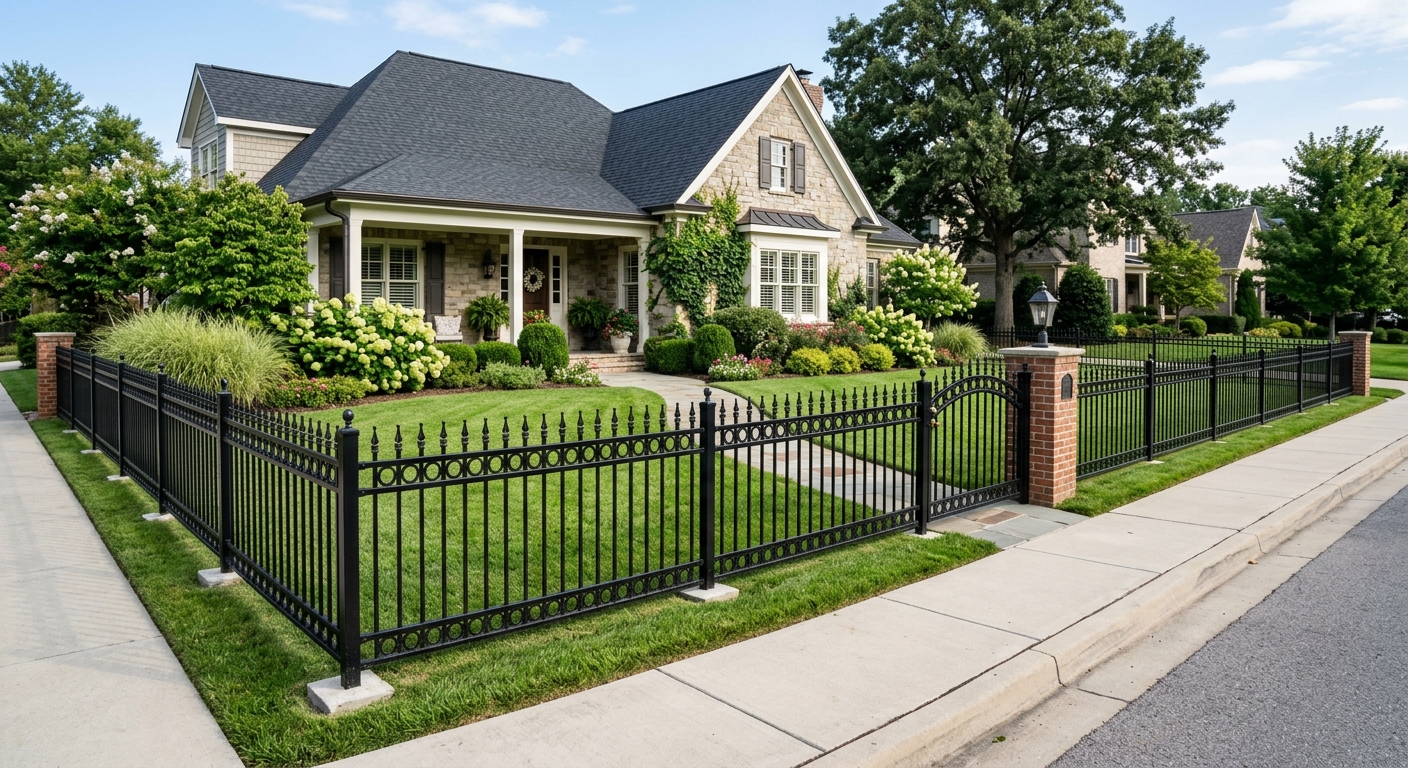
Fencing options and costs in Innisfail
Innisfail is a smaller Alberta community with a lot of family homes, and that matters for fencing because many properties are long, yard-style lots where you’ll see repeated upgrades. With 7,985 residents (Statistics Canada, 2021 Census) and about 2,360 homeowner households (70.3% of households own), fences are a steady, practical project for homeowners rather than a “once-in-a-decade” upgrade. The housing mix is also influential: single-detached homes make up 61.7% of dwellings, so you often have full perimeter fencing needs, not just townhouse-style side boundaries. Add to that the fact that 43.8% of homes were built before 1981 (Statistics Canada, 2021 Census), and you’ll frequently run into older fence posts, intermittent rot, and fence lines that need careful property-line verification.
In the Red Deer economic region, pricing is shaped by prairie freeze-thaw and wind. Frost depth considerations push post holes deeper than “minimum” installs, often leading to concrete-set posts and more excavation time. Wind exposure can also mean tighter post spacing and slightly heavier pickets/panels—especially for taller privacy fences—so the fence resists racking and blowouts. Contractor availability can vary when multiple builds run at once in spring and early summer, which is another reason quotes can differ even for similar styles.
If you’re browsing options in Innisfail—like near newer development pockets or established areas off Main Street—you’ll typically see the biggest swing come from material choice and whether your project includes gates or removal. Use the comparison below to anchor your budget before you request itemised quotes.
| Material |
Lifespan |
Maintenance |
Privacy Rating |
Price per Linear Foot |
| Pressure-treated pine (standard wood) |
10–20 years |
Stain/seal every 2–3 years; inspect posts annually |
Medium–High (depends on slat spacing) |
$45–$85 |
| Cedar (natural rot resistance) |
15–25 years |
Periodic stain; faster refresh than vinyl but easier on appearance |
High |
$55–$100 |
| Vinyl / PVC (no-maintenance) |
25–35 years |
Rinse as needed; check fasteners after freeze cycles |
High (solid board styles) |
$55–$100 |
| Chain-link (galvanized steel) |
20–30 years |
Occasional rinse; straighten sections if hit |
Low–Medium |
$35–$70 |
| Aluminum ornamental |
25–40 years |
Minimal cleaning; tighten hardware if needed |
Low–Medium |
$70–$140 |
| Composite / recycled material |
25–35 years |
Low; occasional cleaning; confirm local product compatibility |
High |
$70–$130 |
Prices are estimates only and vary by project scope, site access and material selection.
What affects the price of fencing in Innisfail
In Innisfail, you can see quotes for what looks like the “same” fence jump by 30–50% when the details differ. That’s common across the Red Deer region and Alberta because frost depth, wind exposure, soil conditions, and access logistics affect both labour time and how much reinforcement (posts, bracing, hardware) a contractor needs. Two yards that both measure, say, 100 linear feet can still price very differently: one may have easy access and firm soil, while the other has wet spots, buried services, or a fence line that needs step-down sections.
Frost depth is a primary driver. In cold Alberta winters, posts often need to be set about 4–6 inches below the design frost depth—meaning it’s frequently closer to 1.5–2.0 m into the ground on many installs. Deeper holes mean longer auger time, longer posts, more concrete where used, and higher material and delivery costs. Wind exposure also matters on the Prairies: contractors typically use tighter post spacing and a design that reduces “sail area” so the fence resists racking and blowouts. Heavier panels and stronger rails add cost. If you’re used to sheltered urban yards, prairie installations feel different.
Local examples in the Innisfail area that raise cost include: (1) clay-heavy or standing-water patches along low spots, which can require extra excavation and drainage before setting posts; (2) older fence lines where partial tear-out reveals rot, broken bases, or misaligned posts that need rework; and (3) gate-heavy layouts on access lanes, where reinforcement is necessary. On the other hand, simpler runs with clear access and firm, dry soil can keep you closer to the lower end of the regional material bands—like wood at roughly $45–$85 per linear foot or vinyl around $55–$100 per linear foot.
| Price Factor |
Why It Matters |
Cost Impact |
| Fence length in linear feet |
Most costs scale directly with total linear footage |
High |
| Post depth required |
Frost line determines hole depth and post length |
High |
| Post setting method |
Concrete vs. gravel pack vs. driven posts changes labour and materials |
Medium–High |
| Material choice |
Vinyl, cedar, and chain-link have different buy-in costs and structural needs |
Medium–High |
| Gate count and type |
Drive-through double gates require stronger frames and hinges |
Medium–High |
| Grade and terrain |
Sloped yards need stepped or raked panels to maintain top line |
Medium |
| Old fence removal and disposal |
Tear-out time, disposal fees, and haul-off affect totals |
Medium |
| Permit fees and survey / property line locate |
Administrative and locating work prevents encroachment mistakes |
Low–Medium |
Permits & regulations in Alberta
In Alberta, permits commonly come into play for fence height. As a practical rule of thumb for many residential locations, fences above about 2.0 m (6.5 ft) at the rear and around 1.0–1.2 m (3–4 ft) at the front or corner often require a building permit. Exact thresholds can vary by municipal bylaws, so for Innisfail you should confirm with the town office before work starts. Regardless of height, all fencing must respect property lines and municipal setback requirements, and you’ll want your fence line laid out to avoid disputes.
Before any post hole is dug, call for utility locates through Alberta One-Call. Even if you “know” where services are, one wrong auger can cause delays and replacement costs. Also consider obtaining a survey or at least a pin locate to verify the property corners and line—especially if you’re replacing an older fence that may have shifted over time. Shared fence ownership rules are generally handled under Alberta line-fences legislation when boundaries and responsibility are in question.
When it does require a permit: if your planned fence exceeds the typical height thresholds above (or if your project triggers other conditions like special setbacks), expect a permit requirement. Often, smaller repairs—like replacing panels within an existing fence footprint—typically don’t trigger the same level of permitting, but you should still check if you’re effectively changing height or location.
To verify your contractor in Innisfail: (1) confirm their Alberta business/licensing details via the appropriate online registries available to you; (2) request a current certificate of liability insurance showing they’re covered for the work; and (3) ask how they handle WCB/WSIB coverage (in Alberta this is WCB). A legitimate contractor will provide certificates and, if requested, clearance documentation. Never start excavation until you’ve seen proof.
Choosing the right fence material for Innisfail
Choosing a fence material in Innisfail is really about matching the product to your priorities: privacy, low maintenance, budget, and lifespan—then pairing that with the prairie realities of Alberta winter, snow load, and wind. Pressure-treated pine is often the budget-friendly route, but it needs regular staining (typically every 2–3 years) to prevent grey weathering and protect the surface. Cedar looks better longer and has natural rot resistance; it still benefits from periodic maintenance, but it tends to keep its look in our climate longer than “standard” pine. Vinyl/PVC is popular for low maintenance because it doesn’t require staining, yet extreme cold can be hard on poorly installed systems; quality hardware, correct post setting, and proper expansion allowances matter. Chain-link is the lowest-cost option and lasts well, but it provides the least privacy unless you add slats or privacy screen. Aluminum ornamental offers durability and a clean look with minimal rust risk, but it’s rarely a true privacy fence.
Because Red Deer-region frost considerations often require deeper post setting (commonly about 1.5–2.0 m into the ground for many residential runs), concrete-set posts are frequently used to improve stability. That means materials that are lighter and less rigid may need stronger frames and bracing for wind resistance, especially for taller runs. In a windy location, you may also want less sail area and tighter spacing regardless of whether you choose wood, vinyl, or metal.
As a dollar example, if pressure-treated pine is priced around $45–$85 per linear foot but you move to vinyl/ PVC around $55–$100 per linear foot, the extra investment is usually justified when you don’t want recurring staining time or you’re dealing with hard access where future repairs would be disruptive. The “best” choice is the one that stays sound through freeze-thaw and can be installed square and securely from day one.
| Material |
Cold Tolerance |
Lifespan |
Annual Maintenance |
Best For |
Price Band |
| Pressure-treated pine |
Good with proper post depth and treatment |
10–20 years |
1 inspection + staining as needed (often every 2–3 years) |
Lowest upfront cost where you’re okay maintaining |
$45–$85 |
| Cedar |
Good; resists rot better in freeze-thaw cycles |
15–25 years |
Light re-stain/refresh as needed |
Natural look with better longevity than pine |
$55–$100 |
| Vinyl / PVC |
Very good; installation details affect long-term performance |
25–35 years |
Rinse/clean; check fasteners after heavy winters |
Low-maintenance privacy and consistent appearance |
$55–$100 |
| Chain-link |
Excellent; flexible in cold with minimal cracking |
20–30 years |
Minimal; occasional straightening |
Security on a tight budget |
$35–$70 |
| Aluminum ornamental |
Excellent; won’t rot and resists corrosion |
25–40 years |
Wash as needed; tighten hardware occasionally |
Street-facing aesthetics and long-term durability |
$70–$140 |
| Composite / recycled material |
Good; confirm product rating and proper bracing |
25–35 years |
Low; clean periodically |
Privacy with minimal upkeep |
$70–$130 |
How to choose a fencing contractor in Innisfail
When you hire a fence contractor in Innisfail, verify credentials before you sign anything. First, request their Alberta registration/licensing information and ensure they can legally carry out the work. Next, ask for liability insurance—have the contractor provide a current certificate of insurance naming the insured party correctly and covering fence installation activities. Finally, confirm their WCB coverage (Workers’ Compensation in Alberta): you want proof that they and any subcontractors are properly covered for on-site work.
Then compare quotes the right way. Get 2–3 itemised written quotes that separate labour from materials, and list line items such as posts, rails, pickets/panels, gates, concrete, hardware, and (if applicable) tear-out and disposal. Avoid lump-sum-only pricing without a scope breakdown; it makes it harder to understand why one quote is lower. Read the exclusions carefully: will the contractor pull a permit if required, or is that on you? Is topsoil reinstatement included? Who hauls away old fence materials?
Warranty matters too. Ask for the workmanship warranty length and whether manufacturer warranties on products apply to your installation, and whether they’re transferable if you sell the home. For payment, protect yourself: never pay more than 10–15% upfront. Use a holdback until the job is complete and the fence line is cleaned up and functioning.
Finally, get your schedule in writing—start date and an estimated completion window—so you’re not left waiting through spring thaws. A good contractor plans around frost-safe installation and local sequencing.
- Ask for proof of Alberta business registration/licensing and keep it with your contract paperwork.
- Request a certificate of liability insurance dated within the last year.
- Confirm WCB coverage (and ask about subcontractors).
- Get 2–3 itemised quotes showing labour vs materials (not just a single total).
- Insist on details: post depth assumptions, setting method (concrete vs gravel pack), and post spacing.
- Verify whether gates include frames, hardware, hinges, and latch alignment.
- Clarify who handles permits (if height thresholds trigger one) and whether fees are included.
- Confirm disposal/haul-away is included for old fence removal.
- Ask how they handle sloped yards—stepped vs raked sections and how the top line will look.
- Check for a workmanship warranty and what it covers (posts, alignment, rails, sagging, blowouts).
- Review payment terms: 10–15% max upfront, holdback at substantial completion.
- Require a written timeline with a start date and completion estimate.
Red flags I see in Innisfail include contractors who won’t provide insurance/WCB paperwork, quotes that don’t state post depth or setting method, “cheap” per-foot pricing without line items for gates and removals, vague scope descriptions like “fence and done,” and contractors asking for large upfront deposits before any measurement or layout is completed.
Frequently asked questions — fencing in Innisfail
How long does fence installation take in Innisfail?
Most residential fence installs in Innisfail take anywhere from a single day to about 3–5 working days, depending mainly on total length, gate count, and whether removal is included. The deeper post setting needed for Alberta frost can slow things down compared with warm-weather regions, especially when soil is firm or wet in spots. A straight run with no gates and minimal excavation may turn over quickly, while multi-angle yards, sloped grades, and concrete-setting posts require more time for layout, drilling, and curing sequencing. If your project includes tear-out, additional hauling, or permit-related scheduling, plan for extra days in the overall timeline.
Can I install a fence on a slope in Innisfail?
Yes, you can install a fence on a slope in Innisfail, and it’s common with yard grades and drainage patterns. The key is choosing the right construction method: stepped panels (each section moves up/down in increments) or raked sections (following the slope smoothly). The “right” approach depends on the material—privacy-style boards often look best with a stepped or raked plan for consistent top alignment, while chain-link can be adjusted more easily with tensioning. Your installer should lay out the grade points first so the posts are set consistently below frost considerations and the finished fence line looks intentional rather than uneven.
What is the most weather-resistant fence for Innisfail's climate?
For many Alberta yards, vinyl/PVC and aluminum tend to be the most weather-resistant in terms of rot and corrosion resistance. Vinyl avoids staining and doesn’t rot in freeze-thaw cycles the way bare wood can, and aluminum won’t rust like some cheaper metals. That said, the installation quality is what really protects your fence: posts must be set deep enough for local frost considerations, and wind exposure on the Prairies should be handled with proper post spacing and bracing. If you want a “set-and-forget” style privacy fence, vinyl around $55–$100 per linear foot is often a practical choice. If you prefer traditional fencing, cedar is also very durable, though it still typically needs maintenance.
How do I prevent wood fence rot in Innisfail?
To prevent rot in Innisfail, focus on the fundamentals that matter most in our climate: correct post depth, good drainage, and proper treatment. Posts need to go below the frost-influenced zone so they don’t heave and break the bottom seal over time; that’s why deeper holes and concrete-set posts are common. Aboveground wood needs surface protection too—pressure-treated pine still benefits from staining/sealing every 2–3 years to reduce grey weathering and water penetration. Cedar resists rot better naturally, but it can still age without occasional refresh. Also check the base area for trapped moisture; if your fence sits in low, damp spots, you may need additional drainage and a slightly different post-setting plan.
What is the cost per linear foot for fencing in Innisfail?
In Innisfail, fencing costs typically fall within these regional bands depending on material and complexity: chain-link is often around $35–$70 per linear foot, while pressure-treated wood commonly lands around $45–$85 per linear foot. Vinyl/PVC is frequently priced around $55–$100 per linear foot, and aluminum ornamental generally runs about $70–$140 per linear foot. Your final number can shift with wind-exposed designs, gate quantity, the need for concrete-set posts, sloped grade work, and whether removal/disposal is included. Always compare itemised quotes so you’re sure you’re comparing the same post depth, setting method, and gate hardware.
Should I repair or replace my old fence in Innisfail?
In Innisfail, repairing can be a great option when the fence line is mostly sound—posts are solid (no wobble), rails aren’t rotted through, and damage is limited to a few boards/pickets or a section near an impact point. Replacement usually makes more sense when rot has spread at the post bases, multiple posts have heaved from freeze-thaw, or the fence alignment is off enough that the whole run will look crooked even if you patch it. If you’re planning to upgrade privacy or security, replacement often costs less overall than repeated patchwork. A good contractor can assess post stability first; if posts can be saved with a reinforced setting plan, you can keep costs nearer the lower end of materials like pressure-treated wood around $45–$85 per linear foot.