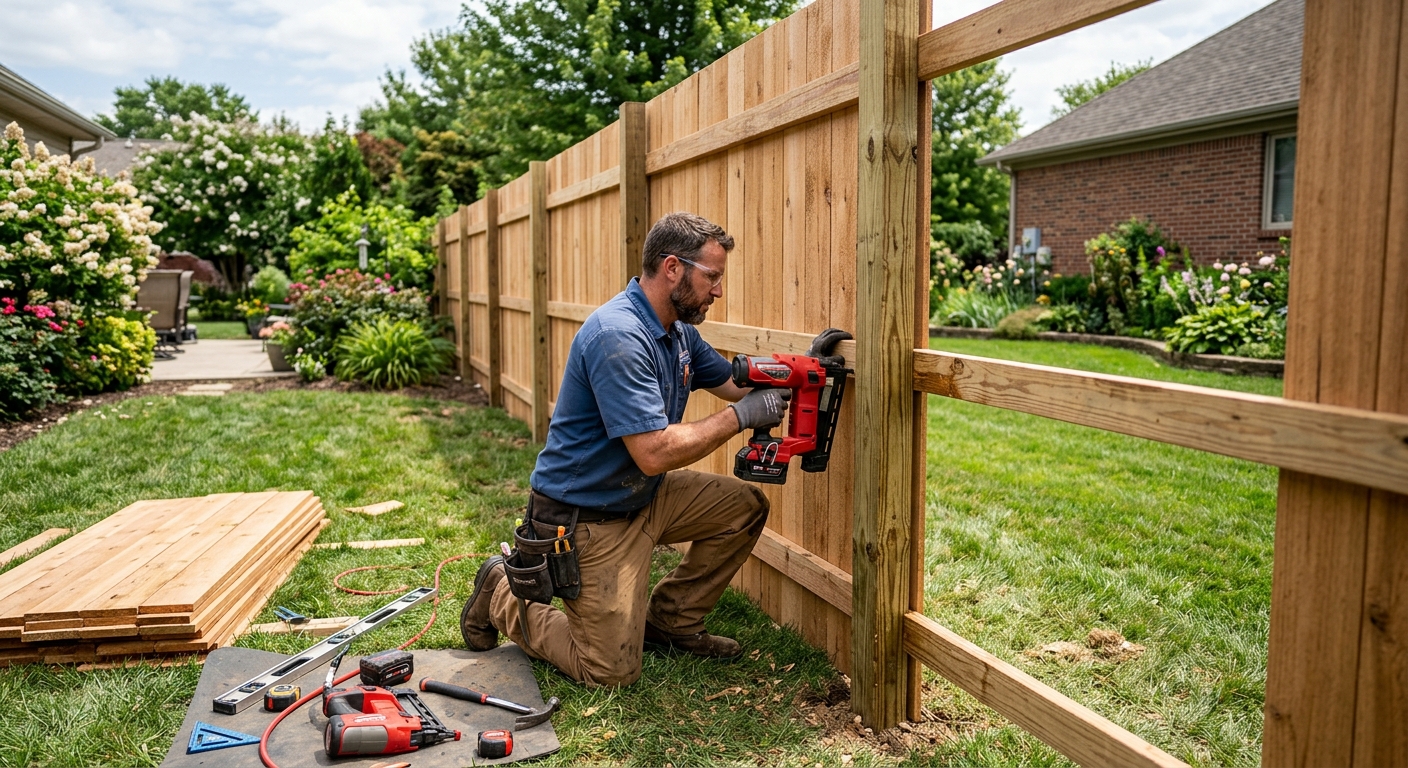
Fencing options and costs in Lincoln Park
Lincoln Park, Alberta has a mix of older lots and newer builds, and that matters because every detached home and yard boundary is a potential fencing job. With a population of 1,590 (Statistics Canada, 2021 Census), demand can be “spiky” by street and phase of new development—so the same fence style can quote differently depending on contractor schedules. You’ll typically see solid privacy fencing activity especially around the neighbourhoods closest to the newer residential growth corridors where homeowners replace aging perimeter fences and add rear yard privacy.
In the Calgary economic region, fencing costs are strongly shaped by the Prairie continental climate: long freeze–thaw cycles, wind exposure, and the need for frost-safe post installation. Contractors in Lincoln Park commonly set posts about 4 ft (≈120 cm) deep to reduce heaving risk, and for 6 ft privacy fences and gate posts they often use concrete footings. That increases excavation time, concrete volume, and material handling versus lighter, more breathable systems. Also, open Prairie exposure tends to push wind load on solid panels, so solid wood or vinyl privacy fences usually require tighter post spacing and more robust framing to prevent racking—one reason they price mid-to-upper in the local range.
For a quick comparison, the table below outlines typical material lifespan, upkeep, privacy performance, and the usual installed cost range per linear foot you’ll see in Lincoln Park projects.
| Material |
Lifespan |
Maintenance |
Privacy Rating |
Price per Linear Foot |
| Pressure-treated pine (standard wood) |
10–15 years |
Stain/seal every 2–3 years; inspect posts after freeze–thaw |
High (solid pickets/boards) |
$40–$80 |
| Cedar (natural rot resistance) |
15–25 years |
Light staining or sealing as needed (often every 2–4 years) |
High (solid styles) |
$55–$95 |
| Vinyl / PVC (no-maintenance) |
20–30 years |
Rinse as needed; occasional panel replacement if extreme cold impacts occur |
High (privacy panels) |
$45–$90 |
| Chain-link (galvanized steel) |
25–40 years |
Minimal; occasional tension adjustments and hardware checks |
Low (visibility; airflow helps in wind) |
$25–$55 |
| Aluminum ornamental |
30–50 years |
Wash/clean; paint touch-ups only if damaged |
Low–Medium (open design) |
$70–$120 |
| Composite / recycled material |
20–30 years |
Low; occasional cleaning; check fasteners after temperature swings |
Medium–High (depends on slat/panel design) |
$60–$105 |
Prices are estimates only and vary by project scope, site access and material selection.
What affects the price of fencing in Lincoln Park
In Lincoln Park, Alberta, two quotes for the “same” fence can still differ by 30–50% because the cost drivers aren’t just the material. Labour efficiency, excavation conditions, wind-loading requirements, and how deeply posts must be set in a freeze–thaw climate can all change the installed total. On the Prairies, contractors factor frost protection and racking risk up-front; that’s why solid privacy fences often come in above lighter systems like chain-link.
Frost line depth is the big one. Even when a fence is only 4 ft to 6 ft tall, posts typically must be set about 4–6 inches below the design frost depth to prevent heaving, and local practice often lands around 4 ft (≈120 cm) deep. That means longer posts, deeper holes, and more concrete—raising both material and labour. Wind exposure also matters: open Prairie exposure pushes lateral forces, so privacy panels frequently need closer post spacing and heavier rails. In milder, wetter climates (such as coastal British Columbia), wood rot risk can accelerate without proper treatment; here, the freeze–thaw cycle and dry cold can be just as damaging to poorly detailed wood joints.
Concrete examples from Lincoln Park jobs: (1) A 120 ft run of 6 ft privacy fence with 4 ft deep concrete-set posts will usually cost far more than the same length of chain-link where posts can often be lighter and more airflow-tolerant. (2) Adding two drive-through gates increases structural work at the gate openings—extra bracing, heavier hardware, and sometimes a different footing design—so the gate sections can add disproportionately to the total. (3) If the yard has soft soil or access is limited (long driveway runs, need for hand-dug areas), excavation labour increases.
As a rough planning guide, wood installation commonly sits in the $40–$80 per linear foot band, while vinyl often runs $45–$90 when concrete-set footings and wind-appropriate spacing are included.
| Price Factor |
Why It Matters |
Cost Impact |
| Fence length in linear feet |
Most materials and labour scale directly with footage and corner/gate complexity |
High (primary cost driver) |
| Post depth required |
Frost-safe depth determines post length, excavation volume, and concrete needs |
High (often the largest variable) |
| Post setting method |
Concrete vs. gravel pack vs. driven posts affects stability and rework risk in freeze–thaw |
Medium–High |
| Material choice |
Vinyl/cedar/wood vs. chain-link changes rail thickness, fasteners, and panel framing |
Medium–High |
| Gate count and type |
Drive-through and double gates need heavier posts, bracing, and hardware |
Medium–High |
| Grade and terrain |
Slopes require stepped or raked panels, plus more cuts and careful alignment |
Medium |
| Old fence removal and disposal |
Scrap handling, haul-away fees, and hidden fasteners increase labour time |
Low–Medium (varies widely) |
| Permit fees and survey / property line locate |
Locates and required permits add paperwork and coordination before digging |
Low–Medium (but critical for avoiding disputes) |
Permits & regulations in Alberta
In Alberta, fences above a height threshold—commonly around 2.0 m (6.5 ft) at the rear and about 1.0–1.2 m (3–4 ft) at the front or corner—often require a building permit, especially when they affect sight lines or sit close to roadways. Even when a permit is not required for a lower fence, you still must respect property lines and any municipal setback rules for your lot configuration. If you plan a taller privacy fence in Lincoln Park, confirm the height/location requirements early because post holes can’t be filled later without rework.
Before you dig any post hole, call for utility locates (Alberta One-Call is the relevant process in Alberta). This step is non-negotiable for safety and to avoid expensive repair delays. Next, obtain a survey or locate your property pins so you’re installing fence line to the correct boundary; it’s one of the fastest ways homeowners avoid encroachment disputes with neighbours.
Shared fence ownership on boundary lines is governed by provincial line-fences legislation, so for any shared or boundary fence, clarify who maintains or replaces sections. For contractor choice, it’s also important that your installer can show proof of proper coverage and compliance.
To verify a contractor in Lincoln Park: (1) confirm their Alberta licence/registration using the appropriate provincial online resources; (2) ask for a certificate of insurance showing liability coverage for the work; and (3) confirm their workers’ compensation coverage (WSIB/WCB registration and clearance or proof) before they start. A reputable contractor should provide clear, current documentation without pushing back.
Choosing the right fence material for Lincoln Park
Choosing a fence in Lincoln Park is mainly about matching material performance to winter conditions, wind exposure, and how much upkeep you’re willing to do. Pressure-treated pine is the budget-friendly option, but to prevent grey weathering and keep surfaces protected, most homeowners plan on staining or sealing every 2–3 years. Cedar looks great and resists rot better, yet it still needs periodic maintenance to keep the colour stable and reduce surface splitting from Alberta temperature swings. Vinyl/PVC is popular for low upkeep because you can rinse it and go; however, in extreme cold, it can be more brittle than wood and may show cracking if installed with the wrong spacing or fastening. Chain-link is typically the lowest upfront cost and the most wind-friendly because it allows airflow, but it offers little privacy unless you add privacy slats or a separate screen system. Aluminum ornamental is a mid-to-upper priced, long-life choice with no rust—ideal when you want curb appeal rather than full privacy.
For the Calgary freeze–thaw cycle, post-depth and anchoring are critical regardless of material. Many projects in the area set posts about 4 ft (≈120 cm) deep to reduce heaving risk below the frost line. For solid wood/vinyl privacy fences, this is often paired with concrete-set footings and sturdier rails to resist racking under wind loads. On chain-link, concrete footings are still common at corners and gates, but the overall panel and bracing requirements can be lighter.
One dollar example that helps: if vinyl privacy is priced in the $45–$90 per linear foot range and wood is around $40–$80, the vinyl premium can be justified when you’re avoiding repeat staining labour and you want a “set-and-forget” fence through long winters and spring thaws. If you’re comfortable maintaining wood, pressure-treated pine can deliver strong value without overpaying upfront.
| Material |
Cold Tolerance |
Lifespan |
Annual Maintenance |
Best For |
Price Band |
| Pressure-treated pine |
Good with proper staining and intact fasteners |
10–15 years |
Seasonal inspection; stain/seal every 2–3 years |
Budget privacy; homeowners who plan routine care |
$40–$80 |
| Cedar |
Very good; naturally handles moisture better |
15–25 years |
Inspect and light seal as needed (often every 2–4 years) |
Premium look with moderate maintenance |
$55–$95 |
| Vinyl / PVC |
Good when installed with proper expansion allowances |
20–30 years |
Rinse/clean; visual checks for impacts |
Low maintenance; privacy panels in windy areas |
$45–$90 |
| Chain-link |
Excellent (steel performance is stable in cold) |
25–40 years |
Minimal; tighten hardware and inspect tension |
Security and long life where airflow matters |
$25–$55 |
| Aluminum ornamental |
Excellent; won’t rust if coated properly |
30–50 years |
Wash and inspect for dents |
Curb appeal; decorative boundaries |
$70–$120 |
| Composite / recycled |
Good; performance depends on fasteners and framing |
20–30 years |
Low; clean and inspect post hardware |
Low maintenance privacy with a modern look |
$60–$105 |
How to choose a fencing contractor in Lincoln Park
Choosing the right contractor in Lincoln Park, Alberta starts with verifying three things: Alberta licensing/registration (where applicable), liability insurance, and workers’ compensation coverage (WSIB/WCB). You should be able to see documentation before any digging begins. Ask for (1) licence/registration details and confirm them against the relevant online registry; (2) a certificate of insurance with liability coverage specifically tied to fencing/contracting work; and (3) proof of WCB/WSIB clearance showing the business is in good standing.
Next, get 2–3 itemised written quotes, not a single lump sum. The best quotes break down labour and materials (posts/rails/panels, concrete/aggregate, hardware, gate framing, and any fencing removal). Read the scope carefully: confirm whether permits are handled by the contractor, whether utility locates are coordinated, and whether debris disposal/haul-away is included. If old fence removal isn’t included, ask what the cost would be to dispose of boards, rails, and posts.
Warranty matters. Ask for a workmanship warranty (how long the installation is covered), plus the manufacturer warranty for the specific product line (vinyl panels, gates, hardware, or composite boards). Also ask whether warranties are transferable to future homeowners.
Payment scheduling should be conservative. Never pay more than 10–15% upfront; a common approach is a deposit for materials only and a holdback until substantial completion. Finally, demand a start date and completion estimate in writing, including what weather delays are accounted for in Calgary-area freeze–thaw conditions.
- Confirm their registration/licence is current before booking excavation.
- Request a certificate of liability insurance and verify the effective dates.
- Ask for WCB/WSIB clearance/proof and confirm it covers all crews.
- Get itemised labour/materials (posts, rails, panels, concrete, hardware).
- Clarify post depth and setting method (concrete vs. gravel pack) in writing.
- Confirm gate structure: bracing, hinge posts, and latch hardware type.
- Ask how they handle slopes (stepped vs. raked) and corner alignment.
- Verify whether property line locating/survey is included or recommended.
- Confirm who calls for utility locates and when it’s done.
- Check whether permit pulling is included for taller fences.
- Review warranty terms separately: workmanship vs. product/manufacturer.
- Use a payment schedule with a small deposit and holdback until completion.
Red flags I commonly see in Lincoln Park include: quotes that don’t specify post depth or concrete setting for privacy fences, “too-good-to-be-true” pricing that omits gate reinforcement, no written scope for disposal/haul-away, refusal to provide insurance/WCB paperwork, and vague timelines like “weather permitting” without a realistic completion estimate.
Frequently asked questions — fencing in Lincoln Park
How do I compare fencing quotes?
To compare quotes in Lincoln Park, Alberta fairly, insist on like-for-like details: material type (pressure-treated vs cedar vs vinyl), fence height, style (privacy vs picket vs ornamental), and—most importantly—post depth and setting method. In Calgary’s freeze–thaw conditions, a quote that doesn’t clearly state how posts will be installed (often around 4 ft/≈120 cm deep with concrete footings for solid fences) can look cheaper but cost more later if panels rack or posts heave. Also ask for itemised labour + materials so you can see whether the quote includes gate bracing, concrete, hardware, and disposal. A practical benchmark: wood privacy often lands in the $40–$80 per linear foot band, while vinyl is commonly $45–$90; if one quote is far outside that without explaining scope, it’s a warning sign. (Statistics Canada, 2021 Census)
How long does fence installation take in Lincoln Park?
Install times in Lincoln Park usually depend on fence length, number of gates, and how complex the site is (access, buried utilities, and slope). A straightforward run of chain-link can move quickly because it’s lighter and more airflow-friendly, but solid wood/vinyl privacy fences take longer due to layout, bracing, and careful concrete footings below frost-risk depth. In practice, many projects take a few days to complete once excavation is done, but winter-adjacent scheduling can add time for curing and weather pauses. If the job includes removing an old fence and hauling debris away, that typically adds at least one extra day. Ask your contractor for a written schedule that reflects Calgary-area freeze–thaw constraints and specifies how long concrete setting/cure steps will take before rails and panels go up.
Can I install a fence on a slope in Lincoln Park?
Yes, you can install a fence on a slope in Lincoln Park, Alberta, and it’s common in the Calgary-area lot patterns. The key is design: installers typically use either stepped fencing (same panel height per section) or raked fencing (a continuous angle following the slope). Stepped panels are often preferred for privacy fences where you want consistent board height across the yard, while raked panels can work well for decorative or ornamental styles. Be sure the quote states which method you’ll use and how that affects privacy coverage and gate alignment—especially at driveways. Sloped yards also increase labour through extra cutting and careful layout, so it can move pricing within the local ranges. If your estimate is unusually low, check whether stepped/raked work and extra posts or rails are actually included.
What is the most weather-resistant fence for Lincoln Park's climate?
For Lincoln Park’s Alberta winter and Prairie wind exposure, the most weather-resistant option is often galvanized chain-link or properly installed vinyl/steel fencing systems, because they tolerate cold cycles well and don’t rot like wood. Chain-link is especially resilient in wind-driven environments because airflow reduces racking forces. Vinyl can be highly durable over time and is popular for low maintenance, but it must be installed with correct fastening and expansion allowance to avoid stress in extreme cold. Proper post depth and secure setting are the real “weather resistance multiplier” across all materials; even the best fence will fail prematurely if posts are too shallow for the regional frost line. If you’re comparing costs, chain-link usually sits in the $25–$55 per linear foot range, while vinyl commonly ranges around $45–$90 when installed for wind stability with proper footings.
How do I prevent wood fence rot in Lincoln Park?
Wood rot prevention in Lincoln Park is mostly about keeping the fence dry at the right locations and using rot-resistant installation practices. Start with material choice: cedar resists rot naturally more than standard pressure-treated pine, but neither is “rot-proof” if joints stay wet. For pressure-treated pine, plan to stain/seal every 2–3 years to protect exposed surfaces from Alberta freeze–thaw moisture cycles. Installation details matter: use concrete footings or proper post-setting methods below frost-risk depth so posts aren’t sitting in water-saturated soil, and ensure rails and pickets have correct spacing for drainage and airflow. Also ask your contractor about how they handle end grain, cut ends, and hardware—small details like cap/sleeve protection and corrosion-resistant fasteners help a lot. Regular inspections after spring thaws can catch early soft spots before they spread.
What is the cost per linear foot for fencing in Lincoln Park?
In Lincoln Park, Alberta, fencing cost per linear foot generally falls into the local Calgary-area pricing bands that account for frost-safe post installation and wind loading. Common installed ranges are roughly: chain-link at $25–$55 per linear foot, wood around $40–$80, vinyl/PVC at $45–$90, and ornamental aluminum at $70–$120. Your final number depends on fence height (privacy vs ornamental), how many corners/struts, gate count, terrain, and whether old fence removal and disposal are included. For example, a 120 ft run of privacy fencing will be materially affected by post depth and concrete volume—those are the Prairie freeze–thaw realities that drive the mid-to-upper pricing for solid panels. For a reliable comparison, request an itemised quote that specifies post depth (often about 4 ft/≈120 cm deep in this region) and the exact setting method.