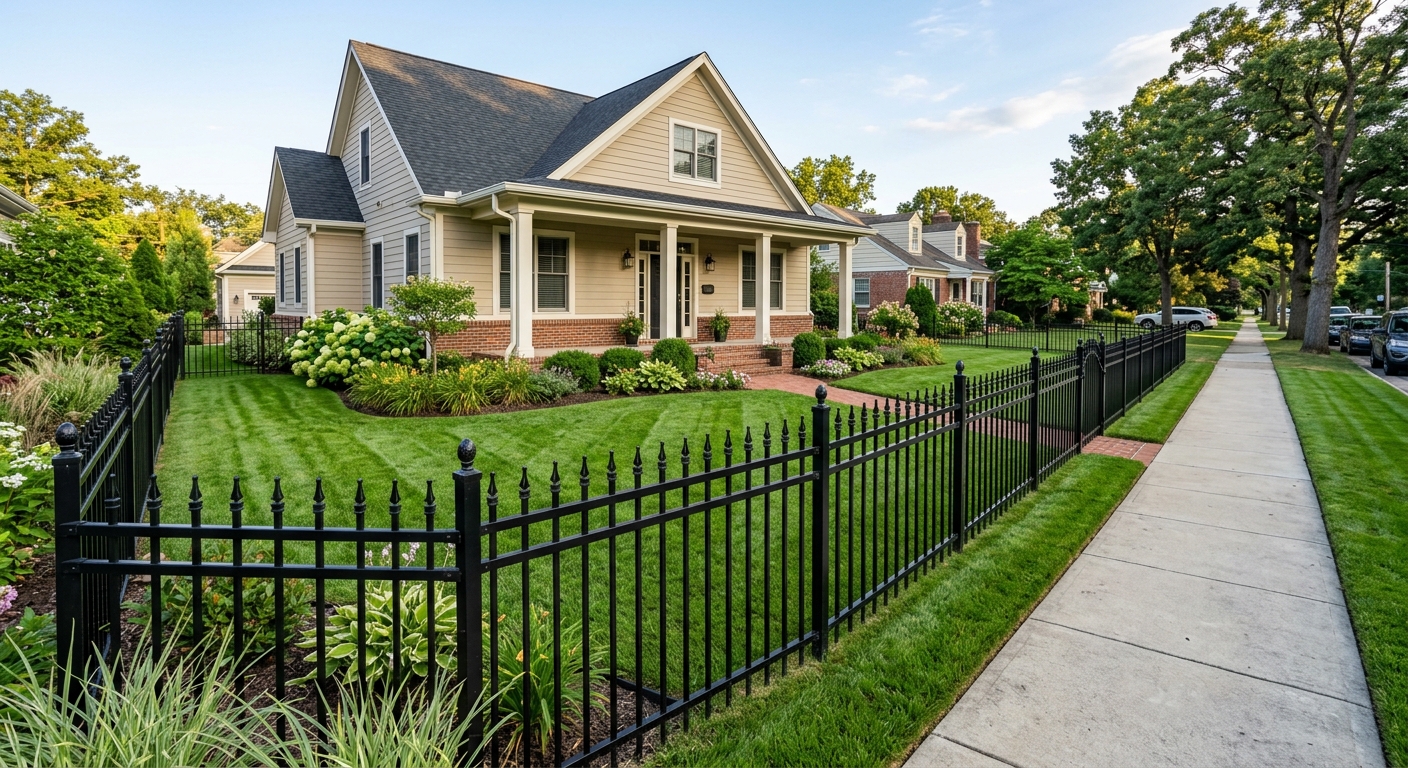
Fencing options and costs in Fort Frances
In Fort Frances, choosing a fence is about balancing privacy, durability, and the realities of a colder Northwest Ontario climate. With 77.2% of local dwellings being single-detached homes, many homeowners end up upgrading boundaries as families renovate or as older sections reach the end of their service life. Fort Frances also has a strong homeowner base—2,515 homeowner households, or 73.0% of all households—which is why fence quotes are common across established neighbourhoods.
Northwest Ontario drives costs higher than many parts of southern Ontario because frost penetrates deeper. For most backyard installations, posts typically need to be set close to 4 ft (1.2 m+) below grade, often with concrete, to help prevent frost heave. Wind exposure can also matter even when the area is forested; open highway corridors and lakeside properties can experience stronger gusts, pushing contractors toward tighter layouts, heavier panels, or more robust post spacing for privacy fences.
In Fort Frances, this trade is especially in demand around residential pockets near the downtown core and along the waterfront approach roads, where lot lines and wind exposure tend to be more pronounced. If you’re planning a new run or replacing an older board fence built on shallower footings (74.6% of local homes were built before 1981), your quote will usually reflect both deep post work and material choice.
Below is a practical comparison of common fence options you’ll see in Fort Frances, with typical price ranges you can use to sanity-check quotes before the installer measures your site.
| Material |
Lifespan |
Maintenance |
Privacy Rating |
Price per Linear Foot |
Price Range |
| Pressure-treated pine (standard wood) |
10–15 years |
Stain/seal every 2–3 years; check for loose rails |
High (solid boards) |
$55–$90 |
$55–$90 |
| Cedar (natural rot resistance) |
15–20 years |
Re-stain or seal every 2–4 years |
High (solid boards) |
$65–$95 |
$65–$95 |
| Vinyl / PVC (no-maintenance) |
20–30 years |
Occasional wash only; inspect caps and posts after winter storms |
High (solid or privacy styles) |
$70–$110 |
$70–$110 |
| Chain-link (galvanized steel) |
20–35 years |
Low; rinse salt/mud build-up and check tension posts |
Low to medium |
$35–$65 |
$35–$65 |
| Aluminum ornamental |
25–40 years |
Low; occasional cleaning |
Low to medium |
$80–$140 |
$80–$140 |
| Composite / recycled material |
20–30 years |
Very low; rinse debris and inspect for warping after deep freeze cycles |
High (solid styles) |
$85–$125 |
$85–$125 |
Prices are estimates only and vary by project scope, site access and material selection.
What affects the price of fencing in Fort Frances
Two quotes for the same fence line in Fort Frances can differ by 30–50% because Northwest Ontario jobs tend to be labour- and footing-intensive. In practice, installers price for the deepest frost conditions they expect on a given property, plus the time needed to measure, dig accurately, brace posts plumb, and set concrete where required. When crews are busy after spring thaw or during short weather windows, labour rates and scheduling pressure can also push costs up.
Frost line depth is the big swing factor: in cold parts of Ontario and Alberta, posts often need to go roughly 1.5–2.0 m into the ground depending on soil and frost conditions, which raises material cost (longer posts) and excavation time (larger, deeper holes). Wind exposure then affects how the fence is engineered—Northwest Ontario can have open, gusty sections where contractors choose closer post spacing and heavier panels for privacy fences. On the other hand, coastal BC tends to reduce frost-related footing depth, but wood rot risk increases without proper treatment; locally, you’re paying to keep the structure stable through deep freezing and thaw cycles, not just to prevent rot.
Here are a few real Fort Frances examples that change the numbers: (1) a backyard run with clay-mixed soil often needs slightly belled footings or extra concrete to reduce movement; (2) a property near a main corridor with strong gusts may require additional bracing and higher rail stiffness; (3) replacing an older pre-1981 fence can add disposal and time if posts are concrete-set and need breaking out rather than pulling.
For budget planning, many homeowners start by comparing wood versus chain-link. If a chain-link run comes in near the $35–$65 band, a solid privacy board option will usually fall nearer the $55–$90 band—then move higher when concrete-set posts and tighter spacing are required.
| Price Factor |
Why It Matters |
Cost Impact |
| Fence length in linear feet |
Most materials and nearly all labour scale directly with linear footage. |
High (primary driver) |
| Post depth required |
Deeper frost protection means longer posts, deeper holes, and more concrete. |
High in Northwest Ontario |
| Post setting method |
Concrete vs. gravel pack vs. driven posts changes labour, materials, and cure time. |
Medium to high |
| Material choice |
Vinyl, aluminum, cedar, and composite have different hardware and cost profiles. |
Medium to high |
| Gate count and type |
Drive-through (double) gates require stronger frames, hinges, and often extra bracing. |
Medium to high |
| Grade and terrain |
Slope may require stepped panels or raked sections to maintain top-line consistency. |
Medium |
| Old fence removal and disposal |
Concrete footings, buried rails, and hauling fees increase time and expenses. |
Medium |
| Permit fees and survey / property line locate |
Locates and any required approvals add upfront admin and sometimes measurement labour. |
Low to medium (but important) |
Permits & regulations in Ontario
In Ontario, fences above a height threshold—often around 2.0 m (6.5 ft) at the rear and 1.0–1.2 m (3–4 ft) at the front or corner—may require a building permit, and municipal setback rules still apply. Even when no permit is required, you must keep your fence within your property lines and respect local setback bylaws. Before you dig any post holes, arrange utility locates through Ontario One Call to prevent accidental damage to buried services.
Step one for Fort Frances homeowners is confirming the line: get a survey or a property-pin locate before installation, especially if you’re replacing an older fence that may have been built a little off alignment. This reduces the risk of encroachment disputes with neighbours later, which is a common reason disputes escalate after new builds or boundary upgrades.
Shared fences and boundary ownership are handled under Ontario’s line-fences legislation, which can affect whether you can require shared replacement costs or whether the neighbour must maintain an existing shared structure.
Contractor checks (do these before signing): verify the Ontario business licence details if applicable in your area, ask for a current certificate of insurance showing liability coverage, and request proof of coverage for workers (WSIB/WCB clearance, where applicable). A reputable fence contractor will send these by email and won’t hesitate to show clearance documentation.
Choosing the right fence material for Fort Frances
Picking the right fence material in Fort Frances is really about matching your priorities to how Northwest Ontario freezes, thaws, and loads fences with wind and snow. Pressure-treated pine is the most accessible option, but it typically needs staining or sealing every 2–3 years to prevent grey weathering and to keep water from pushing into the wood. Cedar looks better longer because of its natural rot resistance, but it still benefits from regular maintenance to keep colour and reduce cupping.
Vinyl/PVC is popular for low maintenance—plan for a wash-down now and then—however, extreme cold can make some components more brittle if the system isn’t designed for freeze-thaw stresses. Chain-link has the longest practical service life and the lowest upfront cost, but privacy is limited unless you add slats or use growth (which takes time and sun). Aluminum ornamental offers a rust-resistant, attractive look with mid-range pricing, but it’s not a true privacy system.
Post depth matters with all solid fences: because frost penetrates deeper in Northwest Ontario, posts often need to be set well below grade, commonly around 4 ft (1.2 m+) and sometimes deeper depending on conditions. Concrete-set posts are frequently chosen to resist frost movement; in clay or mixed soils, belled footings and proper concrete help hold alignment through freeze cycles. For open, wind-exposed sections, you may need heavier rails, tighter post spacing, and more bracing for a privacy board fence to stay plumb after snow loads.
As a dollars-and-cents example: if a chain-link run is near $35–$65 per linear foot but you want solid privacy in the $55–$90 wood band, the extra cost is often justified by the deeper, more robust post setup and the added labour for rails and solid boarding.
| Material |
Cold Tolerance |
Lifespan |
Annual Maintenance |
Best For |
Price Band |
| Pressure-treated pine |
Good (with proper staining and good post setting) |
10–15 years |
2–3 year stain cycle; annual visual checks for loose hardware |
Value privacy when you plan routine maintenance |
$55–$90 |
| Cedar |
Good (natural oils help against moisture) |
15–20 years |
2–4 year sealing; annual check for end-grain and rail fasteners |
Better appearance with moderate maintenance |
$65–$95 |
| Vinyl / PVC |
Very good (systems designed for freeze-thaw) |
20–30 years |
Wash as needed; inspect after heavy winter storms |
Low-maintenance privacy |
$70–$110 |
| Chain-link |
Excellent (galvanized steel handles cold well) |
20–35 years |
Low; periodic rinsing and tension checks |
Security on a budget, pet containment, long runs |
$35–$65 |
| Aluminum ornamental |
Excellent (powder-coated or finished systems) |
25–40 years |
Low; clean annually or as needed |
Attractive curb definition with low rust risk |
$80–$140 |
| Composite / recycled |
Good (can handle freeze-thaw; needs correct installation) |
20–30 years |
Very low; rinse debris and check fasteners |
Long-life privacy without wood staining |
$85–$125 |
How to choose a fencing contractor in Fort Frances
Choosing a fencing contractor in Fort Frances comes down to proof and process, not just the lowest line price. First, verify Ontario-appropriate business details and insurance coverage: ask for a certificate of insurance that includes liability for the work, then request proof of WSIB/WCB coverage or a clearance letter where applicable for workers on the job. If an installer can’t provide documentation promptly, treat that as a major warning sign.
Next, get 2–3 written, itemised quotes. A good quote breaks labour and materials into separate sections (posts, rails, panels, hardware, concrete, gates, removal, and haul-away), rather than giving a single lump sum with vague assumptions. Read the scope carefully: confirm whether permit pulling (if required) is included, whether disposal of old fence materials is included, and whether labour covers setting posts, bracing for alignment, and finishing at corners and gates.
Warranty matters too. You want a clear workmanship warranty (often covering post alignment, hardware fit, and material installation defects) and a separate product/manufacturer warranty for materials. Ask if the warranty is transferable to future owners—on long-lived fences, that can affect resale value.
For payment schedules, don’t prepay more than about 10–15% upfront. Hold back the remainder until the fence is completed and any punch-list items are addressed. Finally, get a start date and an estimated completion window in writing, since deep frost-season excavation and curing can affect timelines.
- Confirm they use appropriate post depth for Northwest Ontario frost conditions and explain their method.
- Request proof of liability insurance (certificate of insurance) before work starts.
- Ask for WSIB/WCB coverage or clearance letter for workers on-site.
- Get 2–3 itemised quotes with labour and materials broken out separately.
- Ensure concrete volume, post setting method, and backfill plan are spelled out.
- Verify gate hardware specs (hinges, latches, frames) match the quoted type and weight.
- Check whether fence removal and disposal are included, including concrete footing removal assumptions.
- Confirm whether utilities locates (Ontario One Call process) are the homeowner’s responsibility or theirs.
- Ask who handles permits if the height triggers one and what it costs.
- Clarify warranty length for workmanship and product, and whether it’s transferable.
- Require a payment schedule with a small deposit and a holdback until the punch list is complete.
- Get start date and completion estimate in writing, including cure-time assumptions for concrete.
Red flags I commonly see with fencing contractors in Fort Frances include: quotes with no clear post depth or setting method; refusing to provide insurance or WSIB/WCB clearance documentation; “lump sum only” pricing that doesn’t show concrete, gates, or removal costs; changing scope after excavation starts; and a warranty that only covers materials but not workmanship (or won’t be provided in writing).
Frequently asked questions — fencing in Fort Frances
How do I find my property line before fencing?
Before you build in Fort Frances, confirm the boundary so you’re not fencing onto a neighbour’s yard or over a setback line. The most reliable approach is to order a survey or a property-pin locate so your contractor can mark corners accurately before any post hole is dug. If your existing fence is old, don’t assume it’s correct—many fences built before the modern style of boundary locating can be off alignment. Utility locates (Ontario One Call) are also essential before digging for posts. When the line is confirmed early, you avoid costly rework and reduce the risk of disputes after installation. If you’re comparing quotes, ask whether their scope includes a locate/survey step or whether it’s your responsibility.
What's the most low-maintenance fence?
For the lowest day-to-day maintenance in Ontario’s colder Northwest conditions, vinyl/PVC or composite are typically the easiest choices because they don’t require staining and resist rot like untreated wood. In Fort Frances winters, the key is proper installation: correct post setting and hardware fit so components handle freeze-thaw cycles without pulling out of alignment. Vinyl/PVC privacy styles generally fall in the $70–$110 band, while pressure-treated pine privacy tends to land nearer the $55–$90 band but needs staining roughly every 2–3 years to keep it looking good and to reduce surface breakdown. Chain-link is also low maintenance, but it won’t provide the same privacy without slats or added screening.
How tall can my fence be in Fort Frances?
Fence height rules in Ontario can vary by location and whether the fence is in a front, corner, or rear area, but a common threshold is around 2.0 m (6.5 ft) at the rear and roughly 1.0–1.2 m (3–4 ft) at the front or corner. If you’re planning taller privacy fencing, it often triggers a building permit requirement or additional review, so confirm with the applicable municipal rules before you order materials. Practically, you’ll also want to consider wind exposure: taller fences behave like sails in gusty areas, so contractors may tighten post spacing or add bracing to prevent wobble. In Fort Frances, if your yard is adjacent to open corridors or exposed lots, plan for sturdier framing even if height is within the limit.
Should fence posts be set in concrete here?
In Fort Frances, concrete-set posts are very common because frost penetration can be deeper than in milder parts of Ontario. To reduce frost heave and keep the fence upright, posts often need to be set well below grade—frequently around 4 ft (1.2 m+) and sometimes deeper depending on soil and the design frost conditions used by your contractor. Concrete helps stabilize the footing during freeze-thaw cycles and is especially important for solid-board privacy fences that take wind and snow loads. That said, the correct approach depends on soil type and the fence design: on some sites, a contractor may use a gravel pack or engineered post-setting method, but they should explain their reasoning and depth plan clearly. When you compare quotes, ask for the post setting method and expected hole depth—not just the material name.
What's the best fence for privacy?
For privacy in Fort Frances, solid-board wood, vinyl/PVC privacy panels, and composite privacy are usually your best bet because they block sightlines effectively and can be built to the maximum permitted height for your yard position. Wood (pressure-treated pine or cedar) can be a strong value, especially if you’re comfortable with periodic staining; cedar generally offers better natural rot resistance and appearance. Vinyl/PVC and composite are often chosen by homeowners who want a “set it and forget it” approach, though they come at a higher upfront cost, commonly within the $70–$110 and $85–$125 style bands respectively. Regardless of material, privacy also depends on wind-friendly structural support—expect proper post depth and bracing so the fence stays tight after Northwest winters.
How do I compare fencing quotes?
To compare quotes in Fort Frances, start by matching scope, not just total price. Ask each contractor for an itemised breakdown of labour and materials: post depth, concrete amount (if used), rail and panel type, hardware, gate construction, and what’s included for removal and disposal. Confirm whether permits are included if the planned height triggers one, and whether utility locates and property line verification are their responsibility or yours. Look closely for differences in post setting method, spacing, and how they handle sloped grades—these details can easily change costs by 30–50%. Finally, check warranty terms (workmanship vs. product) and the payment schedule—never accept a plan that asks for most of the money upfront. If one quote is much lower, it often omits concrete, deep post embedment, or disposal, even when the materials line looks similar.