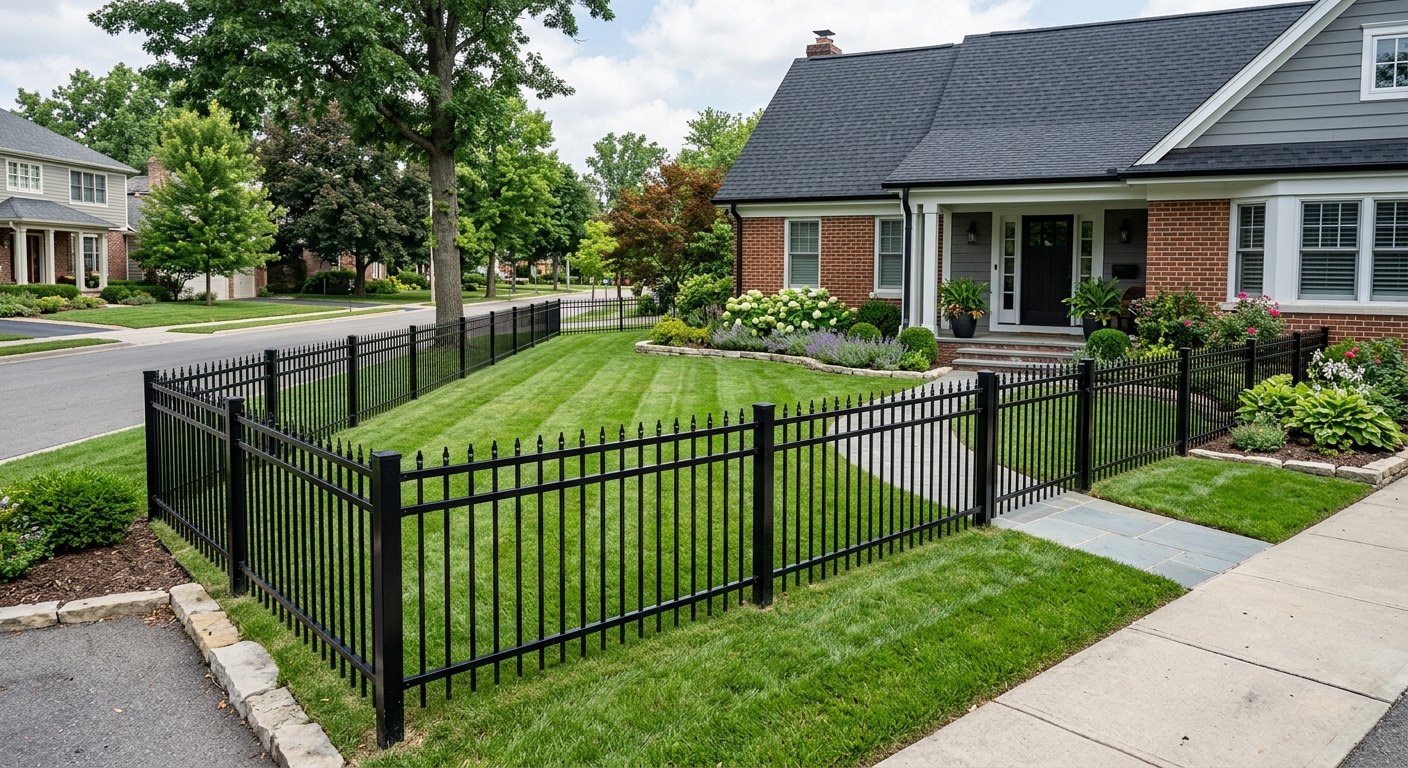
Fencing options and costs in Mount Pleasant East
In Mount Pleasant East, Ontario, homeowners usually shop for fencing based on privacy, maintenance time, and how well a fence will survive Toronto’s freeze-thaw winters. With a population of 16,775 (Statistics Canada, 2021 Census), there’s steady demand from the many households that maintain detached yards, and fences are one of the most common curb-appeal upgrades. That local demand is especially strong along busier residential pockets where homeowners routinely add privacy screens, replace tired panels, or install new gates between properties.
Pricing here is shaped by Toronto-area conditions: we design for frost movement, and contractors typically set posts deeper because Southern Ontario frost is commonly worked out around 42"–48". For 6–8 ft privacy fences, that often means concrete-set posts and extra labour compared with simple driven posts, particularly where clay and mixed soils hold water. Access also matters in Mount Pleasant East—tight side yards or landscaping around existing foundations can add hours for careful demolition and disposal.
If you’re near the Mount Pleasant East residential corridors where backyards are visible from surrounding streets, privacy fences tend to move fastest, and installers often recommend heavier panel styles to limit racking. Use the table below as a quick baseline, then we can tighten the numbers once we know fence length, gate count, and post depth needs.
| Material |
Lifespan |
Maintenance |
Privacy Rating |
Price per Linear Foot |
| Pressure-treated pine (standard wood) |
10–15 years |
Stain/paint every 2–3 years |
High (solid panels) |
$20 – $35 |
| Cedar (natural rot resistance) |
15–25 years |
Stain/clean about every 2–4 years |
High (solid panels) |
$25 – $45 |
| Vinyl / PVC (no-maintenance) |
20–30 years |
Occasional wash; inspect hardware |
High (solid or privacy styles) |
$28 – $50 |
| Chain-link (galvanized steel) |
20–35 years |
Low; tighten hardware as needed |
Low–Medium (add slats for privacy) |
$16 – $28 |
| Aluminum ornamental |
25–40 years |
Low; occasional cleaning |
Low–Medium (ornamental pickets) |
$30 – $60 |
| Composite / recycled material |
25–35 years |
Low; wash/inspect fasteners |
High (solid boards) |
$32 – $65 |
Prices are estimates only and vary by project scope, site access and material selection.
What affects the price of fencing in Mount Pleasant East
Fence quotes for what looks like the same job can swing by 30–50% across Toronto and Southern Ontario because the “hidden” cost items differ: post depth and footing method, gate complexity, access for machinery, and how much old material needs removal. Even labour rates can vary by contractor scheduling, crew size, and how long the job takes to complete safely—especially where side yards are narrow or landscaping has to be protected.
In Mount Pleasant East, frost line depth is the biggest technical driver. Best practice is to set posts about 4–6 inches below the effective design frost depth to prevent heaving. In cold Ontario conditions, that commonly puts post depth in the 1.5–2.0 m range for tall privacy fences, which means longer posts, larger post holes and usually concrete setting. That pushes pricing up versus simple gravel or driven posts. On top of that, wind loading in the GTA (lower than Prairies exposure, but still relevant) affects panel strength—solid taller fences typically need heavier posts (and closer spacing) to resist racking and uplift, which increases material and fastening costs.
Concrete examples from local installs: (1) clay-heavy yards often require careful excavation and extra cleanup when holes retain water, adding labour; (2) where an old wood fence is fully deteriorated, demolition and disposal can add 10–25% to the total; (3) yards with more corners or fencing along irregular lot lines can increase labour because we fit rails and posts to match the terrain. If you’re comparing wood at the $65–$120 band to vinyl/PVC at $75–$130, the difference is usually justified by post hardware quality, panel bracing, and how long you want to avoid repeat staining.
| Price Factor |
Why It Matters |
Cost Impact |
| Fence length in linear feet |
Most materials (rails, pickets/panels, posts) scale directly with length |
High |
| Post depth required |
Frost line determines hole depth and the length of posts you must buy |
High |
| Post setting method |
Concrete vs. gravel pack vs. driven posts changes excavation, labour, and stability |
Medium–High |
| Material choice |
Vinyl/PVC and composite cost more up front than pressure-treated pine; cedar sits in between |
Medium–High |
| Gate count and type |
Double drive-through gates need heavier frames, hinges, and bracing |
Medium–High |
| Grade and terrain |
Slopes require stepped/raked panels, more hardware, and more labour to keep lines straight |
Medium |
| Old fence removal and disposal |
Demolition varies from light panel swap to full dig-out of stubborn footings |
Medium |
| Permit fees and survey / property line locate |
Any required paperwork or locate work adds administrative time and sometimes survey costs |
Low–Medium |
Permits & regulations in Ontario
In Ontario, whether your fencing needs a building permit typically depends on height and location. As a practical benchmark, fences above about 2.0 m (6.5 ft) at the rear and about 1.0–1.2 m (3–4 ft) at the front or corner often trigger a permit requirement, but the exact threshold can vary by municipal by-law. Regardless of permit rules, all fences must be built within your property boundaries and comply with setback and corner-visibility requirements.
Before any post holes are dug, you should have utilities located by calling Ontario One Call. This is not optional—fence posts near hydro lines, cable, gas, or municipal services are common in mature neighbourhoods. Also, arrange for a survey or property pin locate so your contractor measures from known boundary markers. This reduces disputes with neighbours and avoids expensive corrections.
Shared fence ownership (where applicable) is handled by Ontario’s line-fences framework: if you and your neighbour share a boundary fence, responsibilities can be different than a fully private fence, so clarify who pays for materials, repairs, and future replacements.
What typically DOES require a permit: tall fences that exceed the local height thresholds, and any unusual installations near rights-of-way or in special situations. What typically does NOT: like-for-like replacements of an existing fence that stays within the same height limits and same general footprint, assuming you’re not changing it into a taller category.
To verify an Ontario contractor for Mount Pleasant East work, ask for proof of licence status (where applicable), liability insurance, and coverage documentation for worker protection. When you request documents, look for: (1) a certificate of insurance naming you as additional insured (if offered), (2) current WSIB coverage for workers (or confirmation of WCB-equivalent status where applicable), and (3) a clearance letter or proof of account status. Don’t rely on verbal assurances—photos of certificates are fine, but confirm dates and coverage amounts.
Choosing the right fence material for Mount Pleasant East
Choosing the right fence material in Mount Pleasant East comes down to matching Ontario winter realities—freeze-thaw, wet clay, and wind-driven snow—with your goals for privacy and long-term maintenance. Pressure-treated pine is usually the lowest upfront option, but in Toronto’s weather it commonly needs staining or sealing every 2–3 years to avoid grey weathering and splitting. Cedar looks great and resists rot better, yet it still benefits from periodic stain/maintenance. Vinyl/PVC is popular for “no-scrub” ownership: you typically wash it down and check hardware, but in extreme cold it can become brittle if the system is poorly installed or fastened incorrectly. Chain-link is budget-friendly and durable, but it won’t give privacy unless you add slats or privacy mesh. Aluminum ornamental offers long service and won’t rust, though it’s best when you want visibility and a cleaner aesthetic rather than full privacy.
For tall privacy fences, post depth matters as much as the material. In this region, posts are commonly set around 1.5–2.0 m into the ground to get below frost movement, and concrete-set posts are the norm for 6–8 ft fences because they hold alignment over time on mixed soils. That additional footing work is part of why wood often lands around the $65–$120 range, while vinyl/PVC typically sits closer to $75–$130—especially when the quote includes concrete-set posts and proper bracing.
Cost justification example: if a cedar privacy fence is priced noticeably higher than pressure-treated pine, that difference can be worth it if you want fewer re-stains and a richer finish year after year. But if you’re prepared to maintain wood diligently, pressure-treated can be the smart budget choice. In exposed corners or windy backyards, we also recommend heavier post sizes and tighter spacing to reduce racking under gusts and winter snow load.
| Material |
Cold Tolerance |
Lifespan |
Annual Maintenance |
Best For |
Price Band |
| Pressure-treated pine |
Good (with proper sealing) |
10–15 years |
Low to moderate (inspection + stain schedule) |
Budget privacy with owner maintenance |
$65 – $120 |
| Cedar |
Good |
15–25 years |
Low to moderate (periodic staining/cleaning) |
Better look + natural rot resistance |
$75 – $130 |
| Vinyl / PVC |
Good (quality install matters in cold) |
20–30 years |
Low (wash + hardware checks) |
Low-maintenance privacy |
$75 – $130 |
| Chain-link |
Very good |
20–35 years |
Very low (tighten + spot repair) |
Security on a budget |
$45 – $85 |
| Aluminum ornamental |
Very good |
25–40 years |
Very low (wash + inspection) |
Durability and curb appeal |
$90 – $160 |
| Composite / recycled |
Good |
25–35 years |
Low (wash + periodic fastening check) |
Privacy with minimal upkeep |
$90 – $160 |
How to choose a fencing contractor in Mount Pleasant East
In Mount Pleasant East, a strong fencing contractor should be easy to verify. First, ask for proof of liability insurance and worker coverage documentation before work begins. Liability insurance matters because posts can damage buried utilities or existing landscaping. For worker protection, confirm WSIB coverage status (and obtain documentation such as a clearance letter if available). Where a contractor employs subcontractors, you should still request evidence that workers are properly covered—don’t assume it’s handled.
Next, get 2–3 itemised, written quotes—not lump sums. Look for line items separating excavation, post setting method (concrete vs gravel pack), fencing material supply, rails/hardware, gate fabrication, and any demolition/disposal. Make sure the quote states whether permits are included (if needed) and whether the contractor handles property line locate or survey coordination. A clear scope should also specify what’s excluded: landscaping reinstatement, stump removal, concrete cutting, or haul-away limits.
Warranty is another differentiator. Confirm the workmanship warranty length (for example, against post shifting, rail sag, or hardware failure) and the manufacturer warranty for materials. Ask whether warranties are transferable if you sell the home. A contractor who stands behind installation should document it clearly.
For payments, never pay more than about 10–15% upfront. Hold back a portion until the job is complete and the fence is aligned and gates operate properly. Finally, require a written start date and completion estimate; fencing timelines in the GTA can stretch when weather affects post-hole excavation, so a realistic schedule protects you.
- Request proof of liability insurance and confirm the coverage is current.
- Ask for WSIB coverage documentation (and a clearance letter if they provide one).
- Confirm the post setting method: concrete-set vs gravel pack vs driven posts.
- Ensure the quote lists gate count and whether it includes hinges, latches, and bracing.
- Verify fence height and style match what’s sold (privacy boards vs semi-privacy styles).
- Check whether labour includes site protection (tarping, rail guards near landscaping).
- Confirm demolition scope: remove only fence panels or also posts/footings.
- Confirm disposal/haul-away is included (and any limits on what they remove).
- Ask how they handle property line measurements and whether they use survey/pins.
- Require an itemised breakdown of materials, labour, and hardware.
- Read the exclusions section carefully (landscaping touch-ups, grading, sod repair).
- Get warranty details in writing: workmanship + manufacturer coverage.
Red flags I see in Mount Pleasant East include: quotes that don’t specify post depth or concrete-set conditions for tall fences; “all-in” pricing with no breakdown of demolition/disposal; refusal to provide insurance/WSIB documentation; high upfront payments beyond 10–15%; and no written start/finish dates or warranty terms.
Frequently asked questions — fencing in Mount Pleasant East
What's the most low-maintenance fence?
For most Mount Pleasant East homeowners, vinyl/PVC or aluminum ornamental are the lowest-maintenance routes because they don’t need regular staining like wood. Vinyl typically needs only occasional washing and hardware checks, and aluminum won’t rust under Toronto’s wet winters. If you’re comparing costs, wood often shows up in the $65–$120 range, while vinyl/PVC commonly runs $75–$130 depending on height, post spacing, and gate hardware. The key practical point in Ontario is installation quality: proper post setting for frost stability and correct fastening so the system doesn’t rack over freeze-thaw cycles. If you want privacy with minimal upkeep, a vinyl privacy style with heavier posts is usually the best “set and forget” compromise.
How tall can my fence be in Mount Pleasant East?
In Ontario, the permitted fence height often depends on whether it’s at the front/corner versus the rear yard and may require a building permit at higher heights. As a general guideline, rear fences above about 2.0 m (6.5 ft) and front/corner fences above about 1.0–1.2 m (3–4 ft) frequently fall into the permit-required category, but local municipal by-laws control the exact numbers. For Mount Pleasant East, you should confirm the height threshold with your municipality before ordering materials—especially if you’re planning a tall privacy fence or adding a new gate. Also remember visibility-sightline rules near corners: even if height is allowed, placement may be restricted for safety.
Should fence posts be set in concrete here?
For tall privacy fences in Mount Pleasant East, yes—concrete-set posts are typically recommended because frost movement in Southern Ontario commonly requires posts to be set deep (often around 1.5–2.0 m for a 6–8 ft fence depending on design assumptions). Concrete setting helps stabilize alignment through freeze-thaw cycles and clay/mixed soils. If a contractor only offers driven posts or shallow gravel packs, you may see sagging panels over time as soils heave and settle. Concrete doesn’t automatically make every fence better, but for privacy fences where we care about long-term straightness and gate alignment, concrete-set posts are the safer choice and usually explain why some quotes are closer to the higher bands (for example, vinyl/PVC around $75–$130) compared with basic installs.
What's the best fence for privacy?
In Mount Pleasant East, the best privacy options are materials/styles that form a solid barrier: solid wood privacy panels, vinyl/PVC privacy styles, or composite boards with close spacing. If you choose chain-link, you only get privacy if you add slats/mesh, which can be less “solid” visually. For cold-weather performance, heavier posts and appropriate panel bracing matter more than people expect because gusts and snow load can rack lighter systems. A properly built wood privacy fence is often the budget route (frequently within the $65–$120 range), while vinyl privacy generally costs more but offers lower maintenance (often $75–$130). If you want maximum privacy with minimal upkeep, vinyl or composite usually wins; if you want to save and maintain wood, pressure-treated pine is a common starting point.
How do I compare fencing quotes?
When comparing quotes in Mount Pleasant East, don’t compare only the total price—compare what’s included. Ask for itemised pricing that separates fence materials, labour, excavation, post setting method (concrete vs alternatives), gate hardware, and disposal. Verify the height, fence style (solid privacy vs semi-privacy), and post depth approach—frost stability is a major Ontario cost driver. Confirm whether permits are included if needed, and whether the contractor will locate property pins/survey info before digging. Also check warranty terms and payment schedules. A quote that’s cheaper but skips concrete-set posts or omits demolition/disposal often becomes more expensive after change orders. If one bid sits near the lower $65–$120 wood band and another is closer to $75–$130 for vinyl, make sure both include the same post-depth and bracing assumptions.
How long does fence installation take in Mount Pleasant East?
Typical installation time in Mount Pleasant East depends on length, access, soil conditions, and gate count. A straightforward run of fencing with limited gates and easy access can often be done in a few days by a small crew, while longer privacy fences with multiple corners and concrete-set posts can take longer due to excavation, setting, and careful alignment. If there’s significant old fence removal or stubborn footing removal, add time for demolition and hauling. Weather also matters: wet ground and freezing conditions can slow excavation. Ask contractors for a written start date and completion estimate, and confirm whether they plan around frost/temperatures for post setting. A good quote will include realistic scheduling rather than a single “we’ll be done quickly” statement.