Fencing options and costs in Peterborough
In Peterborough, choosing a fence usually comes down to balancing privacy, upkeep, and what the site will demand from your contractor. With 57.2% of local dwellings being single-detached houses and homeowners making up 59.4% of households (Statistics Canada, 2021 Census), many properties have the yard boundaries that families want secured and defined. The result is steady demand for long fence runs along residential streets and back lots, especially where kids, pets, and gardeners share the same space.
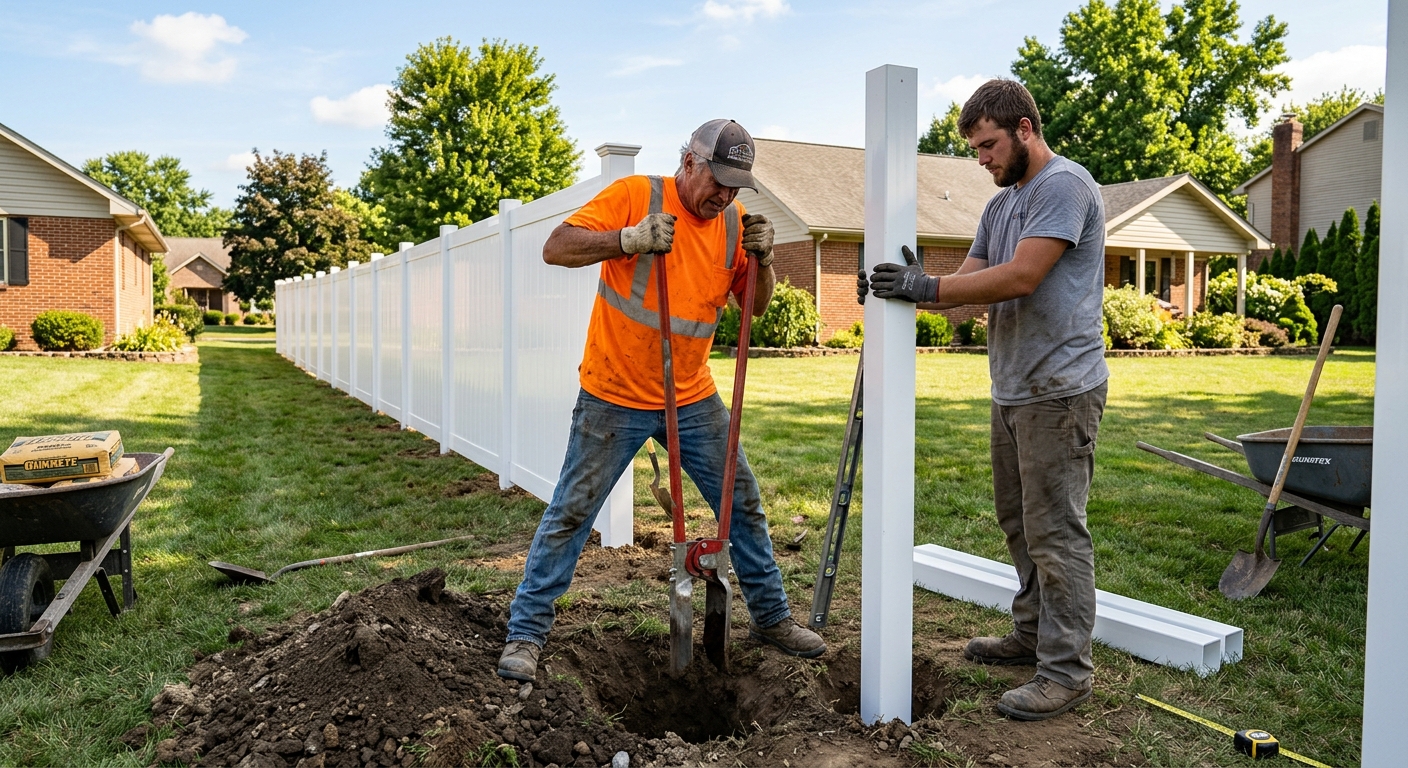
In the Muskoka–Kawarthas region, the biggest cost driver is ground and climate. Frost heave is a real issue here: the design frost line is roughly 4 ft, so posts typically need to be set about 42–48 in. deep to resist shifting and prevent leaning over time. That means more excavation or augering, more concrete, and longer posts than you’d see in milder southern areas—often raising labour and materials costs by project size and site conditions. Access also matters: clay pockets, occasional rock near outlying areas, and tight in-town backyards can slow installs and increase per-foot pricing.
In Peterborough, trade demand tends to be especially strong in neighbourhoods with established housing stock and mature landscaping—areas like Westmount and downtown-adjacent blocks where fencing is often a replacement rather than a new build. Once you factor in deeper footings and typical 2025–2026 market rates in Muskoka–Kawarthas, the differences between materials become clearer. Use the table below to compare typical lifespan, upkeep, and per-foot installed pricing.
| Material |
Lifespan |
Maintenance |
Privacy Rating |
Price per Linear Foot |
| Pressure-treated pine (standard wood) |
10–15 years |
Stain/paint every 2–3 years; inspect posts after freeze/thaw |
Medium to High (solid pickets/boards) |
$55–$80 |
| Cedar (natural rot resistance) |
15–25 years |
Re-stain or seal every 2–4 years depending on sun exposure |
Medium to High |
$70–$95 |
| Vinyl / PVC (no-maintenance) |
20–30 years |
Low: rinse seasonally; replace rare warped sections |
High (privacy panels) |
$65–$95 |
| Chain-link (galvanized steel) |
20–30 years |
Low: occasional tension/hardware checks; spray-coat touchups if needed |
Low (security only) |
$40–$65 |
| Aluminum ornamental |
25–40 years |
Low: clean annually; tighten hardware as needed |
Low to Medium |
$70–$110 |
| Composite / recycled material |
20–30 years |
Low: occasional wash; check for fastening wear |
High (solid styles) |
$80–$125 |
Prices are estimates only and vary by project scope, site access and material selection.
What affects the price of fencing in Peterborough
If you’re getting multiple quotes for the same fence in Peterborough and the Muskoka–Kawarthas region, it’s common to see 30–50% variation—especially when contractors price differently for excavation, post setting, and how they handle gates and line breaks. The same fence material can land at two different totals because the ground conditions decide how hard it is to set posts properly, and the climate decides how deep those posts must go to survive freeze/thaw cycles.
In cold Ontario conditions, the design frost depth drives your post depth: in our area, that roughly translates to setting posts about 4–6 in. below the frost line and typically reaching about 42–48 in. into the ground. In practical terms, that often means 1.5–2.0 m into the ground for many layouts once you account for base clearance, concrete thickness, and panel height. Longer posts and concrete setting increase both material cost and labour time. Separately, windy, open lots (common around lake-adjacent properties and farm-field edges) can change engineering choices: we may tighten post spacing, use heavier hardware, or recommend open styles like chain-link to reduce sail effect. In milder, sheltered backyards the same design is usually simpler and cheaper.
Here are a few concrete examples of what moves costs up or down in Peterborough:
- A longer run through a narrow side gate often adds time for wheelbarrows or small equipment, increasing labour beyond the per-foot baseline.
- Clay-heavy soil that doesn’t drain well can require modified concrete/auger setups; that can push wood projects toward the higher end of the $55–$80 range for treated pine.
- If an existing fence is removed, disposal and salvage time can add cost—sometimes narrowing the difference between wood and vinyl projects that are otherwise in the $65–$95 band.
Housing age also matters. With 63.7% of homes built before 1981 (Statistics Canada, 2021 Census), many properties have older boundary lines, mature trees, and uneven ground—small obstacles that add hours, which is where the quote range comes from.
| Price Factor |
Why It Matters |
Cost Impact |
| Fence length in linear feet |
Main driver of materials, post count, and labour hours |
High (largest share of the total) |
| Post depth required |
Frost line determines post length and hole depth to prevent heaving |
High in Muskoka–Kawarthas |
| Post setting method |
Concrete versus gravel pack versus driven posts affects time and durability |
Medium to High |
| Material choice |
Vinyl, cedar, and chain-link have different component costs and hardware needs |
Medium (but can dominate with premium systems) |
| Gate count and type |
Drive-through double gates cost more than walk-through single gates |
Medium to High |
| Grade and terrain |
Slopes may require raked panels or stepped bases to keep the fence level |
Medium |
| Old fence removal and disposal |
Haul-away, potential salvage, and extra labour for demolition |
Medium |
| Permit fees and survey / property line locate |
Administrative and professional locating costs affect total budget |
Low to Medium (project-dependent) |
Permits & regulations in Ontario
In Ontario, a fence can require a building permit depending on its height and location. A common threshold many homeowners run into is that fences at or above roughly 2.0 m (about 6.5 ft) along the rear, and around 1.0–1.2 m (about 3–4 ft) at the front or corner, may trigger permit requirements. Setbacks and maximum heights can also be affected by municipal bylaws and the fence’s position relative to streets, intersections, or easements—so it’s worth confirming before you book excavation.
Regardless of permit, every fence must respect your property line. Before any post hole is dug, you should call for utility locates through Ontario One Call (and wait until marking is complete). If you don’t already have a recent survey, obtaining a survey or property pin locate is the safest way to avoid encroachment disputes—especially on older properties where boundaries aren’t always obvious.
For shared boundary fencing, line-fence responsibilities in Ontario are addressed under provincial line-fence legislation, so disputes and cost-sharing aren’t handled the same way everywhere. If you’re uncertain, document agreements in writing and keep photos of measurements.
To verify a contractor in Ontario for your Peterborough project, ask for (1) the contractor’s Ontario licence or registration information (where applicable in their trade category), (2) proof of liability insurance (current COI naming you/your property as needed), and (3) confirmation of WSIB/WCB coverage. You can check clearance letter details, and you should request updated certificates directly; a reputable fence contractor can provide them without hesitation.
Choosing the right fence material for Peterborough
Picking the right material for your Peterborough yard is mainly about matching your priorities to how Muskoka–Kawarthas winters treat fences. With a design frost line roughly 4 ft in this part of Ontario, correct post installation matters as much as material: posts usually need to be set deep (often 42–48 in.) and, for stability, concrete-set posts are typically recommended in freeze/thaw conditions—especially for privacy styles with solid panels that catch wind.
Pressure-treated pine is often the budget-friendly choice, but it’s not “set and forget.” In Peterborough’s weather, the wood can grey and wear if left untreated, so plan on staining or sealing every 2–3 years. Cedar typically offers better natural rot resistance and usually looks better longer, but it still needs periodic sealing to maintain appearance and protect fasteners. Vinyl/PVC is popular for low-maintenance schedules, yet in extreme cold it can become brittle if installed with improper clearance or hardware; good contractors space and fasten correctly. Chain-link is the lowest cost and longest life, but it doesn’t provide privacy unless you add slats or plantings. Aluminum ornamental is rust-resistant and mid-range priced; it’s excellent for curb appeal but not for privacy.
For a real budgeting example: if you’re comparing standard pressure-treated pine privacy panels versus vinyl, the difference can be noticeable. Treated pine often lands in the $55–$80 per linear foot range installed, while vinyl commonly sits around $65–$95—so if your goal is low upkeep and a longer “hands-off” span, the vinyl premium is sometimes worth it. If budget is tight and you’re comfortable with maintenance, treated pine can be a sensible fit.
Finally, consider wind and snow load effects. On gusty open lots, privacy wood or vinyl panels need sturdier framing and properly set posts; chain-link and open aluminum styles generally experience less wind load because air passes through.
| Material |
Cold Tolerance |
Lifespan |
Annual Maintenance |
Best For |
Price Band |
| Pressure-treated pine |
Good (if properly sealed and fastened) |
10–15 years |
Minor inspection; re-seal/stain as needed every 2–3 years |
Value-focused privacy with periodic upkeep |
$55–$80 |
| Cedar |
Good to very good (resists rot) |
15–25 years |
Clean and seal/stain every 2–4 years |
Appearance-focused privacy and better weathering |
$70–$95 |
| Vinyl / PVC |
Good (proper installation needed for cold) |
20–30 years |
Low: rinse seasonally; check hardware |
Low-maintenance privacy and a clean look |
$65–$95 |
| Chain-link |
Very good |
20–30 years |
Low: tension and gate hardware checks |
Security, pets, and long-run budgets |
$40–$65 |
| Aluminum ornamental |
Very good |
25–40 years |
Low: occasional wash and tightening |
Curb appeal with light security |
$70–$110 |
| Composite / recycled material |
Good |
20–30 years |
Low: occasional cleaning; inspect fasteners |
Privacy panels with reduced upkeep |
$80–$125 |
How to choose a fencing contractor in Peterborough
When you’re hiring a fencing contractor in Peterborough, verify three things up front: licencing/registration where applicable, liability insurance, and WSIB/WCB coverage. Ask for a certificate of insurance (COI) showing current coverage and the effective dates, and confirm the coverage amount is appropriate for exterior construction work. For WSIB/WCB, request a clearance letter or proof of coverage; don’t rely on verbal assurances. A contractor who handles fence work year-round across Ontario should be comfortable providing these documents quickly.
Next, get 2–3 itemised written quotes. You want a breakdown that shows labour and materials separately (including posts, rails, gates, hardware, concrete/setting method, and any staining or disposal). Avoid “lump sum only” estimates because fence costs swing with post depth, access, and whether demolition is included. Review the scope for exclusions like site prep, tree trimming, removal of old posts, permit pulling (if applicable), and disposal/landfill handling.
Warranty also matters. Confirm workmanship warranty length (often stated in months/years for installation), product/manufacturer warranty terms for the fencing system, and whether the warranty is transferable to you as the homeowner. Finally, payment schedule: never pay more than 10–15% upfront. Hold back a portion until the fence is complete, aligned, and hardware is adjusted.
Make timelines explicit. A good contractor will provide an estimated start date and completion window in writing, and they should explain what weather conditions might affect installation in Peterborough’s winter transition seasons.
- Request proof of insurance (COI) and check dates match the work period.
- Ask for WSIB/WCB clearance or coverage proof; confirm it’s current.
- Get a licence/registration reference relevant to their trade category when applicable.
- Require itemised quotes separating labour, materials, concrete, and gates.
- Confirm post depth and setting method in writing (concrete-set vs alternatives).
- Ask how they handle uneven ground: stepped versus raked sections.
- Confirm disposal and haul-away are included if you’re removing old fencing.
- Clarify permit responsibility: who pulls it if required and what it costs.
- Inspect the hardware list: hinges, latches, fasteners, and tension systems.
- Confirm warranty details: workmanship and product coverage lengths.
- Set a payment schedule with a holdback until final inspection/cleanup.
- Get start date and completion estimate in the contract.
Red flags in Peterborough include quotes that omit post depth or concrete setting details, refusing to provide COI/WSIB clearance, using vague “materials included” language without specifying grades, asking for large upfront deposits (well beyond 10–15%), and starting work without a confirmed property-line plan or utility locates.
Frequently asked questions — fencing in Peterborough
What is the most weather-resistant fence for Peterborough's climate?
For Peterborough’s freeze/thaw winters, the most weather-resistant option is usually chain-link with proper galvanization and correct tensioning, or aluminum with high-quality powder coating. Both handle Ontario moisture and temperature swings well when posts are set at the right depth for frost protection. If you want privacy plus weather resistance, cedar and vinyl can perform very well, but workmanship and installation details matter—especially how posts are set and how panels are braced against gusts. In this area, posts are typically set about 42–48 in. deep to manage frost heave. As a cost reference, chain-link is commonly installed in the $40–$65 per linear foot band, while aluminum often lands around the $70–$110 range depending on style and gate complexity.
How do I prevent wood fence rot in Peterborough?
Rot prevention in Ontario starts below the surface: set posts with a frost-safe depth and a durable base (concrete-setting is commonly used so the post doesn’t shift). Above ground, use the right wood grade and keep water from pooling at post ends and picket bottoms. In Peterborough, I recommend choosing materials that are treated or naturally rot-resistant (cedar), then sealing/staining on a schedule—typically every 2–3 years for pressure-treated pine and every 2–4 years for cedar depending on sun and exposure. Also inspect after major thaw cycles: check for leaning, loose fasteners, and damaged lower boards where moisture collects. If you’re comparing budgets, treated pine often targets the $55–$80 per linear foot band, but cedar can reduce rot issues and improve appearance at a higher upfront cost.
What is the cost per linear foot for fencing in Peterborough?
Installed fencing costs in Peterborough generally track material type plus the site demands of digging and post setting. In the Muskoka–Kawarthas region, typical installed ranges per linear foot are: wood fences at about $55–$80, vinyl/PVC at about $65–$95, chain-link at $40–$65, and aluminum/metal at $70–$110. Your quote can move within that range due to frost-driven post depth, gate count (especially double drive gates), terrain, and whether old fence removal/disposal is included. Since many homes in the area are older (63.7% built before 1981), you may also encounter mature trees, uneven ground, or less predictable access—each of which adds labour time and can increase the per-foot total. Always ask for an itemised quote so you can see whether the price includes concrete setting and disposal.
Should I repair or replace my old fence in Peterborough?
Repair is usually worth it when the posts are still solid, the line is straight, and only a few sections (like damaged boards or minor rail issues) need attention. Replace is smarter if you’re seeing repeated post leaning, extensive rot near the ground line, broken concrete bases, or widespread warping that will keep coming back after patch repairs. In Peterborough’s climate, frost heave can create movement that makes new panels fail early if the underlying post stability isn’t addressed. A contractor should assess the post integrity and show you which posts can be kept. If you do replace, removal and disposal can be a deciding factor in total budget. If you’re currently in the wood range (often $55–$80 per linear foot for installed treated pine), a targeted upgrade to cedar or vinyl may still be justified if you want fewer maintenance cycles over time.
How do I handle a fence dispute with a neighbour in Ontario?
In Ontario, fencing disputes typically come down to property line clarity, height/location rules, and—where applicable—shared responsibility under provincial line-fence legislation. The first step is to document everything: measure fence line locations, take photos, and confirm whether you have accurate survey information or visible property pins. If the dispute is about the boundary, a survey or property-pin locate usually settles the issue faster than argument. Keep communication calm and in writing, and propose solutions that respect the line. If a permit is required due to height or location, avoid installing higher sections until the rules are confirmed. For safety and accuracy, you should also ensure utility locates are completed before any post holes are dug. If costs are shared, agree in writing on material choice and who pays for removal/replacement.
What fence style offers the best wind resistance in Peterborough?
In Peterborough, “wind resistance” usually means reducing the sail effect and ensuring the structure is adequately braced. Open styles like chain-link and well-designed aluminum ornamental typically perform better in gusty conditions because wind passes through rather than catching on solid panels. If you need privacy, you can still manage wind loads by using stronger posts, deeper frost-safe footings, appropriate panel bracing, and tighter post spacing for solid sections. Solid wood or vinyl privacy fences can be very effective, but they demand correct installation to prevent leaning over freeze/thaw cycles. If your yard is exposed (for example near larger open lots), many homeowners find chain-link’s combination of durability and lower wind pressure is the most forgiving. As a pricing reference, chain-link is commonly in the $40–$65 per linear foot band, which also helps when upgrading hardware and post strength.