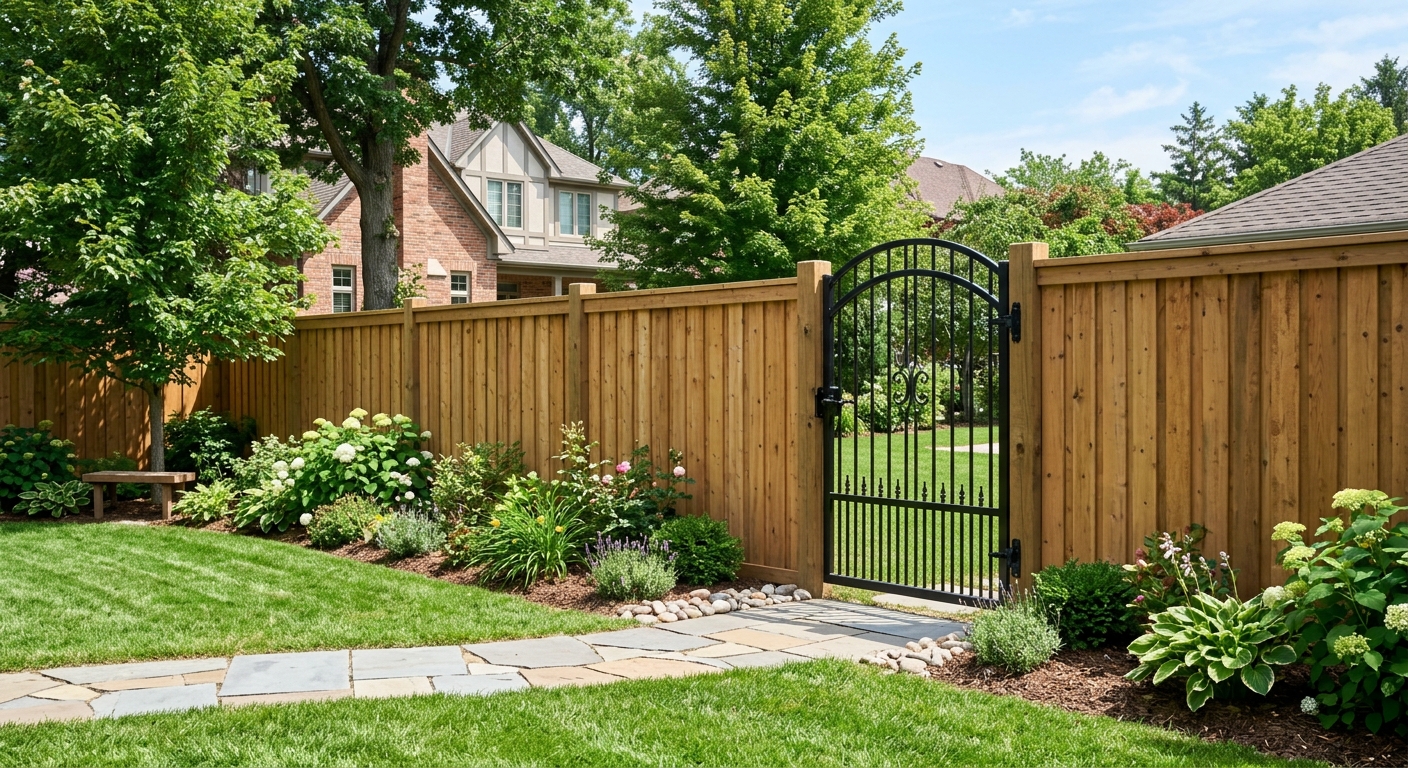
Fencing options and costs in Columbia
Columbia, Ontario has a busy mix of new builds and long-established neighbourhoods, and that makes fencing demand steady year-round. With a population of 13,635 (Statistics Canada, 2021 Census), you’ll often see homeowners upgrading privacy and boundary fencing as properties change hands. In the Toronto economic region, fencing contractors are also busiest where detached home demand is strongest, because every fenced yard is a potential “comfort upgrade” for families, pets and seasonal privacy. That’s why you’ll notice particularly consistent trade activity in older, family-oriented pockets and along main residential corridors where yards are deeper and gates matter.
Toronto-area frost and soil conditions strongly shape pricing. Southern Ontario’s frost line is commonly planned at about 42"–48", so for 6–8 ft privacy fences most contractors set posts 3.5–4 ft deep using concrete to prevent frost heave and reduce long-term leaning. Local clay and mixed soils raise the labour time (digging, forming, and setting) compared to simple driven-post installs. On top of that, wind and racking are factored into post size and spacing, so taller solid fences typically cost more than shorter, open styles.
If you’re comparing options, it helps to start with material lifespans and maintenance needs, then match them to your yard access and gate count. Below is a practical comparison table to anchor your quote before we get into what shifts pricing up or down.
| Material |
Lifespan |
Maintenance |
Privacy Rating |
Price per Linear Foot |
Price Range |
| Pressure-treated pine (standard wood) |
10–15 years |
Stain/seal every 2–3 years |
High (solid boards) |
$18–$28 |
$65 – $120 |
| Cedar (natural rot resistance) |
15–25 years |
Light staining every 2–4 years |
High (solid boards) |
$22–$36 |
$75 – $130 |
| Vinyl / PVC (no-maintenance) |
25–35 years |
Rinse as needed |
High (solid panels) |
$26–$40 |
$75 – $130 |
| Chain-link (galvanized steel) |
20–30 years |
Minimal (wash/inspect) |
Low–Medium (use screening for privacy) |
$14–$22 |
$45 – $85 |
| Aluminum ornamental |
25–40 years |
Minimal (rinse; check hardware) |
Low (open pickets) |
$22–$42 |
$90 – $160 |
| Composite / recycled material |
20–30 years |
Occasional cleaning; no staining |
High (solid boards) |
$24–$40 |
$90 – $160 |
Prices are estimates only and vary by project scope, site access and material selection.
What affects the price of fencing in Columbia
In Columbia and across the Toronto area, it’s common for quotes on the “same” fence to land 30–50% apart. That gap usually comes down to how each contractor prices the essentials: proper post depth for frost, concrete-set versus driven posts, panel sizing for wind load, and whether the quote includes gates, disposal, and permit/survey work. Even when materials look similar, construction details—like post spacing, hardware type, and how they handle slopes—can change labour time and longevity.
Post depth is the big one in Ontario. Southern Ontario’s frost planning is roughly 42"–48", and best practice sets holes about 4–6 inches below the design frost depth to prevent heaving. In practical terms for many yards, that means posts often need to go 1.5–2.0 m deep. Once you’re trenching that deep, concrete setting becomes the norm for 6–8 ft privacy fences, increasing ready-mix costs and labour.
Wind and racking also affect fencing build. While Toronto isn’t as exposed as open prairie corners, taller solid fences can rack during high winds, so contractors may size posts larger and space them closer (often 6–8 ft centres). By contrast, chain-link can be cheaper because it’s lighter and typically uses fewer heavy components.
Two concrete examples from local pricing patterns: (1) A basic chain-link run at around $45–$85 tends to cost less because it usually needs lighter frames and less concrete mass; (2) Switching from pressure-treated pine to cedar or vinyl in a full privacy layout often pushes you toward the $75–$130 range (and higher on complex sites) because materials cost more and the contractor still needs proper post depth.
In Columbia, older housing-stock areas may have tighter access, mature landscaping, and more grade variation—each can add labour for careful demolition and stepped installs. If you’re budgeting with real site conditions in mind, it becomes easier to compare quotes apples-to-apples.
| Price Factor |
Why It Matters |
Cost Impact |
| Fence length in linear feet — the primary cost driver |
More panels mean more posts, rails, and hardware. |
Typically the biggest swing; longer runs can add hundreds to thousands. |
| Post depth required — frost line determines post length and hole depth |
Deeper holes require more excavation and material. |
Can add substantial labour and ready-mix cost versus shallow installs. |
| Post setting method — concrete vs. gravel pack vs. driven posts |
Concrete set posts resist heaving and leaning in freeze/thaw. |
Concrete usually costs more upfront but reduces failures. |
| Material choice — vinyl vs. cedar vs. chain-link |
Different material costs and different post/panel weight. |
Vinyl/cedar privacy often higher; chain-link lower. |
| Gate count and type — walk-through vs. drive-through (double) |
Gates need stronger posts, hinges, and sometimes automation-ready framing. |
A drive-through gate can materially increase the quote. |
| Grade and terrain — sloped yards require stepped or raked panels |
Slopes increase layout time and can increase material waste. |
Common source of “surprise” costs when not described. |
| Old fence removal and disposal |
Demolition, hauling, and proper disposal add labour. |
Can add meaningful cost, especially with long runs. |
| Permit fees and survey / property line locate |
Some heights and locations trigger permits; accurate boundary reduces disputes. |
Small to moderate adders, but important if required. |
Permits & regulations in Ontario
In Ontario, fences above typical height thresholds—often around 2.0 m (6.5 ft) at the rear and 1.0–1.2 m (3–4 ft) at the front or corner—may require a building permit, depending on the municipality and the fence location on the lot. Regardless of permit needs, you must respect property lines and any municipal setback rules. Before any post holes are dug, arrange for utility locates through the appropriate “One Call” service (Ontario One Call for Ontario) so crews won’t hit buried services.
Step-by-step for a homeowner in Columbia: (1) Confirm your exact fence line using your property pins (or a survey) before installation; this helps avoid encroachment disputes. (2) Ask the contractor whether they will pull permits if required (don’t assume it’s automatic). (3) Verify licensing and coverage: find the contractor’s Ontario business details and licence status through the appropriate online registry listings, request a certificate of insurance (general liability) with your address listed, and confirm they carry WSIB coverage where applicable. (4) Get that paperwork provided before work begins, and keep copies for your records.
Shared fence ownership issues typically fall under provincial line-fence principles, so keep communication with neighbours in writing and document any agreements. Always ask what the quote includes before digging starts—permit pulling, locate costs, and disposal should be clearly stated.
Choosing the right fence material for Columbia
Choosing a fence in Columbia comes down to matching material to priorities: privacy, maintenance effort, upfront budget and how long you want the fence to look solid through Toronto-area winters. The region’s freeze/thaw cycle and frost depth mean that no matter which material you pick, post depth and concrete setting are usually non-negotiable for a true privacy fence. Where the material matters most is appearance and durability between maintenance cycles.
Pressure-treated pine is the budget-friendly starting point, but it typically needs staining or sealing every 2–3 years to prevent grey weathering and to slow down moisture-related wear. Cedar costs more but has better rot resistance and a warmer look; many owners still stain periodically (often every 2–4 years) for best results. Vinyl/PVC offers the “set it and forget it” approach—no staining—yet it can become brittle in extreme cold and may require careful installation practices, like proper post/wind hardware and expansion considerations. Chain-link is usually the lowest initial cost and longest-lived option, but it won’t provide true privacy unless you add screening or slats. Aluminum ornamental is attractive and rust-resistant, but it’s open—ideal for boundary definition rather than privacy. Composite/recycled boards can deliver privacy with low maintenance, often at a mid-to-higher installed cost.
Because Southern Ontario frost planning commonly runs about 42"–48", Toronto-area crews typically use concrete-set posts for 6–8 ft fences to reduce heaving. Wind and snow loading still matter: taller solid fences benefit from properly sized posts and closer spacing to prevent racking.
Where the price difference is justified: if you’re comparing a pressure-treated pine privacy fence (often within the $65–$120 range) against vinyl/PVC privacy (often within $75–$130), the extra spend is usually worth it when you want less maintenance and longer, consistent appearance—especially if you’d otherwise budget time and product every few years.
| Material |
Cold Tolerance |
Lifespan |
Annual Maintenance |
Best For |
Price Band |
| Pressure-treated pine |
Good (with proper sealing and post depth) |
10–15 years |
Low–moderate (clean/check; plan staining every 2–3 years) |
Lowest cost privacy on a budget |
$65 – $120 |
| Cedar |
Good (rot-resistant; still needs protective finish) |
15–25 years |
Low (periodic stain/seal every 2–4 years) |
Natural look with better longevity than pine |
$75 – $130 |
| Vinyl / PVC |
Fair to good (can be brittle if poorly installed) |
25–35 years |
Very low (rinse/inspect hardware) |
Low-maintenance privacy |
$75 – $130 |
| Chain-link |
Excellent (steel remains stable when properly galvanized) |
20–30 years |
Very low (wash and inspect posts) |
Security and long life without privacy |
$45 – $85 |
| Aluminum ornamental |
Excellent (powder-coated in Canadian winters) |
25–40 years |
Very low (rinse; tighten hardware) |
Attractive boundary definition |
$90 – $160 |
| Composite / recycled |
Good (designed for outdoor freeze/thaw cycles) |
20–30 years |
Low (cleaning; occasional hardware checks) |
Privacy with reduced staining/warping |
$90 – $160 |
How to choose a fencing contractor in Columbia
When you’re hiring a fencing contractor in Columbia, verifying the basics protects you in the event of delays, damage, or workmanship issues. First, confirm Ontario licensing where applicable for the type of work and business activity. Next, request liability insurance—you should see a certificate of insurance (COI) with your address listed as an interested party or additional insured as appropriate, including coverage limits. Also confirm WSIB coverage (where they are required to carry it). Ask for documentation before work begins, and check that the COI is current (expiry date) and matches the contractor you’ve booked.
Then get 2–3 itemised written quotes rather than lump sums. A solid fence quote should break down labour and materials separately (posts, rails, panels, hardware, concrete setting, gates, and any disposal). Read the scope carefully: is permit pulling included if required? Is fence removal and hauling included? What’s excluded (for example, landscaping restoration, uneven-grade framing, or concrete footprints)? Confirm the warranty too: workmanship warranty length, product/manufacturer warranty coverage, and whether warranties are transferable if you sell the home.
On payment, never agree to pay more than about 10–15% upfront. Hold back a portion until the job is complete, inspected, and any touch-ups are done. Finally, require a written schedule: start date and an estimated completion window.
- COI provided with your address or project listed; verify it hasn’t expired.
- Confirm WSIB coverage in writing (or documented clearance where relevant).
- Request proof of Ontario registration/licence details for the business.
- Quotes include post depth plan for frost and concrete-set method (not just “posts installed”).
- Itemised line items for panels, rails, posts, hinges/latches, and concrete/aggregate.
- Gate hardware specified (hinge type, latch quality, and reinforcement).
- Removal and disposal spelled out (dump fees, hauling, and stacking/cleanup).
- Confirm how slopes are handled (stepped vs. raked) and whether panels are cut to fit.
- Check whether permit fees and property line locate/survey costs are included or extra.
- Warranty terms: workmanship duration, what voids coverage, and product warranty.
- Payment schedule with limited upfront deposit and a clear final holdback.
- Start/completion dates included and weather/travel delays explained in writing.
Red flags I see in Columbia include: contractors who quote without discussing post depth and frost setting; unclear scope that omits removal/disposal; COIs or WSIB coverage that can’t be produced or don’t match the business doing the work; and agreements requiring large upfront payments. If the quote doesn’t clearly state what you’re getting, treat that as a warning sign—not a convenience.
Frequently asked questions — fencing in Columbia
Should I repair or replace my old fence in Columbia?
In Columbia, the decision to repair versus replace usually depends on how the posts and rails have survived freeze/thaw. If your fence has loose or heaving posts, repairing boards often turns into a repeat job, because the real issue is movement at the footing level. For many older privacy fences, the underlying post depth and concrete setting were the weak points, so once leaning starts you can spend more money “patching” than replacing. If the frame is solid and only boards are tired, repair can be sensible—especially with pressure-treated pine—where you can replace the affected sections. If multiple sections are failing or gates sag, replacement is often the better value, and most homeowners find installed privacy options land around the $65–$120 or $75–$130 bands depending on wood vs vinyl and complexity.
How do I handle a fence dispute with a neighbour in Ontario?
Fence disputes in Ontario are common in neighbourhoods where property lines and older fence locations don’t match today’s pins. Start by reviewing your property boundaries using your survey or by locating your pins so you can confirm where the fence should sit. Keep everything civil and in writing: ask your neighbour to show their understanding of the line, and document communications (photos and dates help). Ontario also recognizes shared fence principles under provincial line-fence rules, so if a fence is truly shared, costs and responsibilities may be split. Practically, I recommend you pause any demolition until boundaries are clear. A contractor can help by working to a confirmed line, but it’s your job as the homeowner to verify the boundary and any required permits for height/setbacks.
What fence style offers the best wind resistance in Columbia?
For Columbia’s Toronto-area conditions, a wind-resistant privacy fence usually means a solid-slat design installed with properly sized posts, good bracing, and correct post depth. Taller solid panels catch more wind pressure and are more likely to rack if posts are undersized or too widely spaced, so wind performance depends on construction, not just material. In practice, contractors often tighten spacing (commonly 6–8 ft centres) and use concrete-set posts for 6–8 ft runs to keep everything stable through freeze/thaw. If you want maximum wind “forgiveness” with less racking risk, consider semi-open styles (such as pickets with air gaps) or well-installed wood privacy with solid-to-rail framing. Chain-link can resist uplift when installed properly, but it won’t give you privacy unless you add screening or slats.
How much does a fence cost in Columbia?
Fence cost in Columbia is driven mostly by linear feet, post setting (especially frost-depth excavation and concrete), gates, and whether you need removal/disposal. As a rough guide, wood privacy installations commonly land in the $65–$120 range, while vinyl/PVC privacy often sits in the $75–$130 band due to higher material costs and similar post-depth requirements. Chain-link security tends to be the lowest at about $45–$85. If you’re considering aluminum ornamental, budget more—commonly about $90–$160—because hardware and framing costs add up. Final totals can swing if your yard is sloped, access is tight, or you need permits and a locate/survey, so ask for an itemised labour/material quote.
How deep should fence posts be for Columbia's frost?
For Columbia and other Southern Ontario yards, fence post depth is planned around the region’s frost line (commonly estimated at about 42"–48"). Best practice is to set posts deeper so the bottom of the concrete/post support sits below that frost zone—often roughly 3.5–4 ft deep for typical 6–8 ft privacy fences, depending on your exact design and soil. In many practical installs, this means about 1.5–2.0 m into the ground, which is why concrete-set posts are common here. The “depth only” answer isn’t enough though: your contractor should also specify hole width, post size, and whether they’re using concrete versus gravel pack. Those details affect how stable the footing stays through freeze/thaw cycles.
Wood vs vinyl vs aluminum fence — which is best?
“Best” depends on what you value most. Wood (pressure-treated pine or cedar) is often the most flexible look-wise and can be the best fit if you’re comfortable with maintenance and want a traditional appearance. Cedar generally lasts longer than pine and has better rot resistance, but both typically need periodic staining. Vinyl/PVC is popular for low maintenance and consistent appearance; it often performs well in Ontario when installed correctly with attention to hardware and cold-season handling. Aluminum ornamental is durable and rust-resistant, but it’s usually open for airflow—so it’s best for boundary definition and curb appeal rather than privacy. For true privacy in Columbia, many homeowners start in the $65–$120 band for wood or the $75–$130 band for vinyl, then weigh maintenance tolerance versus how long they want the fence to look new.