Fencing options and costs in Cardston
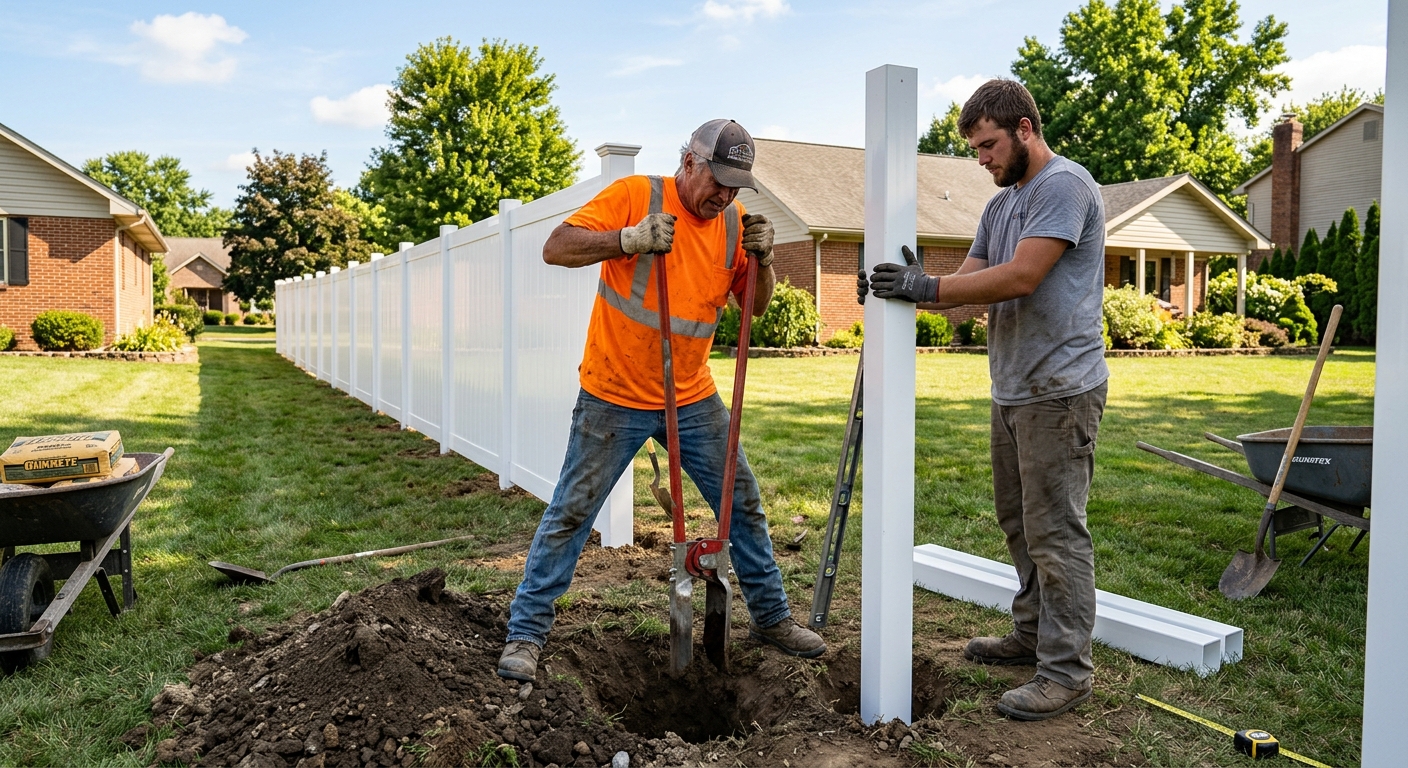
Cardston homeowners have plenty of fencing choices, but the right pick usually comes down to weather performance, privacy needs, and the kind of maintenance you’re willing to do. With 73.8% of local households owning their homes and detached dwellings making up 85.3% of homes, demand for perimeter fencing and back-yard upgrades is steady across neighbourhoods like the west side around Vimy Place and Veterans Way. Lethbridge–Medicine Hat’s climate also shapes cost: Southern Alberta freeze–thaw cycles and prairie wind exposure mean fence posts generally need to be set below frost to reduce winter heave and leaning over time. That typically results in machine-dug holes and concrete-set posts on residential jobs, which adds labour hours and concrete material compared with milder regions.
So, while two quotes may look similar on paper, one contractor’s crew may recommend tighter post spacing and sturdier rails for wind load, especially for solid privacy wood and vinyl. On the other hand, chain-link can cost less because it’s lighter, needs less sail-area resistance, and is often installed with fewer heavy reinforcement steps. If you’re planning a modern privacy run or a driveway gate near the main corridors in town, it’s common to see the total cost land across common regional bands for wood, vinyl, and metal systems—then swing based on ground conditions, access, and post depth.
Use the table below as a practical starting point for budgeting, then compare options against your own privacy goals and maintenance tolerance before you request an itemised quote.
| Material |
Lifespan |
Maintenance |
Privacy Rating |
Price per Linear Foot |
| Pressure-treated pine (standard wood) |
10–15 years |
Stain/paint every 2–3 years; inspect posts after freeze–thaw |
High (solid panels) |
$35–$65 |
| Cedar (natural rot resistance) |
15–25 years |
Seal/stain every 3–5 years; monitor fasteners |
High (solid or close-board) |
$45–$75 |
| Vinyl / PVC (no-maintenance) |
20–30 years |
Rinse as needed; check alignment after extreme cold |
Medium to High (solid designs) |
$40–$80 |
| Chain-link (galvanized steel) |
20–30+ years |
Minimal; occasional tension check |
Low (open mesh) |
$25–$50 |
| Aluminum ornamental |
25–40 years |
Minimal; occasional cleaning |
Low to Medium (ornamental pickets) |
$55–$110 |
| Composite / recycled material |
20–30 years |
Low; periodic cleaning; check for panel warping in freeze–thaw |
High (solid styles) |
$55–$95 |
Prices are estimates only and vary by project scope, site access and material selection.
What affects the price of fencing in Cardston
Fence quotes in Cardston can vary by 30–50% for the same general layout because Southern Alberta conditions change what a “standard” installation means. One contractor might treat the job like a quick retrofit with tamped gravel and standard post spacing, while another will plan around frost depth, wind loading, and the reality that many homes in the area were built before 1981 (58.3%). Older yards often have more underground obstructions, more uneven grades, and more existing fence remnants—each of which increases labour and sometimes disposal costs.
In practice, the frost-line requirement drives the largest difference in price. Contractors typically aim for post holes set roughly 4–6 inches below the design frost depth to prevent heaving. In colder Alberta conditions, that commonly means posts set about 1.5–2.0 m into the ground with longer posts and more concrete, which pushes jobs into the higher end of the wood and vinyl bands. Wind exposure on the Prairies also matters: open, gusty sites can increase lateral loads, so contractors may tighten post spacing and reinforce rails—particularly for solid privacy wood and vinyl that act like a sail.
Here are a few concrete examples of how Cardston site conditions can raise or lower cost. First, if your yard requires machine-dug holes for deeper frost-set depths, labour and concrete uptake increase. Second, if you have heavy clay or frozen ground near installation time, crews may need additional time for drilling and extra disposal of unsuitable soil. Third, if your fence line is mostly flat with easy vehicle access, the per-foot cost may land closer to the lower end of chain-link at about $25–$50/linear foot or wood at the mid-range of $35–$70/linear foot.
| Price Factor |
Why It Matters |
Cost Impact |
| Fence length in linear feet |
Most materials and labour scale directly with total run |
Largest variable—expect the clearest price differences here |
| Post depth required |
Frost line determines how long posts must be and how deep holes go |
Deeper setting can shift the job toward the high end of pricing |
| Post setting method |
Concrete-set posts typically resist frost heave better than gravel-only packs |
Concrete vs gravel can materially change both labour and materials costs |
| Material choice |
Vinyl/cedar and ornamental metals cost more per component than chain-link |
Moves you between common bands (e.g., wood vs aluminum) |
| Gate count and type |
Drive-through and heavier double gates need stronger frames and hardware |
Often adds fixed labour and material premiums beyond panel runs |
| Grade and terrain |
Slope requires racked panels, stepped posts, or custom layouts |
Increases layout time and sometimes wastes material |
| Old fence removal and disposal |
Existing posts and rails may require extra digging and disposal fees |
Can add a substantial one-time cost |
| Permit fees and survey / property line locate |
Some higher fences and corner/adjacent conditions require municipal approval and/or locating |
Typically modest but can add delays and paperwork time |
Permits & regulations in Alberta
In Alberta, fence requirements depend on location and height, but in most municipalities you should assume that fences above a common height threshold—often around 2.0 m (6.5 ft) for the rear and closer to 1.0–1.2 m (3–4 ft) near the front or corner—may require a building permit. Regardless of height, all fences must be installed within your property lines and in line with local setback rules.
Before any digging, call Alberta One-Call (utility locate) and arrange for your service lines to be marked. Utility strikes are one of the most expensive mistakes, and they also create delays. If you’re not completely sure where the boundary falls, get a survey or at least a property pin locate before you install. This protects you from encroachment disputes—especially common in older Cardston neighbourhoods where landscaping and older fences may not match modern boundary markers.
For shared fence lines, Alberta’s line-fences framework governs how costs and responsibilities are handled between neighbours. The practical step for homeowners: confirm whether your fence is considered a shared boundary fence and clarify ownership and maintenance expectations in writing.
To verify a contractor for your Cardston project, start by checking the Alberta business licensing/credentials they advertise, then request proof of general liability insurance and current coverage letters. Ask specifically for their WSIB/WCB clearance (or equivalent proof of coverage) and keep certificates on file. You should also request a written contract that specifies fence type, height, post-setting method, and whether permits/locates are included or billed separately.
Choosing the right fence material for Cardston
The best fence material in Cardston is the one that matches your priorities—privacy, low maintenance, budget, and lifespan—while still performing through Southern Alberta’s freeze–thaw cycles and strong chinook-driven winds. Pressure-treated pine can be the budget-friendly option, but it typically needs staining or painting every 2–3 years to keep it looking sharp and reduce premature greying. Cedar offers a more attractive, more rot-resistant profile, yet it still benefits from periodic sealing, and you’ll want quality fasteners and proper post detailing to maximise life. Vinyl/PVC is a popular low-maintenance choice with no routine painting, but extreme cold can make it brittle if it’s not installed with correct allowances and solid framing. Chain-link is the lowest-cost, longest-life option for security and boundary marking, but it provides little privacy unless you add landscaping or privacy slats. Aluminum ornamental is rust-resistant and low-maintenance, but it’s usually mid-range to premium and best when you want an open, attractive look.
Because Southern Alberta frost lines are typically around 4 feet, many residential installations require concrete-set posts and deeper hole drilling to reduce heave and leaning. That means the material isn’t the only driver—installation method matters. For wind-swept yards, tighter post spacing and stronger rails help reduce sail-effect, so heavier privacy materials may justify the extra labour even if the per-foot material cost is similar. For example, if pressure-treated pine privacy fencing comes in around the lower wood band while vinyl privacy sits higher, spending closer to the higher vinyl range can be justified when you’re trying to minimise re-staining effort over a long ownership period.
| Material |
Cold Tolerance |
Lifespan |
Annual Maintenance |
Best For |
Price Band |
| Pressure-treated pine |
Good with proper post setting |
10–15 years |
Light inspection; plan staining every 2–3 years |
Budget privacy with acceptable maintenance |
$35–$70 |
| Cedar |
Good (resists rot better than pine) |
15–25 years |
Inspect after winter; seal/stain every 3–5 years |
Natural look and longer service life |
$45–$75 |
| Vinyl / PVC |
Fair to good (installation details matter in cold snaps) |
20–30 years |
Minimal cleaning; check alignment and fittings |
Low maintenance privacy |
$40–$80 |
| Chain-link |
Excellent |
20–30+ years |
Minimal tension/anchor checks |
Security with lowest upfront cost |
$25–$50 |
| Aluminum ornamental |
Excellent |
25–40 years |
Occasional cleaning |
Attractive curb appeal with minimal rust risk |
$50–$110 |
| Composite / recycled |
Good (select solid boards and correct framing) |
20–30 years |
Low; periodic cleaning and inspection |
Privacy with reduced rot concerns |
$55–$95 |
How to choose a fencing contractor in Cardston
Choosing the right fencing contractor in Cardston starts with verifying they’re properly covered and easy to work with. In Alberta, you should ask for proof of general liability insurance and clearance for WSIB/WCB coverage (or equivalent proof of coverage). How to check: request current certificates of insurance that list the policyholder and coverage dates, and ensure the certificate indicates the work location or that coverage applies to your project. For the licensing side, verify the contractor’s Alberta business credentials using the online registry they provide (and cross-check the company name matches the quote). If they can’t provide documentation quickly or will only send it after you sign, that’s a major warning flag.
Next, get 2–3 written, itemised quotes—not just a lump sum. The best proposals break out labour and materials and specify what’s included: post depth and setting method, panel type, gate materials and hinges/latches, and whether removal/disposal is included. Also ask whether a permit pull, property-line locate, and utility locate coordination are included or billed as extras. A good warranty is usually two-part: a workmanship warranty (how long they stand behind installation) and the manufacturer warranty (how long the product lasts). Ask whether warranties are transferable if you sell the home.
Payment scheduling matters too. Never pay more than 10–15% upfront. Use a holdback until the job is complete and you’ve confirmed measurements, gate operation, and finish details. Finally, ask for the start date and completion estimate in writing so you know what “good weather window” they’re planning around.
- Confirm general liability insurance is active and matches the legal entity on the quote.
- Request current WSIB/WCB clearance proof before work begins.
- Ask what frost-depth and post-setting method they will use for Cardston’s winter conditions.
- Get an itemised labour + materials breakdown (not just totals).
- Confirm gate type (single vs double) and the exact hardware included.
- Specify whether old fence removal and disposal are included.
- Ask how they handle slopes (stepped posts vs raked panels).
- Verify permit/locate responsibilities and whether they coordinate utility markings.
- Request a workmanship warranty in writing with a clear duration.
- Check manufacturer warranty terms for your exact material and colour/grade.
- Use a payment plan with minimal upfront deposit and a holdback until completion.
- Get a written timeline with start date and projected completion window.
Concrete red flags I see in Cardston include contractors who refuse to describe post depth and concrete setting method, quotes that don’t state gate hardware specifics, unclear scope about fence removal/disposal, promises of “standard posts” without addressing frost heave risk, and paperwork that arrives only after payment.
Frequently asked questions — fencing in Cardston
How long does fence installation take in Cardston?
In Cardston, installation time usually depends on linear feet, gate count, and how difficult the ground is to excavate for frost-set posts. A short run with no gates can be done quickly, while longer privacy runs with multiple posts and concrete setting typically take longer because crews must dig deeper holes and set plumb posts. Weather also matters: extreme cold snaps can slow drilling and concreting, so contractors often schedule around more workable days. For many residential projects, think in terms of crews working in phases—layout first, then post installation, then rails/panels, and finally gates and finishing. Because many homes were built earlier (58.3% pre-1981), some properties also need extra time to work around older landscaping and buried features.
Can I install a fence on a slope in Cardston?
Yes, you can install fencing on a slope in Cardston, but the key is using the correct layout method—either stepped panels (with post height variations) or raked panels (with a consistent fence grade). A slope changes material usage and increases labour time because every post location needs careful measurement, and rail/panel alignment must stay straight enough to look uniform. During freeze–thaw cycles, sloppy grading can also lead to uneven stress on hinges and fasteners, especially at gates. Expect better results when the contractor plans the fence line with a clear start and end point and explains how they will handle grade breaks before work begins. Itemised quotes should specify “stepped vs raked” so there’s no surprise later.
What is the most weather-resistant fence for Cardston's climate?
For Cardston’s Southern Alberta conditions—dry freeze–thaw and strong Prairie wind—vinyl/PVC and cedar are often strong contenders for weather resistance, provided posts are set properly below frost and the framing is robust. Chain-link can also be extremely durable because it’s lightweight against wind load and uses galvanized components designed to handle long term exposure; however, it doesn’t offer privacy. Pressure-treated pine is workable too, but it’s more sensitive to surface weathering and usually requires staining or sealing to prevent rapid greying and to extend its life. In most practical budgeting scenarios, homeowners compare materials by the installed band: wood and cedar privacy often fall into the mid-range (roughly $35–$75/linear foot depending on the design), while vinyl commonly sits in the broader $40–$80 band with fewer maintenance tasks.
How do I prevent wood fence rot in Cardston?
Preventing rot in Cardston starts with what’s underneath the wood. Most rot failures come from water being trapped at the bottom of posts and from poor contact between wood and damp soil. You want a contractor who sets posts deep enough for frost conditions (often requiring deeper holes and concrete set for stability) and uses appropriate post spacing and drainage details. For boards, sealing/staining on a schedule is important—pressure-treated pine generally needs staining every 2–3 years to slow weathering, while cedar benefits from sealing every few years to protect exposed surfaces. Also keep an eye on fasteners and rail joints: use correct hardware so water doesn’t collect at seams. Finally, after winter, do a quick walk-through in spring to spot leaning posts early—fixing small problems before they widen is usually cheaper.
What is the cost per linear foot for fencing in Cardston?
In Cardston, typical installed costs generally align with Southern Alberta market bands: chain-link commonly runs about $25–$50 per linear foot, wood about $35–$70, and vinyl/PVC about $40–$80. Aluminum ornamental is commonly higher, around $50–$110 depending on height and style. Your final number changes with post depth and setting method (deeper frost-set posts and concrete tend to increase cost), wind-load considerations, access for equipment, gate count, and whether old fence removal/disposal is included. If you’re comparing quotes, ask whether each includes the same post setting approach—otherwise the “same fence” can be priced very differently. Always request an itemised per-foot breakdown so labour and materials aren’t hidden in a single lump sum.
Should I repair or replace my old fence in Cardston?
Repairing is often sensible if the fence is structurally sound: posts are plumb, rails aren’t badly loose, and the damage is limited to a few boards or sections. Replacement is usually the better choice when you see widespread leaning (often from frost heave or insufficient post setting), multiple broken posts, or extensive rot at the base. In Cardston’s freeze–thaw climate, small issues can spread when water gets trapped and boards keep cycling through winter expansion and thaw. A practical approach is to have the contractor assess and estimate repair quantities first, then compare that to the cost of replacement. If the overall system is failing, stepping up to a more durable option—like cedar or vinyl—can be worth it even if you move from the lower wood band toward the higher end of $40–$80/linear foot.