Fencing options and costs in Dufferin Grove
In Dufferin Grove, Ontario, choosing a fence is often a practical decision as much as an aesthetic one—whether you’re adding privacy on your backyard line or tightening up your front setback. With Dufferin Grove sitting inside the Toronto economic region (and a population of 11,785 people as of the 2021 Census (Statistics Canada, 2021 Census)), the demand for fencing is steady, especially around older residential pockets where yards are more enclosed and residents want consistency from winter to summer. For homeowners, the strongest day-to-day driver of fence selection is how climate and maintenance expectations line up with typical project timelines in Toronto.
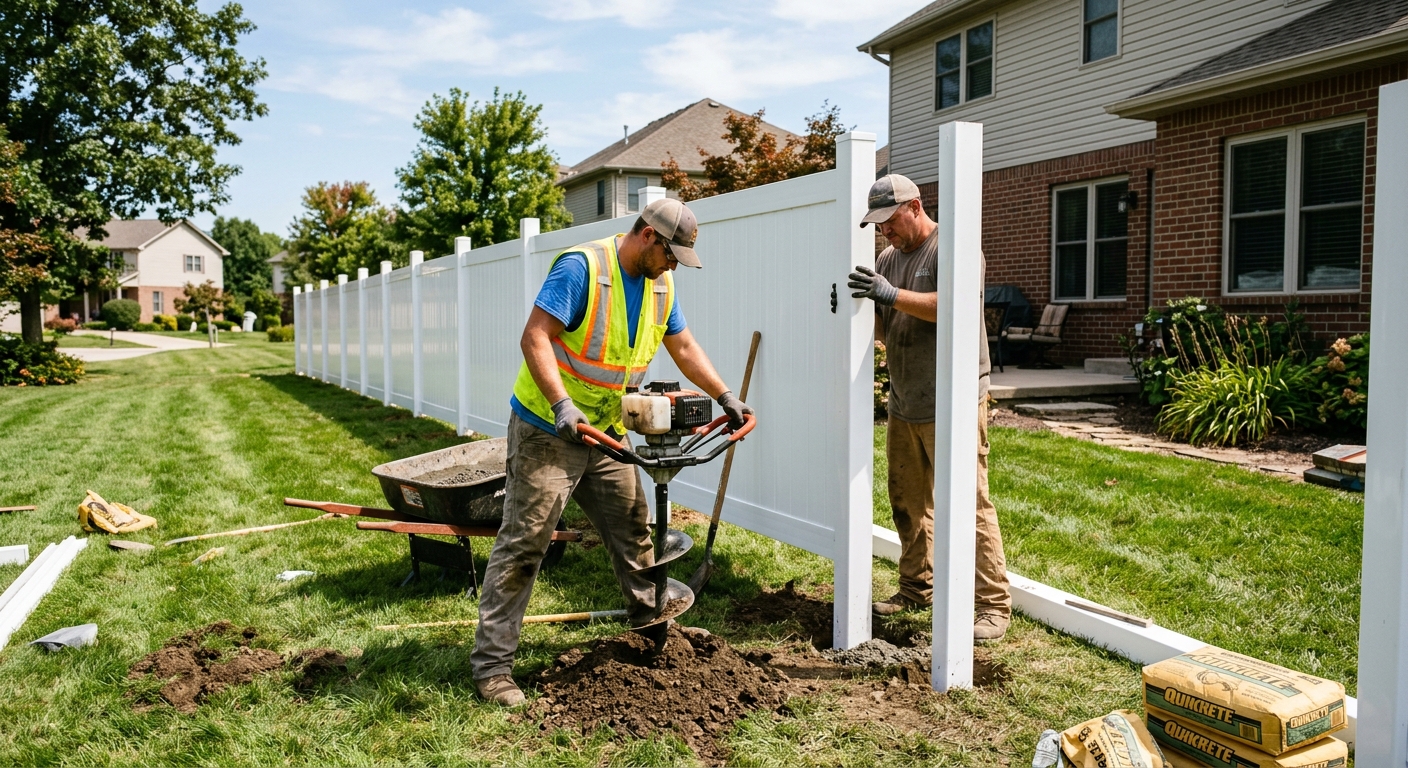
Local frost depth and soil conditions matter. In Southern Ontario, frost is commonly planned around 42"–48", which means most contractors recommend setting posts about 3.5–4 feet deep for 6–8 ft privacy fences to reduce frost heave. That usually pushes you toward concrete-set posts (more labour, more ready-mix) versus simple driven posts. Then there’s wind and racking—Toronto isn’t the Prairies, but taller solid panels still need heavier posts and closer spacing (often 6–8 ft centres) to keep the fence tight after freeze-thaw cycles and snow loading.
In Dufferin Grove’s most active streetscapes—particularly near the Bus corridors and older, narrower lots that require careful access—fencing install scheduling and demolition planning become bigger cost factors than the material itself. From there, the comparison below helps you budget across common options before we get into what drives pricing up and down.
| Material |
Lifespan |
Maintenance |
Privacy Rating |
Price per Linear Foot |
| Pressure-treated pine (standard wood) |
10–15 years |
Stain/seal every 2–3 years; inspect posts/rail connections |
High (solid pickets/panels) |
$18 – $30 |
| Cedar (natural rot resistance) |
15–20 years |
Light seal/stain every 2–4 years (grey weathering is common) |
High (solid boards/panels) |
$22 – $36 |
| Vinyl / PVC (no-maintenance) |
20–30 years |
Wash as needed; check hardware after winters |
High (solid privacy styles) |
$20 – $38 |
| Chain-link (galvanized steel) |
20–35 years |
Minimal; occasional tensioning |
Low (semi-open); add privacy slats if desired |
$14 – $26 |
| Aluminum ornamental |
25–40 years |
Occasional cleaning; inspect for loose fittings |
Medium-Low (decorative pickets) |
$22 – $44 |
| Composite / recycled material |
20–30 years |
Rinse/clean; periodic hardware checks |
High (solid styles) |
$24 – $45 |
Prices are estimates only and vary by project scope, site access and material selection.
What affects the price of fencing in Dufferin Grove
If you get two quotes for what looks like the same fence in Dufferin Grove, it’s normal to see a 30–50% gap across Toronto and Ontario. The difference usually isn’t “because contractors disagree”—it’s because the foundation plan (post depth and setting method), panel type, access constraints, and inclusions (haul-away, layout, permits, gates) are handled differently. One installer may price only materials and day labour, while another accounts for the real work: longer posts, concrete volume, location verification, and removal/disposal.
Frost is the big lever. In cold Ontario, posts typically need to be set about 1.5–2.0 m into the ground, which often means deeper holes, longer treated lumber or heavier-duty posts, and more concrete. For a tall 6–8 ft privacy run, that foundation step alone can move a project into the higher end of local price bands—for example, wood installations often land around $65 – $120 per linear foot depending on grading and gate count, while vinyl / PVC privacy can start higher at about $75 – $130 in the Toronto tier.
Local conditions can also raise or lower cost quickly. In many Dufferin Grove yards with mixed clay and variable topsoil, you often need additional concrete and careful hole prep to keep posts plumb. Conversely, shorter runs in easier-access back lanes may reduce labour hours and equipment time—sometimes trimming a meaningful portion of labour. If you’re near heavier wind corridors at corners, we may recommend closer post spacing and sturdier rails, which can increase material cost but reduce callbacks from racking.
| Price Factor |
Why It Matters |
Cost Impact |
| Fence length in linear feet |
Every additional foot adds materials, posts, rails and labour |
Highest driver; scales nearly linearly |
| Post depth required |
Frost line determines hole depth and post length |
Deeper setting increases lumber and concrete cost |
| Post setting method |
Concrete-set posts resist frost heave better than gravel packs or driven posts |
Concrete usually increases labour and ready-mix |
| Material choice |
Vinyl/cedar cost per component differs; chain-link is simpler hardware-wise |
Can shift the whole project into a different price band |
| Gate count and type |
Gates require stronger framing, hinges, latches, and often extra bracing |
One drive-through double gate can add substantial labour/material |
| Grade and terrain |
Slopes require step-downs or raked panels to maintain a consistent top line |
Extra labour and additional hardware/posts |
| Old fence removal and disposal |
Demolition time, dump fees, and hauling distance vary |
Can add cost quickly for reinforced or concrete-footed sections |
| Permit fees and survey / property line locate |
Some fence heights or site conditions trigger administrative steps |
Small but non-trivial; delays can increase labour exposure |
Permits & regulations in Ontario
In Ontario, fence requirements usually focus on height limits, property lines, and—when applicable—whether a building permit is triggered. While exact thresholds can vary by municipality and context, many homeowners in the GTA encounter permit expectations when fences are taller than roughly 2.0 m (6.5 ft) at the rear and about 1.0–1.2 m (3–4 ft) near the front or corners. The key is that your fence must remain within your property boundaries and comply with local setback rules.
Before you dig any post hole, you should call for utility locates through Ontario One Call. It’s a critical safety step because Toronto-area properties can have buried services near fence lines. Also, get a survey or have property pins located so your posts aren’t installed on a neighbour’s side (encroachment disputes are common when pins aren’t confirmed). Shared fence responsibilities are governed by Ontario’s line-fences principles: generally, shared boundaries involve shared costs and mutual agreement on maintenance, but each situation depends on who’s benefiting and who’s maintaining the boundary structure.
Contractor verification matters for homeowner peace of mind: ask for their Ontario licence/registration details (where applicable for the business), a current certificate of insurance showing liability coverage, and confirmation of WSIB/WCB coverage. You can review the certificate for expiry dates and policy limits, and you should also request the clearance letter (or equivalent proof) so you know they’re properly covered before work begins.
Choosing the right fence material for Dufferin Grove
In Dufferin Grove, Ontario, the “best” fence material depends on what you value most—privacy, maintenance time, budget, and how long you want to stay with the same look. With Toronto’s freeze-thaw cycles and typical Southern Ontario frost depth planning (often around 42"–48"), your post setting approach is just as important as the cladding. For example, if you pick a premium finish but install shallow posts, you risk leaning and uneven tops after winter.
Pressure-treated pine is the usual budget starting point, but it commonly needs staining or sealing every 2–3 years to prevent heavy grey weathering and to keep the wood performing. Cedar resists rot better than most standard treated lumber and tends to look warmer, but it still benefits from periodic sealing. Vinyl / PVC is popular for low maintenance—generally wash-and-go—but in extreme cold it can become more brittle than wood, so proper hardware and spacing are important. Chain-link provides excellent long-life value, but it’s typically a low privacy option unless you add slats or screening. Aluminum ornamental offers attractive curb appeal and won’t rust, but it won’t give the same privacy as solid board fences. If you want a “set it and forget it” solid look, composite/recycled systems can deliver that—typically at a higher upfront cost.
For stability, Toronto projects often require concrete-set posts for taller privacy fences. That means longer posts and deeper holes, which is why wood or vinyl privacy projects in the GTA commonly sit in the ranges contractors quote as around $65 – $120 for wood installs and $75 – $130 for vinyl / PVC privacy. A simple way to judge the value: if you’re paying for deeper concrete-set foundations either way, choosing cedar or vinyl can be easier to justify because you’re reducing the ongoing maintenance burden and extending overall service life.
| Material |
Cold Tolerance |
Lifespan |
Annual Maintenance |
Best For |
Price Band |
| Pressure-treated pine |
Good with correct post depth and concrete setting; wood moves with seasons |
10–15 years |
Low-to-moderate (inspect + plan staining every 2–3 years) |
Budget privacy with straightforward repairs |
$65 – $120 |
| Cedar |
Very good; handles Ontario moisture swings better than many softwoods |
15–20 years |
Low-to-moderate (seal/stain every 2–4 years) |
Natural look and better rot resistance |
$75 – $135 |
| Vinyl / PVC |
Good; relies on correct hardware and panel design for cold brittleness |
20–30 years |
Very low (wash as needed; check fasteners after winters) |
Low-maintenance solid privacy |
$75 – $130 |
| Chain-link |
Excellent; galvanized steel tolerates freeze-thaw well |
20–35 years |
Minimal (tighten and occasional coating touch-ups if needed) |
Security/perimeter definition on a budget |
$45 – $85 |
| Aluminum ornamental |
Excellent; won’t rust in Toronto humidity and winter salt exposure |
25–40 years |
Very low (cleaning; check hardware) |
Decorative boundaries and curb appeal |
$90 – $160 |
| Composite / recycled material |
Good; dimensional stability better than many natural woods |
20–30 years |
Low (cleaning + hardware checks) |
Solid privacy with long-term appearance |
$95 – $165 |
How to choose a fencing contractor in Dufferin Grove
Choosing a fencing contractor in Dufferin Grove comes down to proof, not promises. First, verify Ontario coverage and compliance: ask for a certificate of insurance showing liability coverage (and ensure it’s current), and confirm they carry WSIB/WCB coverage for workers. You can check WSIB/WCB status through the insurer and/or the clearance letter they provide, and you should confirm the policy details match the company name doing the work—not a parent company or subcontractor you’ve never met.
Next, get 2–3 itemised written quotes. Don’t accept a lump sum without line items. You want a breakdown of labour (layout, post holes, setting, rails/panels, gate build/adjustment), materials (specific lumber grades or vinyl profile, hardware, post size), concrete quantities, and any haul-away/disposal. Also confirm what’s excluded: is the permit application included if required? Is property line locating included if a survey is needed? Are you paying extra for site protection, tree/root cutting, or rework if pins shift?
Review warranty terms carefully. A workmanship warranty should state the length and what’s covered (post movement, leaning, defective installation). Product warranties come from the manufacturer and often have conditions—are defects covered for the full term, and is the warranty transferable if you sell the home? Finally, payment schedule should be homeowner-friendly: never pay more than 10–15% upfront, and keep a holdback until the fence is complete and cleaned up.
In writing, require a start date and a completion estimate so winter exposure doesn’t stall your project.
- Quote includes fence length, number of posts, and post size/profile details.
- Post setting method specified (concrete-set vs gravel pack vs driven).
- Gate type and hardware model listed (latch/hinge style, swing direction).
- Itemised concrete and disposal/haul-away costs included or clearly excluded.
- Permit responsibility stated clearly (who pulls it, who pays, who files).
- Shows how they’ll handle sloped grade (racked panels vs stepped boards).
- Workmanship warranty length and coverage wording provided in writing.
- Manufacturer warranty included with product model details and start date.
- Insurance certificate provided before any materials are ordered.
- WSIB/WCB clearance letter requested and reviewed.
- Payment schedule capped at 10–15% deposit; holdback until completion.
- Start date and estimated completion timeline stated in the contract.
In Dufferin Grove, common red flags I see include: contractors who won’t show concrete-set details for tall privacy fences, quotes that exclude disposal but use a “lowest price” headline, missing or expired insurance/WSIB/WCB paperwork, a warranty that’s only “verbal,” and schedule promises without a written start/completion window.
Frequently asked questions — fencing in Dufferin Grove
How deep should fence posts be for Dufferin Grove's frost?
For Dufferin Grove and the broader Southern Ontario area, frost planning is commonly around 42"–48". In practice, that means setting posts about 3.5–4 feet deep for many privacy fence layouts to reduce frost heave risk—especially for 6–8 ft solid fences with heavier panels. Because most Toronto projects use concrete-set posts (not just gravel packs or driven posts), you’ll usually need both longer posts and deeper holes than people expect from “older neighbourhood fences.” If your yard has clay or variable soil, deeper and well-set posts are even more important for straight tops after winter freeze-thaw cycles. Always confirm the plan in your written quote so you know the post depth and setting method match the intended fence height.
Wood vs vinyl vs aluminum fence — which is best?
In Ontario, “best” depends on your priority. If you want maximum privacy with the lowest ongoing work, vinyl / PVC privacy styles are a common match—very low annual maintenance, and they typically budget around $75 – $130 per linear foot in this Toronto tier. If you want a classic look and can handle periodic upkeep, cedar or pressure-treated pine can work well; wood pricing often starts around $65 – $120 for many installs, but plan for staining/sealing every couple of years. Aluminum is best for curb appeal and durability, but it’s usually a medium-to-low privacy option because it’s more open picket style. For Dufferin Grove’s climate, ensure any material you choose is paired with correct concrete-set posts for tall sections—material alone won’t prevent leaning.
Do I need a permit to build a fence in Ontario?
Often, yes—depending on height and where the fence sits on your lot. Many homeowners run into permit requirements when fence height exceeds roughly 2.0 m (6.5 ft) at the rear, and around 1.0–1.2 m (3–4 ft) near the front or corners. In Dufferin Grove, the safest approach is to ask the contractor to confirm the expected height-to-permit threshold before digging. Also remember: your fence must respect property lines and municipal setback rules. Before any post holes, you must call Ontario One Call for utility locates. Finally, don’t assume a shared boundary fence means “no rules”—shared boundary maintenance and costs follow Ontario line-fences principles, and you should confirm responsibilities in writing with your neighbour.
How long does a wood fence last in Dufferin Grove?
A properly installed wood fence in the Dufferin Grove area typically lasts about 10–15 years for pressure-treated pine and often 15–20 years for cedar, assuming correct post depth and good drainage around the base. The reason installation quality matters is frost heave: with Ontario winters and freeze-thaw cycles, shallow posts can shift and cause rails to loosen, which accelerates rot. Expect maintenance to drive longevity—if you stain/seal on a reasonable schedule (commonly every 2–3 years for pine, and about every 2–4 years for cedar), you slow weathering and cracking. If you skip upkeep, even durable boards can grey out faster and connections can fail sooner. Ask your contractor whether they’re using concrete-set posts and what post size/rail hardware they specify.
Who owns and maintains a shared fence?
In Ontario, shared fence responsibilities are generally addressed under line-fences principles and depend on the boundary situation and agreement between neighbours. Practically, that usually means the fence is treated as belonging to both parties along the shared property line, with maintenance responsibilities and costs shared—unless there’s an existing agreement or specific circumstances that make one party responsible. In Dufferin Grove, the most important step is to confirm the property line (survey pins/locates) and then get clarity from your neighbour about maintenance expectations. When a new fence is being installed or an old one replaced, put agreements in writing: who pays for what, what style/materials are chosen, and how future repairs will be handled. A good contractor can also help document the scope for a clean boundary handoff.
How do I find my property line before fencing?
Before you install any fence posts in Ontario, verify your property line with a survey or a pin locate. If you don’t have a current survey, ask your municipality for guidance on property pin locations or hire a surveyor to locate the boundary markers. In Dufferin Grove, this step is crucial because neighbouring disputes happen when fences are placed on the wrong side of the line—sometimes even by a small margin. You should also ensure utility locates are completed before digging via Ontario One Call. Once pins are confirmed, mark the intended fence line and keep measurements consistent with your contractor’s layout. This is also the point to confirm whether your fence is considered shared or strictly on one property, since that affects maintenance expectations and how costs may be split.