Fencing options and costs in Laurelwood
Laurelwood, Ontario has plenty of backyard demand for new fencing, especially as owners refresh older landscaping and add privacy along side yards. With a local population of 5,150 (Statistics Canada, 2021 Census), the area is small enough that contractors often feel changes in demand quickly—particularly around high-traffic streets and cul-de-sacs where access and layout are straightforward. That matters because fencing is a labour-driven trade: better site access can keep installation closer to the lower end of the Toronto-area price bands, while tight gates, long runs, and frequent corner returns push labour up.
In Toronto’s broader housing mix, many neighbourhoods include a high share of detached properties (Statistics Canada, 2021 Census), and each fence line becomes a potential project when homeowners want to modernize privacy, keep pets in, or reduce wind-driven nuisance issues. In Laurelwood, frost action is a major cost driver: local best practice commonly assumes the design frost line around 42"–48", so posts usually need to be set about 3.5–4 feet deep and concrete-set for stability. That longer post depth increases material and labour, but it improves long-term performance for 6–8 ft privacy fences.
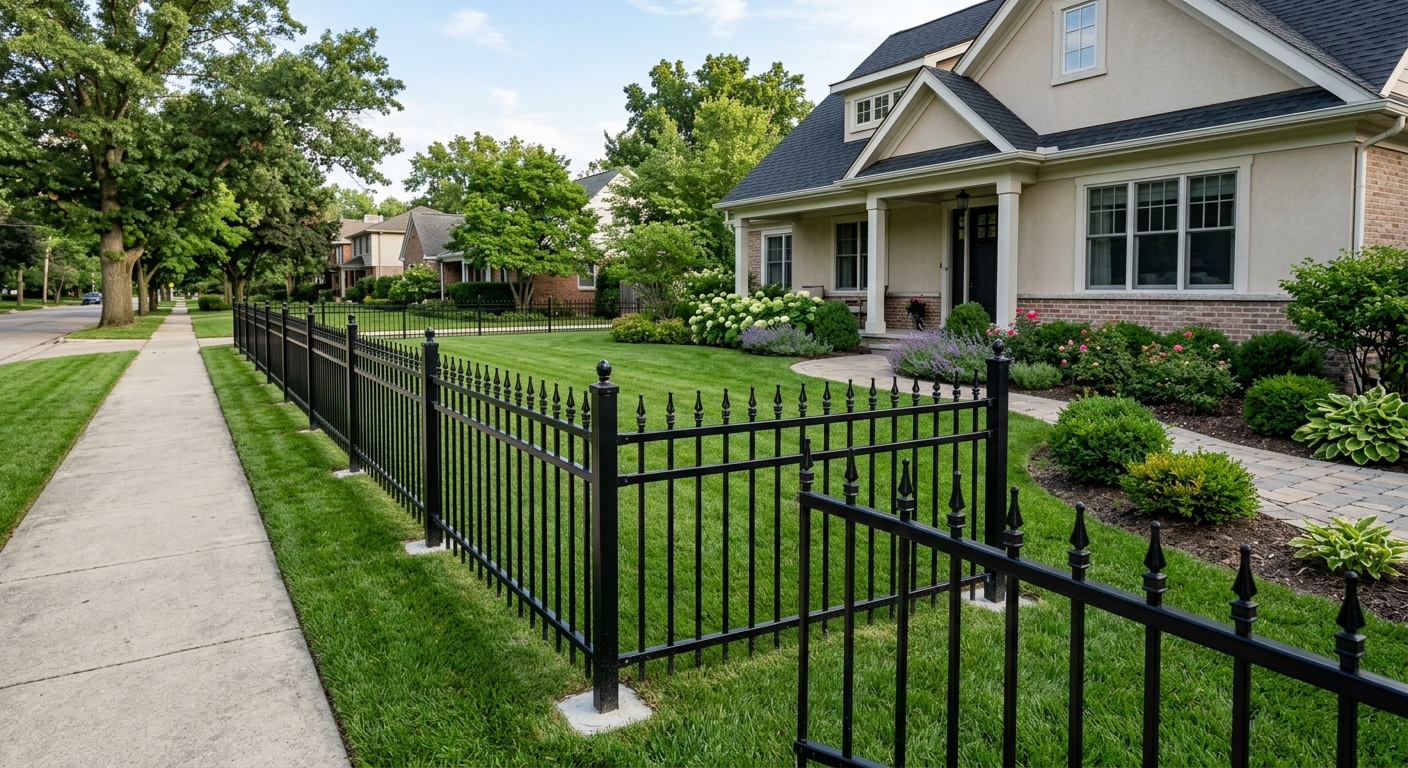
Trades are especially busy on perimeter lots and backyards facing more exposed wind corridors—one common hotspot is around the main collector roads that funnel gusts through neighbourhood streets. If you’re comparing options, the table below gives typical installed ranges by material so you can line up your priorities and budget before you request an itemized quote.
| Material |
Lifespan |
Maintenance |
Privacy Rating |
Price per Linear Foot |
| Pressure-treated pine (standard wood) |
10–15 years |
Stain/seal every 2–3 years (spring/fall) |
High for solid-panel styles |
$65 – $120 |
| Cedar (natural rot resistance) |
15–25 years |
Re-stain as needed every 2–4 years |
High for solid-panel styles |
$75 – $130 |
| Vinyl / PVC (no-maintenance) |
25–35 years |
Rinse/wash 1–2 times per year; no staining |
High for solid or semi-solid designs |
$75 – $130 |
| Chain-link (galvanized steel) |
20–30 years |
Occasional cleaning; tighten/stretch as needed |
Low (visibility through mesh) |
$45 – $85 |
| Aluminum ornamental |
25–40 years |
Wash 1–2 times per year; inspect hardware annually |
Medium (open/ornamental pickets) |
$90 – $160 |
| Composite / recycled material |
20–30 years |
Minimal cleaning; occasional hardware checks |
High for solid-panel configurations |
$85 – $150 |
Prices are estimates only and vary by project scope, site access and material selection.
What affects the price of fencing in Laurelwood
In the Toronto economic region, the same “average” backyard fence can come in up to 30–50% apart depending on the site and build details—especially around post depth, panel style, and how much concrete and hardware are needed. Contractors aren’t just swapping materials; in Laurelwood and the GTA, they’re building for frost and freeze-thaw movement. The design frost line in Southern Ontario is commonly taken at about 42"–48", and best practice is often to place concrete-set posts roughly 4–6 inches below that frost depth to reduce heaving risk. In practical terms, that typically means holes around 1.5–2.0 m into the ground for 6–8 ft fences, which increases both labour time and ready-mix costs.
Wind and racking also influence the quote. While Ontario doesn’t see the extreme open-field wind loads of the Prairies, Toronto-area builds still factor gusts into post size and spacing—solid privacy fences often need tighter spacing (commonly 6–8 ft centres) and heavier brackets to reduce wobble. If the yard has open corners, it can push you toward larger posts and stronger rails, raising the project closer to the higher end of the $65 – $120 wood band or into vinyl/PVC ranges like $75 – $130.
Concrete examples from Laurelwood-area jobs: (1) a 40 ft straight run on level ground with easy gate access can keep wood installation closer to the lower wood band; the same length with three corners and raked panels usually pushes price up due to labour and extra hardware; (2) clay-heavy soil often needs careful excavation and more concrete per post hole to achieve proper alignment—meaning a vinyl job might cost more than expected even though material is “no maintenance”; (3) if you’re replacing an existing fence, removal/disposal can add cost quickly, but it can also reduce long-term maintenance by allowing proper post placement.
| Price Factor |
Why It Matters |
Cost Impact |
| Fence length in linear feet |
More posts, rails, panels, and fasteners are required |
Major driver; scales almost directly with total footage |
| Post depth required |
Frost line dictates hole depth and post length |
Often adds labour and ready-mix; impacts material usage |
| Post setting method |
Concrete vs. gravel pack vs. driven posts affects stability |
Concrete-set posts typically cost more but perform better long-term |
| Material choice |
Vinyl/cedar/wood/chain-link have different hardware and installation characteristics |
Shifts the quote between wood (often lower) and metal/vinyl (often higher) |
| Gate count and type |
Gates require heavier framing, hinges, and often additional bracing |
Each gate can add a noticeable premium over similar-length fence sections |
| Grade and terrain |
Slopes require stepped or raked panel systems |
More layout time and specialty materials increase costs |
| Old fence removal and disposal |
Debris hauling, dismantling, and site clean-up |
Can add 10–30% depending on height, materials, and disposal distance |
| Permit fees and survey / property line locate |
Accuracy prevents encroachment and redesign costs |
May add fixed fees; survey delays can also add scheduling costs |
Permits & regulations in Ontario
In Ontario, fences can fall under permit requirements depending on height and location. As a practical guideline, fences above a height threshold—often about 2.0 m (6.5 ft) at the rear and 1.0–1.2 m (3–4 ft) at the front or corner—may require a building permit. You also need to respect property lines and municipal setback rules, which can vary by lot and street frontage. If your fence changes the boundary layout or significantly increases height near a corner visibility area, assume additional review may be needed.
Before you dig any post holes, call for utility locates through Ontario One Call to mark buried services. This step is non-negotiable for safety and to prevent expensive damage. Plan to get a survey or locate your property pins before installing—this reduces disputes about encroachment, especially on older lots where boundary markers may have shifted.
For shared boundary fences, Ontario’s line-fences framework is used to manage responsibilities between neighbours, but the actual construction still must follow local bylaws and any permit conditions.
To verify your contractor, start by checking that they’re properly licensed for the work they’re doing (and that the licence covers fencing-related construction as required in Ontario). Ask for liability insurance and provide a certificate of insurance showing active coverage. For workplace coverage, request proof of WSIB/WCB coverage—your contractor should be able to supply current clearance documentation or the applicable proof of account status.
Choosing the right fence material for Laurelwood
Picking a fencing material in Laurelwood is mostly about balancing privacy, maintenance, and cold-weather durability. In Toronto’s freeze-thaw conditions, the post installation method is as important as the material—because even the best panel won’t perform well if posts heave. For pressure-treated pine, you’re usually paying less upfront, but you’ll typically need to stain or seal every 2–3 years to prevent grey weathering and moisture checking. Cedar offers better natural rot resistance and often looks warmer and richer over time, but it still benefits from periodic maintenance to preserve the finish and reduce premature surface splitting.
Vinyl/PVC is the classic “no-maintenance” choice, but it has trade-offs: extreme cold can make some boards more brittle, so quality products and proper installation details matter (straight runs, correct fasteners, and room for thermal movement). Chain-link is typically the lowest cost and longest-lived for security, but it provides little privacy without add-ons like slats or lattice. Aluminum ornamental is mid-range; it resists rust and looks crisp, but it’s not a true privacy fence.
For privacy in a Laurelwood backyard, wood, vinyl/PVC, cedar, or composite solid-panel designs make the most sense. With Toronto’s frost line commonly around 42"–48", many installs in the GTA go with concrete-set posts for 6–8 ft fences, and that’s a key reason solid fences aren’t “cheap” even when the materials seem similar. As a concrete value example: if you’re choosing between pressure-treated wood and vinyl, you may see vinyl come closer to the $75 – $130 per-foot band while standard wood sits nearer $65 – $120. That added upfront cost can be justified if you want to avoid repeated staining and you plan to stay in the home long enough to amortize the maintenance savings.
| Material |
Cold Tolerance |
Lifespan |
Annual Maintenance |
Best For |
Price Band |
| Pressure-treated pine |
Good when properly sealed; needs protection from winter moisture cycles |
10–15 years |
Light prep/spot touch-ups; full stain/seal every 2–3 years |
Budget privacy with a willingness to maintain |
$65 – $120 |
| Cedar |
Excellent for rot resistance; still benefits from finish to reduce checking |
15–25 years |
Wash/inspect; re-stain every 2–4 years |
Premium look and natural resistance in Ontario weather |
$75 – $130 |
| Vinyl / PVC |
Very good in cold; performance depends on installation and quality |
25–35 years |
Minimal—rinse/wash 1–2 times per year |
Low-maintenance privacy for busy homeowners |
$75 – $130 |
| Chain-link |
Very good; resilient to freeze-thaw when galvanized properly |
20–30 years |
Occasional cleaning and hardware checks |
Security and pet containment (with slats for privacy) |
$45 – $85 |
| Aluminum ornamental |
Excellent; does not rust |
25–40 years |
Wash and inspect annually |
Attractive boundary definition without high maintenance |
$90 – $160 |
| Composite / recycled |
Good in cold; solid panels typically handle temperature swings well |
20–30 years |
Minimal cleaning; occasional hardware checks |
Privacy with fewer wood-finishing hassles |
$85 – $150 |
How to choose a fencing contractor in Laurelwood
When you’re choosing a contractor in Laurelwood, verify the basics first: Ontario work authorization/licensing (as required for the scope), liability insurance, and workplace coverage (WSIB/WCB). You can usually check licensing online through Ontario’s available registries or the contractor’s own proof package. For liability insurance, request a certificate of insurance that lists the property owner as an additional insured if your contract requires it, and confirm the policy is current at the time of work. For WSIB/WCB, ask for the latest clearance letter or proof of account status so you know you’re not indirectly exposed if a worker is injured.
Next, get 2–3 itemised written quotes. “Itemised” means you should see labour and materials broken out (posts, rails, panels, gates, hardware), and you should also see line items for what’s excluded. Ask whether permit pull is included (when required), whether disposal and hauling are included, and whether any survey/property line locate is required. For fencing, small omissions—like assuming you’ll provide access to the side yard, or excluding concrete removal of old posts—can swing final costs.
Look at warranty terms carefully. A good contract states a workmanship warranty length (often distinct from the product warranty), and clarifies whether it’s transferable to the next owner. Finally, payment schedule matters: never pay more than about 10–15% upfront; use progress payments and hold back a portion until the fence is fully completed and cleaned up. Ask for a start date and a completion estimate in writing, since winter scheduling, frost depth preparation, and curing/settling time can affect timelines.
- Confirm licensing and that it matches the fencing construction scope you’re buying.
- Request current liability insurance and review dates on the certificate.
- Ask for WSIB/WCB clearance/proof before any digging starts.
- Get 2–3 quotes that itemize labour, materials, posts, gates, and hardware.
- Check whether the quote includes post-hole depth and concrete-setting (not just “posts installed”).
- Verify disposal/haul-away of old fencing is included or excluded.
- Confirm permit responsibilities: “permit pulled by contractor” vs homeowner.
- Ask how they handle property line verification and whether a survey locate is assumed.
- Review panel layout method for slopes: stepped vs raked sections.
- Check gate specs: latching type, hinge hardware, and whether bracing is included.
- Read warranty language for workmanship duration and product warranty conditions.
- Use a payment schedule with a small deposit and holdback until final inspection and cleanup.
In Laurelwood, common red flags include quoting “driven posts” for 6–8 ft privacy fences without addressing frost depth, refusing to provide insurance/WSIB proof, offering a vague lump-sum with no line items for gates or removal, skipping a written start/completion timeline, and asking for a large upfront payment before any post holes are even scheduled.
Frequently asked questions — fencing in Laurelwood
How do I find my property line before fencing?
In Ontario, the safest approach is to confirm your boundary before any post holes are dug. Start by locating your property pins (or requesting a pins/locate service) and comparing that to any survey you may already have from purchase paperwork. If pins are missing or hard to verify on-site, a new survey is the cleanest option—especially in neighbourhoods where older fencing may have been installed slightly off-line.
In Laurelwood, also plan for a proper Ontario One Call utility locate before digging. That doesn’t tell you property lines, but it prevents service hits. When you hire a fencing contractor, ask them how they determine the line and whether they include a property line locate in the quote or treat it as homeowner-supplied. This is one of the biggest factors behind dispute risk and rework costs, and it’s worth clarifying up front.
What's the most low-maintenance fence?
For low maintenance in Laurelwood and the broader Toronto region, vinyl/PVC is usually the top choice: it’s designed to avoid staining and typically needs only rinsing or light washing once or twice per year. If you’re comparing budgets, vinyl/PVC often lands in the $75 – $130 per-foot band depending on height, post size, and whether you’re including concrete-set posts and gate hardware.
Composite/recycled can also be low maintenance with similar “no staining” benefits, while aluminum ornamental is very low maintenance but won’t give true privacy. By contrast, pressure-treated pine is budget-friendly in the $65 – $120 range but generally needs staining/sealing every 2–3 years to stay looking good and reduce weathering.
Cold snaps and freeze-thaw won’t eliminate maintenance—what matters is choosing materials suited to Ontario winters and ensuring post installation is stable for long-term performance.
How tall can my fence be in Laurelwood?
Fence height rules in Ontario depend on where the fence sits (rear yard versus front/corner), and many municipalities treat taller fences as subject to permit requirements. A common guideline used in practice is about 2.0 m (6.5 ft) at the rear and 1.0–1.2 m (3–4 ft) at the front or corner, where exceeding those heights may trigger a building permit.
Because bylaws can vary by lot orientation and corner exposure, you shouldn’t rely on a neighbour’s fence height alone. Your best move is to ask your contractor to confirm whether your specific plan requires a permit before installation. If a permit is required, verify whether the quote includes permit pull, and confirm setbacks from property lines and any corner-visibility constraints.
If you share a boundary, shared ownership expectations are governed by Ontario line-fences legislation, but you still must comply with municipal height/setback rules.
Should fence posts be set in concrete here?
For most 6–8 ft fences in Southern Ontario (including Laurelwood), concrete-set posts are the common best-practice recommendation. The reason is frost action: the design frost line is commonly taken around 42"–48", and contractors typically set posts deeper—often 4–6 inches below that frost line—to reduce heaving risk. That usually means hole depth in the 1.5–2.0 m range for many privacy fences, and concrete setting improves long-term stability in clay and mixed soils.
Gravel packs or alternative methods can work in certain conditions, but if you want durability through winter freeze-thaw cycles and strong wind moments (especially with solid panels), concrete is usually the safer approach. Concrete-set posts also influence quoting: they add labour time and ready-mix costs even if the panel material is lower-cost.
Ask your contractor how deep they plan to dig and whether concrete is included per post—this is a key difference between quotes.
What's the best fence for privacy?
For privacy in Laurelwood, solid-panel fences with minimal gaps are usually the best fit. Wood (cedar or pressure-treated) and vinyl/PVC are the most common privacy choices because solid styles block sightlines effectively. In Ontario’s climate, the long-term performance comes down to both the material and the foundation: solid privacy fences are typically built with heavier posts and tighter spacing to resist racking and uplift, and posts are commonly concrete-set to manage frost movement.
Price-wise, pressure-treated privacy fencing often aligns with the $65 – $120 band when the site is straightforward, while vinyl/PVC privacy often comes in around the $75 – $130 band depending on height, gates, and installation details. Cedar can land in a similar range but is valued for appearance and natural rot resistance.
If your yard is on a more exposed side, tell your contractor about that—strong wind exposure can change post size, rail design, and spacing.
How do I compare fencing quotes?
Compare fencing quotes like-for-like. First, ask each contractor for an itemised breakdown: labour, materials, post type/size, panel style, concrete (if included), and gate construction. A “lowest price” quote can be misleading if it excludes disposal, assumes a shallow post depth, or lists gates without bracing/hardware detail.
Next, verify inclusions and exclusions in writing: permit pull (when required), utility locates responsibility, survey/property line locate assumptions, and old fence removal/disposal. In Laurelwood, frost depth and post setting are big cost levers—so confirm whether each quote uses concrete-set posts and what hole depth they plan.
Finally, check warranty terms and payment schedule. If one contractor asks for a large upfront payment or provides vague scope language, that’s a quality warning. Using the same target material and height across quotes, then benchmarking price against typical bands like $65 – $120 for wood or $75 – $130 for vinyl/PVC, will help you spot real differences fast.