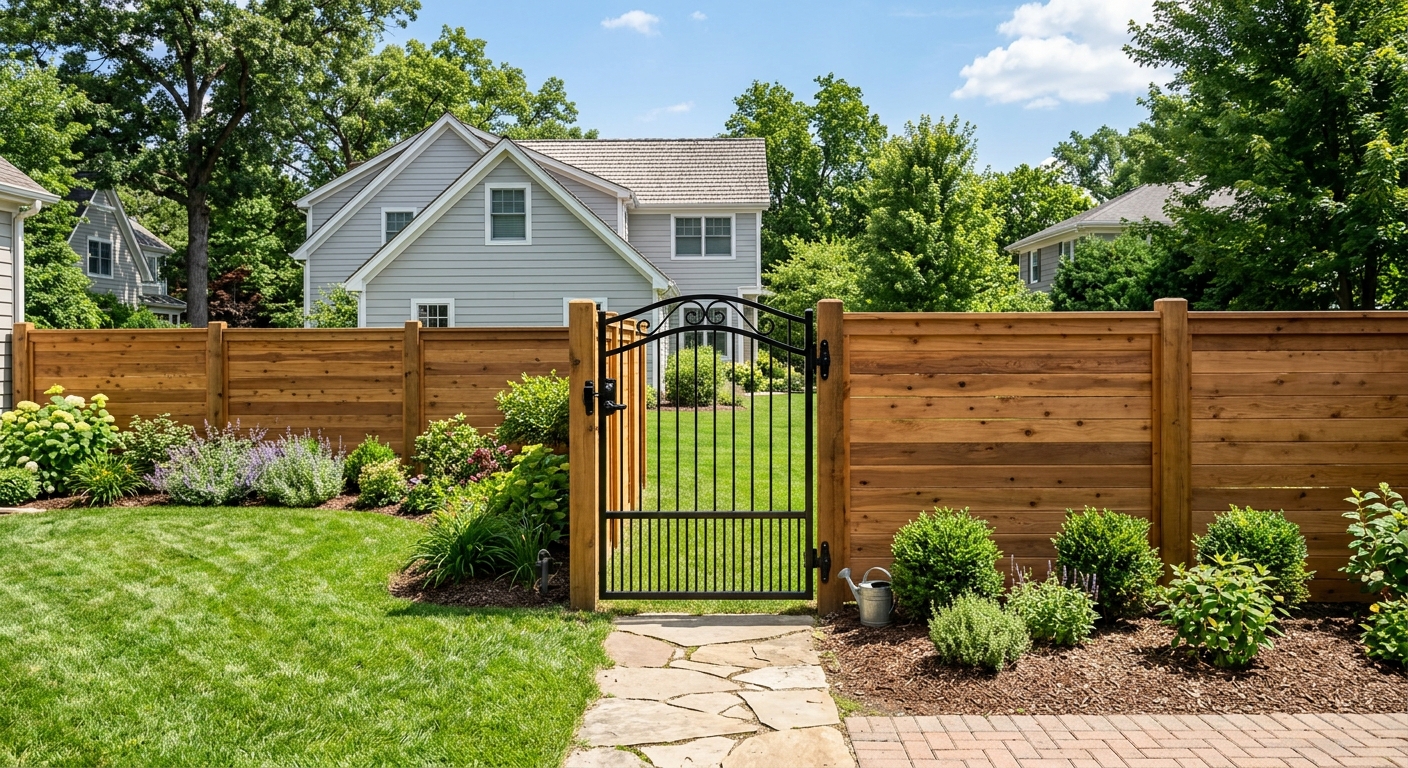
Fencing options and costs in Woburn
Woburn is a growing community with plenty of detached homes, and that matters when you’re budgeting for fencing. With a population of 53,485 (Statistics Canada, 2021 Census), there’s steady demand for backyard privacy, pet containment, and tidy frontage runs—especially in established pockets like the Erindale Drive/Highway 7 area, where homeowners often update older boundary fencing as landscaping and home exteriors get refreshed. Toronto’s market also means contractors are busy seasonally, and that availability can tighten timelines (and sometimes labour pricing) in peak spring and summer weeks.
In Southern Ontario, frost depth drives how fence posts are installed. In practice, posts are commonly set deeper than the finished height suggests to avoid frost heave—often around 3.5–4 ft down for many privacy fence layouts. On top of that, the Toronto economic region’s mixed soils (including clay pockets) and local building practice favour concrete-set posts for longer-lived stability on taller runs. The result: even when two fences use the same material, quotes can differ noticeably based on post depth, panel style, access for augers, and whether old fencing removal and disposal are included.
Below is a homeowner-friendly comparison of common fence materials you’ll see quoted across Woburn, using realistic lifespan and maintenance expectations. Use the table to anchor conversations with contractors before you request itemised pricing.
| Material |
Lifespan |
Maintenance |
Privacy Rating |
Price per Linear Foot |
| Pressure-treated pine (standard wood) |
10–20 years |
Stain/seal every 2–3 years; yearly inspection |
8/10 (solid pickets typical) |
$20–$30 |
| Cedar (natural rot resistance) |
15–25 years |
Stain every 2–4 years; minor re-staining as colour fades |
9/10 (solid boards typical) |
$22–$36 |
| Vinyl / PVC (no-maintenance) |
20–35 years |
Rinse as needed; check brackets after winter |
9/10 (solid privacy panels) |
$26–$40 |
| Chain-link (galvanized steel) |
20–40 years |
Occasional wash; tighten hardware |
3/10 (privacy requires mesh inserts) |
$17–$26 |
| Aluminum ornamental |
25–40 years |
Wash 1–2 times per year; check hinges/gates |
4/10 (decorative pickets) |
$30–$46 |
| Composite / recycled material |
25–35 years |
Wash as needed; rare repairs |
8/10 (board-style privacy) |
$28–$45 |
Prices are estimates only and vary by project scope, site access and material selection.
What affects the price of fencing in Woburn
In Woburn and across the Toronto economic region, the same “front yard 4-ft fence” request can land 30–50% apart between quotes. The difference usually isn’t the brand of wood or vinyl—it’s the unseen work: how deep posts must be set for Ontario frost conditions, what type of footing method is proposed, and whether the contractor is pricing for gates, removal, and clean disposal. In short, two fences that look similar on paper can require different excavating effort and different materials if the soil is clay-heavy or the yard is sloped.
Frost line depth is a major driver because posts must be set below the design frost to prevent heaving. A common rule of thumb is to set posts roughly 4–6 inches below the design frost depth; in Southern Ontario that often means digging down about 1.5–2.0 m and using longer posts. Once you’re concrete-setting, labour time increases (hole augering, forming, bracing, curing time) and ready-mix costs add up. This is why Toronto-area privacy fences (6–8 ft solid wood or vinyl) often price closer to the higher end of the local bands, rather than the bargain end.
Wind also plays a role even if we don’t face prairie-level exposure. Taller solid panels need heavier post sizing and closer spacing (commonly 6–8 ft centres) to resist racking. Concrete examples in Woburn: (1) a straight 50-ft backyard run can come in more predictably using pressure-treated pine; (2) adding two gates and relocating around mature trees often increases labour and hardware; and (3) a steep lot may require stepped panels, which can raise material waste and installation time. If you’re comparing vinyl versus chain-link, it’s normal to see budgets near $65–$120 for standard wood installs versus $75–$130 for vinyl/PVC—especially once concrete-set posts are included for stability.
| Price Factor |
Why It Matters |
Cost Impact |
| Fence length in linear feet — the primary cost driver |
Every extra foot adds posts, rails, pickets/panels and hardware |
Major; can change total cost by 40%+ on longer runs |
| Post depth required — frost line determines post length and hole depth |
Deeper holes mean more augering, longer posts, and concrete |
Major; often the biggest difference between low and high quotes |
| Post setting method — concrete vs. gravel pack vs. driven posts |
Concrete-set posts improve long-term stability in Ontario soils |
Moderate to major; concrete increases material and labour |
| Material choice — vinyl vs. cedar vs. chain-link |
Upfront material costs and weathering/repair cycles differ |
Moderate; drives per-foot rate and long-run value |
| Gate count and type — walk-through vs. drive-through (double) |
Gates require heavier frames, hinges, latches, and often extra reinforcement |
Moderate to major; each gate can add $500–$2,000+ depending on size |
| Grade and terrain — sloped yards require stepped or raked panels |
More measuring, trimming, and potential material waste |
Moderate; can add labour and change material totals |
| Old fence removal and disposal |
Demolition and haul-off add time and dump fees |
Moderate; frequently overlooked in “low-ball” estimates |
| Permit fees and survey / property line locate |
Verification work reduces the risk of encroachment disputes |
Low to moderate; can still affect total by several hundred dollars |
Permits & regulations in Ontario
In Ontario, fence height rules and permitting can apply depending on where the fence sits and how tall it is. A common threshold homeowners run into is that fences above about 2.0 m (6.5 ft) at the rear typically require a building permit, while front or corner-area fences are often restricted to around 1.0–1.2 m (3–4 ft). You still need to follow property-line placement and any municipal setback rules that apply where you live in Woburn, even if you don’t expect to need a permit.
Before any digging, arrange utility locates. In Ontario you use Ontario One Call (not guessing—posts get set deep in clay and mixed soils, so you’re excavating enough to strike hidden lines). Next, confirm the property line. For disputes or older lots, I strongly recommend a survey or at least a property-pin locate before you install posts—one mismeasured panel can turn into a removal job.
Shared fence ownership is handled by provincial line-fence legislation, and the practical takeaway is that you should clarify who owns, who maintains, and who pays for repairs or replacement before work begins.
What typically DOES require a permit: fences exceeding the rear height threshold (often around 2.0 m / 6.5 ft) and certain installations that substantially change site conditions. What typically does NOT require a permit: smaller boundary fences that fall under the local height limits, provided they’re on your side of the property line and meet setbacks.
To verify a contractor in Ontario: check their online business registry profile (they should be properly registered/legit), obtain a certificate of insurance (liability coverage naming you as certificate holder where applicable), and confirm WSIB coverage where required. Ask for proof in writing—an insured, covered contractor will provide clear documentation without hesitation.
Choosing the right fence material for Woburn
Choosing a fence in Woburn is really about matching your priorities—privacy, low maintenance, budget, and lifespan—to what our Southern Ontario winters do to materials. Pressure-treated pine is the budget-friendly starting point, but it typically needs staining every 2–3 years to limit grey weathering and keep boards looking good. Cedar costs more up front and still benefits from maintenance, but it resists rot better and tends to age more gracefully when cared for. Vinyl/PVC is the “set it and forget it” option: it’s low maintenance, but very cold snaps can make it feel brittle if it’s not installed with correct expansion allowances and proper post anchoring.
Chain-link is usually the lowest cost and longest-lived because it doesn’t rot, but it doesn’t provide privacy unless you add a privacy mesh or screen system. Aluminum ornamental is a mid-range option that looks sharp and won’t rust, but it’s decorative rather than privacy-focused. For true privacy—especially on 6–8 ft fences—most homeowners end up with solid wood, vinyl/PVC, cedar, or composite/recycled boards, paired with concrete-set posts to handle frost conditions.
On post depth: with Toronto’s frost pattern, concrete-set posts are commonly recommended. Even if a contractor proposes a gravel pack, I’d want to understand their depth plan and reinforcement approach—Ontario clay and freeze/thaw cycles are unforgiving. Wind and snow loads can also rack tall, solid panels, so hardware and post spacing matter as much as the fence height.
Concrete value example: if a pressure-treated pine privacy fence is quoted near the wood band (about $65–$120 per linear-foot range depending on scope) but cedar or vinyl lands closer to the higher band (often around $75–$130 for vinyl/PVC installs), the extra cost can be justified when you want fewer maintenance cycles and more stable panel appearance over a long stretch.
| Material |
Cold Tolerance |
Lifespan |
Annual Maintenance |
Best For |
Price Band |
| Pressure-treated pine |
Good (with proper above-ground clearance) |
10–20 years |
Inspect yearly; stain/seal every 2–3 years |
Budget privacy with acceptable upkeep |
$65–$120 |
| Cedar |
Good (naturally rot-resistant) |
15–25 years |
Inspect yearly; stain every 2–4 years |
Better appearance and natural durability |
$80–$135 |
| Vinyl / PVC |
Very good (expansion allowances matter) |
20–35 years |
Rinse as needed; check hardware after winter |
Low maintenance privacy |
$75–$130 |
| Chain-link |
Excellent (galvanized steel) |
20–40 years |
Tighten/inspect occasionally; rinse |
Security with minimal upkeep |
$45–$85 |
| Aluminum ornamental |
Excellent (powder-coated) |
25–40 years |
Wash 1–2 times per year |
Attractive curb definition |
$90–$160 |
| Composite / recycled |
Good (board stability; install correctly) |
25–35 years |
Wash as needed; rare repairs |
Long-life privacy with low upkeep |
$85–$150 |
How to choose a fencing contractor in Woburn
Hiring well in Woburn starts with verifying coverage and credentials the same way I do on every job. First, confirm Ontario licensing/registration where applicable for the type of work the contractor is advertising, and don’t accept verbal confirmation—ask for proof and keep copies. Next, request liability insurance (certificate of insurance) and ensure the coverage is active for the job dates. If the contractor employs workers, verify WSIB coverage where required and ask for a clearance letter or proof of status. A real fencing contractor won’t mind these checks; they do them daily.
Then get 2–3 itemised, written quotes. I want to see a breakdown of labour and materials (posts, rails, pickets/panels, concrete, hardware, gates) and not just one lump-sum number. Read the scope carefully: what’s excluded (tree trimming, rock excavation, permit pulling, disposal), and what’s included (utility locates, property line locate, old fence removal, post-depth specification, and how gates are built/anchored).
Warranty matters too. Ask for the workmanship warranty length and whether the manufacturer warranty is included and transferable to you. Payment should be controlled: never pay more than about 10–15% upfront, and use a holdback until the job is complete and inspected. Finally, get the timeline in writing: a start date target and a completion estimate, plus what happens in rain, frost, or material delays.
- Request proof of insurance (liability) and keep the certificate on file.
- Confirm WSIB coverage status/clearance where applicable for Ontario jobs.
- Ask for the post-depth plan (depth and concrete setting method).
- Get utility locate confirmation: who requests Ontario One Call and when.
- Insist on itemised labour/materials—not a single “all-in” number.
- Clarify gate type, hinge style, latch model, and reinforcement.
- Confirm disposal/haul-off is included for old fence removal.
- Ask whether permits are required for your height/location and who pulls them.
- Get a written scope for sloped yards: stepped vs. raked panels.
- Ensure the warranty is in writing: workmanship and product terms.
- Confirm payment schedule with a holdback until completion.
- Review start/completion dates and weather contingencies.
In Woburn, common red flags include: (1) quoting without discussing post depth or frost heave prevention, (2) offering only lump-sum pricing with no disposal/permitting details, (3) asking for large upfront deposits (well beyond 10–15%), (4) refusing to provide insurance/coverage paperwork, and (5) giving vague installation timelines without written scope and start dates.
Frequently asked questions — fencing in Woburn
How long does a wood fence last in Woburn?
In Woburn, a well-built wood fence typically lasts around 10–20 years for pressure-treated pine and closer to 15–25 years for cedar, assuming the posts are set deep enough for Ontario frost conditions and the fence is installed with good drainage and proper spacing. The big failure mode we see isn’t just weather—it’s frost heave and moisture trapping at the post base when posts aren’t concrete-set to the right depth. If you stain/maintain on a regular schedule (often every 2–3 years for pine, and every 2–4 years for cedar), you protect the surface and slow down twisting and checking. For budget planning, many homeowners compare wood pricing near the wood band of $65–$120 depending on height, post depth, and gate count.
Who owns and maintains a shared fence?
Shared fence ownership and responsibility in Ontario are commonly handled under the province’s line-fence legislation, but the practical answer depends on how the fence is positioned on the property line and what you and your neighbour agree to. If the fence is truly shared (on the line and intended as such), maintenance and replacement costs are often treated proportionally or by agreement, and repairs shouldn’t be done without notifying the neighbour—especially when replacement affects the same boundary line. In Woburn, many neighbourhood disputes come from assumptions about location rather than cost. That’s why a survey/locate and clear scope (exact materials, height, and replacement method) matter. Before you sign, ask your contractor to include what portion of the run is shared and document photos and measurements.
How do I find my property line before fencing?
Start by locating your property pins or getting a professional survey, particularly in older Woburn lots or where previous fences were installed by earlier owners. Homeowner sketch maps and online imagery can be off—one misalignment can lead to encroachment and expensive rework. Practically, you should also run utility locates before any post hole digging by calling Ontario One Call. If you don’t have survey documents, ask the contractor whether they’re recommending a locate service and whether it’s included in the quote. A good fencing quote should discuss how they’ll verify boundaries before installation. Once pins are located, mark corners and run string lines so the layout matches the property line before concrete is placed.
What's the most low-maintenance fence?
For low maintenance in Ontario, vinyl/PVC is usually the top pick because it doesn’t rot, and it typically only needs rinsing and periodic hardware checks after winter. Chain-link is also very low maintenance over the long run, but it doesn’t provide privacy without added screening. Cedar and pressure-treated wood are not “no-maintenance” options—expect staining/sealing cycles to keep them looking good and reduce surface breakdown, especially after harsh freeze/thaw seasons. In terms of pricing, many homeowners budget near the vinyl/PVC band of $75–$130 depending on fence height, post depth, and gate count. If you want a balance of appearance and durability with less upkeep than wood, vinyl or composite privacy fences are common choices.
How tall can my fence be in Woburn?
Fence height limits in Ontario often depend on where the fence is located—front, corner, or rear—and local setback bylaws. A common guideline many homeowners run into is around 2.0 m (6.5 ft) at the rear, where a building permit is frequently required for fences above that height threshold, while front/corner areas are often limited to roughly 1.0–1.2 m (3–4 ft). The key is that “can I build it?” and “where can I build it?” are both questions. In Woburn, you should verify your exact location and setbacks before ordering materials. If you’re planning a 6–8 ft privacy fence, assume the contractor will need to confirm permits and post-depth requirements for frost heave prevention—deep concrete-set posts are the stability piece.
Should fence posts be set in concrete here?
In Woburn (Southern Ontario), concrete-set posts are strongly recommended for most taller privacy fences because Ontario frost conditions can heave posts that aren’t anchored properly. A typical best-practice approach is to dig down around 1.5–2.0 m for many installations so the post base sits below the design frost depth, often with a small extra margin. That depth plus mixed/clay soils means concrete adds stability and reduces long-term leaning. Gravel pack and driven-post systems may be used in some situations, but for 6–8 ft fences—especially with solid panels that catch wind—concrete setting is usually the safer long-term choice. This is also why quotes can differ: contractors that price correct post depth and concrete work generally fall higher within the local bands (for example, wood near $65–$120 and vinyl/PVC near $75–$130 depending on scope).